The Story of Heyford: Heyford at the Turn of the Century V4C3

The Census return of 1891

The details from Census Returns are not made available to the public until they are one hundred years old so the one most recently available to us is that of 1891. An analysis of this gives us a pretty good idea of what life in the village was like at the turn of the century.

The houses and people

The details below tell us about the number of houses, people and canal boats.

Lower Heyford

  • 164 houses inhabited, 28 uninhabited
  • 750 people, 365 males and 385 females
  • 7 canal boats with 23 people on board

Upper Heyford

  • 22 houses inhabited, 7 uninhabited
  • 96 people, 41 males and 55 females

The houses listed as uninhabited were either vacant because the occupants were away on the night of the census, or more likely because they were uninhabitable.

A number of the families listed in the 1891 Census have continued to live in the area throughout the century: Names such as Adams, Charville, Clarke, Collins, Denny, Eales, Faulkner, Foster, Furniss, Garrett, Kingston, and Masters are still well known in the village today.

In those days street names were generally not used and there were certainly no house numbers. However several specific buildings are mentioned in the census.
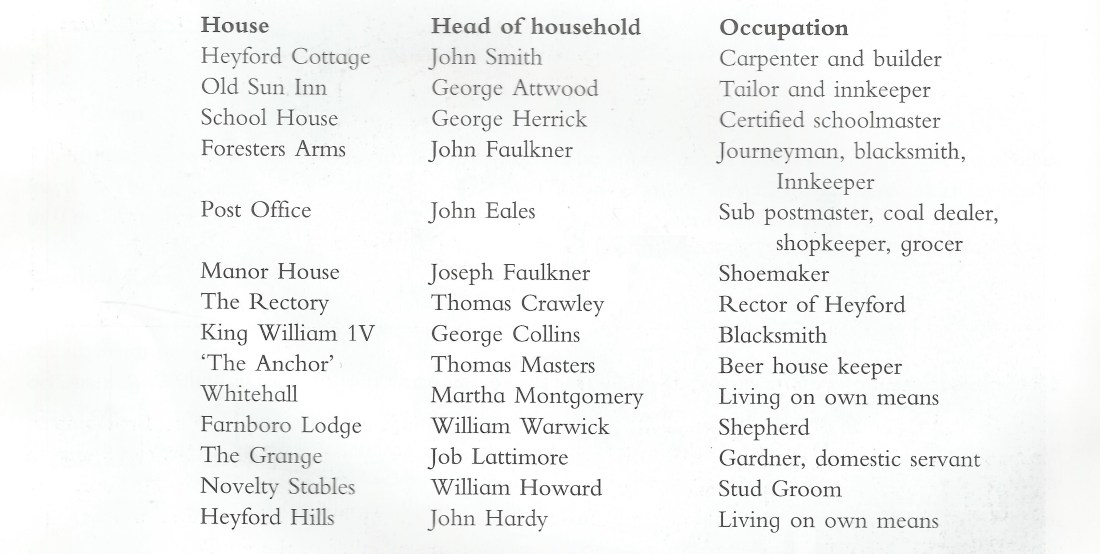
NetherHeyfordTurnofCentury_StoryofHeyford1 copy

Working life

The occupations listed in the census also give some insight into working life in the village. Here is a breakdown into the main types of occupation.

Farming. The census lists 2 farmers, 2 flour millers, 1 milkman, 3 shepherds, 1 tractor engine driver and 26 agricultural labourers.

Building. 1 builder, 1 plasterer, 1 stonemason, 3 bricklayers and 7 carpenters.

Boot and shoe making. 5 shoemakers, 2 shoe rivetters, 1 boot and shoe finisher.

Other trades. 1 tailor, 2 lacemakers, 11 dressmakers, 2 blacksmiths, 1 harness maker, 1 wheelwright, 1 gunmaker, 3 boatbuilders, 1 organ builder.

Dealers. 1 butcher, 2 bakers, 3 coal merchants, 1 timber merchant, 1 corn merchant, 1 draper, 2 carriers, and 5 publicans, beer sellers and innkeepers.

Blast furnaces. These were the biggest single employers in the village with 1 blast furnace foreman, 2 blast furnace engine drivers, 2 stationary drivers, 1 engine fitter, 2 ironstone labourers, 1 weighboy, and 28 labourers.

Brickworks. 16 brickyard labourers.

Railway. 1 railway engine driver, 1 goods shed labourer, 1 engine fitter, 1 telegraph clerk, 3 signalmen and 4 platelayers.

Domestic and educational. 1 schoolmaster, 2 school mistresses, 1 clerk, 1 governess, 14 housemaids and domestic servants, 2 grooms, 1 nurse girl, 3 laundresses, 1 midwife.

Other. 28 general labourers.

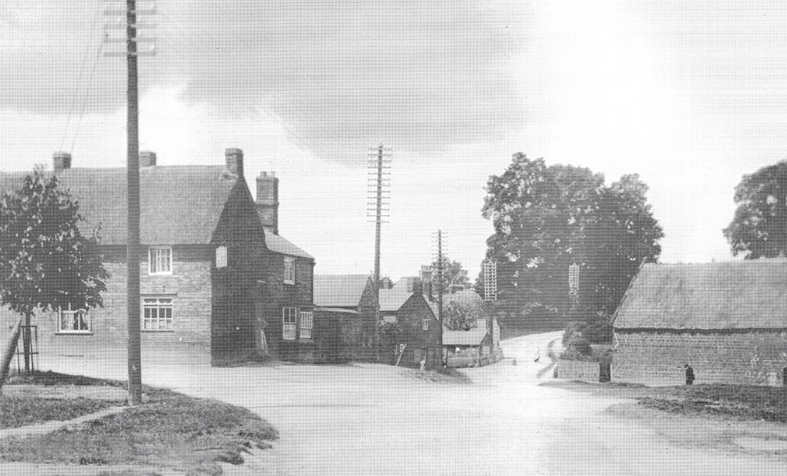
The village as it appeared in 1900NetherHeyfordTurnofCentury_StoryofHeyford2

The memories of Bob Browning (1892-1997)

Many of the details in the remainder of this chapter came from information given by Bob Browning to Stephen Ferneyhough on Tuesday 9th April 1996. Bob Browning was born in August 1892 and died in March 1997, aged 104. He was one of two brothers and four sisters all born in Nether Heyford. The story of this family appeared in Volume 2 of this series of booklets. All lived well into their nineties (94, 96, 98, 99, 101, 104) and Bob was the last and oldest surviving member of the family.

I visited him in his room at Bethany Homestead in Northampton. He was smartly dressed in a suit and tie. He greeted me with a handshake and made me feel very welcome by telling the nurse that I was a very good friend of his. He was very lively, interested in anything historical and was very glad to pass on anything he could for the interest of future generations. He lived in the village until he moved to Northampton in 1922, and most of the memories below are from that period.

Everyday life in Heyford

Life for most people was a matter of survival and self-sufficiency. The days were long, money was scarce and life was simple. Most families had an allotment and grew most of their own vegetable needs. After work in the light evenings, this was one of the main activities.

Most families kept hens. At harvest time the children went ‘gleaning’, that is picking up any remaining ears of corn to feed to the chickens. If a hen went broody, you’d put a dozen eggs under her in the spring time and so continue the supply of chickens and eggs.

Most people also kept a pig, usually in the backyard but sometimes on the allotment. The straw from the pigsty Was tipped onto the allotment, and the vegetable waste from the kitchen was fed to the pig. The boys went collecting acorns for the pigs in the autumn which they could sell for a tanner a bagful. The pigs were killed and butchered in the autumn to give a winter supply of meat. This was usually done by the butcher Ted Capel, and later by his son jack. The butcher went to the home or allotment to kill the pig. The meat was salted, and then laid in trays or hung in nets in the living room or hallway.

There were several farmers in the village producing milk. They delivered the milk, which was unpasteurised, each day in large cans. They had pint and half-pint measures which they filled and tipped into the jugs of the housewives who bought it. During the war there were shortages of anything that they couldn’t grow themselves. Sugar was rationed to half a pound a week. Butter was scarce and margarine became more common. However, they made a kind of butter by leaving the milk to stand overnight so that the cream came to the surface. By scooping it off and shaking it up they were able to make a sort of butter to use as a treat at the weekend.

There were two orchards in the village. john Barker had the one owned by the school behind Church Street. There was also Ben’s Orchard in Middle Street. This had a wall all around it, but it didn’t keep the boys out. They went scrumping for apples and pears in the autumn and stored them under the eaves the hayricks which were thatched for protection against the rain. They would always know the right time to retrieve them before the farmer came to dismantle the ricks. Nowadays there are no orchards, but the boys go garden hopping instead… presumably to get the same sense of excitement.

Lack of services

There was no sanitation, just an outside toilet. Some of these still exist in village as tool sheds or stores. but most have gone. The toilet would be emptied around once a week, usually onto the allotment. Sometime before the first world war the cart started coming. Two men employed by the council brought a two-wheeled cart pulled by horse to collect the toilet contents. It was then taken away for disposal. It had only two wheels to allow it to tip for emptying.

There was no gas or electricity. Gas came to the village just before the first world war via the Bugbrooke gasworks. Electricity didn’t come until after the second war. For light there were candles and oil lamps. For cooking there was a range with an open fire. On one side was a boiler for heating water and on the other side a small oven for baking cakes. You could divert the flames and heat to one or the other. On Sundays the wife would cook the vegetables, but the joint and yorkshire puddings were usually taken to one of the bakers for cooking while the family was at church or chapel. The main bakery for this was the one in Furnace Lane run by Wesley Faulkner. Most people had a bath once a week, often on Friday. Each house had a tin bath. The water for the bath was heated in the copper in the kitchen over an open fire. The fires were fuelled mostly by coal. There was a ready supply of coal to the village which came by canal. The Eales family who ran the post office kept a coal yard. Tom Dunkley at the Bricklayers Arms beside the canal also had a coalyard. He made deliveries by cart from which people would buy; enough to last the week.

The water supply consisted of four taps and many wells. There were four public taps in the village. One outside the jubilee Hall, one opposite the school outside Dennys house, one on the wall in Church Lane, and one near the Church rooms. A lot of the houses had wells, all supplied by the many springs in the area. The wells were dug two or three feet wide, five or six feet deep, and brick lined. The water was obtained by means of a bucket and rope. Later after the first war it became common to fit a handpump to the well.

The top of Church Street in 1913NetherHeyfordTurnofCentury_StoryofHeyford3This photograph, lent by Bob Smith, was taken in 1913 and shows a view from the top of Church Street. In the distance can be seen a small group of cottages, since demolished.

The homes

Most of the houses were of stone (either limestone or sandstone) with thatched roofs and stone slabs for flooring. Some of the older ones like the tinsmith forge opposite the war memorial had mud walls. But many of the newer houses built late nineteenth and early twentieth centuries were of brick and slate with red quarry floor tiles. There was a brickworks in Furnace Lane where Wickes now is, but again the canal brought a ready supply of both brick and slate into the village. The owners of Flore Lane Wharf were dealers in brick and slate.

Inside the homes, most walls were plastered. This was made with a mixture of sand and lime. There were two good sandpits in Furnace Lane and there were a number of lime kilns along the canal which supplied slaked lime.

Church Street – the working heart of the village 

In those days there were no street names or numbers. It was just ‘Barkers yard’ or ‘Tandy’s place’. Everybody knew who everybody was and where they lived.

The stone and thatch house behind the war memorial known as ‘the Springs’ was a laundry owned by a family called Smith. Sometime before the first world war the laundry was closed and the house was taken over by the Ward family.

In front of ‘the Springs’ was the Jubilee Hall. An article on this appeared in volume one of this series of booklets.

On the site of the jitty opposite the war memorial was a tinsmith forge. The path of the jitty then ran further to the left and came out beside the house known as ‘the Springs’. The forge was made of mud walls but became derelict and was demolished in 1920 when the New School house was built.

The small building to the right of the jitty which housed ‘Tops the Hairdressers’, and more recently ‘Heyford Antiques’ was built by William Browning, (Bob’s father) as a haberdashery and material business. Bob grandparents, Mr and Mrs Alfred Marsh (maternal side) lived next door.

To the right of this is a small three bedroomed cottage where the six Browning children were born and grew up. Behind these buildings was a saw pit and builders yard.

Next door is the house known as Tandy’s place. There used to be a right of way here through the yard to the jitty. Before Tandy was there it was occupied by a man named Gammage who ran a boot and shoe business. He married into the Faulkner family but later moved his business into Northampton. After he left it was taken over by Mr Tandy who made only heels and soles. He bought scraps from the leather factories and cut them up with special knives, building them up in layers to make heels and soles which were then sold on to shoe factories. After Mr Tandy left, it was occupied by a man named Williams who kept three or four cows and supplied milk to the village.

Further down Church Street, where the road turns sharply to the left, the red brick building on the inside of that corner was a bakehouse. It was owned by Thomas Faulkner who also ran the Methodist chapel for around 50 years until his death in 1940. He lived opposite in the stone and thatch building known as Ash Tree Cottage.

To the right of Ash Tree Cottage are some black doors. Here there used to be a blacksmith. The building belonged to the Faulkner family but the forge was used only once a week by Mr Green who came over from Flore. Later on it was Edward Wright who came (Bob Browning’s father in law). It was closed sometime before the second world war.

To the left of Ash Tree Cottage is Capel Cottage. so called because it was where a butchers business was run by the Capel family for three generations. Firstly by Ted before the first world war, then later by his son Jack. Most of the pigs in the village were slaughtered by the Capels.

Just around the corner was a small wheelwright shop run by Mr Foster. He learned his trade as an apprentice sponsored by the Arnold charity. The main local wheelwright was in Flore.

Further down Church Street, round the corner, almost opposite the Church is a stone, brick and thatch house that was a shop selling sweets, general groceries and beer. It was run by Mrs Oliver. Her husband worked on the roads (building and repairing).

Two views of Church Street

NetherHeyfordTurnofCentury_StoryofHeyford4This view of Church Street at the corner of Manor Walk shows Manor Cottage and Capell Cottage. The lady in the picture is Mrs David Browning.
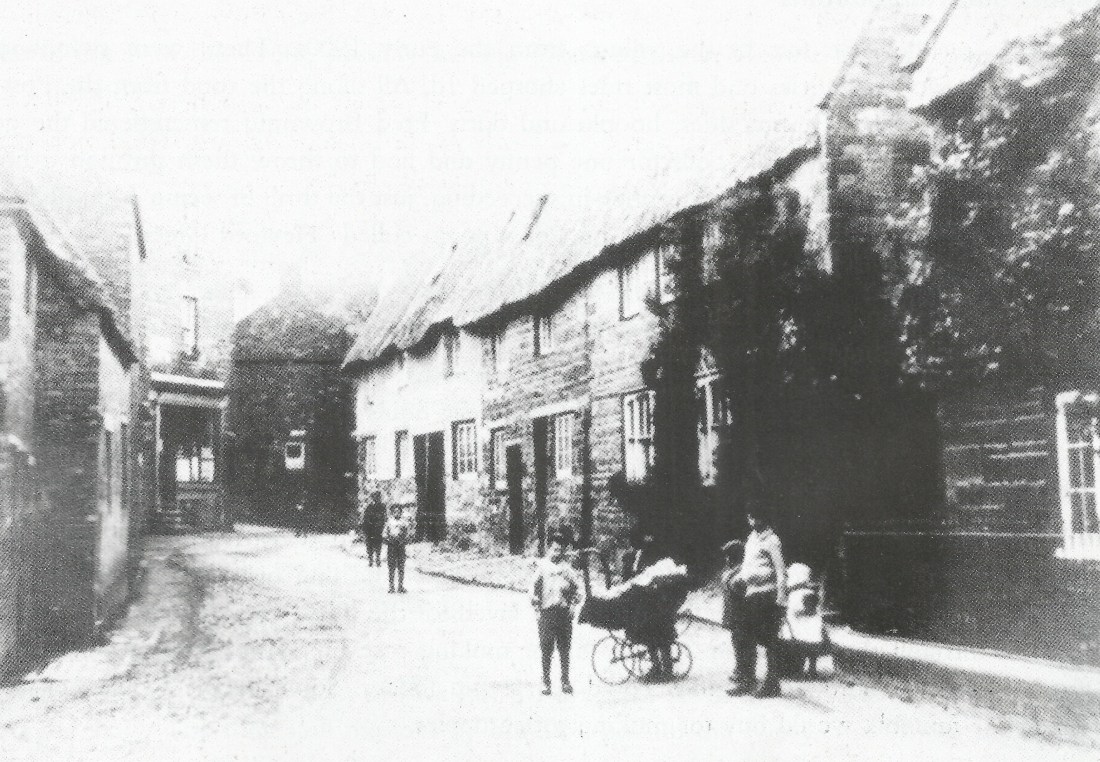
NetherHeyfordTurnofCentury_StoryofHeyford5This picture above shows the row of cottages between the two bends in Church Street. The ones at the far end have since been demolished. 

Stephen Ferneyhough

~~

Extract from “The Story of Heyford” – Local book series published in the late 1990’s

Volume 4 of 4 | Chapter 3 of 8 | Pages 12 to 17

TheStoryOfHeyford_NetherHeyford_Footer

Heyford’s Historical Heritage  |  How the books were created

Index  |  Covers

The Story of Heyford: The Browning Family V2C11

The Brownings are a notorious Heyford family — notorious, that is, for their longevity! The last generation of Brownings to bear the family name in the village all died in their late nineties and early one-hundreds. The very last, Bob Browning, died aged 104 in 1997.

The Browning story begins in Maxey, near Peterborough with David Browning, a labourer, who was  born some time in the late 1790s. He married a woman called Maria and it may have been she who provided the longevity gene. Maria was born in 1798 and died in 1881, in Daventry, at the age of 83 – only a year before her own son and daughter-in-law.

Police inspector

Maria’s son, also called David was born in 1832 in Maxey and he brought the Browning family to Northamptonshire. He married Susan Price, the daughter of a butcher in 1861 and a year later went into the police force. He became the Police Inspector at Daventry and lived at the County Police Station there. The couple had nine children over thirteen years – the last three were all born within a year of the previous birth. While this is an eye—watering thought, of course it was not unusual to have so many children so close together. More remarkable, perhaps, was that seven children survived into adulthood.

Their parents, David and Susan, were not so lucky with their own life expectancy. Both died in 1882; David aged 50 and his wife, only 41. It appears that an unfortunate incident affected David’s police career and ultimately his life.

Hilda Collins, David Browning’s great grand-daughter, said that when the police inspector turned out gypsies at Dodford village as part of his duty he was attacked and, as the family recalled, “was never the same since.” He did not work again and was retired early from the force.

In the October Court Session of 1878 it is recorded: “That Inspector David Browning  be superannuated for 12 months, he has been in the force since 1862 and reported by two Medical Gentlemen as unfit to perform further duty. And it is further ordered as the Chief Constable recommends Inspector Browning for a pension that he do receive for the next 12 months an allowance after the rate of £48 per annum, the allowance to be paid quarterly; at the expiration of the 12 months Inspector Browning be then incapable of performing duty the Court will have to consider the continuation of the Allowance as a yearly Pension.”

One year later the October Session recorded that Inspector David Browning was “incapable of further duty” and was permanently retired. The pension would have been helpful but the family needed to find another income. The Brownings moved to Sheaf Street in Daventry and Susan Browning became a grocer. The census of 1881 shows Susan Browning to be the head of the family, (although David was still alive at the time) with five of her children at home. The elderly Maria Browning, Susan’s mother-in-law – who had been living with the family for at least ten years – had died just before the census was taken.

William Price Browning

Susan and David died shortly after the census, in 1882, and it was left to William Price Browning, as the eldest son, to take care of his younger brothers and sisters. He was 18 and was a commercial traveller and later, a rate collector in Nether Heyford. There must have been some financial difficulty in keeping the family together because Leonard Browning, the youngest child, was sent to Wolverhampton Orphanage at the age of six. Hilda Collins has a Bible inscribed by the orphanage and presented to Leonard. She is not sure why Wolverhampton was chosen but thinks that it might have been a connection with the police force.

Several of the Browning siblings moved to Heyford with William Price Browning (“W.P.”) including one of his younger brothers, David. He was the second son to be called David, the first having died in infancy. David Browning married into the Eales family, who ran the post office, and he kept the shop and post office from 1930 to 1955.

William Price Browning in 1923

NetherHeyford_BrowningFamily1

Photo lent by Hilda Collins (nee Smith)

The Hardly Annuals

W.P. Browning married Violet, a teacher. They lived in a small cottage near the top of Church Street and had six children within seven years! For this reason, their father referred to them as ‘hardy annuals’ little realising how hardy they would actually be. Violet – without the Browning streak of endurance – died aged 49, but all six children lived on into their late nineties or one—hundreds.

Gwendoline, the eldest child, was born in Nether Heyford in 1891 and followed her mother into the teaching profession, becoming a pupil teacher at Weedon School. In an interview for The Prattler in 1977, 86 year old Gwen remembered how “I did some self—tuition by taking a correspondence course and then later on cycled to teachers’ classes in Daventry.”

She recalled that as a child, “We’d go up to the canal at Heyford Bridge and then all the boys would change one side and the girls the other. Then we’d have a swim or watch the boats, all drawn by horses of course, being pulled up the canal.”

As a young woman, Gwen had an illegitimate daughter, Dorothy. She then married Mr Fred George and had two sons, although the eldest Philip died at 13. She could remember the village midwife, Anne Clarke: “It was quite an occasion when she brought her thousandth baby into the world.”

Like many in the Browning family, Gwen was a Baptist and actively involved in chapel life. She later claimed that her secret to a long life was “to never think about age. Forget how old you are, go wherever you’re asked and never turn down invitations.”

The eldest son, Robert (Bob) was born in 1892 and died in 1997 aged 104. He was the oldest surviving sibling. Like the other Browning children, he attended Bliss Charity School under the headmaster, Mr Cook who he remembered as a stern man. One of his earliest memories was in 1900 when a policeman from Bugbrooke cycled to Heyford to post up the call notices for the Boer War.

In 1905 at the age of 13 he left school and went to work for W H Smith in Weedon, delivering newspapers to the surrounding villages. He would walk with the post to places as far as Grimscote. Later, he joined a boot making factory in Northampton to which he cycled each day. He could always recall the terrible stench of the tanneries as he approached the outskirts of the town.

On the outbreak of World War One, Bob Browning was declared unfit to fight but contributed to the war effort by working a modern boot making machine. He married a woman called Mabel and in 1922 he moved into Northampton. However he retained an active interest in his home village and contributed occasional articles to The Prattler.

May Browning, born 1893 married Harold Smith whose family lived by the canal, beside the Bricklayers Arms before it closed. Harold’s father, Charles, was a railway signalman at Heyford South and the signal box was located on the Litchborough Road near Bugbrooke until the early 1930s.

Hilda Collins remembers how her mother, May, took the post up to Upper Heyford. A family there had a piano and May asked for no charge for her errand but just the opportunity to play it.

Winifred Browning, born 1895, married a Trinidadian, Mr Punch, which was probably considered unusual in 1920s rural England. They had two children but marriage did not survive and at the end of the 1930s, Win Punch earned her income running the fish and chip shop in the barn near The Olde Sun, taking it over from George Oliver.

Nell Browning was born in 1896 and married George Bennett with whom she had a son, Bill. The youngest sibling, Fred, was born in 1898 and lived to be 98. He was an active member of the village community and involved in the parish church — particularly bell ringing. He married a woman called Gladys and lived in Furnace Lane.

Despite the size and longevity of the family, the Browning name did not survive this generation. Of nine children born to the siblings, eight were born to the sisters under their married names and the other was a girl who also married. However, the Browning stock continues in the village through the Collins family, with its most recent name change, by marriage, to Willgress.

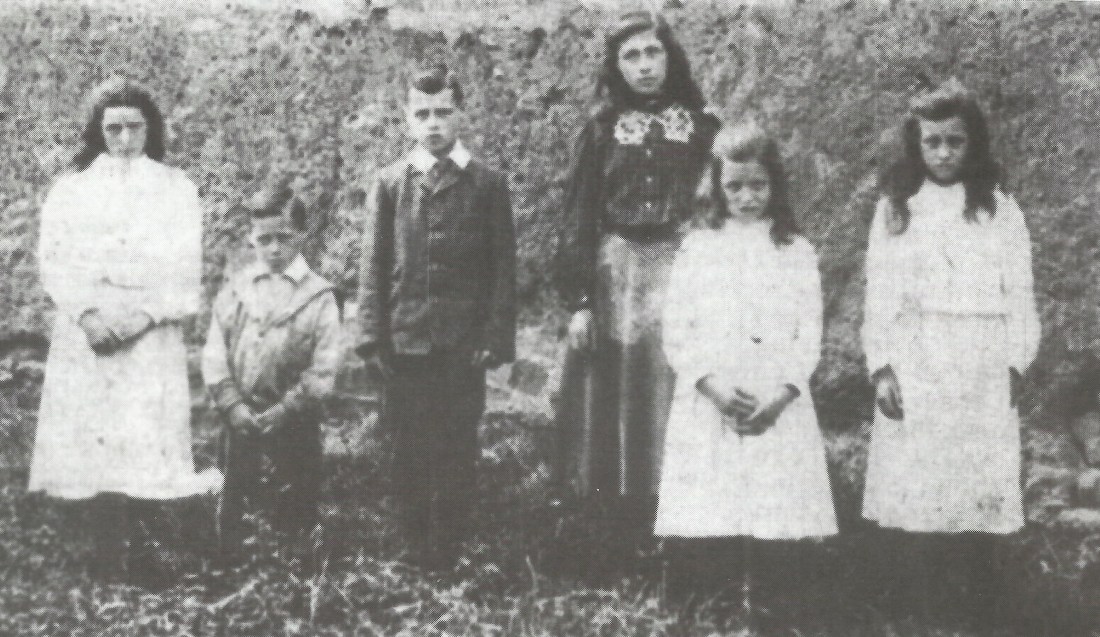
The six Browning children as they appeared around 1906

NetherHeyford_BrowningFamily2

Left to right: May, Fred, Robert, Gwen, Nell, and Win

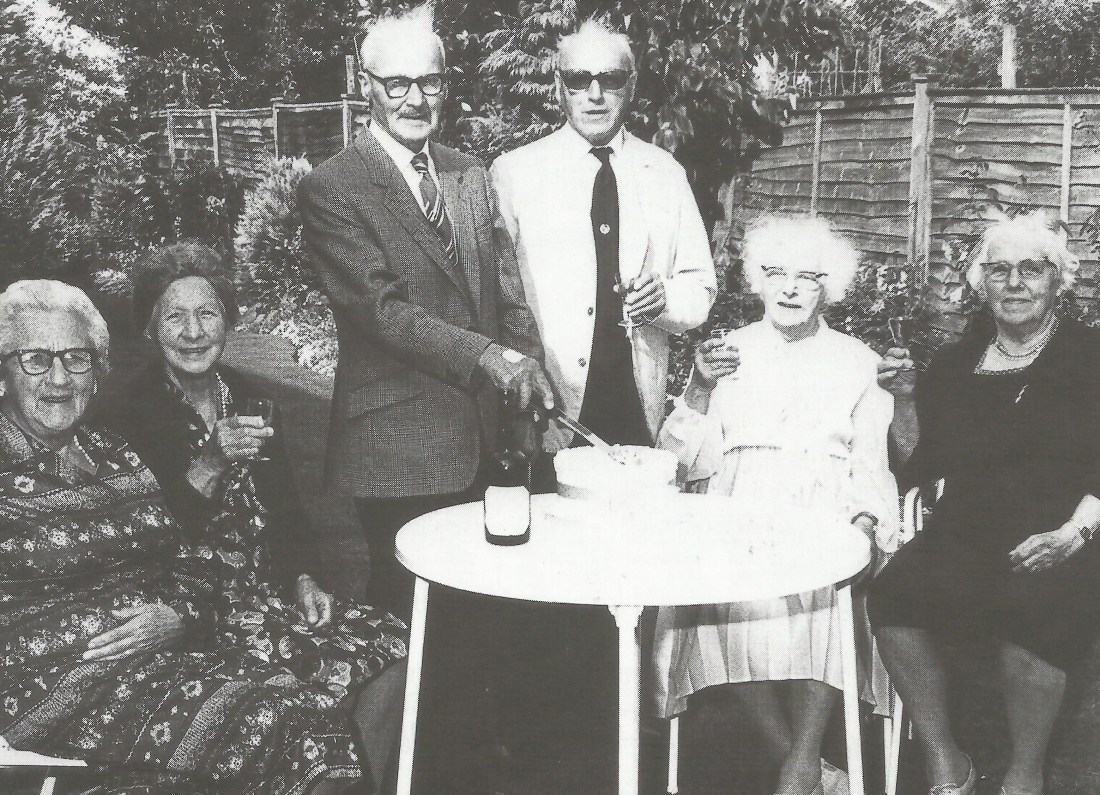
The family on the occasion of Bob’s 90th Birthday celebration

NetherHeyford_BrowningFamily3

Left to right: Mrs Winifred Punch (87), Mrs Gwendoline George (91), Bob Browning (90),
Fred Browning (84), Mrs May Smith (88), and Mrs Nell Bennett (86)

Photos from an article in the Chronicle and Echo August 1982

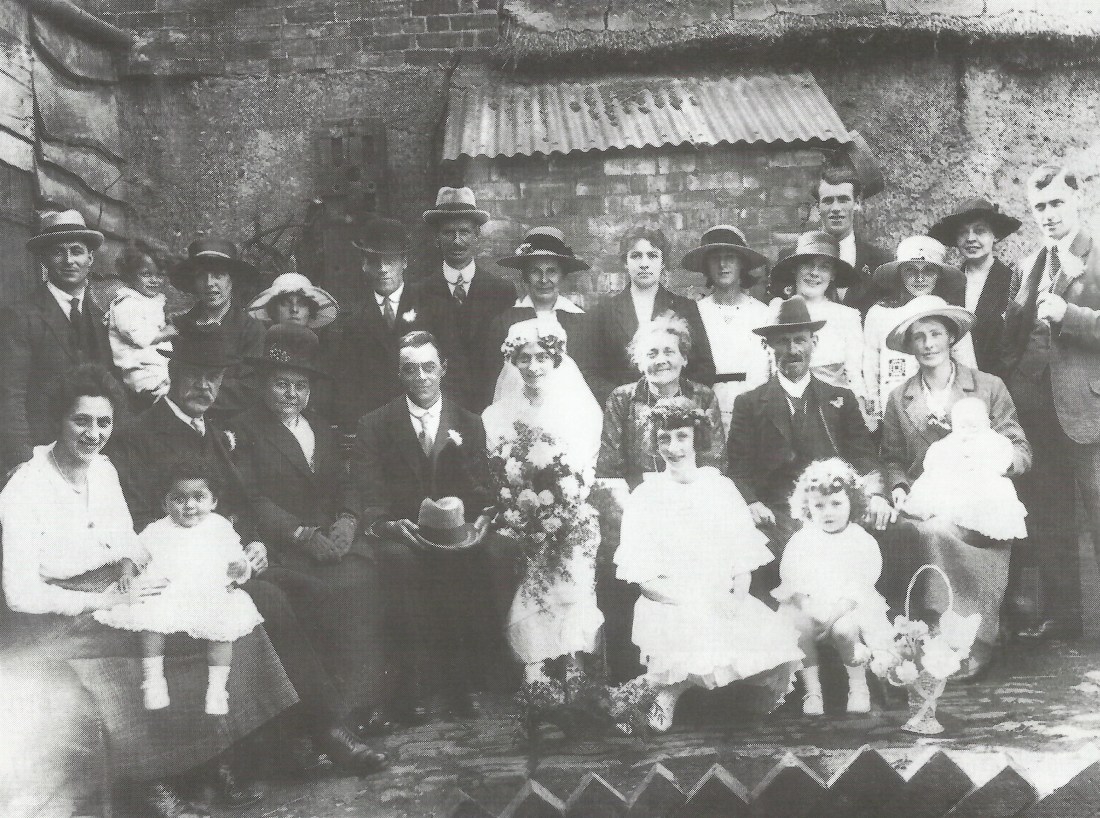
W.P Browning’s family on the occasion of his daughter’s wedding in 1921

NetherHeyford_BrowningFamily4

Top: George Bennett, Bill Bennett, Nell Bennett (nee Browning), Gladys Browning, Fred Browning, Friend, Friend, Mabel Browning, Friend, Friend, Fred George, Friend, Friend, Bob Browning

Middle: Win Punch (nee Browning), Odette Punch, Charles Smith, Harriet Smith, Harold Smith (bridegroom), May Smith (bride), Violet Browning, W.P. Browning, Gwen George (nee Browning), Philip Browning

Bottom: Dorothy Browning, Ellen ‘Nen’ Browning

Photo lent by Hilda Collins (nee Smith)

‘Progress’ by Bob Browning (1892-1997)

These days it seems there’s such a fuss about which foods are good for us.
What’s worse, I notice with dismay, the list grows longer every day!
They’re all the things that I miss most: Yorkshire puddings, Sunday roast,
Mash and bangers, eggs and ham, warm scones and strawberry jam,
Toast with butter, thickly spread, beef dripping on fresh-baked bread
Cheese and chicken are suspect too. I really don’t know what to do!’
Obediently when I was small, what Mother served, I ate all,
It seems to me now I am old, I still must do what I am told.
I’m over four score years and ten, and won’t see ninety—five again.
Since everything I ate was wrong, I marvel that I lived so long!

The words of Bob Browning whilst in Bethany Homestead where he spent his later years.

The Post Office

Other Brownings contributed to life in Nether Heyford. As mentioned, David Browning, brother to W.P., married into the village’s post office family. His wife, Annie, Was a member of the Eales family who had run the business since 1877.

John Eales was the village’s first postmaster and ran the post office and shop for 30 years before handing it on to his daughter Amy. She took over in 1907, When the shop and houses on the site were auctioned at The Old Sun Inn and bought by Amy Eales for £320.

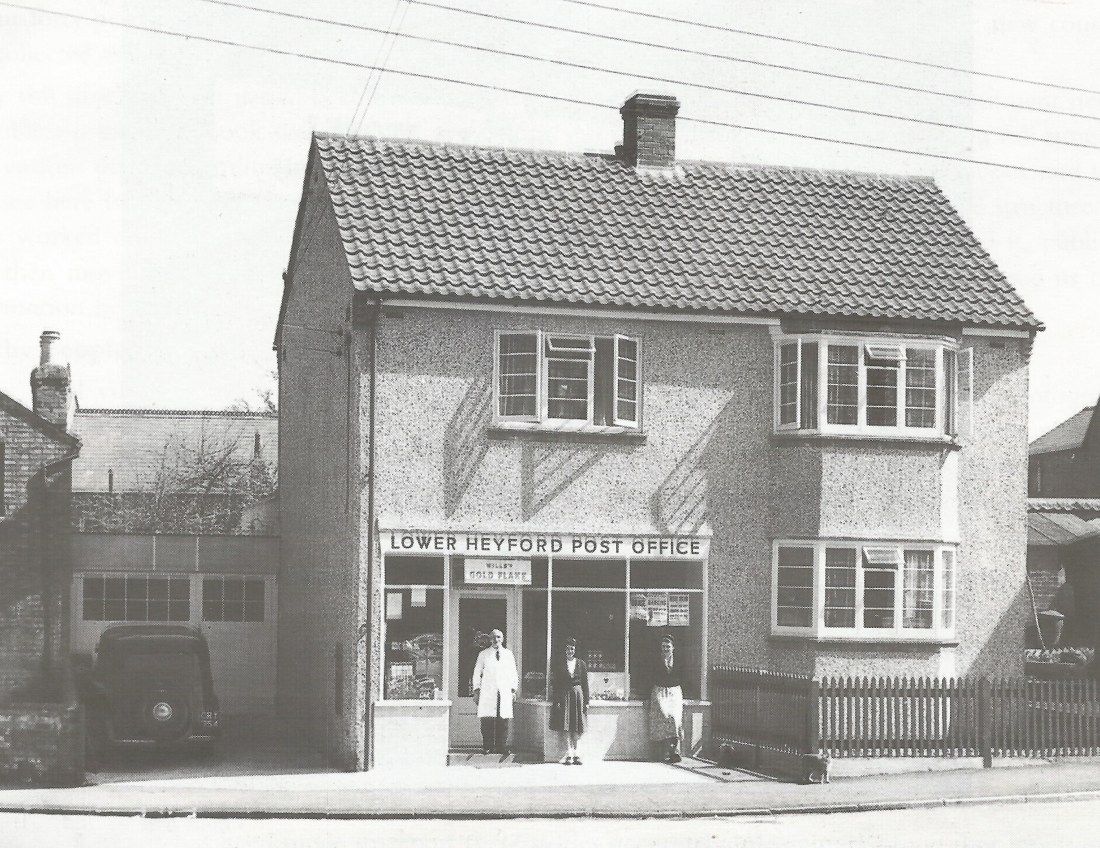
David and Annie Browning then took over in 1930 during which time the thatched premises was pulled down and replaced by the present corner—shop building, They had a daughter, Ellen (‘Nen’) who was born in Manor Cottage, Church Street in 1907. Nen taught in the village school before succeeding the shop and post office from her father in 1955.

David Browning outside the post office in the 1950s.

NetherHeyford_BrowningFamily5

Photo lent by Judy Armitage

Nen Blaney 

Nen ran the business until 1968 When, on the death of her husband, Major W. Blaney, Nen sold the shop to a Mr and Mrs Eales (apparently no relation) and opened the newsagent and post office next door. She continued working until 1986 — retiring gracefully at the age of 80!

Nen Blaney had many memories of Heyford. Her uncle, Mr J. Earl, ran a carrier’s cart to Northampton on Wednesdays and Saturdays. She recalled that “the first bus we had in the village was a coal cart that  travelled once a day and was run by a Mr Harold Botterill from Bugbrooke. On Saturdays it was a bit different because they put a shed thing (a wooden structure) on top as a cover.”

Mrs Blaney outside her post office

NetherHeyford_BrowningFamily6

Photo lent by Judy Armitage

She also remembered a postman named Albert Bates Who used to cycle in from Weedon with the post, hand over Nether Heyford’s share and then cycle on to Bugbrooke. Nen Blaney’s own working day was long; starting at 5am and often finishing around midnight. Despite this demanding schedule, Nen Blaney was chairwoman of the British Legion Women’s Section for over 20 years.

She was proud to be invited to the Queen’s Birthday Party at Buckingham Palace in 1971 in celebration of the Legion’s 50th anniversary. Major Blaney chaired the British Legion’s Northamptonshire Branch and served Nether Heyford on the Daventry Rural District Council, of which he became chairman. Family of Nen Blaney still live in the village today.

Sarah Croutear

~~

Extract from “The Story of Heyford” – Local book series published in the late 1990’s

Volume 2 of 4 | Chapter 11 of 11 | Pages 26 to 32

TheStoryOfHeyford_NetherHeyford_Footer

Heyford’s Historical Heritage  |  How the books were created

Index  |  Covers

The Story of Heyford (Extra): Heyford Home Guard WW2

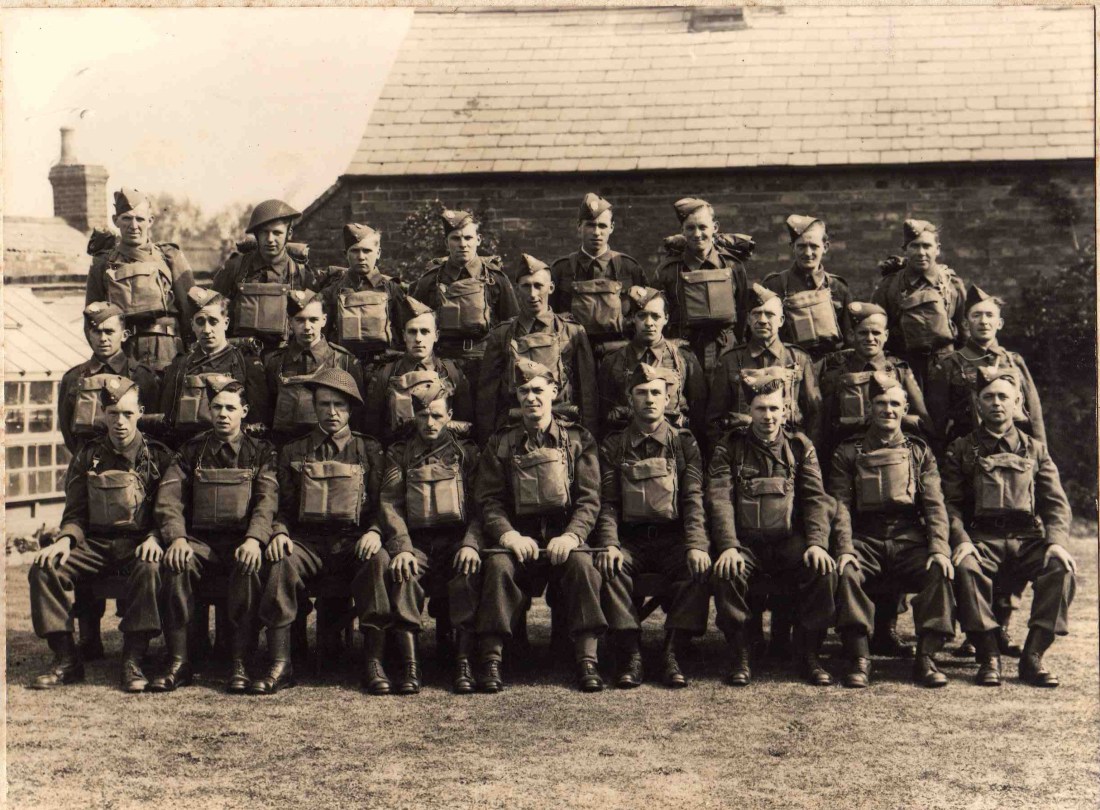
Nether & Upper Heyford Home Guard (WW2)

The Home Guards met twice a week in the yard of the Foresters Arms, where they had their stores. The Commanding Officer was Charlie Highfield, chosen because of his army career.

Nether Heyford Home Guard.jpg

Back row (L>R):
Alf Adams, Stan Faulkner, Joe Matthews, Arthur (Batty?) Charvill, Jeff (Geoff?) George, Dick Fisher, Ron or Frank (?) Taylor, Fella Masters (the only name he was known by!)

Middle row (L>R):
Reg Collins, Tom Eales, Charlie Masters, Jack Butcher, Frank Reeve, Dave Ward, Herbert (Horace?) Blood, Amos Lee, Les (Bob?)Foster

Front row (L>R):
Bill Spokes, Anselm Banner, Sid Blencowe (Joe?), Harry Haynes, Charlie Highfield (Captain), Ted Wright, Joe Garratt, Joe (Joey?) Charvill, Arthur Mead

Thank you to the following villagers for the names: Joe Garratt / Michelle McMillan / Tom Harrison / Anna Forrester / Garry Collins / Zoe Highfield / Richard Eales / Keith Clarke /  Trev Clarke / John Butcher / Charlene Zambo / Shirley Collins

Follow more Nether Heyford history, stories and photos on the Facebook group – Nether Heyford Past “Thanks for The Memories”

Please contact The Prattler if you can confirm any of the name spellings or nicknames. Also if you have any information on the Home Guard activities or any memories to share then send them in and we can update this page.

Jez Wilson 

The Story of Heyford: King George V Jubilee Celebrations 1935 V2C7

To celebrate the silver jubilee of King George V the Parish Council organised a public tea  for all the parishioners. Charges were sixpence for 14-16 year olds and ninepence for adults. The children were paid for by the school governors, and pensioners and widows were free of charge. All other expenses were covered from the proceeds of a jumble sale organised by the Jubilee committee.

As well as the tea there were sports and games on the Green. Bill Kingston particularly remembers a slow bicycle race between the two sets of goal posts. The idea was to get from one end to the other without touching the ground. Sid Goodman won because he came last. He won a wallet. Tom Eales came second. Bill Kingston came third and won a pipe. He swapped it for Sid’s wallet because each preferred the others prize.

Mr Foster (Reg Fosters father) made a brass candlestick for auction. Dorothy Kingston bought it for £1. 5s which was a lot of money then. However it was a beautiful piece of craftsmanship and she still has it today.

Stephen Ferneyhough

~~

Extract from “The Story of Heyford” – Local book series published in the late 1990’s

Volume 2 of 4 | Chapter 7 of 11 | Page 18

TheStoryOfHeyford_NetherHeyford_Footer

Heyford’s Historical Heritage  |  How the books were created

Index  |  Covers


The Story of Heyford: Four Hundred Years of Bell Ringing V2C3

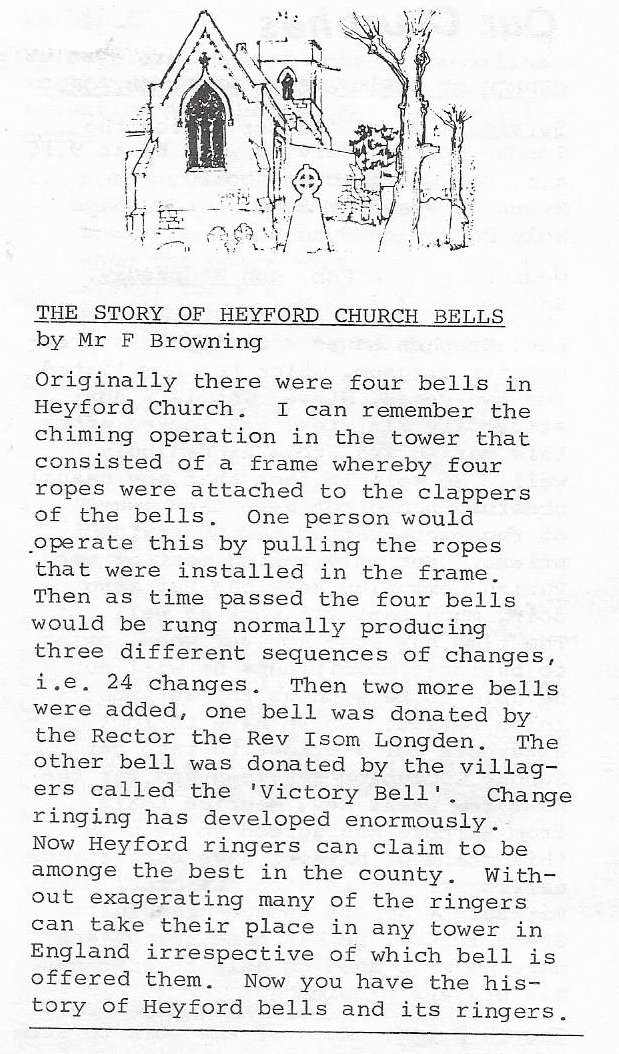
Bell—ringing in the parish church of St Peter and St Paul goes back at least four centuries. The two oldest bells are dated 1601 and one of these is inscribed ‘Thomas Morgan gave me to the church frank and free.’  Judge Morgan lived in the Manor House at this time. Both bells were cast by a founder called Watts and one is the heaviest bell in the belfry. It is the tenor, weighing over seven hundred-weight: that’s over 784 lbs. or 356 kilos. Another bell was added in 1638, cast by Watts II, and a fourth in 1704 cast by H. Penn. With these four bells it was possible to ring a maximum of 24 changes or sequences (English Change Ringing is based on mathematical sequences rather than musical composition). This was how it remained for 250 years.

Originally there was an external door in the tower where the bell-ringers could gain access. In 1855 there was extensive restoration work in the church which included opening up the tower inside, moving the organ and sealing off the outside door. The heavy wooden door which was removed became the one now hanging as the front entrance to the Old Sun pub. This would be appropriate as the vestry meetings used to adjourn to the Old Sun. Of course, it is still the tradition today for the bell-ringers to finish off every Friday-night ringing practice with a drink in the local – even if, for some reason, ringing hasn’t actually taken place!

During the 1930s the ringers included Mont Smith (John Smith’s grandfather), Fred Browning, Charlie Foster, Bernard Kingston, Harry Eales and Dick Capell. At this time, ringing only usually took place on holy days such as Christmas or Easter; for church services, the bells were just tolled. During the Second World War, bell—ringing generally was banned and only to be used as an alarm for the community. However by 1943 the threat of invasion was considered over and the ban lifted.

A new era and two new bells

This spelled a new era for the Nether Heyford bells. Fred Browning, as the tower captain, recruited and trained a new generation of ringers, including Ted Garrett and Hilda Collins who are still ringing today. Fred also developed handbell ringing at Christmas time. This new enthusiasm was further encouraged by the addition of two new bells after the Reverend Isham Longden, rector from 1897 to 1942, left £100 in his will for a new bell. Even in the 1940s, this provided only a quarter of the amount needed to cast and hang the bells, so an active fund—raising campaign started in the village.

Coffee mornings, whist drives and sales helped to raise £400 and on 21st September 1946, two treble bells were dedicated in church. They were made in London by Gillett and Johnson and hung on a metal frame above the others who were still on a timber frame.

One was called the Victory Bell and there is a list from 1943 of villagers who donated funds towards it. The list includes the rector “Mr” (sic) Mortimer, Harry Allen the verger, Jack Capell the butcher, William Wakefield Whitton, the Kingston family, the Brownings, the Collins’s and the carpenters shop. Most contributed £1, some as much as £5 and some gave ‘two ‘n’ six.’ Now with six bells, the number of possible changes increased dramatically from 24 to 720.

Repairs

In 1979, the four older bells on their wooden frame needed to be rehung and refitted. They had been taken down before but this was the first time in nearly 400 years that they had left the village. They were taken to Taylors of Loughborough and their transport was provided by Jeremy Rice. An eight mile sponsored walk from the church to Flore and Stowe was organised to help raise funds.

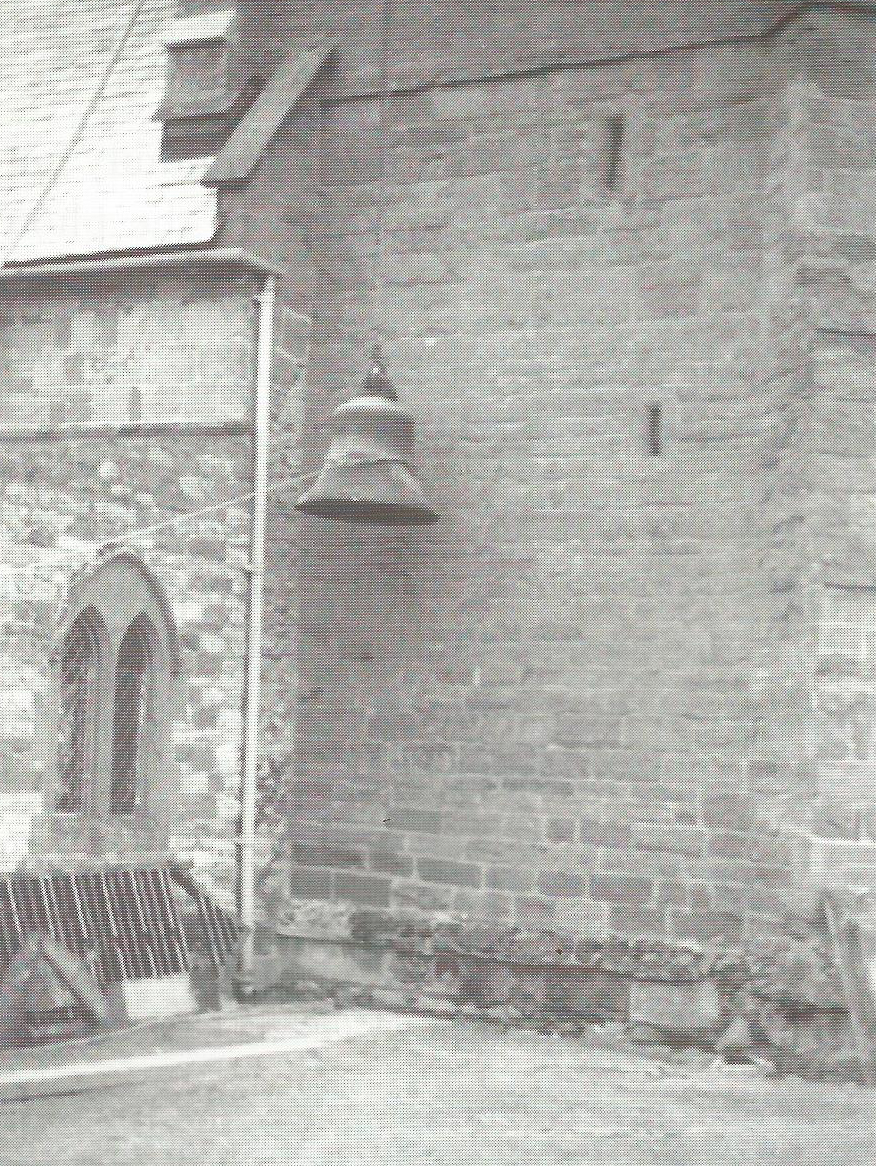
Lowering the bells

NetherHeyfordChurch_Bells1

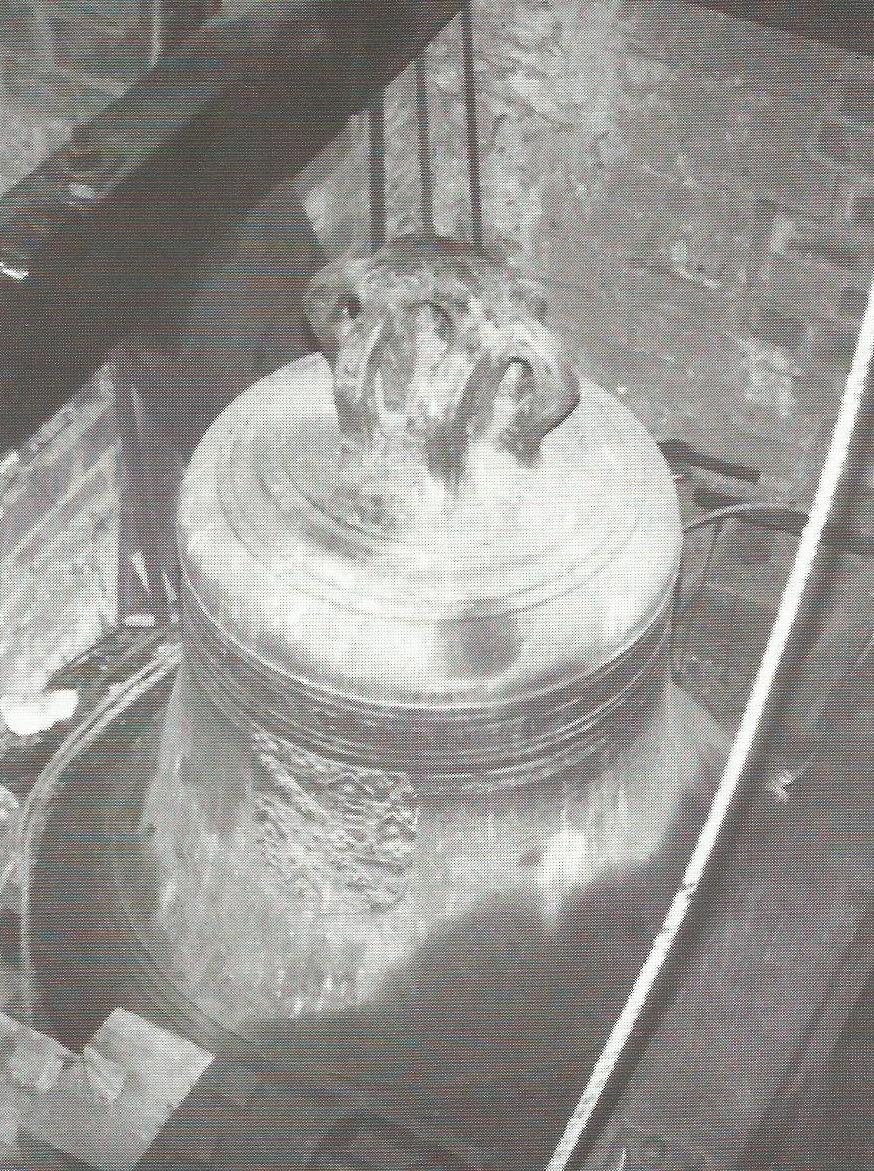
The Tenor bell of 1601 bearing the Morgan family crest

NetherHeyfordChurch_Bells2

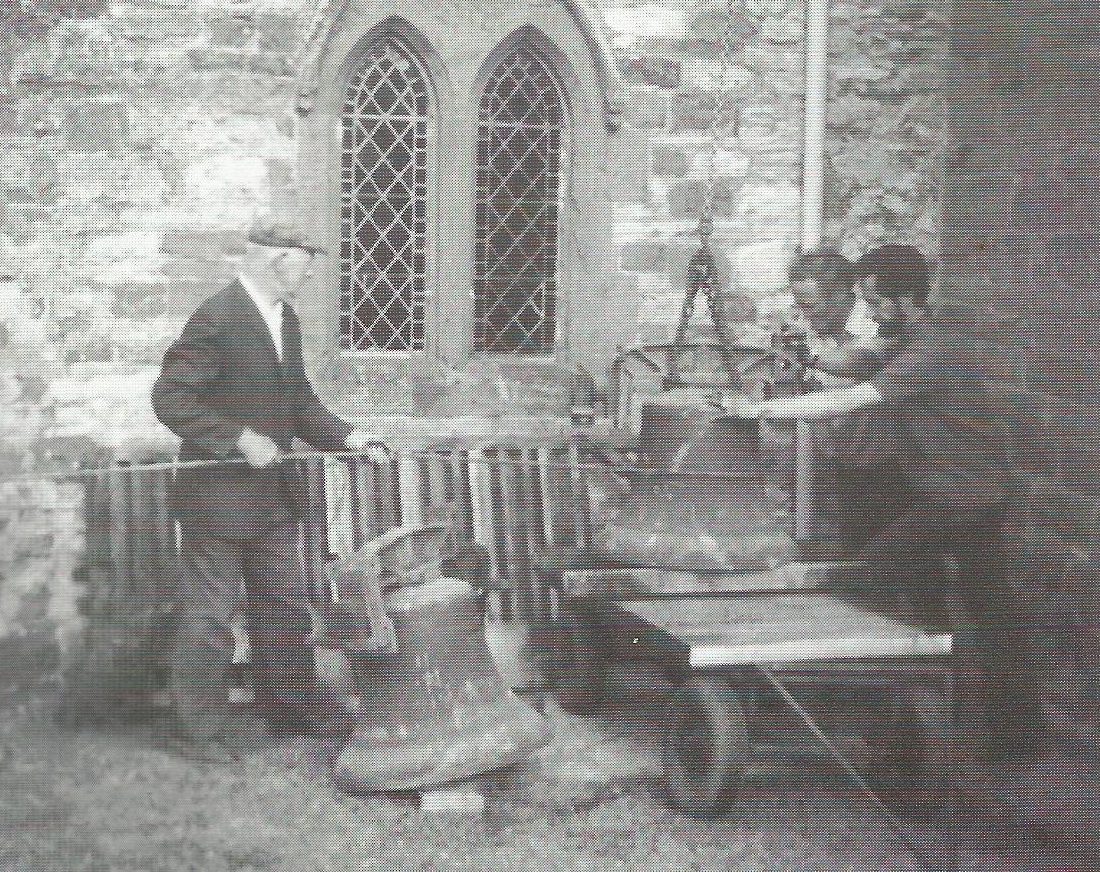
Removing the bells to Loughborough in 1979

NetherHeyfordChurch_Bells3.jpg

Left to right: Wilf Denny, Bill Collins, Malcolm Chown

Photos lent by Hilda Collins

In 1995, a quarter peal was rung to commemorate the 50th anniversary of VE day. This consisted of 1260 rings non stop and lasted for about an hour. In 1996, the church celebrated the half-century of the treble bells with the Heyford Morris Men, handbell ringers, a lone piper, John Anderson, and a special commemorative service.

Sarah Crontear with thanks to Hilda Collins and Ted Garrett

~~

NetherHeyfordChurchBellsFredBrowning

Article Published in The Prattler – February 1989 – Fred Browning

~~

Extract from “The Story of Heyford” – Local book series published in the late 1990’s

Volume 2 of 4 | Chapter 3 of 11 | Pages 6 & 7

TheStoryOfHeyford_NetherHeyford_Footer

Heyford’s Historical Heritage  |  How the books were created

Index  |  Covers

The Story of Heyford: Memories of Heyford Scouts in the 1950’s V1C11

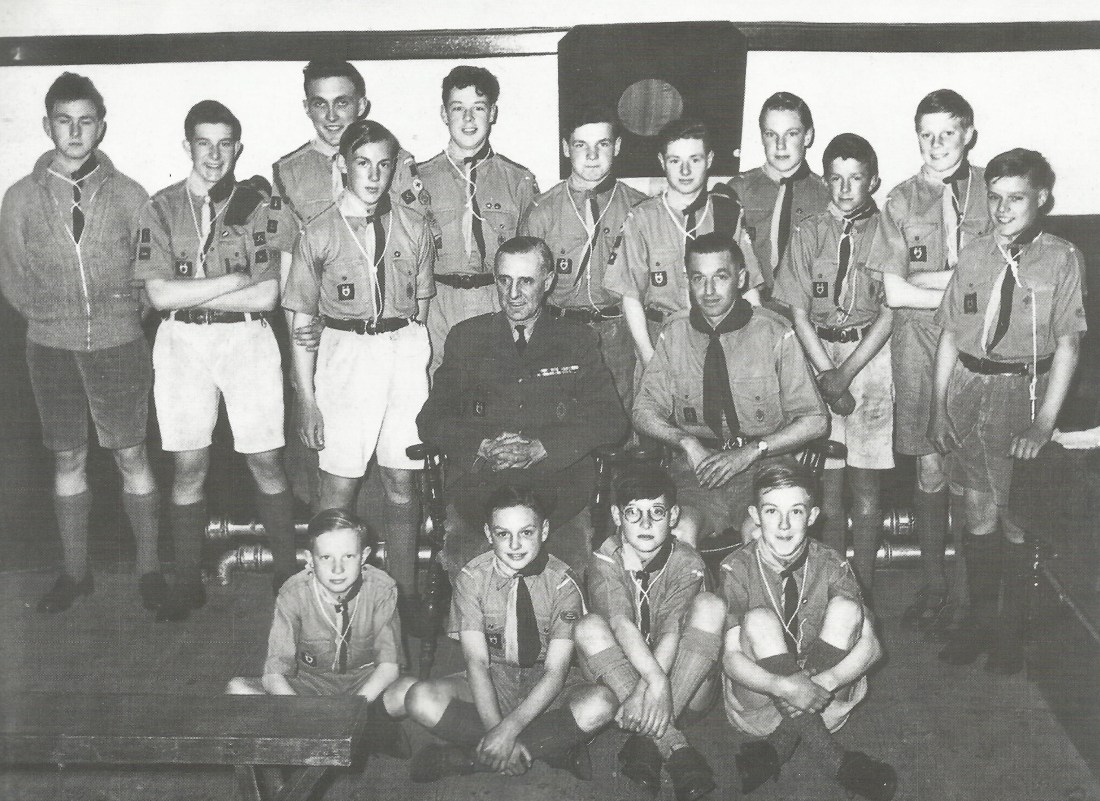
Heyford Scouts was formed in 1952. The School headmaster, Mr Woods, was the scoutmaster, ably assisted by Mr Bert Wilkinson. During the 1950s it had a thriving troop of more than 20 boys. The troop was split into several patrols – peewit, kingfisher, etc., each with their own patrol leader, and weekly meetings were held in the school hall.

The Scout Troop in the 1950s

StoryOfNetherHeyford_Scouts1.jpg

Back row: Terry Randall, Norman Denny, Tony Lovell, David Butcher, Brian Eales, Anthony Hinnick, Colin Haynes, Michael Eales, John Smith, Colin Harrison, John Haynes
Seated centre: Gordon Cabbam, Bert Wilkinson 
Front row: Michael Royle, Roger Wilkinson, Richard Danby, Ken Garrett

Photo lent by Mrs Mary Butcher

Gang shows
Gang shows were very much a part of the scout year and were always a great success. They were presented on stage in the church rooms on the corner of Church Street and Church Lane and consisted of the normal songs (such as Ging Gang Gooly) and sketches. Rehearsals seemed to go on for ever and parents must have torn their hair out trying to provide costumes for some of these. The show was sometimes taken on tour for one night only to places as far afield as Flore, and it was just as daunting performing to strangers as to family and friends.

Soap Box Derbys
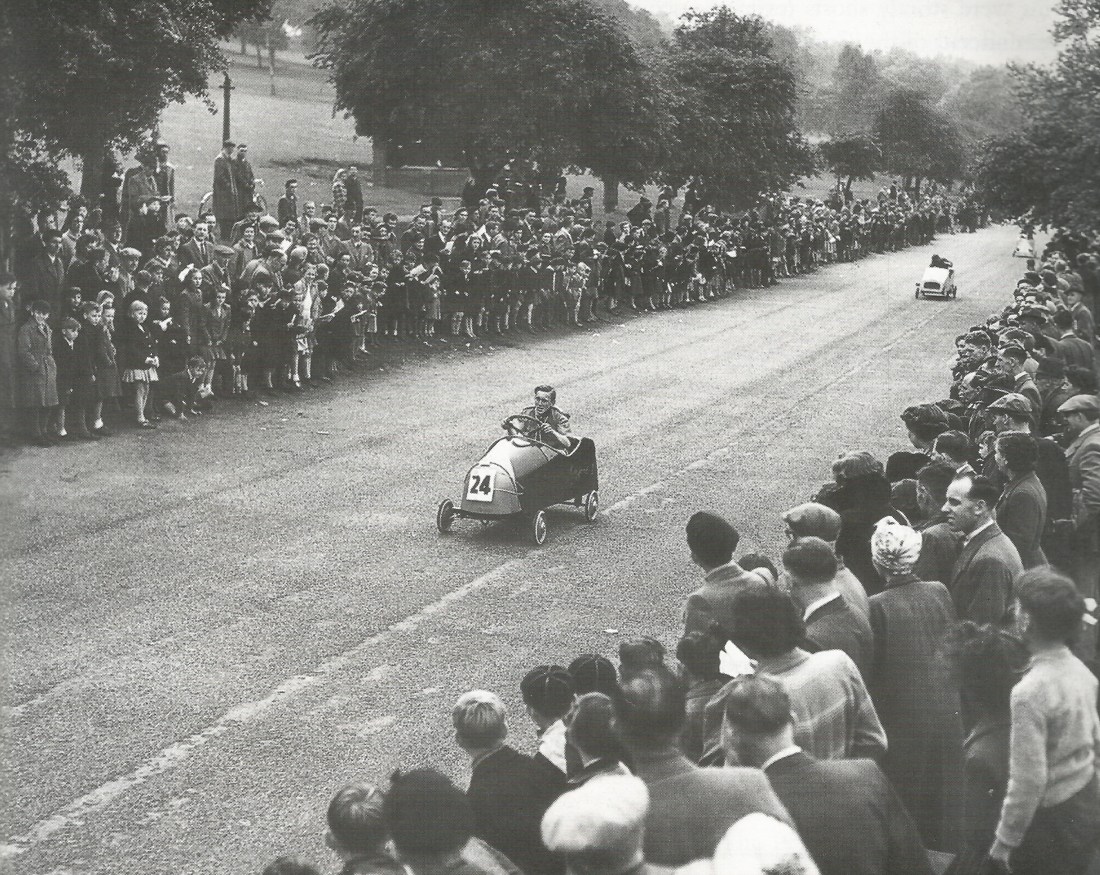
During my time in the scouts the troop entered the National Soap Box Derby. We built our soap box with a lot of help from Grose’s garage, and to our great delight we reached the national final held in Morecambe. To reach there we had to leave the village at about five o’clock in the morning and didn’t return home until late. The excitement of winning, however, got us through. The ‘car’ was on display for a month in the garage showroom, which at that time was in Marefair where the Barclaycard building is now situated. Boy, were we proud!

David Butcher winning the Soap Box Derby at Morecambe

StoryOfNetherHeyford_Scouts2

Photo lent by Mrs Mary Butcher

Camps
From later Spring until early Autumn several weekend camps were held fairly locally, and once a year the annual camp took place. This was always further afield and normally lasted for two weeks. One of these camps took us to the Pendle Hills in Lancashire, and inevitably it was raining when we arrived. After showing us to the field in which we were to make camp, the farmer pointed to the hill behind us and solemnly declared that, “If you can see those hills it’s going to rain, and if you can’t see them it’s already raining.” If memory serves me right we had about one day of dry bright weather in the whole fortnight and I seem to remember using washing bowls to scrape mud away from the front of the tents. No-one suffered any ill effects from this experience however and all returned to the village quite healthy.

During these camps one patrol was responsible for cooking the breakfast each morning and the others all went for an early morning run accompanied by the scoutmaster in order to work up an appetite. Each patrol took it in turns during the week so that nobody missed out on the joys of the run. Breakfast consisted normally of porridge made in a large billycan and coated with golden syrup diluted with hot water. This was followed by bacon and omelette. It was never a surprise if you found a generous helping of grass in either or both courses, but it never had any adverse effects on anybody.

The morning ablutions were always an adventure as we normally washed in cold water. One camp in the Lake District was near to a small stream and this was used by one or two hardy souls.

Street cred
Uniforms were strictly shorts (even the scoutmaster wore them!) and the distinctive hats with the stiff brim, reminiscent of the Canadian Mountie. These were terribly difficult to get flat again once you had bent it out of shape. This often happened, especially at camp.

I spent many pleasant and happy years in the scouts and during that time learned to cook, tie knots (some of which I still use, especially the granny), semaphore and Morse codes (all of which I have forgotten!). I also learned that it was easy to be polite and helpful and that this didn’t damage your street cred. I feel that I am better for the things I did and look back to this time with much pleasure.

Ken Garrett

~~

Extract from “The Story of Heyford” – Local book series published in the late 1990’s

Volume 1 of 4 | Chapter 11 of 13 | Pages 30 to 32

TheStoryOfHeyford_NetherHeyford_Footer

Heyford’s Historical Heritage  |  How the books were created

Index  |  Covers

The Story of Heyford: The Jubilee Hall V1C7

The Jubilee Hall used to stand just behind the memorial green, on the opposite side of the road to where the Butchers and Patisserie are today. It was a stone barn with a thatched roof and was used as a meeting place for clubs and events much as the village hall is used today .

It was an ancient building, possibly built in the late 1600’s at the same time as ‘The Springs’, the thatched stone house which still stands today just behind the site of the Jubilee Hall. In the late 1800’s and early 1900’s the house and barn were occupied by a family called Smith who ran a laundry there. Bob Browning who was born in 1892 recalled the laundry but we don’t know for sure whether it was run from the house or the barn.

The name Jubilee Hall is believed to have originated from Queen Victoria’s Jubilee, probably her Diamond Jubilee of 1897. It may be that this was when the barn began to be used as a meeting place rather than as a laundry.

In 1914 the house and barn which had been owned by the Church were bought by the Ward family  The Jubilee Hall continued to be used as a meeting place until around the time of the second world war, and we have several local memories of it from the 1920’s and 1930’s.

The Jubilee Hall

JubileeHall_NetherHeyford_1920

Photo lent by Janet Randall

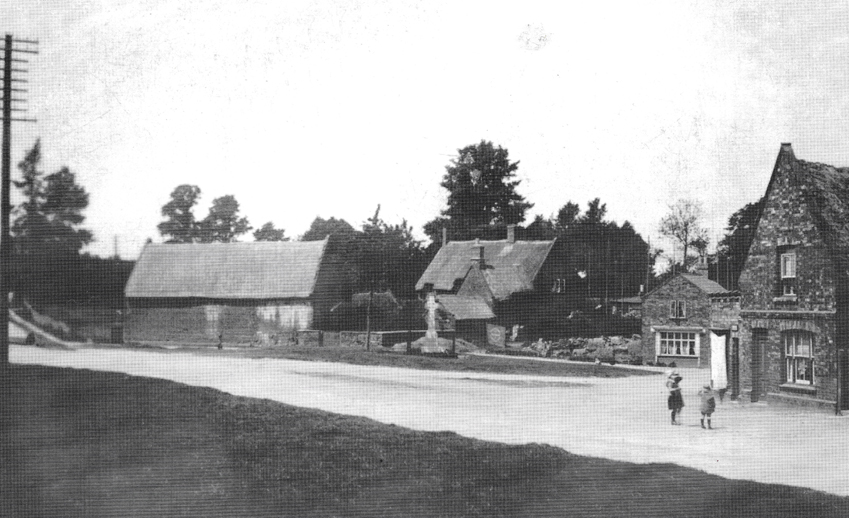
This photograph, lent by Janet Randall, was taken in 1920. n the far right is the old Post Office. To the left of this can be seen the scaffolding from the building of the New School House. In the centre of the picture is the thatched house known as ‘The Springs’, and in front of this is the war memorial.  Note the size of the oak tree beside it. The building on the left is the Jubilee Hall.

Memories of the Jubilee Hall
In March 1981 there was an article published in the Prattler, written by Marjorie Hamborg, based on information from Mr and Mrs Amos Lee, which gives a good insight into its use. This article is reprinted here in italics but we have also added some additional information based on the recollections of a number of other local people.

From The Prattler March 1981
“Our readers may have noticed that to the left of the thatched cottage facing the Memorial Green there is an old wall built of Northamptonshire stone. As this is now being reshaped to camouflage the building of a garage, I thought it would be of interest to know a bit about the history of this part of Heyford. So I visited my friends Mr and Mrs Amos Lee in Furnace Lane as they can give us new villagers some of the history of the Jubilee Hall that used to stand on this site.

At one time this was the only place where the young folk could gather, and here they came to play darts, skittles, rings, bagatelle, and a bit of boxing.”

It was also used for private parties. Dorothy Kingston had her Wedding reception there and Tommy Rolfe of the Foresters supplied them with a ham for £1.

The Pussyfoot Club
“The hall was mainly used by the men of the village, was teetotal, and was given the name ‘Pussyfoot Club’. The ladies of the village were invited when a dance was held there. Mrs Dorothy Kingston remembers them well, the fiddle being played by Lily Porch and Bern Kingston, and the piano by Lily’s sister Phillis. I also understand that Mrs Cameron from the school also used to take part. There was a small stove around which wet clothes could be dried in bad weather.”

Bob Browning who was born in 1892 recalled that ‘it was open six evenings a week between 6 pm and 10 pm. You could buy drinks there and play skittles. Sometimes there was also boxing, done in those days with bare fists.’

Bill Nickolls also remembers the Pussyfoot Club. The youngsters came from 5 pm to 8 pm. They paid a halfpenny per night to play darts, billiards, skittles and cards. Later the older ones came. They took it in turns to run the bar. Bill remembers on one occasion how somebody put a firework in the keyhole. The door jammed and they had to escape through the toilet window by climbing on the bucket.

Bill Kingston remembers the dances on Saturday nights. His father Bernard, and Lily Porch (later Mrs Green) played the violin. They danced waltzes, the military two-step and the lancers (a formation dance).

“However partly due to agitation by mothers whose sons became too fond of the card games carried on there, and partly to difficulty of getting committee members to organise events, the hall fell into disuse.”

The Laundry
“Before Mr and Mrs Ward came to live in the cottage Mrs Lee’s stepmother had a laundry there and Mrs Ada Smith can remember as a child seeing Mr Lee trundling his basket of clean laundry up Furnace Lane.”.

Cobblers Shop
Another person remembered with the Jubilee Hall during the 1930’s was Sid Eales. There was a small wooden hut next to the Jubilee Hall in which he ran a cobblers shop. He had been injured during the first world war and walked with a limp. He not only mended shoes, but would also take bets on your behalf if you wanted him to.

Fire wood and the black market
Jack Haddon had a timber yard a little way up Weedon Road Where the Randalls now live.

“Mr Lee tells me that during the second world war years the hall was used for chopping firewood and he remembers what a grand employer Jack Haddon was, working alongside Mr Lee, Mr Andrews, three or four women from the village and others, and there was a good trade with the bundling machine working at full blast. The wood came from as far as Brockhall Park and was stored in the paddock at the side.”

Jack Haddon apparently also did some black market dealing there during the War. There’s a story which says that while a deal was being struck inside the hall there was some panic because the local bobby was seen approaching. “Don’t worry,” said Jack reassuringly, “he’s only coming to pick up his joint!”

The Final days
When at last the hall was no longer used it fell into disrepair. Around 1954 the building had become unsafe, and when David Ward removed one of the beams it finally collapsed. Mr Ward had the wall built along the boundary line and many of the remaining slabs of stone disappeared in various directions.

Weedon Road/Furnace Lane

JubileeHall_NetherHeyford_FurnaceLane

Photo lent by Janet Randall

This photograph shows the view along the Weedon Road. The Jubilee Hall is on the right hand side and Sid Eales Cobblers shop can be seen at the end of the building.  On the left of the picture is the butchers shop and slaughterhouse. Note also the telegraph poles and the lack of proper kerbs and pavements.

Margorie Hamborg and Stephen Ferneyhough

~~

Extract from “The Story of Heyford” – Local book series published in the late 1990’s

Volume 1 of 4 | Chapter 7 of 13 | Pages 13,14 & 15

TheStoryOfHeyford_NetherHeyford_Footer

Heyford’s Historical Heritage  |  How the books were created

Index  |  Covers

The Story of Heyford: The Methodist Chapel V1C3

The chapel buildings
Methodism was very much a part of village life in Heyford for almost 130 years. It flourished from the 1830s until the 1960s. The first chapel was built in 1838. This was the small red brick building which still stands at the top of Church Street, immediately to the left of the Heyford Stores. It has a barn style roof with a single beam across the middle, and there was originally no floor upstairs. It has a blank plaque on the front wall and it still has signs of the tall chapel windows. It was converted to a private house in the 1870s.

According to the religious census of 1851 there was a general congregation of 50 in the afternoon and 50 in the evening. lt is hard to see how this number of people would have fitted into such a small building. It must have been standing room only.

In 1879 the existing building in Church Street was erected. lt was built by Alfred Marsh on land donated by Thomas Faulkner, and services continued to take place there until the early 1960s.

The founding family
There is a typescript in the Northamptonshire Record Office, unsigned and undated, which gives some details of one of the families involved in much of the chapel’s history. This typescript refers to Mrs J.S. Gammage who as a young girl around the turn of century was of the fourth generation of village Methodism. It records how, ‘in 1835 when the early pioneers of primitive Methodism missioned the village of Heyford from Northampton, Mrs Gammage’s great-grandmother gave them a welcome and shelter. She also helped in 1838 to secure the first Methodist Chapel in Heyford, owned by the Northamptonshire circuit, at a cost of £65, furniture included.’

Mrs Gammage’s mother ‘was given to hospitality. The saints of god found shelter and refreshment beneath her roof.’ Her father, Thomas Faulkner piloted the chapel for over 50 years until his death in 1917. ‘No man was more typical of the staunch Methodist and radical stock of the Victorian age than Thomas Faulkner. The oppressed looked to him for succour, and the poor found in him a friend. The earliest impressions that the writer of this document had of Mrs Gammage (which must have been around the 1880s) was ‘of a little girl dressed all in white, asking the local preacher for the hymns in the new chapel, then after the service taking him home to her fathers house to tea and introducing him to the missionary box, and pleading the cause of the little black boys and girls in a far-off land.’ The musical service at Heyford also owed much to Mrs Gammage. ‘At the age of twelve she took charge of the organ and became secretary of the Sunday School, and later became choirmaster.’

MrsFaulkner

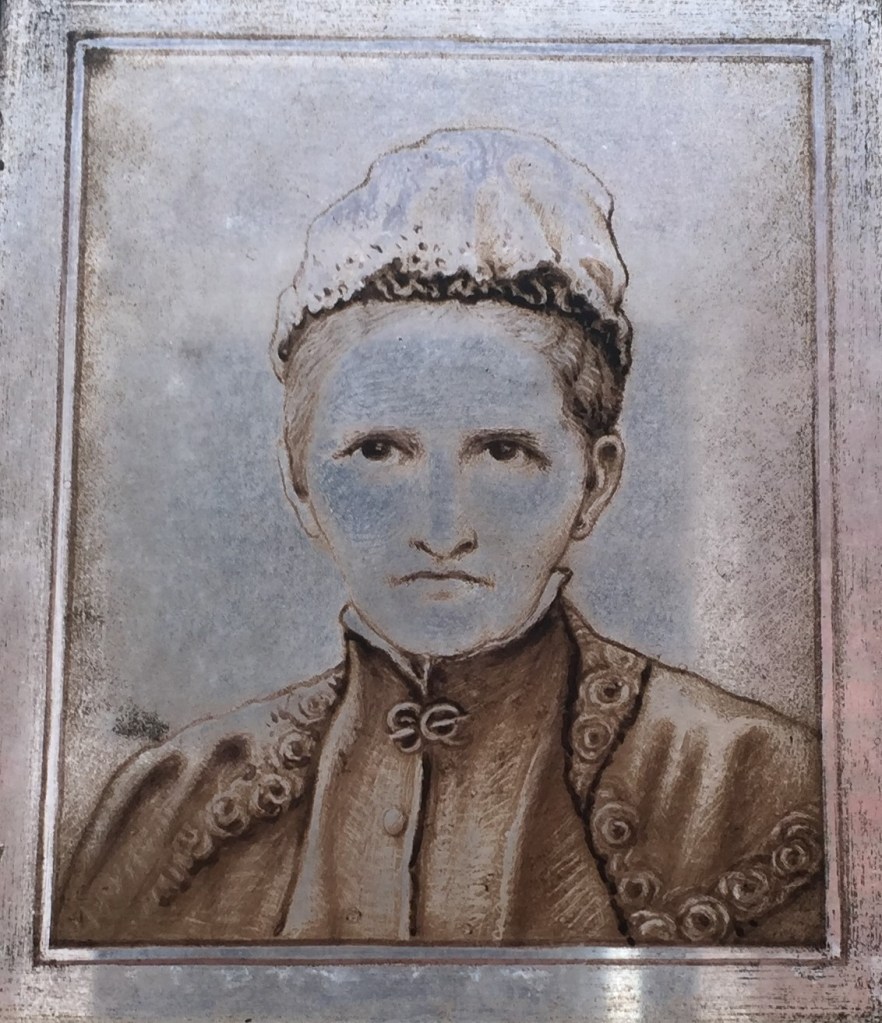
Mrs Gammage’s mother, Mrs T.G. Faulkner.

The chapel interior 
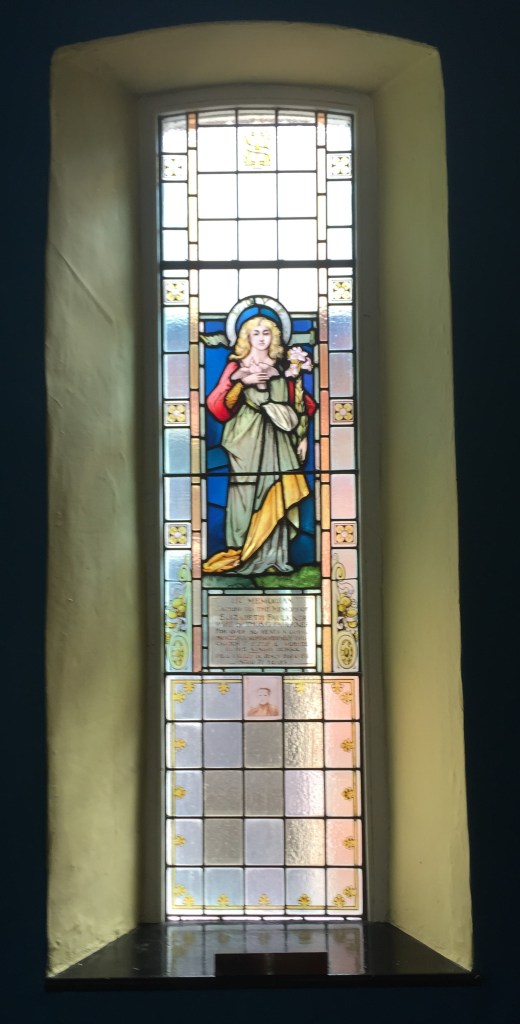
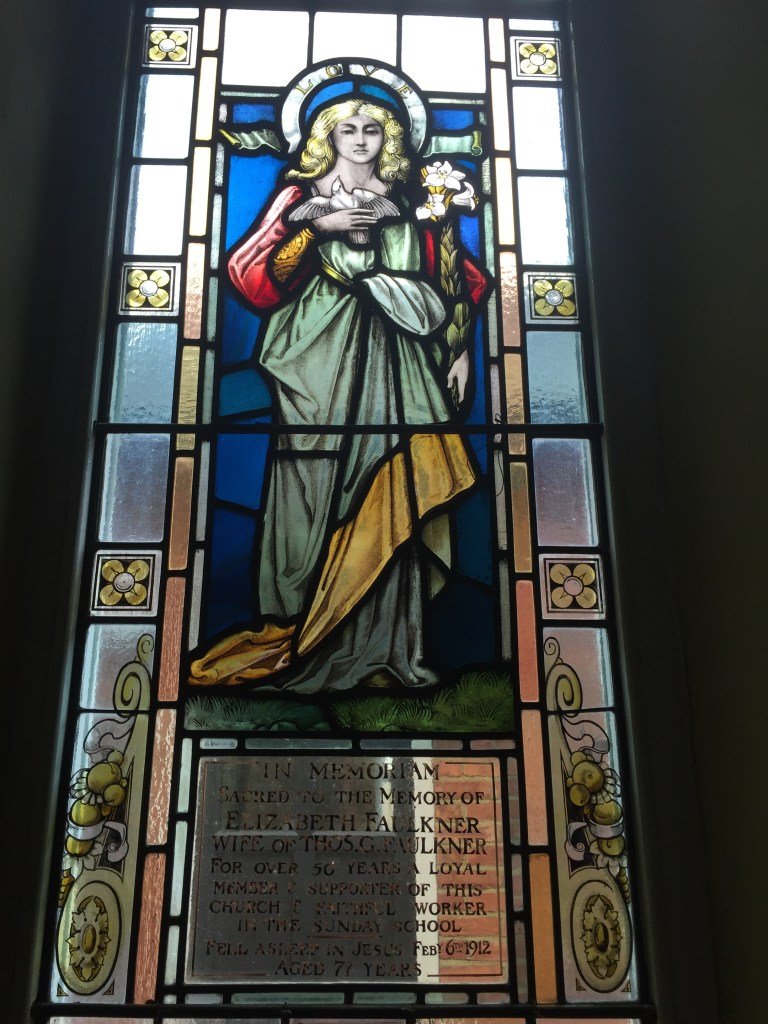
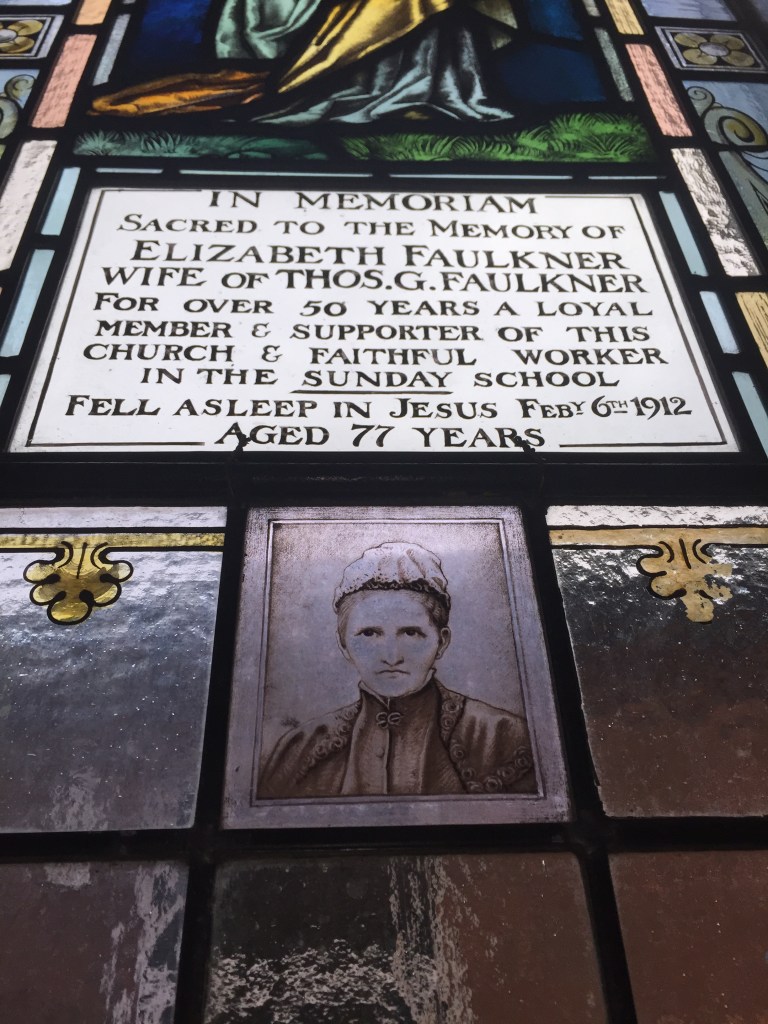
At the rear of the chapel was a gallery in which there was a large pump organ with two keyboards and a series of pipes. For almost fifty years from the early 1900’s this organ was played by Mrs Evelyn Clarke, a daughter of Wesley Faulkner and grand-daughter of Thomas Faulkner. Her two sons Keith and Dennis both remember operating the hand pump. Keith remembers how he had to watch a gauge which showed how much air was in the organ. When the gauge reached a certain level you had to pump air in by hand. It was tempting to allow the gauge to run low and risk silence in the middle of one of the hymns as the organ ran out of air. Dennis remembers as a youngster how the services seemed to be long and boring. Either side of the organ in the gallery was seating for the congregation. Downstairs, just inside the door there was a pulpit and there were wooden pews stretching to the back of the church. The carpets and upholstery were supplied and maintained by Pearce’s of Northampton and were rich blue in colour. The windows at the front of the church were stained glass and included the images of Mr and Mrs Thomas Faulkner.

The chapel business
Also in the Northampton Record Office is a the ‘minute book of the Heyford Trustees and Chapel Committee’ which has periodical entries between 1925 and 1960. Below are some details from this book which give a flavour of life in the chapel during that period.

May 1925 — it was agreed ‘that we install electric light at the Heyford Church and school’

June 1929 – an envelope system was established to enable members to ‘promise to contribute the sum of … per week towards the amount required for carrying on the work above church.’

Mrs Ralph Clarke 6d / W Faulkner 3d / Miss Furniss 6d / Mr and Mrs Furniss 1s Od’ / Mrs Thompson 3d / Alice Eales 3d

Feb 1937 – the general chapel committee acting on behalf of the Methodist Conference paid a grant of £10 ‘to aid the extinction of the debt of the Lower Heyford Methodist Chapel’ and also ‘that the trust should be renewed before long as the number (of trustees) living is now only five.’

]an 1938 – ‘we record that Miss Furniss be reappointed secretary, that Mrs Humphrey be the treasurer, that Mrs Clarke be reappointed organist, that the assistants be Miss Furniss and Miss Faulkner, that Mrs King be reappointed caretaker with remuneration as before, that the property stewards be Mr Warwick and Mr Faulkner’

Jan 1939 – ‘that Mr Arthur Humphrey be asked to procure a new ash bin’

Nov 1940 – ‘we record with sincere regret the death cy‘ one of our members brother Wesley N T Faulkner who passed away on Oct 19th 1940 and was buried in the Lower Heyford cemetery. Mr Faulkner had an almost lifelong association with the church… he was a local preacher, a class leader and a society steward’

Feb 1941 – the minutes refer to ‘Heyford Methodist Chapel (formerly Primitive Methodist)’

July 1941 — ‘that we receive with pleasure the gift of land adjoining the chapel from Mrs Wesley W Faulkner’

July 1942 — ‘that the repairs done by Mr W ] Denny to the front boundary wall of the chapel have been satisfactorily completed and that the bill of  £22.7s.4d has been paid’

Dec 1949 – ‘the meeting received with joy the inspiring and generous offer of Messrs Pearce regarding the renovations of the interior of the church… it was agreed that Mr Pearce ’s suggestion that the organ be brought down into the body of the church and the gallery be partitioned off be adopted’ .

Feb 1953 – ‘as the pipe organ had not been brought down into the church as agreed because of its need of repair, the minister offered to enquire whether it had been disposed of as being beyond repair. No definite information had reached the trustees as to its condition and whereabouts. It was noted that it had been in working order when removed. ’

Feb 1959  –  ‘new heating arrangements were discussed and it was decided to have electric convector heaters installed, these to be obtained through the kindness of Messrs Pearce and Co at wholesale prices’

Feb 1960 — ‘we record with sincere regret the passing of our dear friend and brother Mr Luther Furniss u/ho served the church in so many ways’

The Methodist chapel in the late 1930s

MethodistChapel_NetherHeyford

 Photo lent by ]udy Armitage.

The end of an era
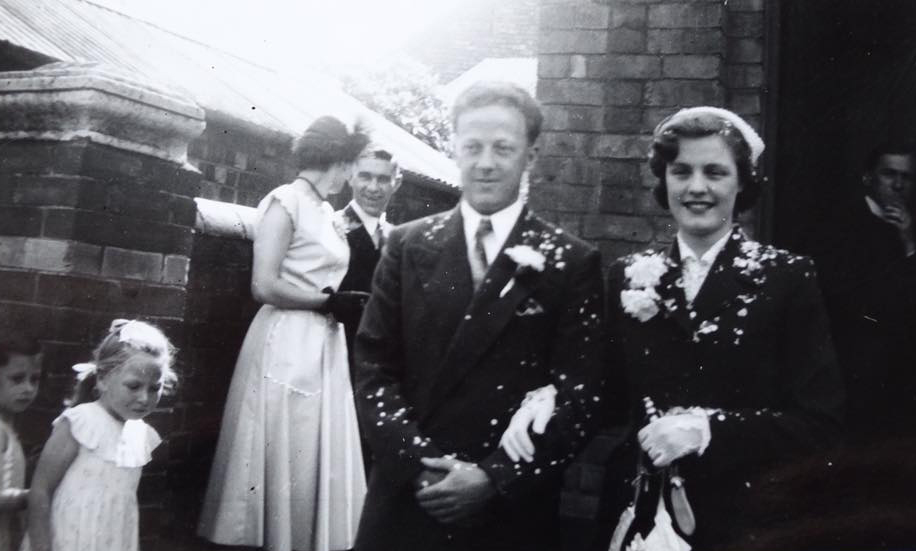
The last people to be married in the chapel were Keith and Brenda Clarke in 1953. The last christenings were of their children Elaine and Trevor. The congregation by this time was very small, certainly smaller than that of the Baptist chapel.

Keith & Brenda Clarke Wedding 1953

Brenda&Keith_Clarke

Photo from Trev Clarke, 2019 “The last wedding to be held there, my mum and dad  – Brenda and Keith Clarke”

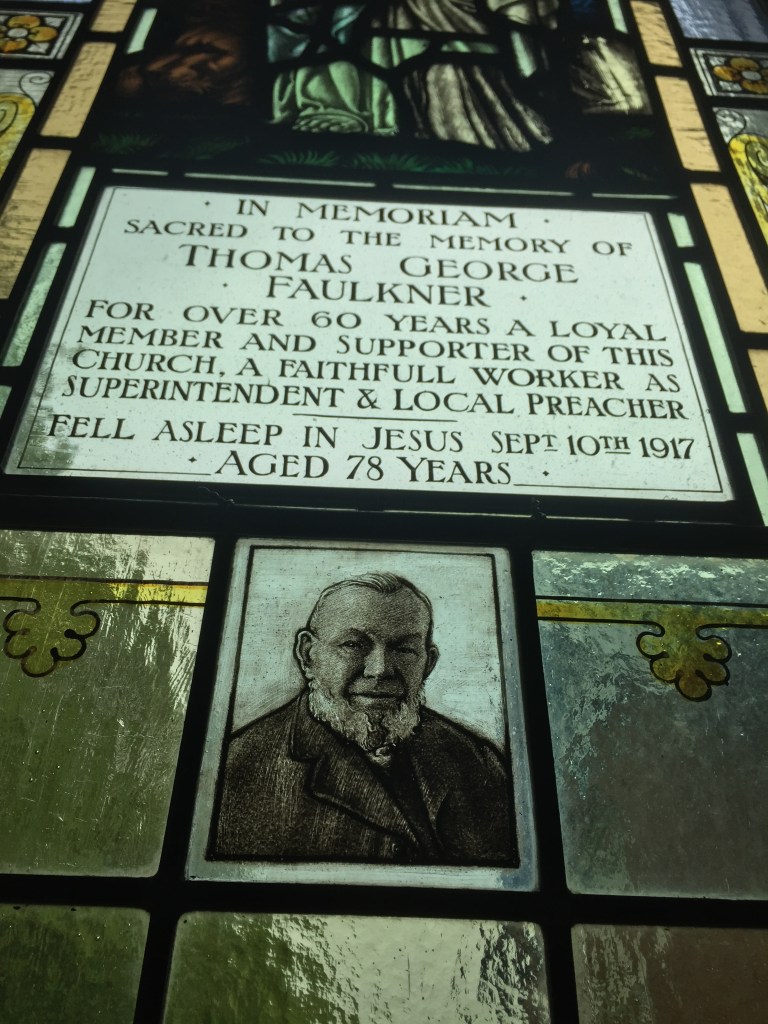
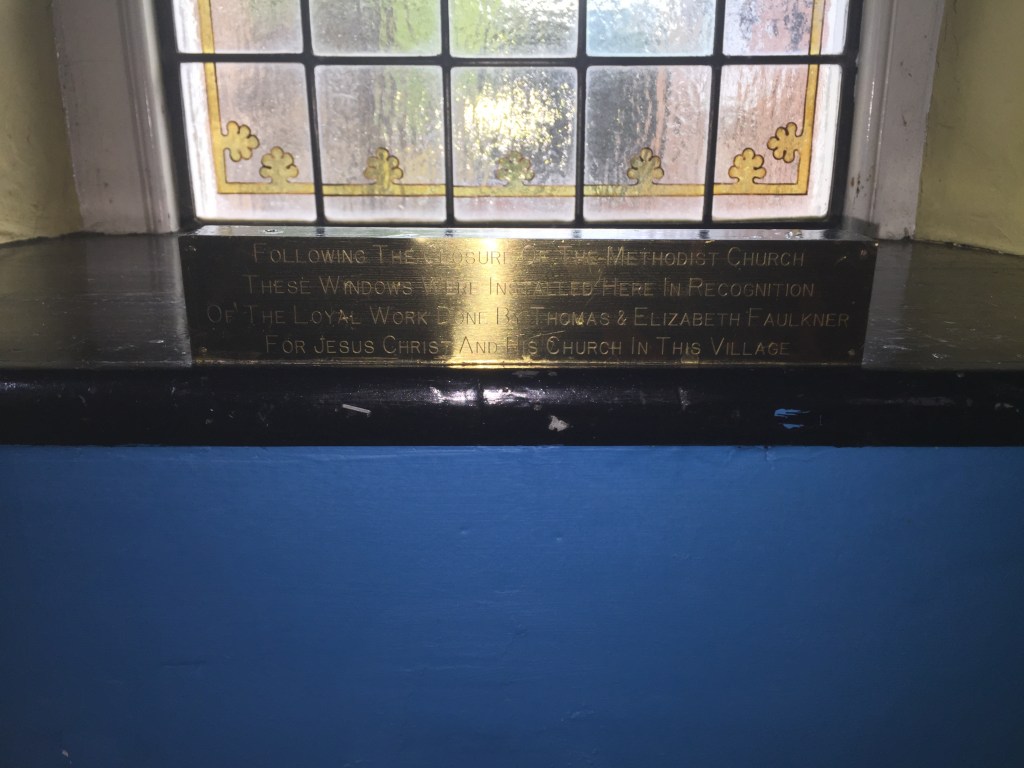
By 1962 the chapel had virtually ceased to function. All the original trustees had died, and some of the few remaining members transferred to the Baptist chapel. In 1963 some of the pews, together with the stained glass windows which depicted members of the Faulkner family, were also moved from the Methodist to the Baptist chapel.

Between 1962 and 1965 there was considerable legal correspondence to establish ownership of the chapel, and of the land adjacent to it that had been donated. In 1965 it was finally sold to the Northamptonshire Association of Youth Clubs, and the Youth Club was formally opened in the Autumn of that year. After 130 years, Methodism in Heyford had come to an end.

Stephen Ferneyhough

Stained Glass Windows

Update Jez Wilson – November 2020

~~

Extract from “The Story of Heyford” – Local book series published in the late 1990’s

Volume 1 of 4 | Chapter 3 of 13 | Pages 6,7 & 8

TheStoryOfHeyford_NetherHeyford_Footer

Heyford’s Historical Heritage  |  How the books were created

Index  |  Covers

Heyford Athletic Football Club – February 2019

Hi Everyone,

I hope you all had a fantastic Christmas and New Year and got to spend some time with loved ones over the festive period. As I write this from my office in London it is finally starting to turn cold and actually feel like winter, hopefully we will not be impacted by too many postponements as there is a bit of momentum in the club currently.

Firstly, on behalf of the club we would just like to send our well wishes to Linda Eales, an important lady in our club and we hope you are back on your feet soon and coming along to cheer the lads on.

Following on from my optimism last month results didn’t quite turn out as we had wished and we suffered a number of heavy defeats in the early weeks of December, which caused us as a committee to seek additional support. I am pleased to say that Danny Macintosh joined the club in the middle of December. He has delved into what I have since seen as a lengthy list of contacts and has brought in a number of players to help the club. We badly needed more players and we are now focusing on embedding these players into our club structure with a management team for both sides that I am sure can take the teams forward and reap the benefits.

In Danny’s first match in supporting Gary Hammond we were up against local rivals Harpole and we had a bumper crowd down the playing fields in the week between Christmas and New Year. They were treated to well contested 1-1 draw. After the season we have had this was a much welcomed point for the Blue’s. It is also the first time since I returned to the club 6 years ago that we have taken any points at all from Harpole. There have only been a smattering of games since then due to a certain somebody going off and getting married, and also the Christmas period. Both teams lost 2-1 in the last weekend (12th Jan). For the first team it was against current Champions Moulton and the reserves lost by the same score line at Finedon.  However, the results here don’t tell the story – both teams had 15 in their squad – the first time that has happened in a number of years and there were certainly much better performances that gives us hope and optimism for future games. So welcome to the new players and I hope you enjoy your time here at Heyford, we are delighted you are on board.

I wont put any focus on the youth sides in this article – we currently have 4 teams and I am proud of each and every one of them. The time the coaches dedicate to making these young people better players is humbling. I am asked a lot by people about whether we will have new teams. So I wanted to say in our local news letter that yes. As a club I am happy to support the set-up of any new youth teams – it is, simply put the future of the club… we want boy and girls of all ages to become a part of our club and join our teams or help set up new ones. You will have my full support and that of a fantastic committee and secretary to do everything they can to help you. However, I can only do this if I have volunteers to run these sides. Without them these things cannot happen. I can have all the children ready to play, but without a coach it just isn’t feasible. So if your child is wanting to play and you think you can spare the time to run a team (ultimately this would involve training once a week and a game on the weekend) then please get in touch. Or if you are reading this thinking you would love to run a team but don’t know how then again, get in touch and we can have a chat.

Finally, I wanted to mention a fundraising event coming up in March. We will be holding our first Comedy Night at the Village Hall on 16th March. We have 3 great acts for you on the evening and tickets are costing just £10. The bar will be provided by the Foresters and a great evening should be had by all. Tickets will be available from The Foresters and Brian Edgington.

Hopefully next month I can give you news of positive results, but please come and see for yourselves, a friendly welcome and a cup of tea is always provided down the club – and there is a bar if you would like a pint 🙂

Gary McMahon – Chairman – 07801 276488