Heyford Picturedrome – Sometimes Always Never – Thursday 20th February 2020

SometimesAlwaysNever

The next film will be Sometimes, Always, Never – a 2018 British comedy-drama to be shown at the Village Hall on Thursday 20th February 2020. The film stars Bill Nighy, Sam Riley and Jenny Agutter and is about an old man who is searching tirelessly for his son who has been missing for years. When a body is found, the whole family’s life is turned upside down and they must all learn how to reconnect with each other. It is an off-beat comedy with lots of dry ‘Brit’ humour.

Doors open at 7pm for a start to the film at 7.45pm.

Admission remains at £4.00 per person and there is no joining fee.

There is free tea or coffee and a biscuit on arrival and there will be a licensed bar for the purchase of wine and soft drinks both before the film and during the interval.

~/~


Tony Clewett – Phone: 01327 341533

The Story of Heyford (Extra): The Baptist Chapel

NetherHeyfordBaptistChapel

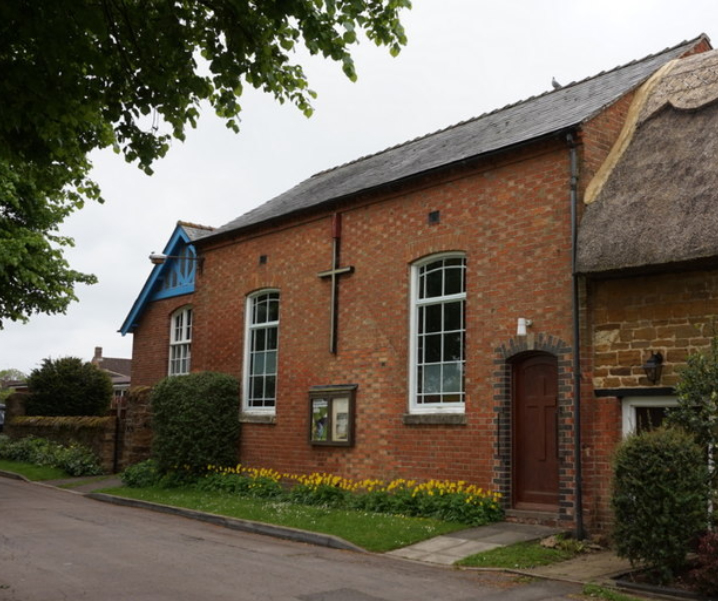
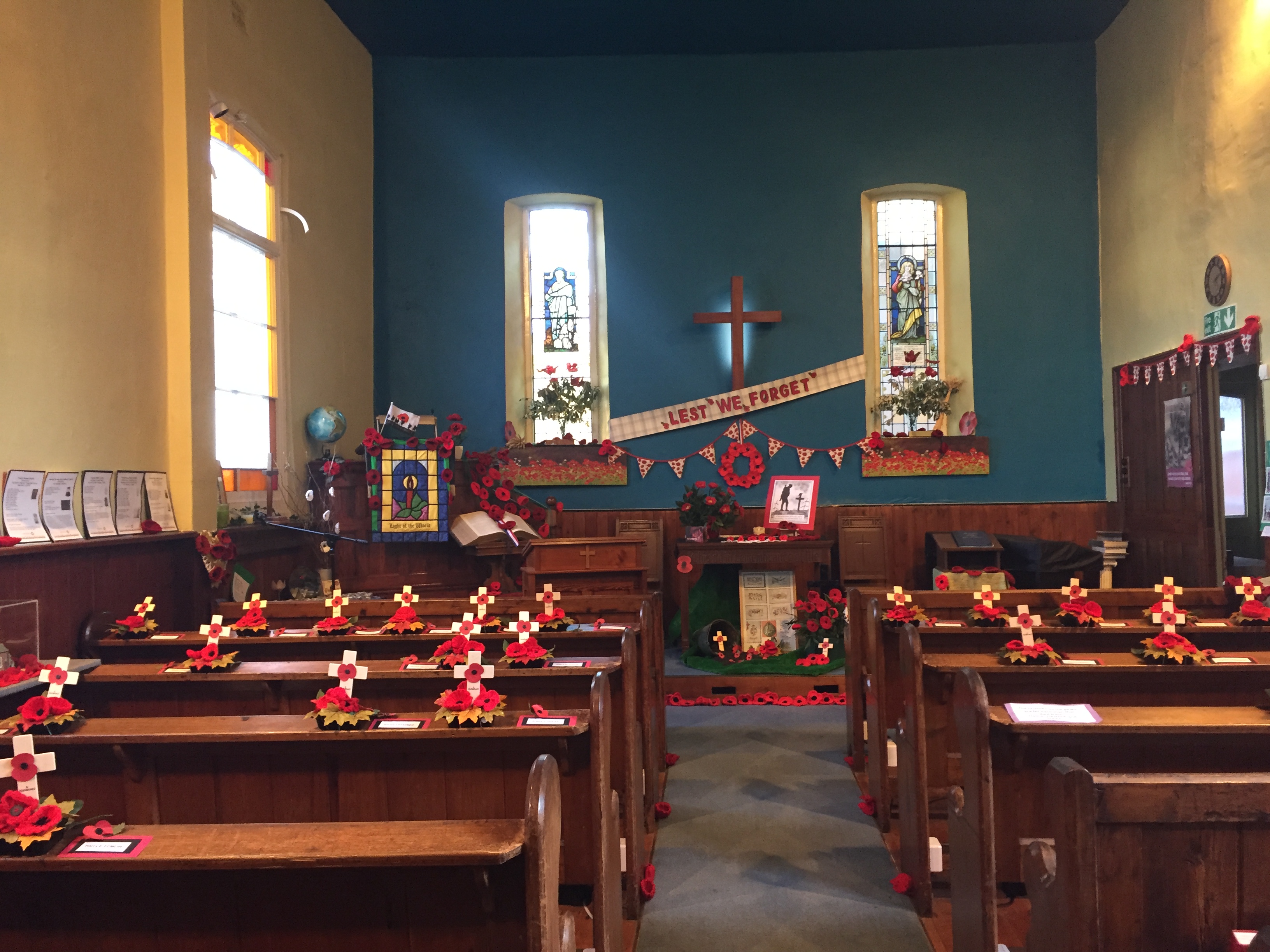
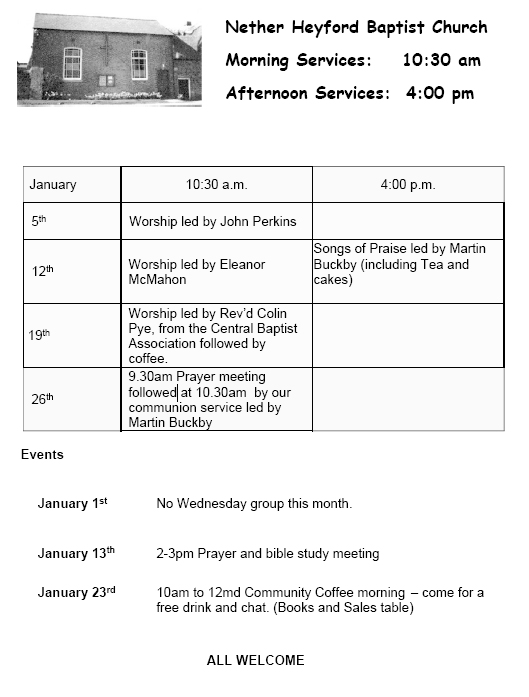
Nether Heyford Baptist Chapel overlooks the village green, next door to the village hall. It also has an adjoining schoolroom which is used for coffee mornings, community cafes and other many other community events.

In 1799, a small group of Heyford people first met together regularly for worship in a building belonging to Mr Richard Adams and before that time they attended Castle Hill Chapel in Northampton. Later it seems in 1805, when a Baptist Chapel opened at Bugbrooke the Heyford folks walked or rode on horseback to attend services there.

In 1826 however in an era of industrial development in the village between the opening of the canal (1790’s) and the construction of the railway (1830’s) Baptists were able to establish a presence in Heyford and opened the Chapel here although the link with Bugbrooke remained and the Minister there had charge of both Chapels.

By 1839 there were 76 adults in membership. There were also 24 children and therefore a Sunday school was started. The growth continued and when the Jubilee was celebrated in 1876 over 120 children assembled for a hot dinner in Bliss School. Games were organised for the children in Mr Adam’s Orchard at the rear of the School and later an open air service was held on the Green.

In 1922 Mr Oliver Adams was instrumental in the building of the Schoolroom. The Cost was £838 whereas the Chapel in 1826 had cost £178.

Partly with the benefit of a legacy from Mr A T Cosford in 1962 the Heyford Chapel was able to consider a measure of rebuilding and, in calling a part time Minister, became independent.

This was the beginning of the ministry of the Rev Harry Whittaker, better known for his work as the Founder Director of the Northamptonshire Association of Youth Clubs. Between then and 2003 there have only been three other ministers; Revd. Frank Lawes, Revd. Michael Jones and Revd. Roy Cave.

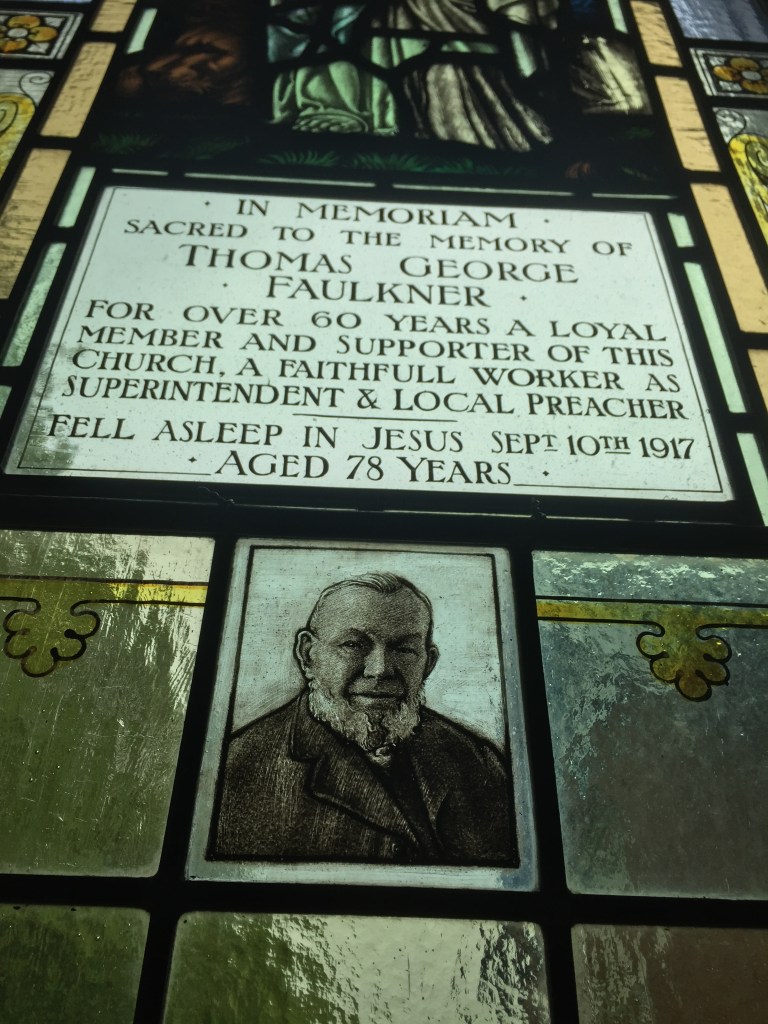
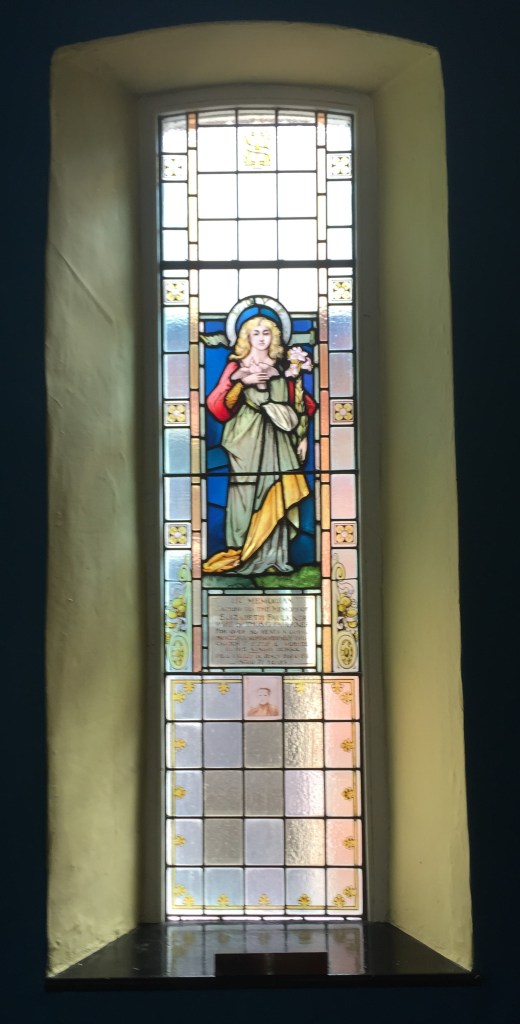
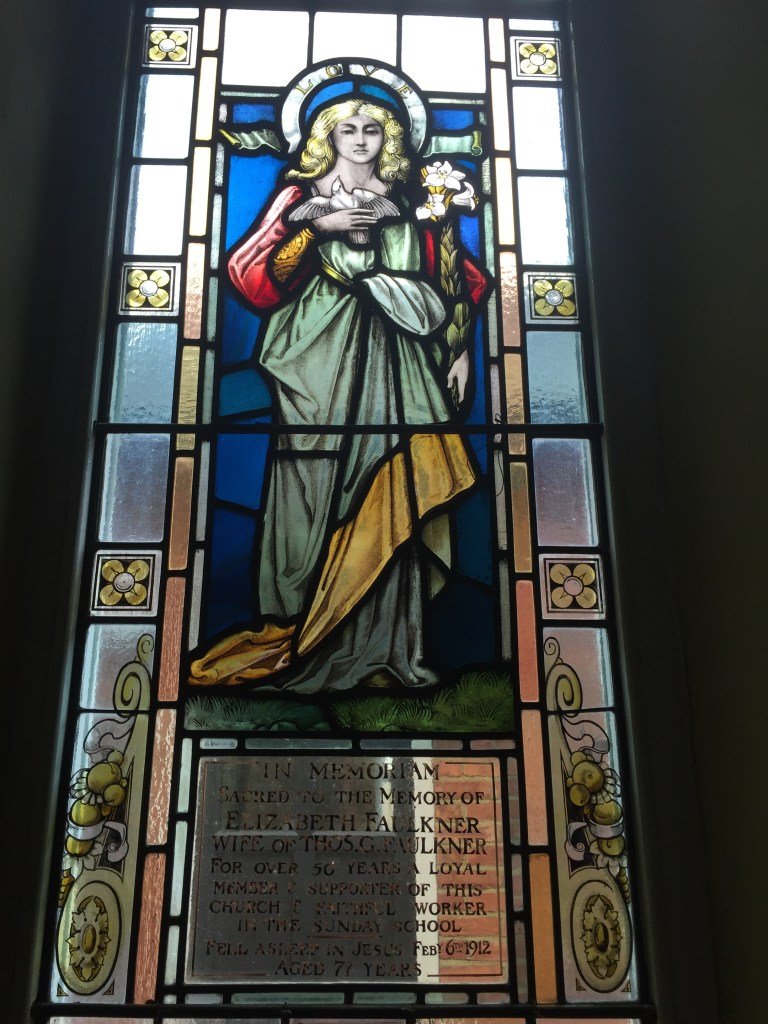
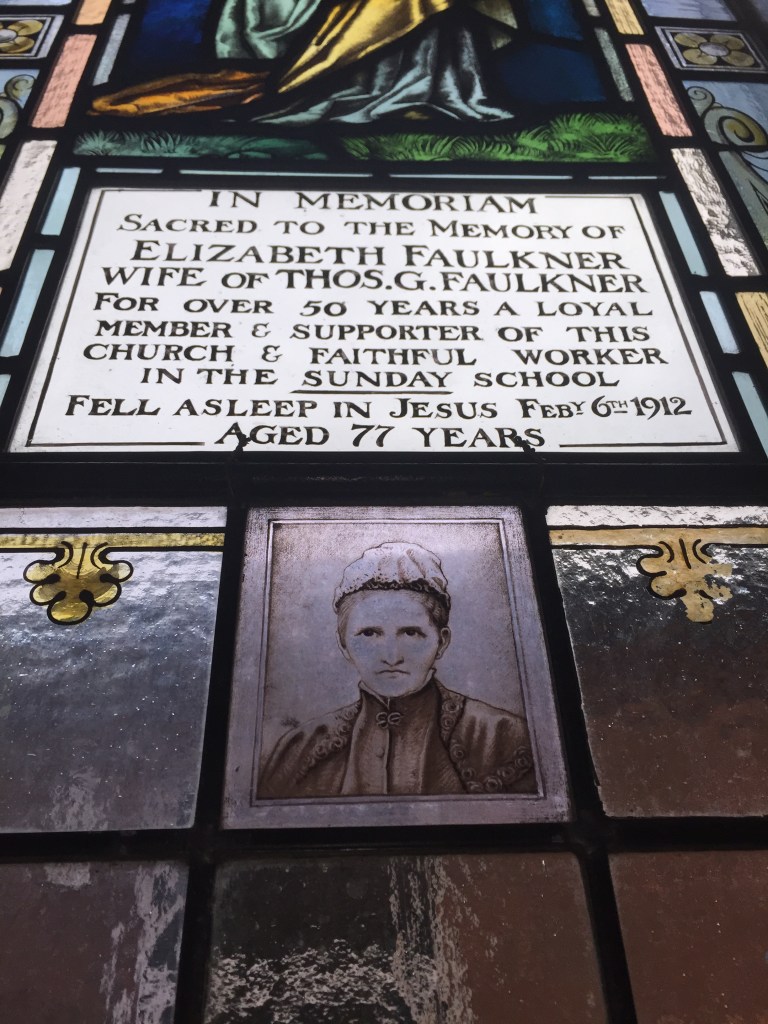
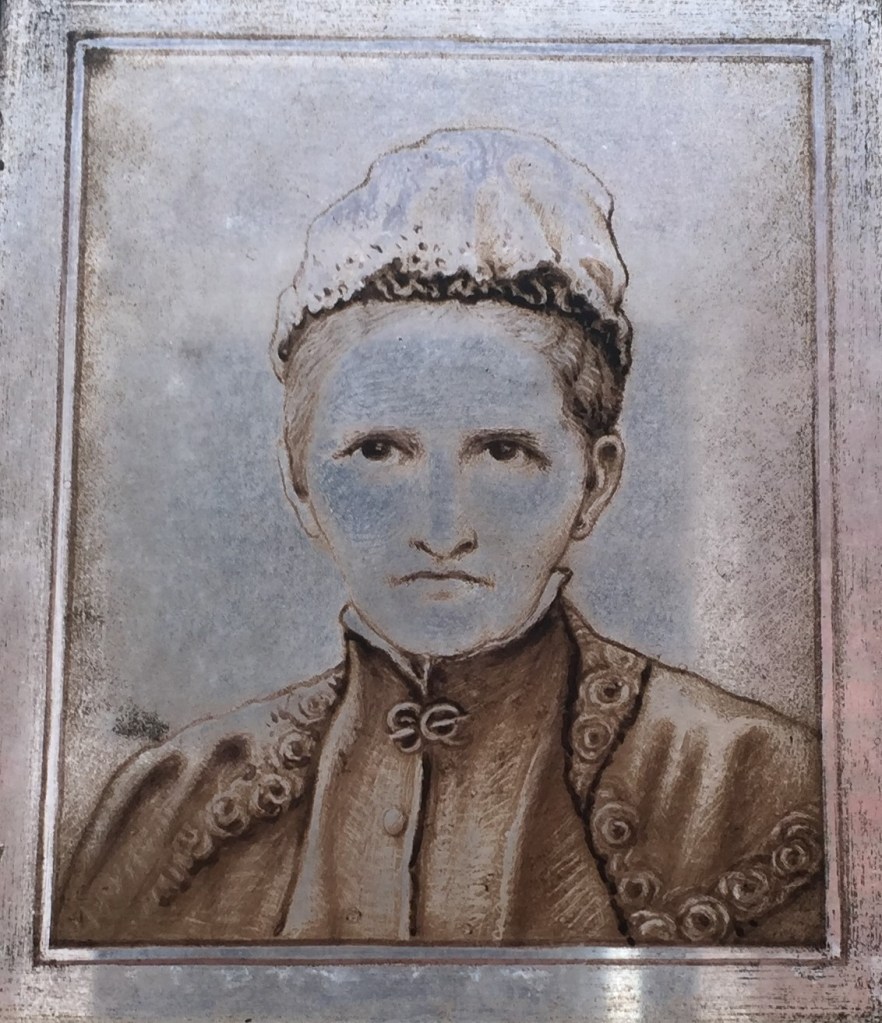
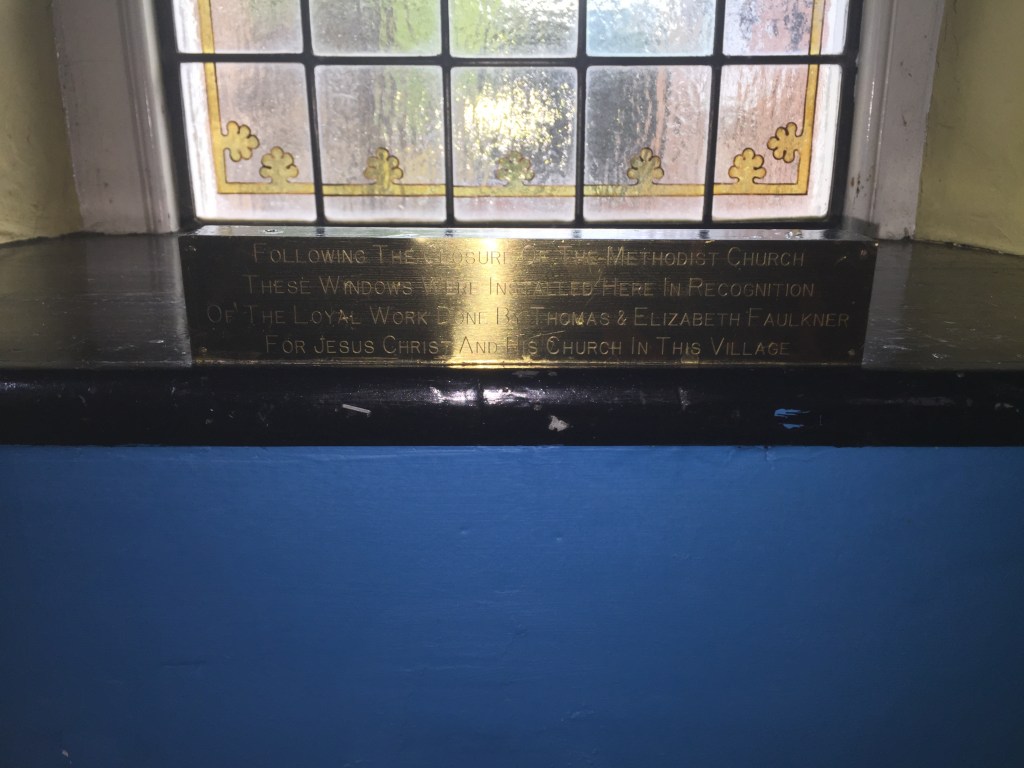
In 1963 the Methodist Chapel having opened in 1838, was suffering from dwindling numbers and had to close with its remaining few members transferring to the Baptist Chapel. The two stained glass windows which are at the front of our building were also moved from the Methodist Chapel along with a number of the pews and some panelling which was used to create a vestibule.

Serious Dry rot problems were found in 1984 in the Chapel which it seems were simultaneously affecting the Parish Church. This led to a number of united events in money raising activities.

“In the absence of a Minister we are fortunate to have the services of a number of visiting preachers but in particular we are indebted to Mr Martin Buckby for his Ministerial and Pastoral help and his spiritual guidance which has been an inspiration to us all.

We remember with gratitude those who had the faith and vision to build this Chapel and those hundreds of faithful men and women who have kept our doors open for all these years.”

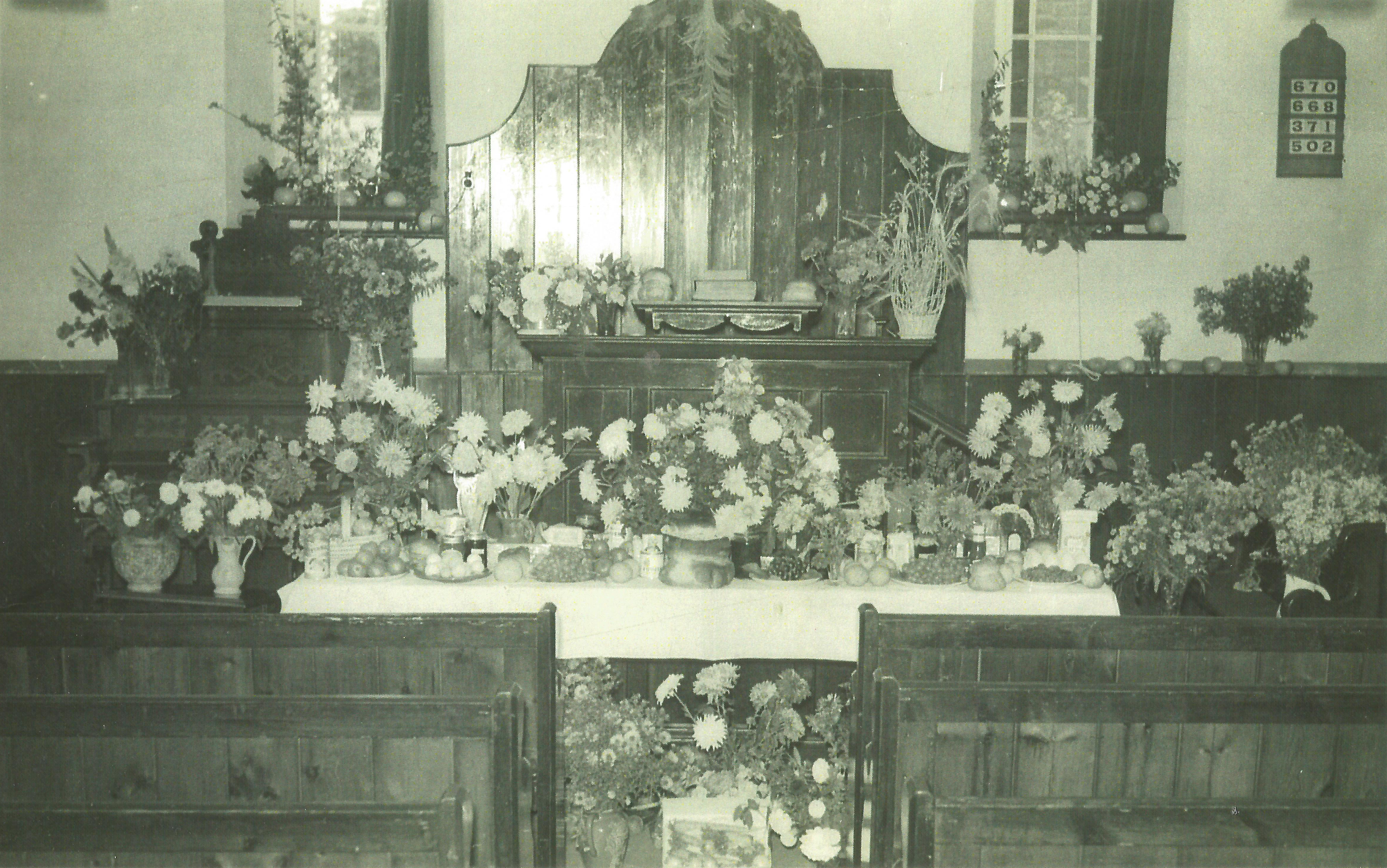
Harvest Festival (Sometime before 1963)

NetherHeyfordBaptistChapel

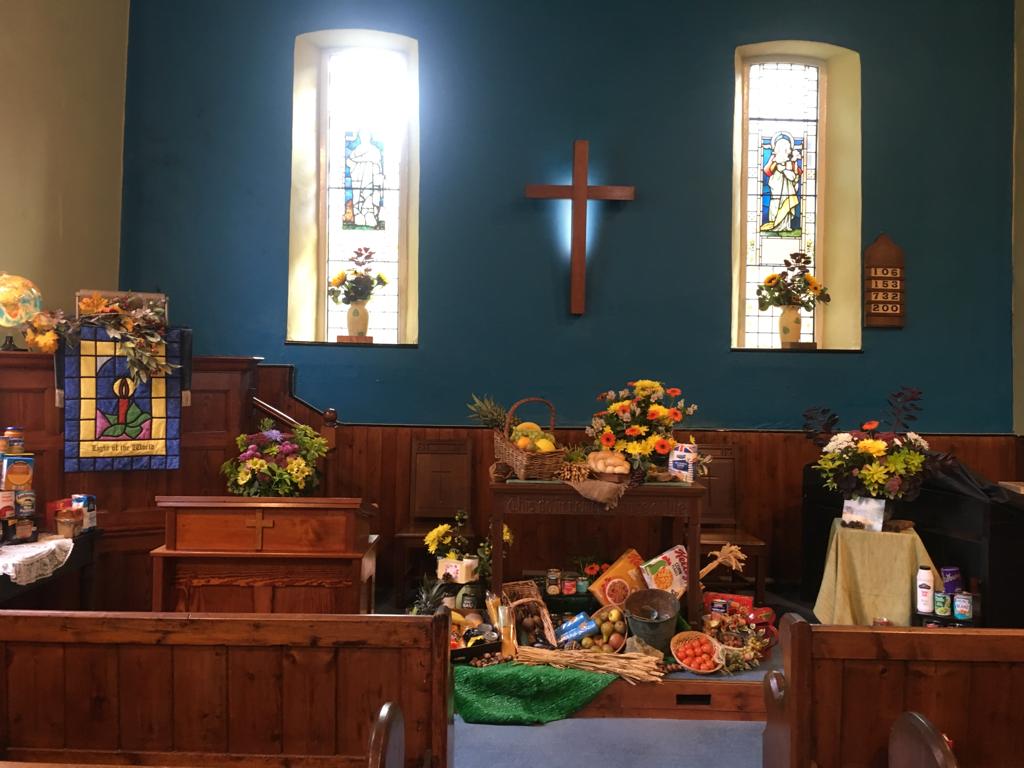
Harvest Festival 2019

netherheyfordbaptistchapel_harvest

Remembrance Day 2018

netherheyfordbaptistchapel_remembrance

Vi Wilson 

Stained Glass Windows

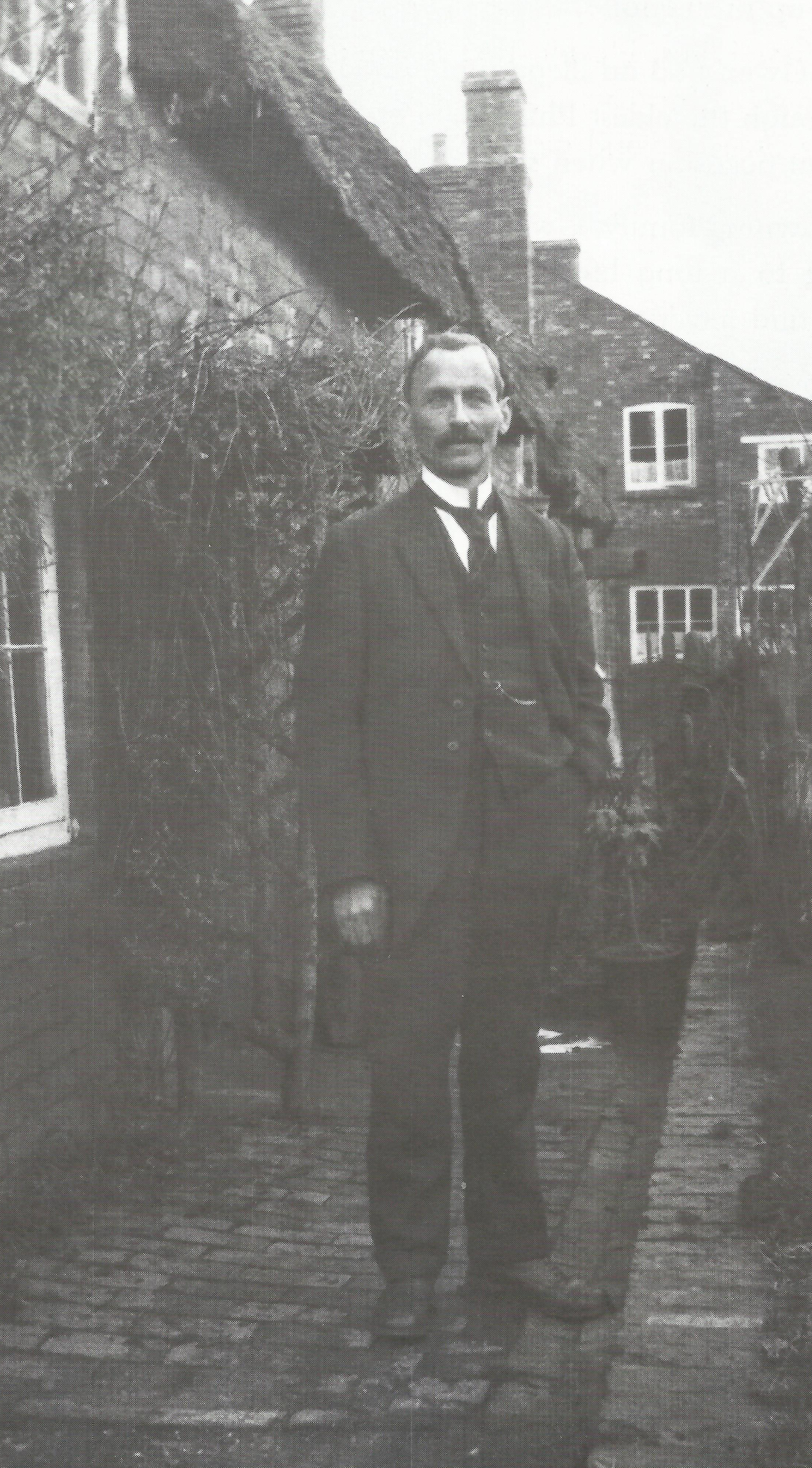
To read more about Thomas Faulkner and The Methodist Chapel visit the stories below:

For all stories with the Faulkner surname visit:

Jez Wilson

The Story of Heyford: Heyford Manor and the Manor House V2C5

In DESIRABLE FREEHOLD ESTATE
Consisting of The
MANOR or REPUTED MANOR
of
HEYFORD
Stone—Built Mansion or Manor House
with
Suitable Offices, Stabling, Gardens etc.
And
Sundry Eligible Farms with their Suitable Buildings
And
528A. 2R. 28P. of uncommon rich Arable, Meadow
Pasture and Wood Land
Let to Tenants on Leases which will expire at Lady Day next, at very low Old Rents (the Wood Lands in Hand included) of
FIVE HUNDRED AND NINETY~NINE POUNDS

These are how the Particulars and Conditions of Sale read on Thursday, February 2nd, 1792 at the Auction held by Mr Christie at his Great Room in Pall Mall. At that time a Fee Farm Rent, payable to the King was 3s. 4d, Land Tax for the whole of the Estate was £54.16s.0d and various Tithes to be paid meant total outgoings of ,£112.6s.9d. Part of the outgoings included an Annual Payment of £20 to the Hospital at Northampton, “out of which £4 is allowed in Land Tax”. The actual Manor House was much smaller than it is now — the East and West Wings came at the turn of the Century and the small ‘Garden House’ at the back, although keeping the original frontage and downstairs room complete with large stone fireplace, was added to as late as 1982.

The early estate

The original Manor House was at Upper Heyford and the remains of its foundations can still be seen. This was the Manor House of the Mauntells and Morgans, Prestons and Herbert Marquis of Powis and is supposed to have stood in the field called the Upper Park. John Mauntell of Heyford, descended from Michael Mauntell of ‘Rode’ married Elizabeth, daughter and heiress of John Lumley (also reputed to be of Heyford) and ‘levied fine of Heyford Manor’ in the reign of Henry VI (around 1446) and so founded a dynasty of Mauntells at Heyford.

Prior to the Mauntells the Tudenhams ruled the roost at Heyford (also ‘big’ in Suffolk; as you approach Bury St Edmunds you can see the village of Tudenham signposted) and presumably occupied the old Manor House, but we are going back to 1333 here and records are a little vague as to Lords of the Manor, but they were certainly large land owners and owned “the manor of Heyford with pertinences, lands and tenements in Bugbrook, Flore and Farthingstone, Grimscote, (Cold) Higham and Carsecoell (Carswell in Greens Norton?), lands and tenements in Cold Ashby and West Haddon”.

The Mauntells

What we do know, however, is that the ‘younger generation’ of Mauntells let the family name down as John and Elizabeth Mauntell had a son, Walter, later knighted, (buried in Heyford with his wife also called Elizabeth) and his son and heir, ]ohn Mauntell, well and truly blotted the family name. In 1541 John “sallying forth in company with his brother-in-law, Lord Dacre, and others, on a nocturnal frolic to chase the deer in Sir Nicholas Pelham’s park in Sussex, encountered three men, one of whom being mortally wounded in the affray; he and his associates were convicted of murder, executed, and their estates escheated to the crown.”

And to make matters even worse and to complete the irretrievable ruin of the house, his only son Walter Mauntell engaged in the Kentish insurrection to oppose the marriage of Queen Mary, headed by Sir Thomas Wyatt, and was taken prisoner with him, sent to the Tower and subsequently executed in Kent, 27th February 1553 and ‘attainted’ (i.e. he lost his estate to the crown).

However, due to a bit of forward planning the Manor was saved from the general wreck of the family fortune as John Mauntell had made a settlement of the Manor to his wife Anne (leafing through old cuttings I came across an article on the Manor written in the Herald September 1908 which said it was his mother, sister of Lord Dacre, who was the recipient of the settlement, but I am sure the Press were apt to make errors even then as old family trees show his wife Anne to have inherited) who with her second husband Richard Johnson and Francis Morgan ‘serjeant—at-law’ (who was lessee for the years 1555-56), “levied a fine of the three manors of Heyford, Over Heyford and Nether Heyford and the advowson, or rather two thirds of the advowson, of Nether Heyford, to the use of Sir Richard Sackville and his heirs.”

The Morgans and Prestons

This meant that Sackville took over the Mauntell estates in Heyford but Francis Morgan soon after obtained the ‘fee simple’ and after Francis Morgan died in 1558 ( he and his wife Anne are buried at Heyford) the estates descended to his son Thomas. However in the archives it is written that Matthew Mauntell ‘of Horton and of Collingtree’ son of the executed Walter, ‘was restored to his father’s estate in the 15th reign of Elizabeth’. This would make it 1573. So it is unclear whether there was another (short) ‘reign’ of Mauntells in between the Morgans.

In any event Thomas Morgan’s daughter and heiress married Sir John Preston of Furness in Lancashire and he was succeeded in his title and estates by his brother Sir Thomas Preston who in May 1685 settled the manors of Heyford, Nether Heyford and a whole lot more on Mary his eldest daughter and co-heiress in marriage with William Lord Herbert, son and heir of William Earl of Powis.

Now, the Earl was zealously attached to James II who selected him to accompany the Queen to France and on abandoning the throne in 1688 James joined them both there. In return the King gave him the titles of Duke of Powis and Marquis of Montgomery. But the Duke was outlawed for remaining abroad in the service of the deposed monarch and died at the court of St Germain’s in 1696.

After a lapse of 30 years, a ‘mandamus’ (judicial writ issued from the King’s Bench Division) was granted and it was accordingly reversed by the court of the King’s Bench in April 1722; by which reversal his only son, William Lord Herbert (as above) then Viscount Montgomery, was restored to the Marquisate and all the other honours to which his father was entitled prior to James II leaving his throne.

The Dukedom and second Marquisate were never legally recognised in England, though generally adopted by courtesy. William the 3rd Marquis or Duke of Powis, only surviving son of the preceding, died unmarried in 1747 and the titles became extinct; but by his will, dated 28 April of that year he left his extensive family possessions (by-passing his several sisters) in trust for Henry Arthur Herbert, then Lord Herbert of Chirbury, who was afterwards created Earl of Powis and in 1751 married Barbara, the posthumous daughter and heiress of his brother Edward.

Decay

Now, if you can keep up with any of this, comes the crunch. The Trustees under the Marquis’s will were empowered to sell all or any part of the Northamptonshire estates towards the liquidation of his debts, and towards raising a fund for working his lead mines and in November 1758 with the approbation of the Earl of Powis and under the authority of an act of Parliament, confirming the authority of the Trustees, the whole, comprising the manors of Heyford and surrounding manors with about 3000 acres of land were disposed of in lots by public auction and produced the princely sum of £65,424.

By this time Sir Thomas Preston may have demolished the actual Manor House, or it may have fallen into general decay during the Commonwealth period (the 1650s). Here again the Herald (and this is substantiated) states that early in the Civil war the Manor House was uninhabited. It was still unoccupied in 1652 as we learn from an entry in the Parish Registers (“lying open into vagrants”).

But in any event the estate itself remained intact and Miss Nelson writes “in 1758 the estate was sold by auction in London, the business taking three days. The names of some of the tenants of farms at that time were Ed Middleton, Richard Gardner, Sam Newbold, Thomas Payne and Richard Claridge. Also Will Simons, who farmed Pond Close, or Pastel Pan and Pastle Pightle. Other field names mentioned in the catalogue are The Spung, Stocking Meadows, Worsten Pond Field, Talland, Adal, Bell Pool Leys, Flash Close and Blakes Hitch.”

Thus the old Manor met its demise and its vast estates were split up.

A new house is built

But a new era had already begun with the building of the new Manor House where it still stands, in Nether Heyford. It is believed to have been built about 1740 by William the 3rd Marquis of Powis (as above) using the stone from the original Manor. (The earliest date found on the old walls of the existing Manor is 1794 but the stone is worn and could read ‘1714’). Some researchers have stated the Manor and 30 acres was then bought by Rev Henry Jephcot in 1759 (who in 1789 became Rector of Heyford) but according to Joan Wake in her book ‘The Life of Henry Isham Longden’ published in 1942 she states “Heyford, like Stowe IV (now Stowe IX) Churches was a Crawley living, a member of that family having bought the two advowsons and the Manor House at Heyford in 1764.”

Churchmen take up occupancy

However according to the auction details of 1792 they clearly state that the Manor was let to the Rev Mr Henry Jephcott “at Will, at a low old rent of £63.0s. 0d” so he would have been a tenant at that time. In 1800 we know that he died and the property passed to his daughter Elizabeth and her husband the Reverend R B Hughes, Rector of Kislingbury. And they must have owned the property as in 1802 they sold the house and land to Reverend John Lloyd Crawley who in 1800 had succeeded Henry Jephcott as Rector of Heyford. John Crawley remained at Heyford as both Rector and Lord of the Manor until his death in 1850 and was succeeded as Rector by his son, Thomas, but he moved into the newly built rectory in 1851.

So, interestingly enough, for the sixty years between 1789 and 1850 there were two successive rectors who were also Lords of the Manor and it was to the Manor House that ‘privileged young people’ went for Sunday School.

When John Lloyd died in 1850 his widow Anne Crawley (at that time 65) remained in the Manor House with her sons Alfred and Charles and three domestic servants (Footman, Ladies Maid and Housemaid) until 1871 when we know from details of a Census that John Smith, Curate of Norton, his wife and their five children and four domestic servants (Cook, Housemaid, Scullery Maid and Groom) took over for the next ten years and by 1881 Charles Carden, aged 61, a retired army captain lived there with his wife, six children and four servants (Housemaid, Ladies Maid, Cook and Groom), a Governess coming from as far afield as Liverpool and a Head Gardener, Richard Houghton, who hailed from Milton.

Then in 1891 Joseph Faulkner, a shoemaker aged 60 with his wife, four children, son-in-law and grand-daughter – who presumably helped out with all the chores as there were no domestic servants recorded – took over the Manor until the turn of the century when the ]eyes family arrived.

The Manor House in 1825
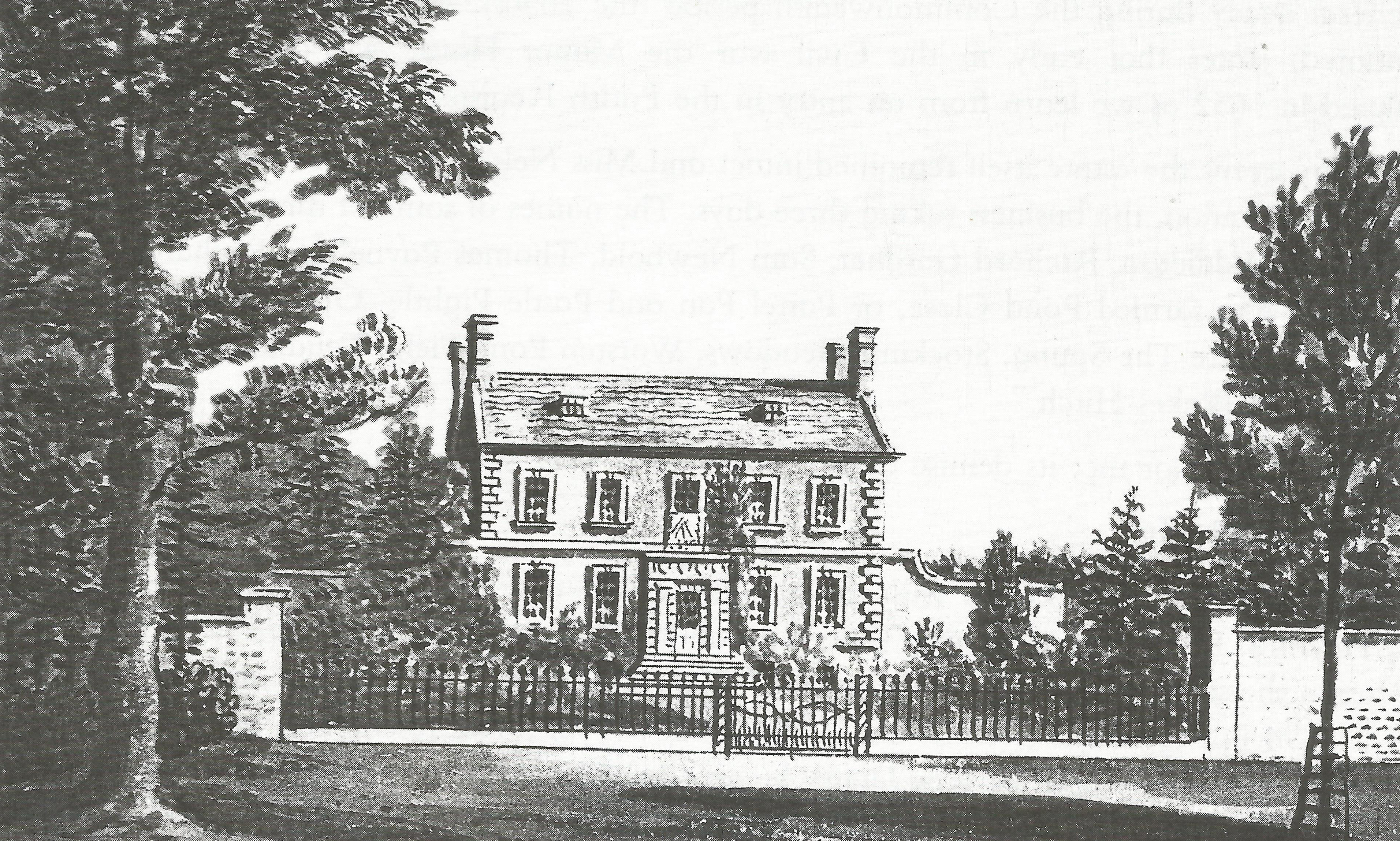
12_NetherHeyfordManorHouse1825

From a print lent by Tony Landon

The early 1900s – military men and merchants

Mr Jeyes was the brother of Philadelphus ]eyes who owned a chemist shop in the Drapery in Northampton. He was a ‘country gent’, sported a coach house and kept three or four hunters in the stables to the west of the Manor (now houses and garages). It was probably while the Jeyes family were in situ that a visit to Nether Heyford Church was arranged in 1906 by a local Architectural and Archaeological Society for the Archdeaconries of Northampton and Oakham as the Rector, the Rev H Isham Longden, was ‘a true archaeologist’ and a visit to the Manor House had been planned. But “time and the weather did not permit a visit” and instead they all headed back to the Rectory for tea presided over by ‘Mrs Crawley’.

After the Jeyes family moved out it was said that it was empty for a while, but then came the Muir family and documentation to this effect is available in the form of an Indenture made out in 1914 by John Buchanan Muir’s son Matthew Andrew which left everything to his wife, Jessie Agnes Muir, on the understanding she did not leave him, in which case she would lose the lot… What is interesting about this Indenture is that the Fee Farm Rent was still 3s.4d….

The Conveyance for the sale to the next occupant was dated 5th December 1919 and this was Lieutenant Colonel Livingstone-Learmouth who was based at the Ordnance Depot in Weedon and it is said that he had the house massively extended with new wings at each end. However it is more likely the East Wing was put on quite a bit earlier and the flat-roofed West Wing added during the first World War as wood was difficult to come by although one rumour has it that the occupant, a woman at the time – Mrs Muir? – could not afford a ‘proper’ roof .

The Manor house around the turn of the century
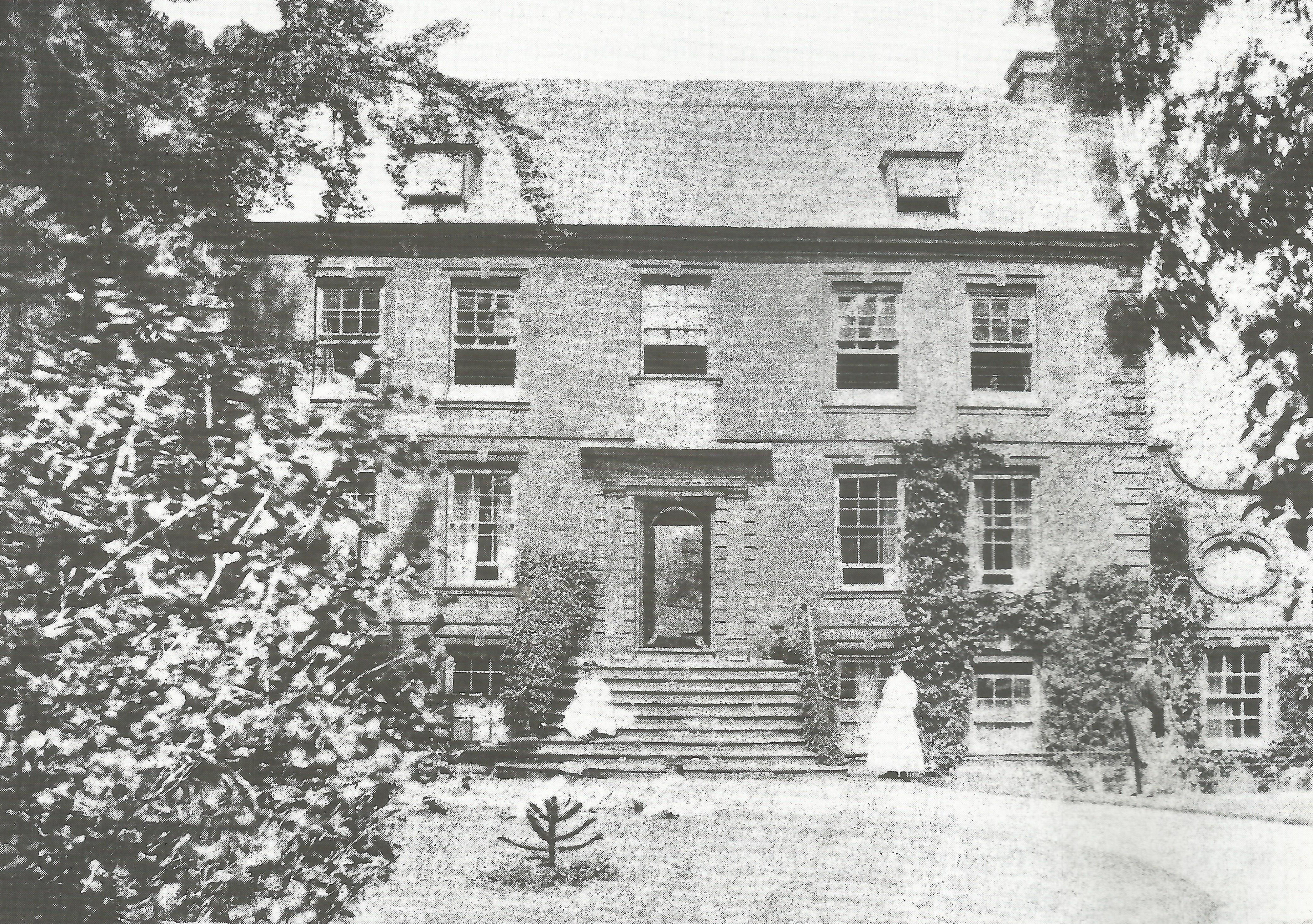
13_NetherHeyfordManorHouse1825

Gardens, stables and domestic service

But what we do know is that Frank Pearson’s parents came to Heyford in 1919, his father becoming Head Gardener at Heyford Manor until his death in 1948. Frank was born in the Head Gardener’s cottage which was situated backing on to the Churchyard and Frank himself helped his father in tending the Manor gardens. The earliest inhabitant of Heyford Manor Frank can remember was Brietmeyer “a big man who was very fond of hunting, which he enjoyed sometimes three times a week”. Certainly there are still memories in Heyford at the time of writing of the Master riding to Hounds and scattering coins to the children who had gathered in what is now Manor Walk to see this awesome sight.

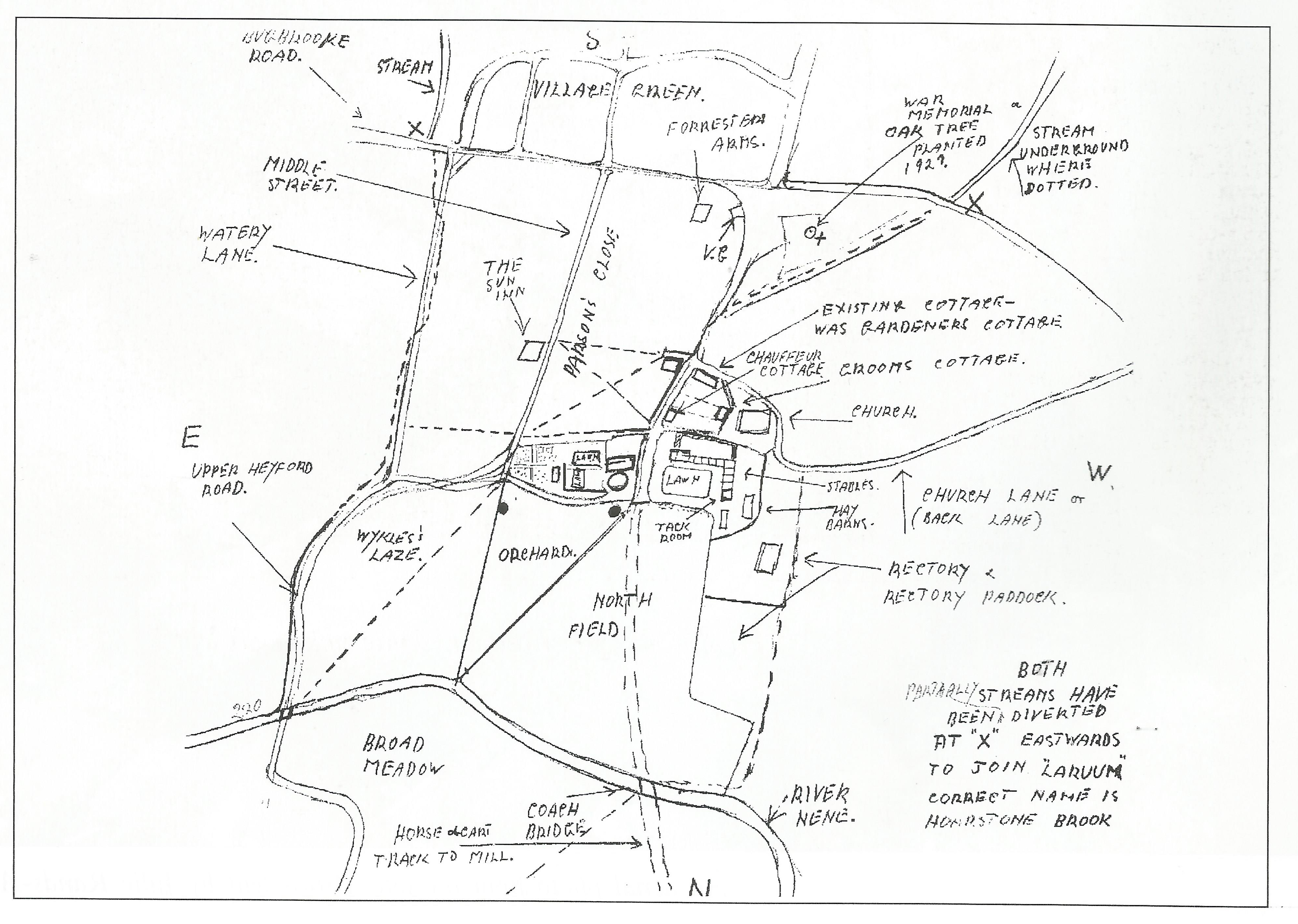
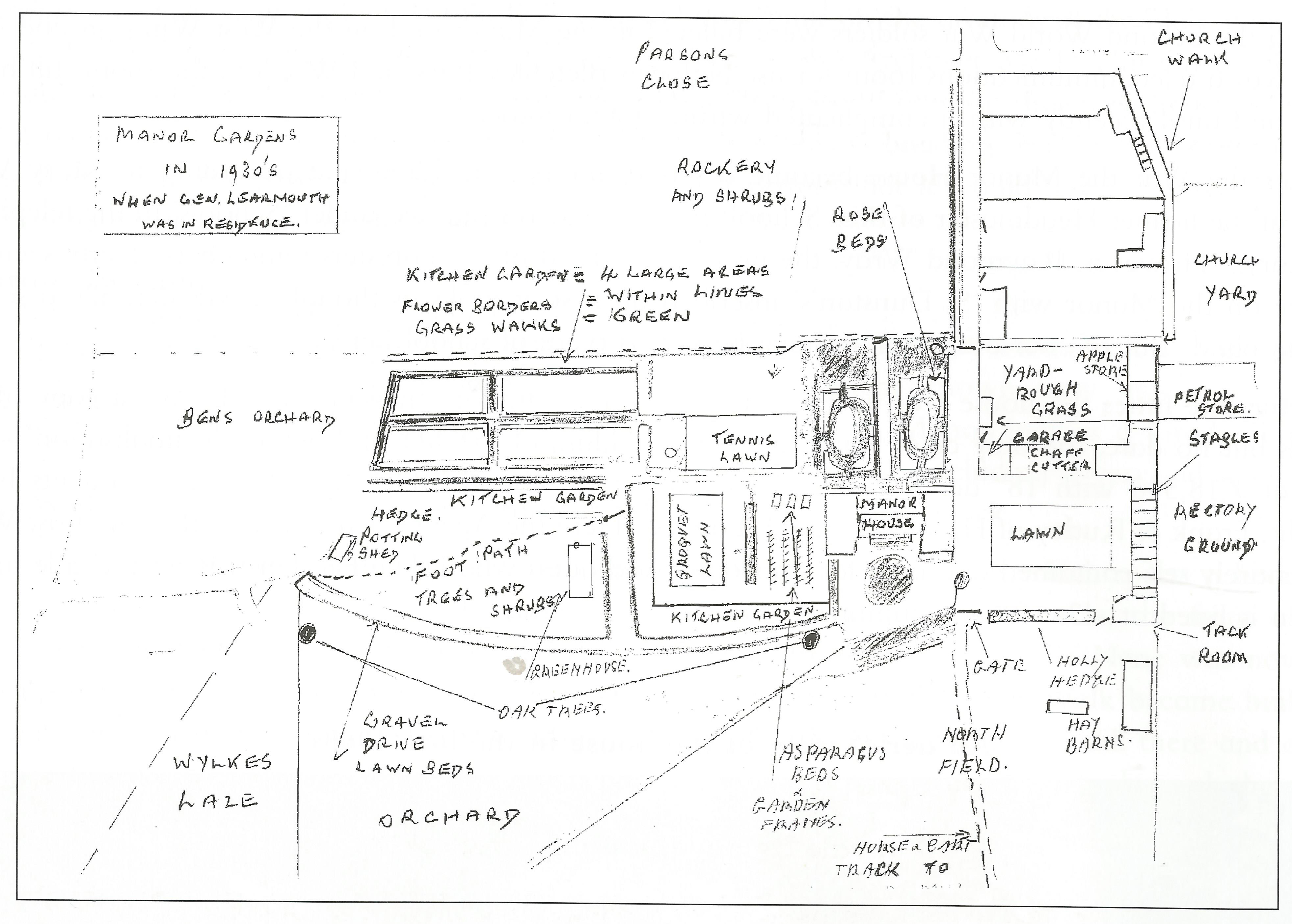
But the Livingstone-Learmouth era (1920s and 30s) was probably the last of the ‘greats’ in the sense that here was a large Manor, acres of land, servants and a Head Gardener. The gardens, as remembered by Frank Pearson, comprised rose beds, rockeries, kitchen gardens,flower borders and grass walks, asparagus beds and apple stores and the horse and cart track led down to the ‘Coach Bridge’ and thereon down to the mill. Frank himself told of how he was responsible for raking the gravel drive in order to keep it tidy which ran by the existing boundary at the front of the Manor and on down to The Sun. At that time he said the servants used the West Wing and the ‘garden room’ there was the servants’ dining-room.

The whole of the bottom floor of the Manor was I believe devoted to kitchens and the old bread oven can still be seen in the middle part of the Manor – the little ‘Garden House’ at the back was reputed to be the dairy (although as the present occupants pointed out, strange that the dairy should be in the front of the building?) – and ladies from Heyford can remember helping out in these vast kitchens.

There is still an enormous cellar for the fine wines and the scribblings of the Butler above the store bins denoting the type of wine enclosed. The old bells to summon the servants are also still in place and until very recently so was the ‘dumb waiter’. In the East Wing the stairs to the attic where the servants slept are pitted with their constant footsteps and the bannisters uneven where they slid their hands down in their haste to attend to their duties. The attic roof was bare With no insulation but the coal fire must have been lit as there is an enormous chimney breast which goes through their attic rooms in order to give them some warmth. It must have been a hard life for the young girls who Would have been employed around this time.

But by now the First World War had struck, twenty three soldiers from Heyford losing their lives and Lieutenant Colonel Livingstone-Learmouth CMG, DSO, RHA unveiled the War Memorial in 1921 which stands on the green at the junction of four cross roads. The Rev Isham Longden conducted the service and amongst the names on the memorial is Captain T H O Crawley.

Bill Kingston remembers when there were no buildings between the Foresters Arms and Richard Denny’s house and there was a field stretching back to the Manor House in which the occupant at that time, Captain Shield, kept several hunters.

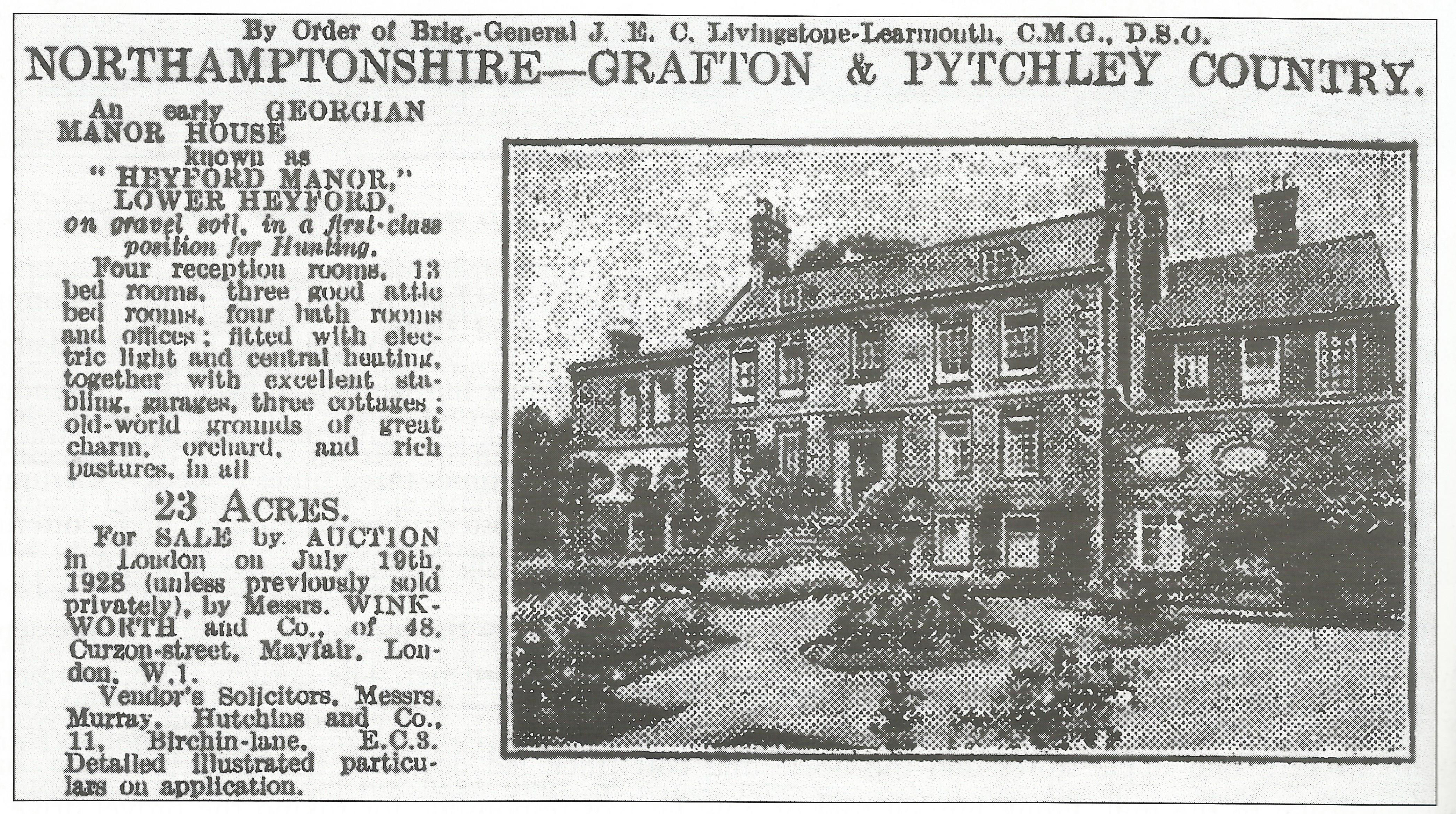
In 1928 another auction took place this time with only 23 acres attached, the land gradually being eroded by new buildings. This may have been bought by ‘the Diamond Merchant’. Unfortunately no other details as to this person emerges except he left strong evidence of his occupancy within the house itself!

For sale by auction – July 19th, 1928
14_NetherHeyfordManorHouse1825

From a newspaper cutting (source unknown) lent by Tony Landon

The Manor House and gardens as they appeared between the wars
15a_NetherHeyfordManorHouse1825

The surrounding fields

15b_NetherHeyfordManorHouse1825

From illustrations made by the late Frank Pearson

The post-war years

During the Second World War soldiers were billeted in the Manor and on the West Wing ground floor there was a telecommunications room for use between Bletchley Park and Weedon, the room still being there and until recently with a complicated wiring system intact.

After the War the Manor House became a school for deaf children and according to Mary Warr (wife of the former Headmaster of Bliss School) in 1970 it was still listed under ‘Schools’ in the telephone directory… However, Raymond Wray, the present Landlord of the Foresters remembers clearly seeing a plaque on the Manor with ‘St Dunstan’s’ inscribed on it so it looks as though it was actually a school for the blind. But of course there may have been two types of school here.

In the latefifties the house was up for sale again – actually I’m guessing here. I have a copy of the details but no date, the only clues being ‘after the building of the M1 and before decimalisation’ – this time at £18,500 With 18° acres, having been subject to ‘considerable expenditure’, the agents being Knight, Frank & Rutley of Hanover Square, London. Here the Agent’s details reveal that the East Wing was entirely self-contained and used for staff only. And guess What? The Fee Farm Rent payable to the Queen is listed at – 3s. 4d. per annum…!

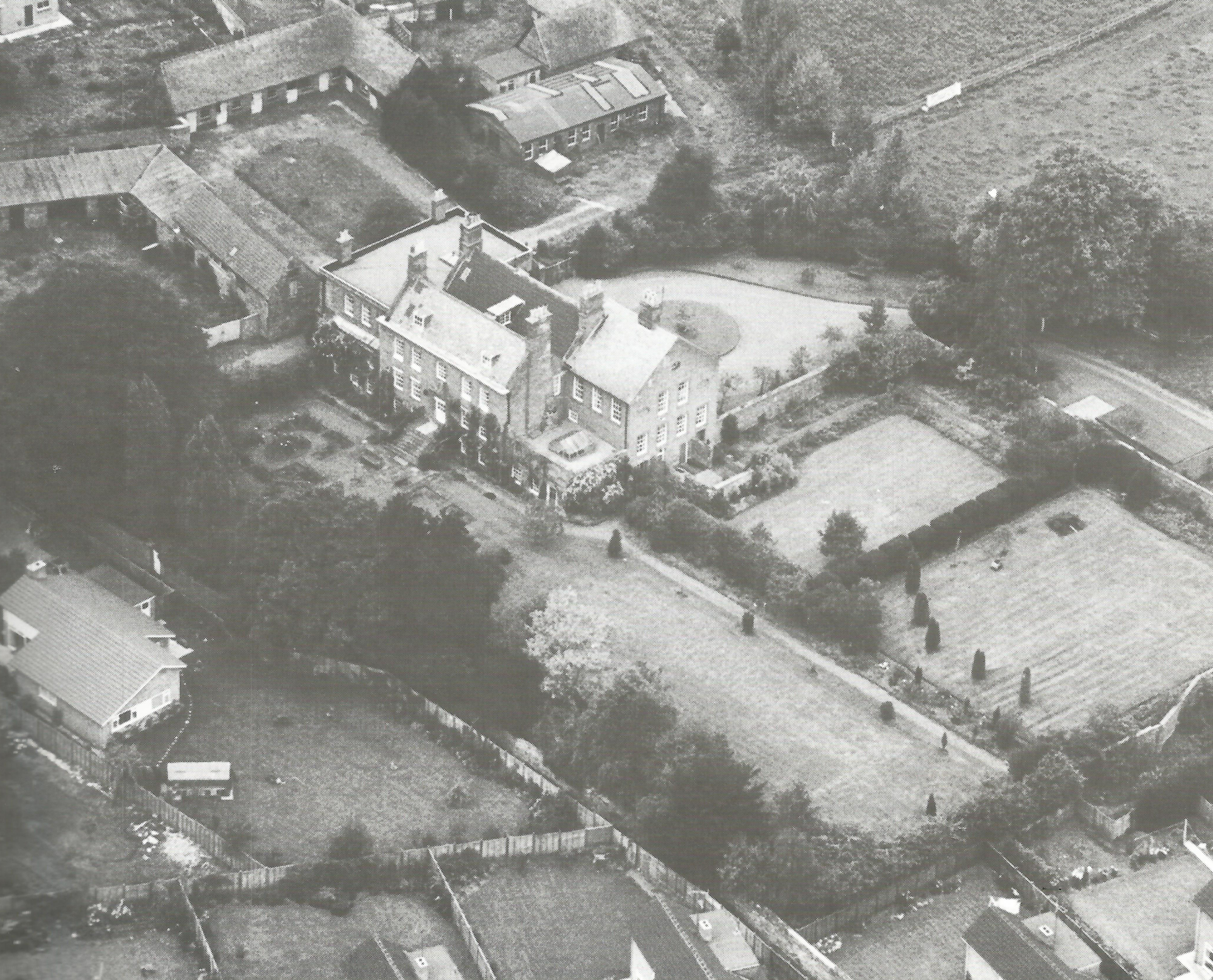
An aerial view of the house in the late 1960s
16_NetherHeyfordManorHouse1825

An aerial photo from the late 1960s lent by Julie Rands-Allen

By the sixties the Manor was still intact but with even less land as an old aerial photograph shows the beginning of the new chalet bungalows in Manor Walk built on the grounds of the old Chauffeur’s cottage. And we know that at this time it was occupied by the Architect Mr D Harwin as he was responsible for a lot of the new bungalows materialising. Raymond Wray (at that time living in Flore) was, at twenty-seven, the General Foreman for one of Mr Harwin’s building firms and was responsible for the building of this new development and he is almost certain that it would have been Mr Harwin who purchased the Manor for the sum of £18,500.

Separate dwellings

Then in 1975 with the rising tide of up-keep costs, the Manor and all its remaining land was sold to Cooper Construction Ltd of Lichfield for a housing development known now as Manor Park. Fortunately many of the trees were given Preservation Orders (the Manor itself is a Grade II listed building) and a fine old oak and many Scots Pines stand proudly still, including a very old apple tree which would have been in the old orchard near the stables and garage block.

And the Manor House became divided into three dwellings. The frontage which sports a beautiful old sundial and small oval windows became the back and the large grassed circle. the front of the Manor. The land which swept down passed the Horestone Brook and across the Nene was now all taken up with the new development. Its Glory Days were indeed over! Manor ‘Walk became built up with even more new houses but Manor Cottage — the old Gardener’s Cottage – is still there and other cottages dotted around Manor Walk and others backing on to the Churchyard still look much the same as they did when they belonged to the Manor and its estate. And although the drive that swept through Manor Park and through to Middle Street has long gone, one of the pillars which marked the entrance is still there at 15 Manor Park in Bernard Carpenter’s back garden…

Michael N Harbour, a former member of Northampton’s Royal Theatre Company bought the East Wing and was especially delighted when the BBC offered him a leading role in ‘A Last Visitor for Mr Hugh Peter’ as it depicted the story of Cromwell’s chaplain who is spending his last days after being imprisoned by the Royalists. The Battle of Naseby took place about ten miles from the Manor and Michael believes dead bodies could easily have been buried at Nether Heyford as the soldiers returned to London. Another bit of history to add to the already long one of Heyford Manor…And we mustn’t forget a piece of recent ‘history’. In the Great Northampton Floods of Easter 1998 both the East and West Wings were flooded when the River Nene broke its banks — the worst floods for over a hundred years.

Tony Landon bought the main part of the Manor and skillfully finished converting it into a period home for his family, and the Rands-Allens (appropriately hyphenated) bought the East Wing from Michael Harbour where they have lived for the past seventeen years. Gill and Tony Pont and their family live in the West Wing, keeping all of the original features, having been there for fourteen years, and Wayne and Ann Edmonds live in the little studio at the back which Michael Harbour built and lived in for a time before moving to London. Unfortunately there appear to be no sightings of ghosts from any of the occupants.

With all its history, both actual and imagined and with all the changes the years have seen, one thing remains constant. Families have lived in the Heyford Manor House over the centuries, are doing so now and will continue to do so over the Millennium and far beyond.

Julie Rands-Allen (with a little help from some friends!)

Article updated for the years 1947-1956 in Volume 4 Chapter 6:

The Story of Heyford: The Manor House 1947-1956 V4C6

~~

Extract from “The Story of Heyford” – Local book series published in the late 1990’s

Volume 2 of 4 | Chapter 5 of 11 | Pages 9 to 17
TheStoryOfHeyford_NetherHeyford_Footer

Heyford’s Historical Heritage  |  How the books were created

Index  |  Covers

The Story of Heyford: The Browning Family V2C11

The Brownings are a notorious Heyford family — notorious, that is, for their longevity! The last generation of Brownings to bear the family name in the village all died in their late nineties and early one-hundreds. The very last, Bob Browning, died aged 104 in 1997.

The Browning story begins in Maxey, near Peterborough with David Browning, a labourer, who was  born some time in the late 1790s. He married a woman called Maria and it may have been she who provided the longevity gene. Maria was born in 1798 and died in 1881, in Daventry, at the age of 83 – only a year before her own son and daughter-in-law.

Police inspector

Maria’s son, also called David was born in 1832 in Maxey and he brought the Browning family to Northamptonshire. He married Susan Price, the daughter of a butcher in 1861 and a year later went into the police force. He became the Police Inspector at Daventry and lived at the County Police Station there. The couple had nine children over thirteen years – the last three were all born within a year of the previous birth. While this is an eye—watering thought, of course it was not unusual to have so many children so close together. More remarkable, perhaps, was that seven children survived into adulthood.

Their parents, David and Susan, were not so lucky with their own life expectancy. Both died in 1882; David aged 50 and his wife, only 41. It appears that an unfortunate incident affected David’s police career and ultimately his life.

Hilda Collins, David Browning’s great grand-daughter, said that when the police inspector turned out gypsies at Dodford village as part of his duty he was attacked and, as the family recalled, “was never the same since.” He did not work again and was retired early from the force.

In the October Court Session of 1878 it is recorded: “That Inspector David Browning  be superannuated for 12 months, he has been in the force since 1862 and reported by two Medical Gentlemen as unfit to perform further duty. And it is further ordered as the Chief Constable recommends Inspector Browning for a pension that he do receive for the next 12 months an allowance after the rate of £48 per annum, the allowance to be paid quarterly; at the expiration of the 12 months Inspector Browning be then incapable of performing duty the Court will have to consider the continuation of the Allowance as a yearly Pension.”

One year later the October Session recorded that Inspector David Browning was “incapable of further duty” and was permanently retired. The pension would have been helpful but the family needed to find another income. The Brownings moved to Sheaf Street in Daventry and Susan Browning became a grocer. The census of 1881 shows Susan Browning to be the head of the family, (although David was still alive at the time) with five of her children at home. The elderly Maria Browning, Susan’s mother-in-law – who had been living with the family for at least ten years – had died just before the census was taken.

William Price Browning

Susan and David died shortly after the census, in 1882, and it was left to William Price Browning, as the eldest son, to take care of his younger brothers and sisters. He was 18 and was a commercial traveller and later, a rate collector in Nether Heyford. There must have been some financial difficulty in keeping the family together because Leonard Browning, the youngest child, was sent to Wolverhampton Orphanage at the age of six. Hilda Collins has a Bible inscribed by the orphanage and presented to Leonard. She is not sure why Wolverhampton was chosen but thinks that it might have been a connection with the police force.

Several of the Browning siblings moved to Heyford with William Price Browning (“W.P.”) including one of his younger brothers, David. He was the second son to be called David, the first having died in infancy. David Browning married into the Eales family, who ran the post office, and he kept the shop and post office from 1930 to 1955.

William Price Browning in 1923

NetherHeyford_BrowningFamily1

Photo lent by Hilda Collins (nee Smith)

The Hardly Annuals

W.P. Browning married Violet, a teacher. They lived in a small cottage near the top of Church Street and had six children within seven years! For this reason, their father referred to them as ‘hardy annuals’ little realising how hardy they would actually be. Violet – without the Browning streak of endurance – died aged 49, but all six children lived on into their late nineties or one—hundreds.

Gwendoline, the eldest child, was born in Nether Heyford in 1891 and followed her mother into the teaching profession, becoming a pupil teacher at Weedon School. In an interview for The Prattler in 1977, 86 year old Gwen remembered how “I did some self—tuition by taking a correspondence course and then later on cycled to teachers’ classes in Daventry.”

She recalled that as a child, “We’d go up to the canal at Heyford Bridge and then all the boys would change one side and the girls the other. Then we’d have a swim or watch the boats, all drawn by horses of course, being pulled up the canal.”

As a young woman, Gwen had an illegitimate daughter, Dorothy. She then married Mr Fred George and had two sons, although the eldest Philip died at 13. She could remember the village midwife, Anne Clarke: “It was quite an occasion when she brought her thousandth baby into the world.”

Like many in the Browning family, Gwen was a Baptist and actively involved in chapel life. She later claimed that her secret to a long life was “to never think about age. Forget how old you are, go wherever you’re asked and never turn down invitations.”

The eldest son, Robert (Bob) was born in 1892 and died in 1997 aged 104. He was the oldest surviving sibling. Like the other Browning children, he attended Bliss Charity School under the headmaster, Mr Cook who he remembered as a stern man. One of his earliest memories was in 1900 when a policeman from Bugbrooke cycled to Heyford to post up the call notices for the Boer War.

In 1905 at the age of 13 he left school and went to work for W H Smith in Weedon, delivering newspapers to the surrounding villages. He would walk with the post to places as far as Grimscote. Later, he joined a boot making factory in Northampton to which he cycled each day. He could always recall the terrible stench of the tanneries as he approached the outskirts of the town.

On the outbreak of World War One, Bob Browning was declared unfit to fight but contributed to the war effort by working a modern boot making machine. He married a woman called Mabel and in 1922 he moved into Northampton. However he retained an active interest in his home village and contributed occasional articles to The Prattler.

May Browning, born 1893 married Harold Smith whose family lived by the canal, beside the Bricklayers Arms before it closed. Harold’s father, Charles, was a railway signalman at Heyford South and the signal box was located on the Litchborough Road near Bugbrooke until the early 1930s.

Hilda Collins remembers how her mother, May, took the post up to Upper Heyford. A family there had a piano and May asked for no charge for her errand but just the opportunity to play it.

Winifred Browning, born 1895, married a Trinidadian, Mr Punch, which was probably considered unusual in 1920s rural England. They had two children but marriage did not survive and at the end of the 1930s, Win Punch earned her income running the fish and chip shop in the barn near The Olde Sun, taking it over from George Oliver.

Nell Browning was born in 1896 and married George Bennett with whom she had a son, Bill. The youngest sibling, Fred, was born in 1898 and lived to be 98. He was an active member of the village community and involved in the parish church — particularly bell ringing. He married a woman called Gladys and lived in Furnace Lane.

Despite the size and longevity of the family, the Browning name did not survive this generation. Of nine children born to the siblings, eight were born to the sisters under their married names and the other was a girl who also married. However, the Browning stock continues in the village through the Collins family, with its most recent name change, by marriage, to Willgress.

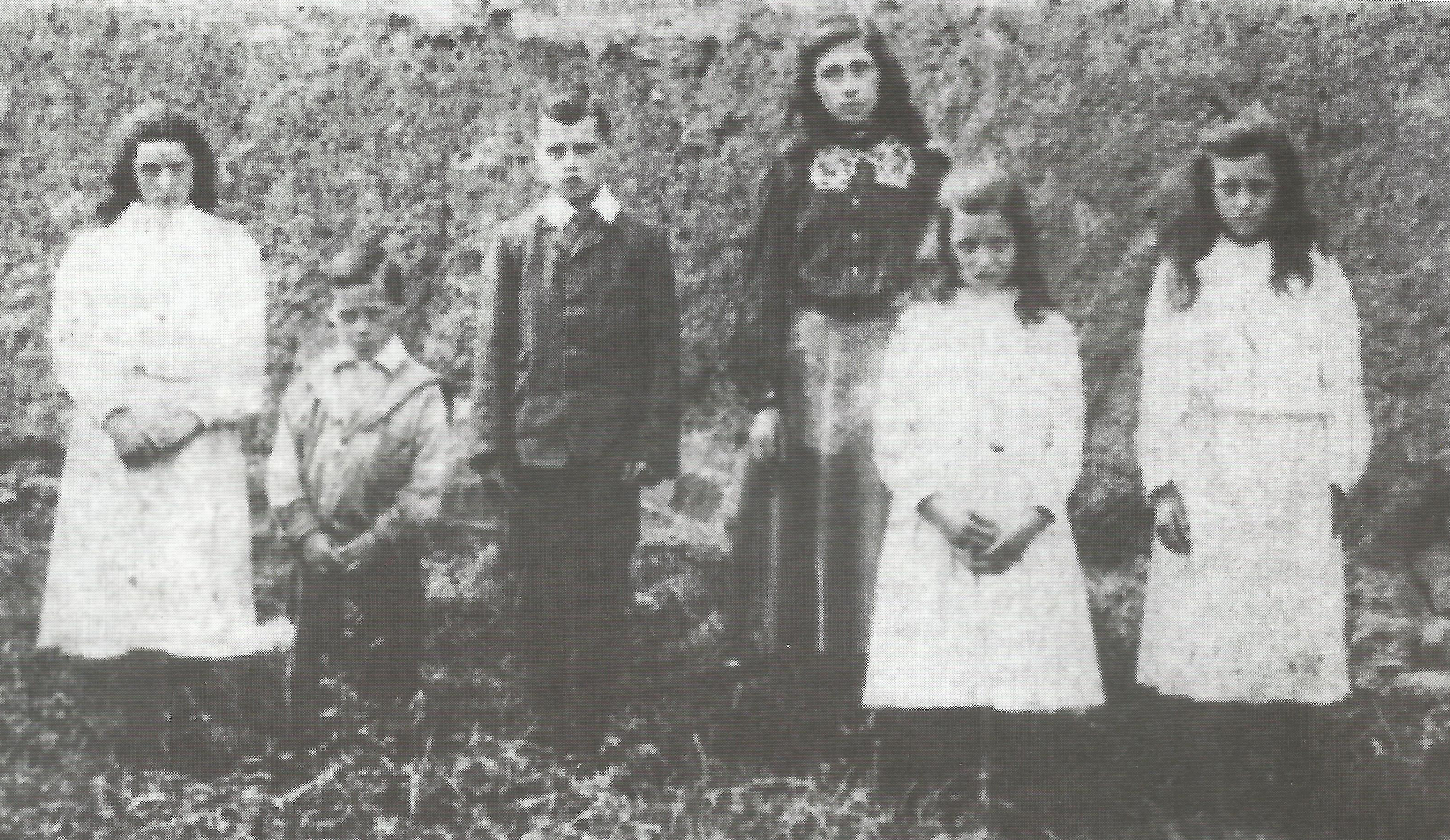
The six Browning children as they appeared around 1906

NetherHeyford_BrowningFamily2

Left to right: May, Fred, Robert, Gwen, Nell, and Win

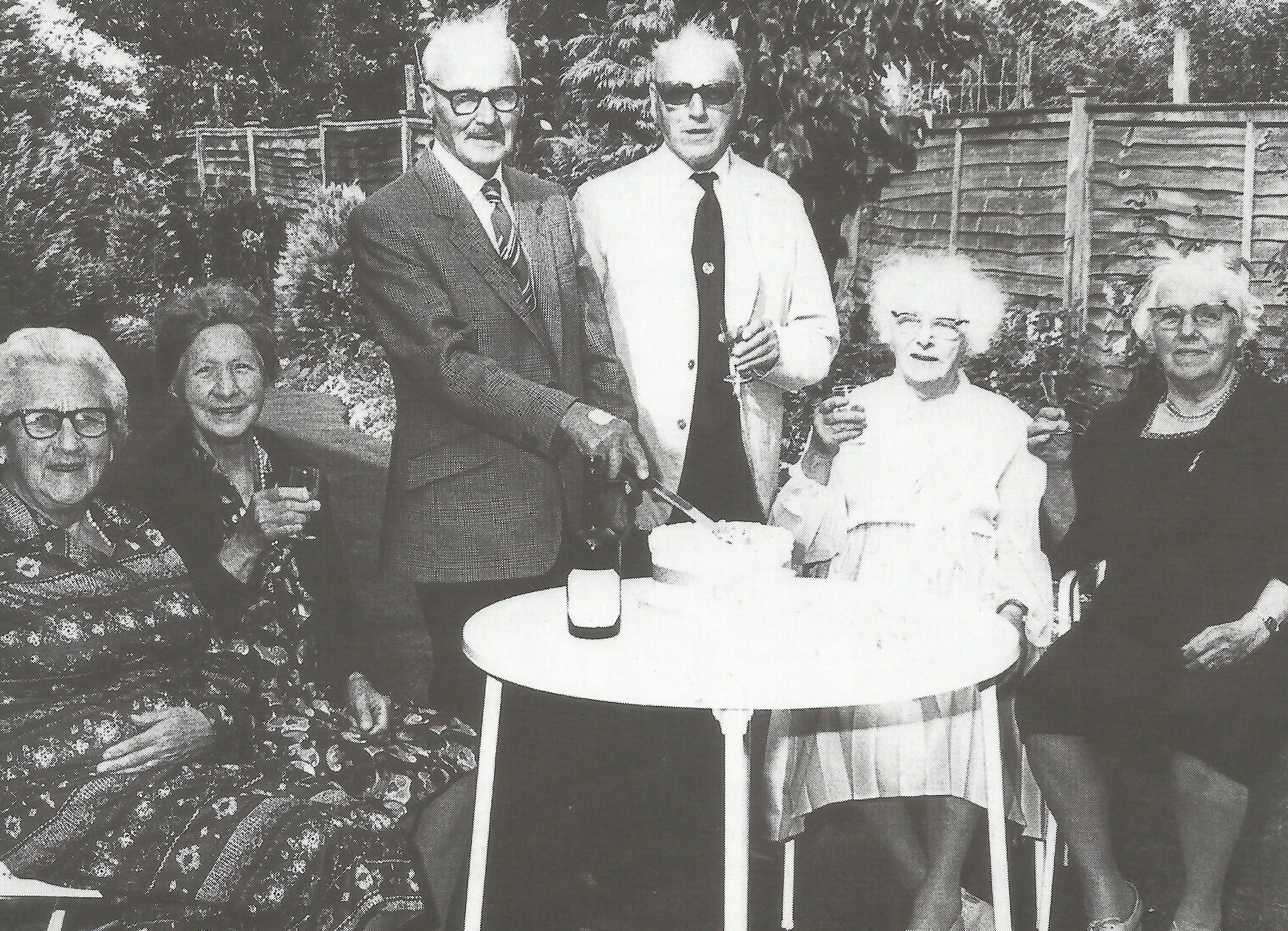
The family on the occasion of Bob’s 90th Birthday celebration

NetherHeyford_BrowningFamily3

Left to right: Mrs Winifred Punch (87), Mrs Gwendoline George (91), Bob Browning (90),
Fred Browning (84), Mrs May Smith (88), and Mrs Nell Bennett (86)

Photos from an article in the Chronicle and Echo August 1982

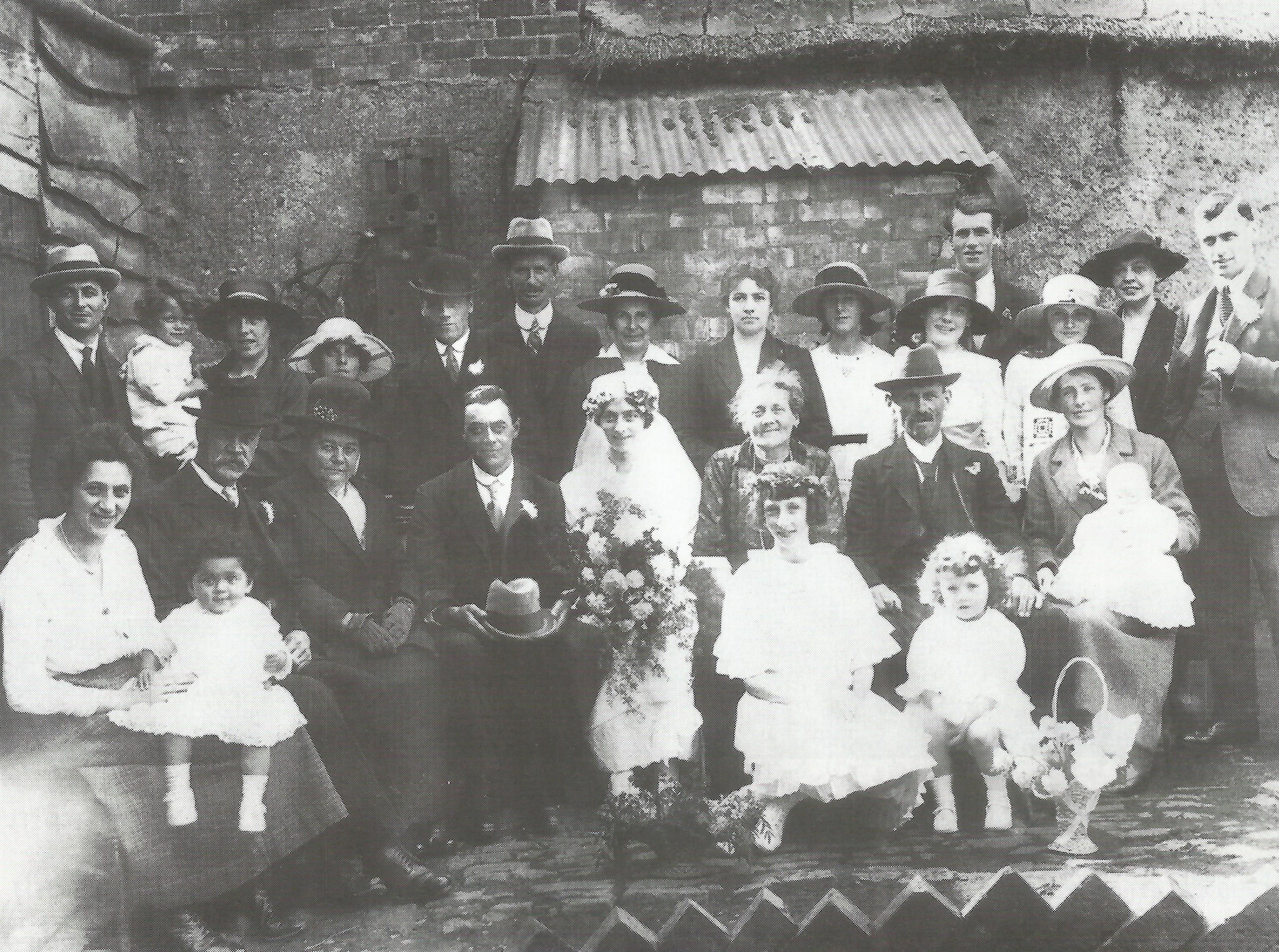
W.P Browning’s family on the occasion of his daughter’s wedding in 1921

NetherHeyford_BrowningFamily4

Top: George Bennett, Bill Bennett, Nell Bennett (nee Browning), Gladys Browning, Fred Browning, Friend, Friend, Mabel Browning, Friend, Friend, Fred George, Friend, Friend, Bob Browning

Middle: Win Punch (nee Browning), Odette Punch, Charles Smith, Harriet Smith, Harold Smith (bridegroom), May Smith (bride), Violet Browning, W.P. Browning, Gwen George (nee Browning), Philip Browning

Bottom: Dorothy Browning, Ellen ‘Nen’ Browning

Photo lent by Hilda Collins (nee Smith)

‘Progress’ by Bob Browning (1892-1997)

These days it seems there’s such a fuss about which foods are good for us.
What’s worse, I notice with dismay, the list grows longer every day!
They’re all the things that I miss most: Yorkshire puddings, Sunday roast,
Mash and bangers, eggs and ham, warm scones and strawberry jam,
Toast with butter, thickly spread, beef dripping on fresh-baked bread
Cheese and chicken are suspect too. I really don’t know what to do!’
Obediently when I was small, what Mother served, I ate all,
It seems to me now I am old, I still must do what I am told.
I’m over four score years and ten, and won’t see ninety—five again.
Since everything I ate was wrong, I marvel that I lived so long!

The words of Bob Browning whilst in Bethany Homestead where he spent his later years.

The Post Office

Other Brownings contributed to life in Nether Heyford. As mentioned, David Browning, brother to W.P., married into the village’s post office family. His wife, Annie, Was a member of the Eales family who had run the business since 1877.

John Eales was the village’s first postmaster and ran the post office and shop for 30 years before handing it on to his daughter Amy. She took over in 1907, When the shop and houses on the site were auctioned at The Old Sun Inn and bought by Amy Eales for £320.

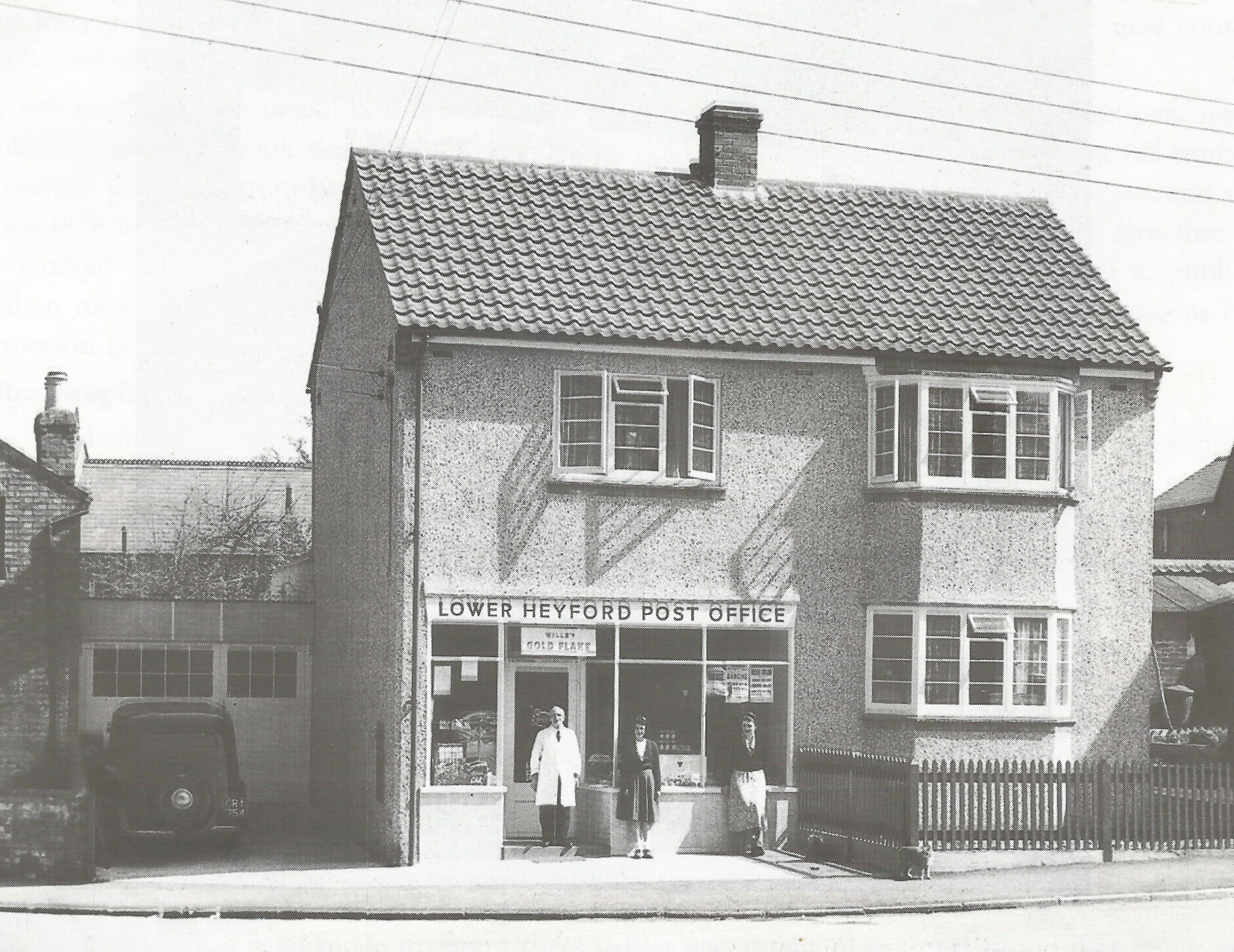
David and Annie Browning then took over in 1930 during which time the thatched premises was pulled down and replaced by the present corner—shop building, They had a daughter, Ellen (‘Nen’) who was born in Manor Cottage, Church Street in 1907. Nen taught in the village school before succeeding the shop and post office from her father in 1955.

David Browning outside the post office in the 1950s.

NetherHeyford_BrowningFamily5

Photo lent by Judy Armitage

Nen Blaney 

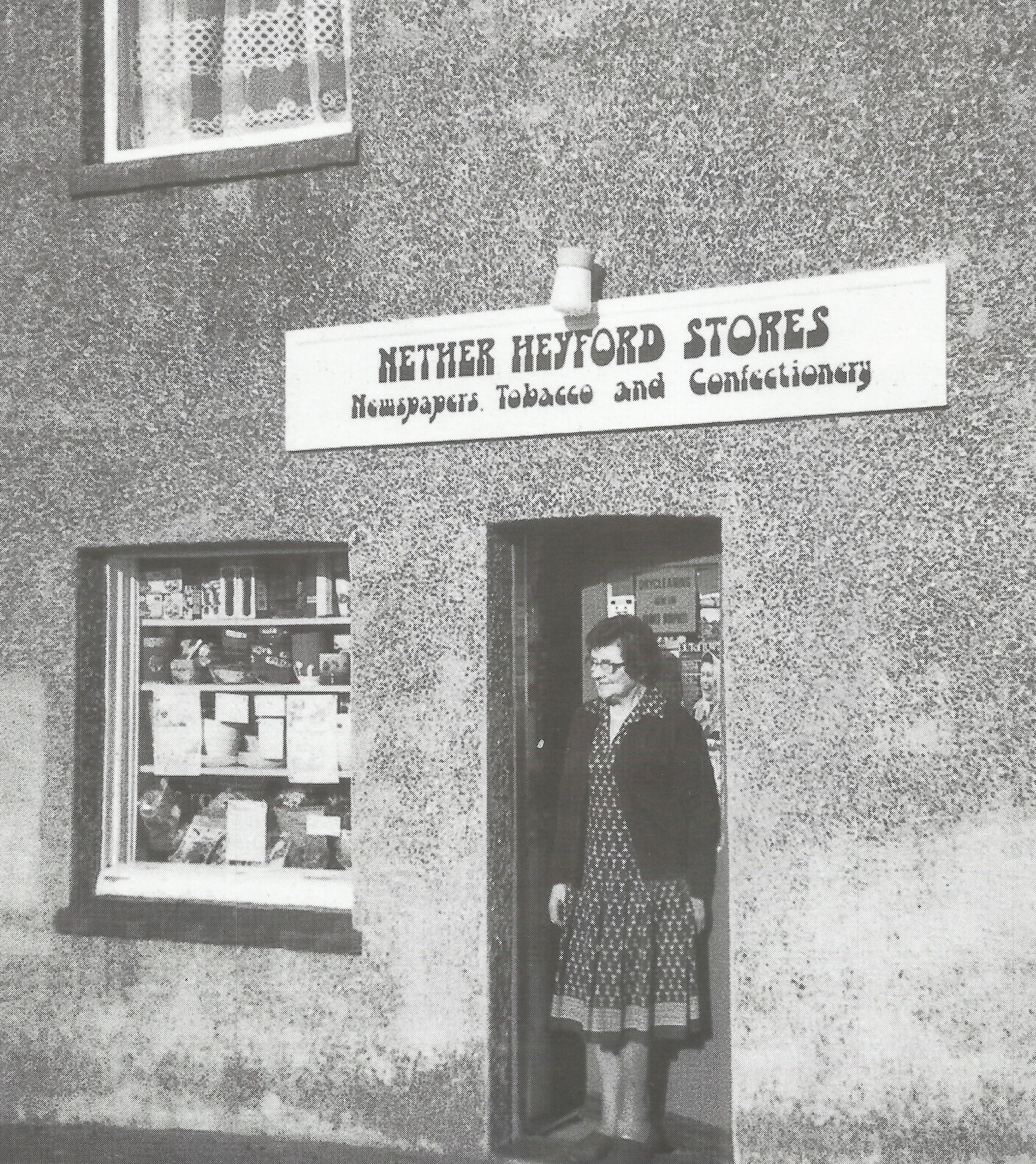
Nen ran the business until 1968 When, on the death of her husband, Major W. Blaney, Nen sold the shop to a Mr and Mrs Eales (apparently no relation) and opened the newsagent and post office next door. She continued working until 1986 — retiring gracefully at the age of 80!

Nen Blaney had many memories of Heyford. Her uncle, Mr J. Earl, ran a carrier’s cart to Northampton on Wednesdays and Saturdays. She recalled that “the first bus we had in the village was a coal cart that  travelled once a day and was run by a Mr Harold Botterill from Bugbrooke. On Saturdays it was a bit different because they put a shed thing (a wooden structure) on top as a cover.”

Mrs Blaney outside her post office

NetherHeyford_BrowningFamily6

Photo lent by Judy Armitage

She also remembered a postman named Albert Bates Who used to cycle in from Weedon with the post, hand over Nether Heyford’s share and then cycle on to Bugbrooke. Nen Blaney’s own working day was long; starting at 5am and often finishing around midnight. Despite this demanding schedule, Nen Blaney was chairwoman of the British Legion Women’s Section for over 20 years.

She was proud to be invited to the Queen’s Birthday Party at Buckingham Palace in 1971 in celebration of the Legion’s 50th anniversary. Major Blaney chaired the British Legion’s Northamptonshire Branch and served Nether Heyford on the Daventry Rural District Council, of which he became chairman. Family of Nen Blaney still live in the village today.

Sarah Croutear

~~

Extract from “The Story of Heyford” – Local book series published in the late 1990’s

Volume 2 of 4 | Chapter 11 of 11 | Pages 26 to 32

TheStoryOfHeyford_NetherHeyford_Footer

Heyford’s Historical Heritage  |  How the books were created

Index  |  Covers

Planning – Development site at Stowe Hill

A letter from Stowe Nine Churches Parish Council:

Development site on the A5 at Stowe Hill 

Application Number DA/2015/0195 – 5th Feb 2016

The application for this site was opposed by Stowe Nine Churches, Weedon Bec and Flore Parish Councils and by South Northants Council and Highways England, but was granted by Daventry District Council (DDC).  Objections included the unsafe access onto and off the A5, development in the open countryside and the long-term intentions of the applicant for more than one pitch or for use as a transit site.  Stowe Parish Council has also always had concerns about the ability of DDC to adequately enforce any transgressions of the permission.

The consent was for ’Use of land for stationing of caravans for residential purposes Oner Gypsy and Traveller pitches, formation of hardstanding, resurfacing of partially overgrown access track and conversion of existing building to dayroom ancillary to that use’ with a condition that ‘no more than one mobile home and one day van shall be stationed on the site at any one time’ and one that ‘The development shall not be occupied until highway improvement works to the access from the site to the A5 are compete…’

In April, Stowe Nine Churches PC raised the matter of the significant clearing of the site far in excess of that which had been approved and asked DDC to ensure that the development complied with the original proposal ‘and that additional pitches are not approved retrospectively’.

In May 2019 the Deputy Chief Executive of DDC said that there were ‘on-site unauthorised works to create a hardstanding beyond the planning permission’………..that ‘a retrospective/new application had been suggested’ and ‘their intention that additional vans will be coming to live on the site – they say in 2-3 years . He states that DDC were taking legal advice on their options but that there was no intention on the part of DDC to use that site as a ‘Stopping Place’.

Since May, Stowe Nine Churches has been supported by the Weedon District Councillors in endeavouring to ensure that DDC enforces the terms of the original planning consent, with little success.  We were told that no residents would be allowed on the site until the Highways England requirements for the entrance were met – which was a condition of the permission! -These works have not been completed, but there are now at least 5 static units on the site and rumours that up to 30 more units could be added once the necessary hard core has been delivered (3000 tonnes in 150 loads has been ordered from a local contractor!).

Executive Director (Community) Maria Taylor stated recently that the site is approved for residential use ‘for one traveller family only’ but that is not what the original permission said (see above).  There is a difference between one pitch (1 static and 1 mobile home) and one family – which could be a very extended family group in multiple caravans, and the consent was not personal to one family.

Our concern has always been that we did not feel confident that DDC would ensure that the terms of the original permission would be adhered to, on the basis that previous developments within the parish have been granted retrospective consent when works had ‘strayed’ from the original plans.

The Parish Council (Stowe Nine Churches) monitors all of the consents applied for and granted, as they occur and until the development is completed, and has called attention to perceived breaches as appropriate.  The system and rules should be made to work for everyone, not just those residents who are careful to comply with what has been granted.  If developers and land owners believe that they can do as they please, confident that they can get ’retrospective consent’ after they have built what they wanted, what is the point of the planning system?

Councillor Johnnie Amos, who has been dealing with this matter on behalf of the Parish Council, has been asked by DDC officers – where is the harm?  How many people care about what is happening? He has suggested that as a Parish Council we canvass the opinion of our residents.

If you feel as strongly as the Parish Councillors do – that ‘permission’ should mean what it says, then write to planningenforcement@daventrydc.gov.uk  and let them know how you feel.  The more correspondence they receive, the more likely they are to act. (Please copy in the parish clerk so that we can monitor the level of concern clerkstowe9churches@gmail.com )

Circulated by Stowe Nine Churches Parish Council

Daventry District Council planning website direct link: Application Number DA/2015/0195

Reference Number: DA/2015/0195
Registration Date: 09-Mar-2015
Application Type: FULL PLANNING
Parish: Stowe Nine Churches
Ward: WEEDON
Main Location: Land At Stowe Hill, Watling Street, Weedon (Stowe IX Churches Parish), Northamptonshire

Case Officer: Mr B Allen
Proposal: Use of land for stationing of caravans for residential purposes 1 No. gypsy and traveller pitches, formation of hardstanding, resurfacing of partially overgrown access track and conversion of existing building to dayroom ancillary to that use. Part Restrospective.
Decision: Approval Full
Decision Date: 05-Feb-2016


Nether Heyford Neighbourhood Watch 2020

Nether Heyford Neighbourhood Watch.jpg

Nether Heyford & Upper Heyford Neighbourhood Watch 2020

NEW scheme revival for 2020

New Coordinator (Jez Wilson @ The Prattler)

New Deputy Coordinator (Sue Boutle @ The Prattler) 

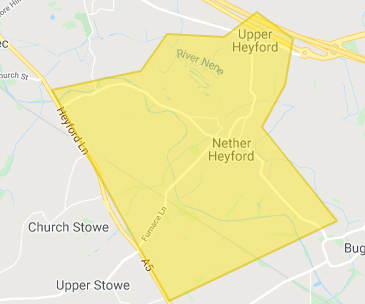
New larger geographical area includes the full parish areas of Nether Heyford & Upper Heyford

The scheme is open to village residents only and all applications should be made online: www.ourwatch.org.uk/scheme/25380/nether-heyford-and-upper-heyford

Neighbourhood Watch itself began life in the UK over 30 years ago in response to rising crime, but today, as times change, it covers all aspects of keeping safe.

In 1983, Northamptonshire Police set up a Neighbourhood Watch scheme which was seen as one of the first in the country. Five years later, in 1988, the Northamptonshire Neighbourhood Watch Association was formed to establish and run the scheme as an independent organisation.

Neighbourhood Watch is the largest voluntary crime prevention group in the country. It is based on the idea of communities coming together to reduce crime and increase community cohesion.

Nether Heyford has a long history of having a Neighbourhood Watch scheme and indeed supported Northamptonshire Police with a scheme from the early beginnings in the 1980’s.

Since then there have been the following developments:

1995:  CrimeStoppers 0800 555 111
The Community Action Trust that began in 1988 with a simple phone line to report crime anonymously became CrimeStoppers  a National Freephone number 0800 555 111 available 24 hours a day, 7 days a week, 365 days a year. crimestoppers-uk.org

CrimeStoppers

2007: “Neighbourhood Watch” becomes a National Organisation
Neighbourhood Watch representatives formed local, county and regional groups and in 2007 with the support of the police and the Home Office the first national umbrella organisation for the movement was established. www.ourwatch.org.uk

2011: National freephone number 101 is launched for reporting non-emergency incidents.
Call101

2015: Northamptonshire Police launch new ability to report crimes online www.northants.police.uk

northamptonshire

2017: Northamptonshire Neighbourhood Alerts – Email subscription service for crime reports from across the county. www.northamptonshireneighbourhoodalert.co.uk

NNA

2017: “Neighbourhood Watch” became “Neighbourhood Watch Network” a Charitable Incorporated Organisation www.ourwatch.org.uk

2018: A Facebook group was set up Nether Heyford Neighbourhood Watch it’s aim to notify people of incidents which are happening in and around Nether & Upper Heyford.

NH NHW Facebook Header

2019: New Police Community Support Officer (PCSO)
Nether Heyford Parish Council funds a new PCSO for the village. PCSO Matt Taylor also serves as PCSO for the neighbouring village Bugbrooke.

2020: Nether Heyford Neighbourhood Watch scheme
The 2020 scheme revival is a fresh start for the village “Neighbourhood Watch Register” and expands the scheme area to include the complete parish area and Upper Heyford. Also completely linking together with the Facebook group, Northants Neighbourhood Watch, The Parish Council, The PCSO and The Prattler.

The scheme is open to village residents only and all applications should be made online: www.ourwatch.org.uk/scheme/25380/nether-heyford-and-upper-heyford

Village Benefits:

People join Neighbourhood Watch for many different reasons, whether it is to improve safety around their home or to become part of a group and meet new people. It is widely regarded that being part of Neighbourhood Watch can:

  • Reduce / prevent local crime and disorder
  • Reduce fear of crime
  • Protect the vulnerable and elderly
  • Safeguard property
  • Address issues relating to anti social behaviour
  • Create safer neighbourhoods
  • Build community spirit and cohesion
  • Reassure members of the public
  • Enhance partnership working with other community groups
  • Assist in the detection and apprehension of criminals through members providing information to the police
  • Improve quality of life and the local environment

Member Benefits:

  • Email alerts of crimes and issues affecting Nether Heyford, Upper Heyford and the surrounding areas.
  • Crime prevention advice to help protect your family and belongings.
  • Latest information on current scams and criminal activity in the area.
  • “No Cold Calling” and “Neighbourhood Watch Area” stickers and advice leaflets available.
  • Opportunity to help vulnerable village residents to help tackle loneliness in the community.
  • Join the register of community residents who may be called upon in times of national emergency.

New 2020:

  1. A new coordinator (Jez Wilson @ The Prattler)
  2. A new deputy coordinator (Sue Boutle @ The Prattler)
  3. The geographical area of the scheme has been increased to include everyone inside the parish boundary up to the A5, Heyford Mill and the village of Upper Heyford.HeyfordWatchArea
  4. Previous members who signed up online via the website have been contacted and are considered members of the new 2020 scheme. Theses members are in the process of being verified by the coordinator to establish continuation of membership or if they have moved from the area.
  5. Previous members of the village scheme who signed up at meetings or via the telephone/post/visits are no longer recorded as official scheme members and the member list no longer exists. Theses members are encouraged to sign up again online [The scheme must hold all membership details within the the official system/website/database in order to comply with all areas of General Data Protection Regulation.]
  6. The previously unofficial Facebook Group Nether Heyford Neighbourhood Watch now becomes an official scheme news channel with the new NHW scheme coordinator (Jez Wilson @ The Prattler) as Facebook group admin.

It’s aim to notify people of incidents which are happening in and around Nether & Upper Heyford. The group now has over 400 members with 15 volunteer moderators from the village helping to reacting quickly and maintain the integrity and rules of the group. Anyone can join to follow/share/comment on anything that’s happening in Nether Heyford and Upper HeyfordThe Facebook group welcomes all new members who agree to the small number of rules, its a good opportunity to stay up to date for those who have family and friends in the village or have an active interest in the area. All members of the Facebook group are very much appreciated and all views, posts, shares and comments are all important to the overall success of the official village scheme.

It should be noted that being a member of the NHNW Facebook group doesn’t mean membership of the official Nether Heyford & Upper Heyford Neighbourhood Watch scheme.

The scheme is open to village residents only and all applications should be made online: www.ourwatch.org.uk/scheme/25380/nether-heyford-and-upper-heyford


The Story of Heyford (Extra): Heyford Home Guard WW2

Nether & Upper Heyford Home Guard (WW2)

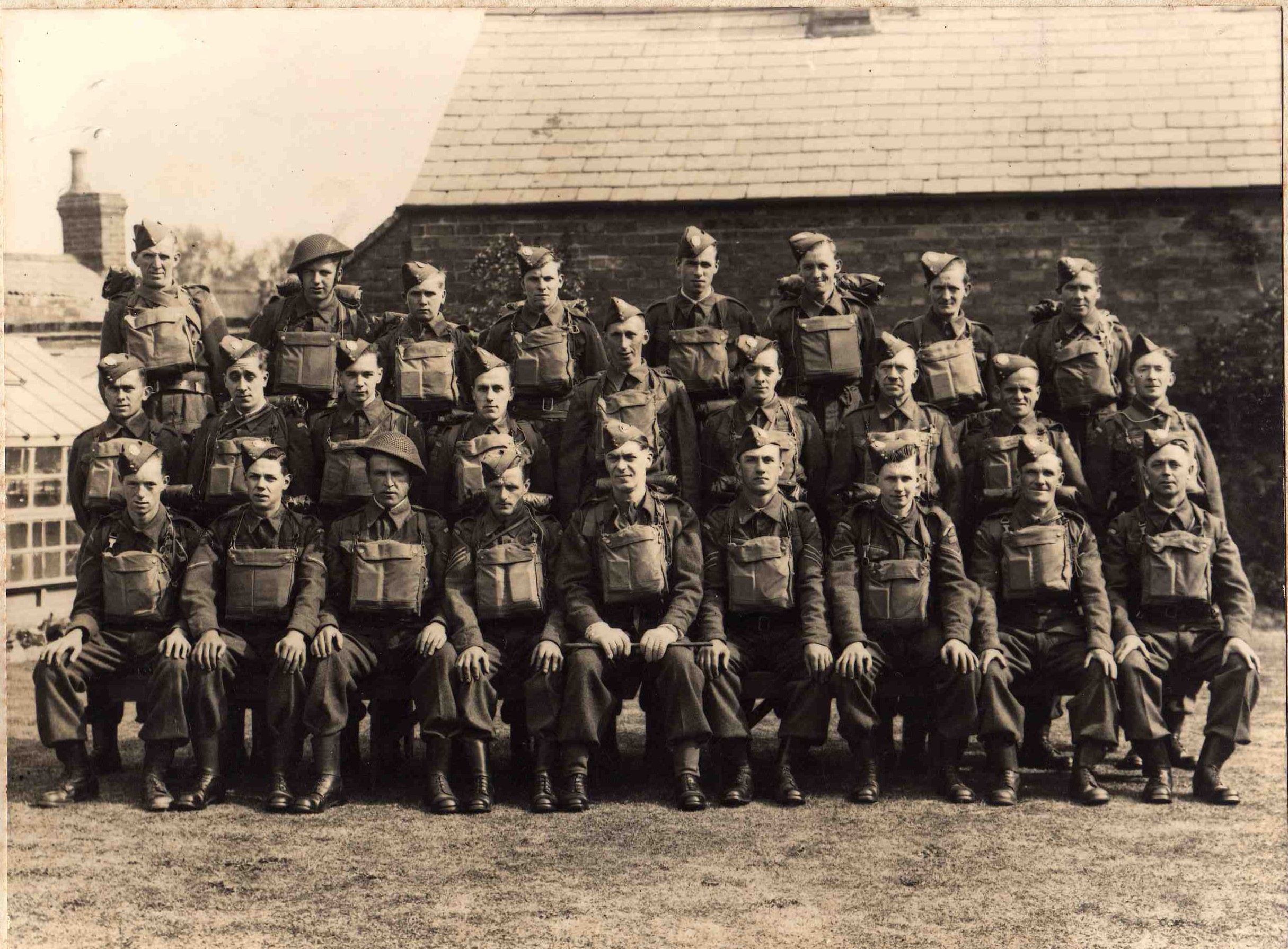
The Home Guards met twice a week in the yard of the Foresters Arms, where they had their stores. The Commanding Officer was Charlie Highfield, chosen because of his army career.

Nether Heyford Home Guard.jpg

Back row (L>R):
Alf Adams, Stan Faulkner, Joe Matthews, Arthur (Batty?) Charvill, Jeff (Geoff?) George, Dick Fisher, Ron or Frank (?) Taylor, Fella Masters (the only name he was known by!)

Middle row (L>R):
Reg Collins, Tom Eales, Charlie Masters, Jack Butcher, Frank Reeve, Dave Ward, Herbert (Horace?) Blood, Amos Lee, Les (Bob?)Foster

Front row (L>R):
Bill Spokes, Anselm Banner, Sid Blencowe (Joe?), Harry Haynes, Charlie Highfield (Captain), Ted Wright, Joe Garratt, Joe (Joey?) Charvill, Arthur Mead

Thank you to the following villagers for the names: Joe Garratt / Michelle McMillan / Tom Harrison / Anna Forrester / Garry Collins / Zoe Highfield / Richard Eales / Keith Clarke /  Trev Clarke / John Butcher / Charlene Zambo / Shirley Collins

Follow more Nether Heyford history, stories and photos on the Facebook group – Nether Heyford Past “Thanks for The Memories”

Please contact The Prattler if you can confirm any of the name spellings or nicknames. Also if you have any information on the Home Guard activities or any memories to share then send them in and we can update this page.

Jez Wilson 

Parish Council – December 2019 Meeting

Nether_Heyford_Parish_Council_2019

The December meeting was held as normal on Monday 6th in the  Baptist Chapel Schoolroom.

Like all Council meetings it was open to the public.

Reports from the District and County Councillors: A report from Cllr Brown was read out, explaining that progress towards Unitary authorities was on hold due to the current political situation. He also gave details of NCC’s draft budget consultation. Cllr PB also referred to the uncertainty regarding the initiation of the Unitaries because of the General Election. He gave details of the refuse collections over the holiday period.

Public Participation: Mrs Matthews expressed concerns over the situation regarding flooding in Watery Lane and in support of the proposals of the highways department to alleviate it.

PCSO:  was felt to be doing a good job, and was visible and friendly.

Streetlights: Lights outside the Baptist Chapel, 15 watery lane, between Bliss Close and the Luddle, and Rolfe Cresc. all to be reported as out.

Roads and pavements: Poor condition generally. Conifers in South View had been cut.

The Green and Play Area: The Green was felt to be in good order. CK felt more trees were needed, AW wondered whether sponsoring would be popular. Play Area inspected and no problems.

Playing Fields: Netball Court had been started.

Trees: Churchyard and Green pollarding to be done in early New Year.

Allotments: Wildlife area progressing well. Pond being developed. 5 Allotments free.

Footpaths: Very muddy in the exceptionally wet weather.

Churchyard: Hedges trimmed, wall in good order.

Canal: MB reported the dog mess situation had improved.

Joint Burial Board: Fallon name plate details to be kept on file. 3 recent interments.

Youth Club: All going well. PCSO had visited to introduce himself.

Defibrillators: Both checked and in order.

To reconsider the situation regarding kerbs in Watery Lane. Discussion took place about the reasons for the problems in Watery Lane and about the proposed solutions from Highways, who recommended raising the dropped kerbs on the residential side of the road opposite the allotments, and dropping the kerb on the allotments side by 1 ½ – 2 inches over a 3 metre length. Highways have the funding to do the work. Resolved To support the Highways plan.
Resolved. To purchase a Sand Bin for placing in the area, and later to purchase sand and bags when it is installed.

To consider the provision of an office. This was a long term project, deferred for the present.

Church roof/Alarm. Council considered a contribution towards funding for a replacement steel roof, and an alarm system. It was felt an immediate contribution could be made, and further assistance given if required. Resolved. £1000 to be contributed towards the replacement roofing.

To consider removing the Memorial Green hedge. Resolved. To remove the hedge.

To consider signing the Armed Forces covenant. Resolved. To sign the covenant.

Grants Policy – to adopt. Deferred.

Neighbourhood Plan – No report on progress due to the illness of Mrs Corner.

To consider the recommendations of the Finance committee regarding the 2020/21 Precept. In light of the decisions at the meeting it was felt better to defer acceptance of the Finance Committee recommendations until January.

ACRE Village Awards 2020 – Resolved. To support the Village Hall Management application to be put in by Alwyne Wilson.

PDF of Full Minutes December 2019

Reporting Highway and Footpath Issues. The Clerk will report issues that Council is made aware of, but Council would encourage residents to use the FixMyStreet service to report issues themselves as there will then be no time lag and first-hand reports are almost always better than 2nd or 3rd hand reports. The service can be found here: www.fixmystreet.com 

It is easy to use; you can have your own account and can check up on any issues you have reported.

Council meetings take place on the first Monday of each month (unless there is a Bank Holiday)

Clerk to the Parish Council: Guy Ravine, c/o Old Dairy Farm, Upper Stowe, Weedon, Northamptonshire, NN7 4SH
Telephone: 07935 931787
Email: netherheyfordparishcouncil@gmail.com

Next Meeting
The next Parish Council meeting will be on the first Monday of the month at the Baptist Chapel Schoolroom at 7.30 pm and is, like all Parish Council meetings, open to all Parishioners.

For further useful information about Nether Heyford Parish Council and full contact details for the clerk and the councillors please visit our Nether Heyford Parish Council page.

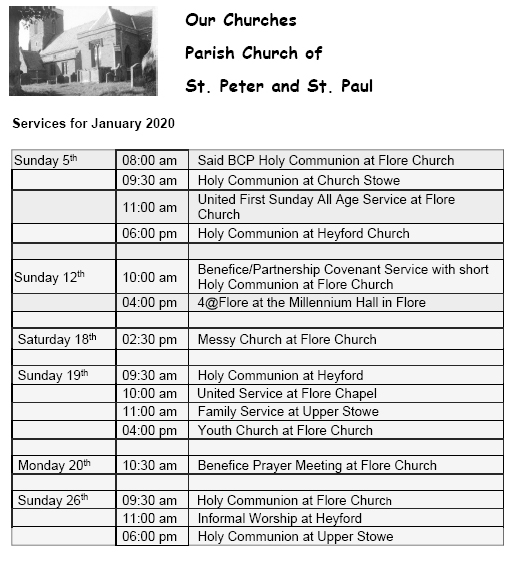
Parish Church of St. Peter & St. Paul – Services – January 2020

NetherHeyfordChurchServicesJan2020

Midweek Communions are held weekly on Wednesdays, 9.30am at Heyford and Thursdays, 10am at Flore, – all are welcome (Not Wednesday 1st January)

Prayer During January we shall be praying for people living in Church Lane and Weedon Rd in Heyford, Spring Lane and Russell Rise in Flore, Francis Row in Upper Stowe and the Stables and Coach House in Brockhall.

Rev Stephen Burrow (Tel. 01327 344436)