Blog

The Story of Heyford: Heyford Mill V3C7

The Domesday Survey of 1086 includes a record of ‘Haiford with one mill rendering 16s.’ There has presumably always been a mill on this site since those days. The mill buildings are marked (though un-named) on Eyre’s/]effrey’s map of 1771. Bryant’s map of 1827 marks them simply as ‘mill’, but the one inch OS map of 1835 shows it specifically as ‘Heyford Mill’. There were a number of mills along this stretch of the river Nene – at Dodford, Flore, Heyford, Bugbrooke, Harpole, Kislingbury, and Upton. Sadly though, like most of the others, Heyford Mill has fallen into disuse.

The current buildings, though now derelict, consist of a millhouse, a cottage, and several barns and outbuildings. The building at right angles to the mill stream appears to be the oldest one on site and it is thought to have had an undershot waterwheel. The building on the south side of the stream is considered the most recent, and had an overshot waterwheel. There is a plague built into the front wall of the mill which states: ‘].D. — erected 1821, restored 1881’. The lower part of the buildings are of stone and probably form the original part built in 1821. The upper part which is of brick was probably added
during the 1881 restoration.

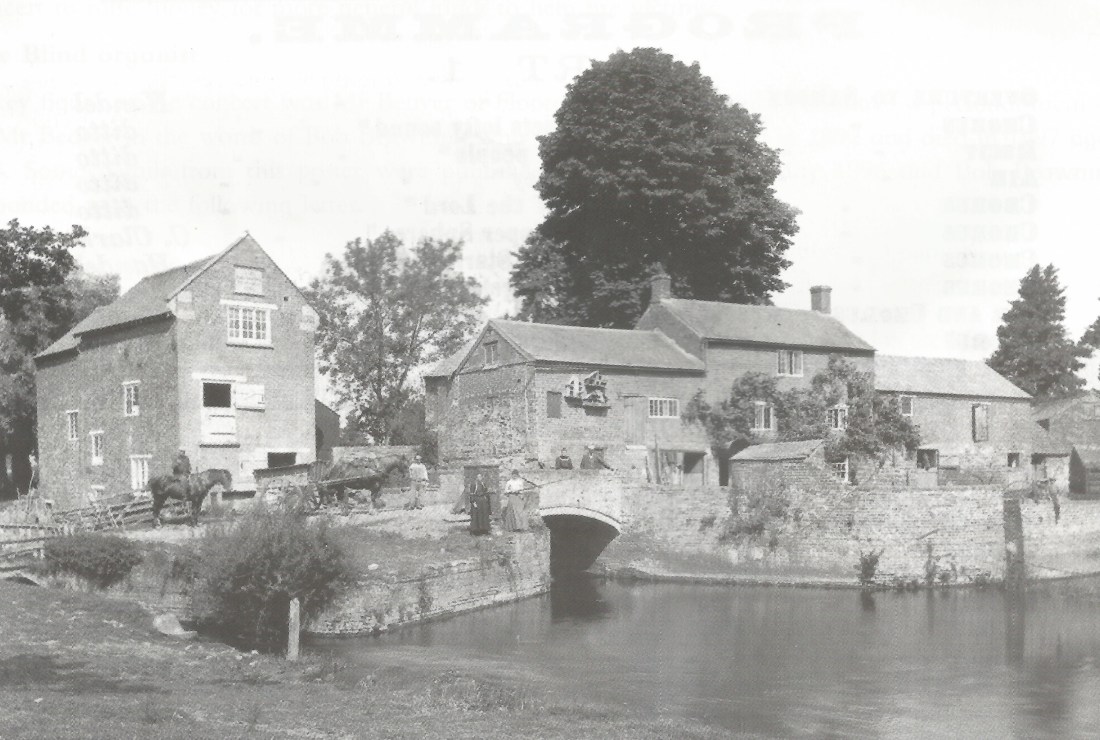
The mill in the early 1900s
NetheryHeyford_Mill_1900

This photograph, lent by David Banner, shows the mill buildings as they appeared in the early 1900s. The building on the left is the new mill with an overshot wheel. In the apex above the window is the plaque referred to in the paragraph above. The building on the other side of the bridge is the old mill with an undershot wheel. The slightly taller building in the centre is the mill house, and to its right is the stable block.

The Cosford family

From the late 1700s until the early 1900s the mill was run by the Cosford family. The militia lists of 1777 and 1798 for Upper Heyford both refer to ‘Thomas Cosford, miller, with one water mill capable of grinding 20 quarters per week’. The census returns for 1841 and 1851 show the occupants of the mill as being George Cosford, born around 1804. Also living there were his wife Sarah, their twelve children, and three servants. George Cosford died in 1867. The census return of 1871 shows the occupier as George’s son Edwin George. He was born in 1845. The Kelly’s directories of 1885 and 1914 both list ‘Edwin George Cosford of Upper Heyford’ as ‘miller using water power only’. Edwin’s son, Arthur Thomas, ran the mill with him.

The Banner family

During the first world war, John Banner came to work for Edwin and Arthur Cosford as their miller. He later took over the rent of the mill and continued to run it with his son John. The Banner family continued to run the mill until it eventually closed in the 1960s. Around 1915 John Banner bought a bakehouse in Weedon where his other son James did the baking. They ground the grain at the mill and mixed it with other grades of flour to make bread. James’ wife became known as ‘the bakers lady’ because she took the bread by cart to the villages.

After a lifetime of working in a dusty environment, John Banner developed ‘millers asthma’ and he eventually died in 1933 at the age of 63. His wife continued to live at the cottage until she died in 1943. She was the last member of the family to occupy the cottage.

Around this time, James and John bought the mill (it was originally only rented) and continued trading under the name of Banner Brothers. In addition to growing and grinding their own grain, they provided a milling service to other local farmers. Some of the farmers who came were Charlie North from Upper Heyford, and Billy Whitton, Reg Collins, and Oliver Adams from Lower Heyford. The route from Lower Heyford was along Church Street, through the Manor yard, across North field, and over Coach Bridge. This route from Lower Heyford to the mill is clearly marked on the 1834 ordnance survey map as a track, but on the modern map is shown only as a footpath.

Coach Bridge

Coach bridge was an ancient stone bridge, just wide enough to take a horse and cart across the river. However it had fallen into poor repair and was eventually dismantled in the early 1960s. Now it has been replaced by a simple concrete foot bridge behind Manor Park.

Bob Browning (1892-1997) recalled Coach Bridge with the following words which he wrote for the Prattler several years ago: ‘Take a walk down Church Street, straight on past the Manor House, across the first meadow (I think it is called Manor Park now), and you will find a most unusually built bridge. The two sides are stone built, perpendicular, and it has a flat top and very stout girders of oak with oak railings. This bridge must be  centuries old and possibly was built during the Danish occupation as ‘Hei’ and ‘Forde’ are Danish words. ls this the place from which the village was first called Heiforde?’

Working life at the mill

From 1954 until 1960, the mill continued to be run by James’ sons Jim and Anslem. Jim, who provided much of the information for this article, described to me how the mill worked. The wheat or barley would arrive by horse and cart. It was carried to the top of the mill by a series of chains driven by the mill wheel, and tipped into the garners. It then ran via a spout down to the stones for grinding, and out into the tubs for the farmers to take away.

The wheel was almost certainly the one that had been there since the restoration of 1881. The cogs were made of applewood, and when they wore out, they were replaced by new ones made by a wheelwright called Les Phillips in Flore. The stones, which were of Derbyshire granite, each weighed more than a ton, and would last around twenty to thirty years. The bottom stone remained stationary, and the top one rotated. Both had grooves carved into them to allow the grain to flow. Jim and Anslem both learned the trade of ‘dressing the stones’, that is carving or ‘pecking’ the grooves in such a way as
to ensure that the grain flowed evenly.

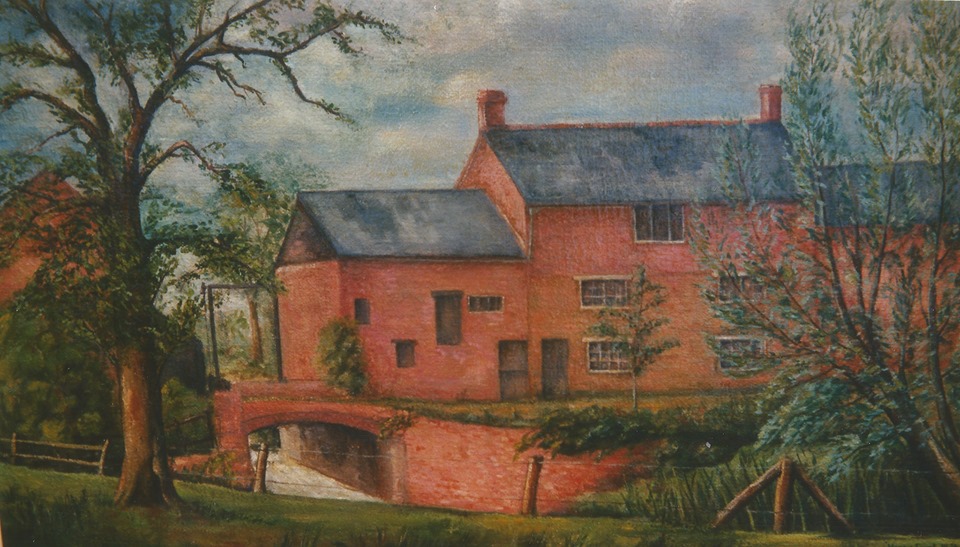
The mill as it appeared in 1976
NetherHeyfordMill_1976_C.jpg

The photograph above is from a painting owned by Jim Banner. It was painted in 1976 by Harry Frost and shows the appearance of the buildings before they became derelict.

The closure 

When the mill was working, the building shook with vibration. This eventually caused it to become potentially dangerous and too expensive to repair. This, together with the development of modern electrically-driven mills such as Heygates at Bugbrooke, made it necessary in 1960 for Jim and Anslem finally to close the mill. It was the last of the mills along this stretch of the Nene to close, and therefore marked the end of an era.

They applied for planning permission to convert the buildings into living accommodation, but it was refused because the area is in a flood plain. When the river rises it occasionally breaks its banks, and it is not uncommon for the ground floor to become flooded with several inches of water. This really made it impractical to do anything with the buildings. Until the 1970s they were in reasonably good repair, but the damage created by vandals, together with the effects of the wind and rain, have caused them gradually to become derelict.

Stephen Ferneyhough

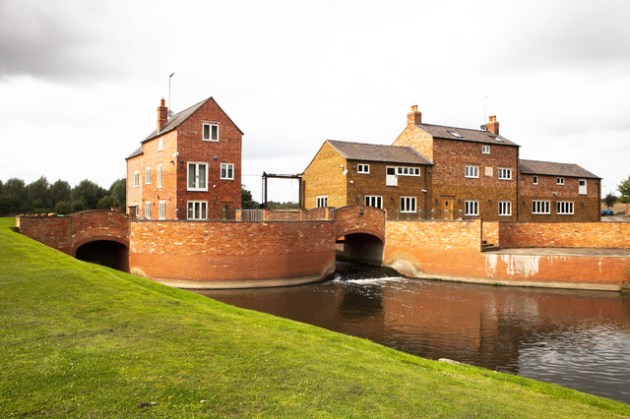
The Mill in 2020
TheStoryofHeyford-HeyfordMill2020_2

Photo by Tactico Photography:
www.tactico-photography.co.uk
www.houzz.co.uk

Jez Wilson

~~

Extract from “The Story of Heyford” – Local book series published in the late 1990’s

Volume 3 of 4 | Chapter 7 of 17 | Pages  14 to 16

TheStoryOfHeyford_NetherHeyford_Footer

Heyford’s Historical Heritage  |  How the books were created

Index  |  Covers

The Story of Heyford: Three Wise Men V3C16

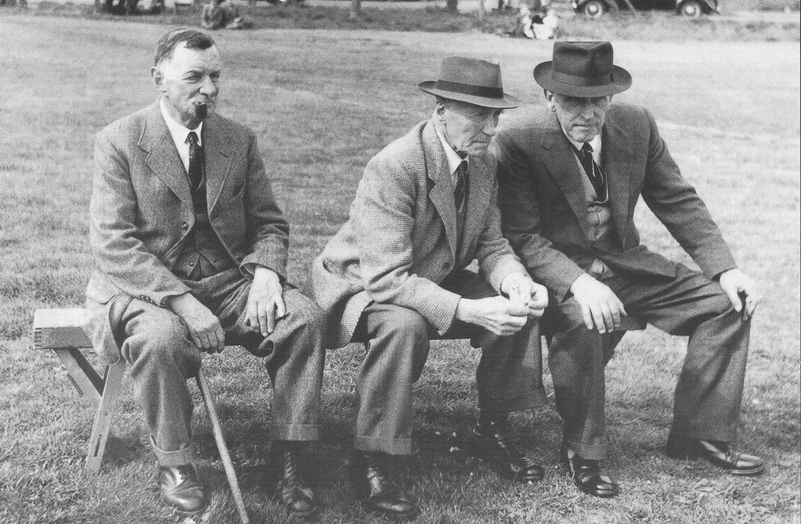
Pictured here around 1950 are Wakefield Whitton, William Denny , and Bernard Kingston. Mr Whitton owned Brook Farm before it was demolished and replaced by the modern houses in Watery Lane and Brookside. Wakefield Way was named after him.

William Denny was of the family of builders. He built the council houses in Furnace Lane. Bernard Kingston as one of the bell ringers. All three were school governors, and they are seen here on the village green judging at one of the school events .

NetherHeyford_ThreeWiseMen_1950

Photo lent by Dorothy (nee Denny) and Bill Kingston

~~

Extract from “The Story of Heyford” – Local book series published in the late 1990’s

Volume 3 of 4 | Chapter 16 of 17 | Page 30

TheStoryOfHeyford_NetherHeyford_Footer

Heyford’s Historical Heritage  |  How the books were created

Index  |  Covers

The Story of Heyford: The Canal Burst of 1939 V3C15

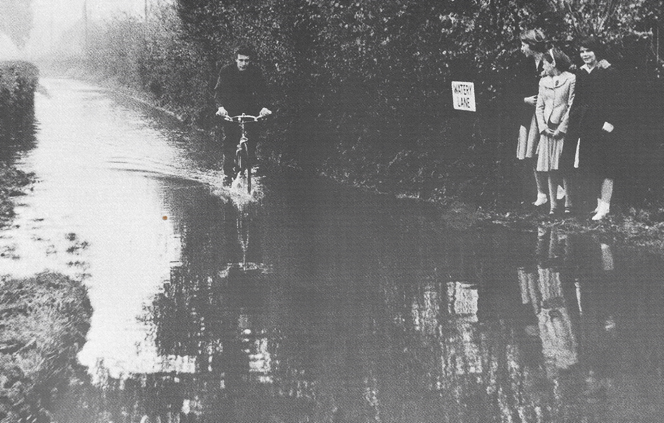
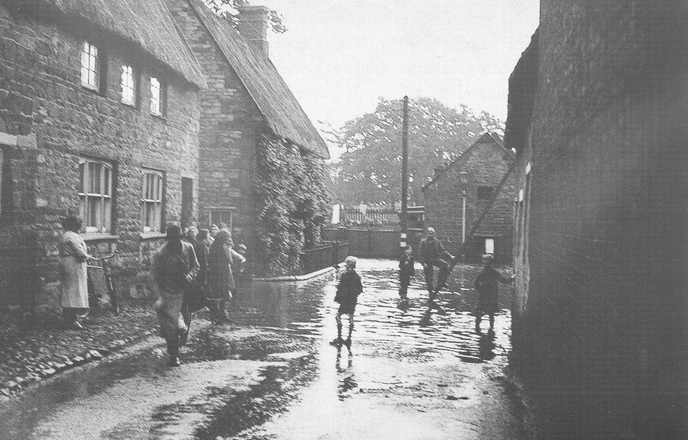
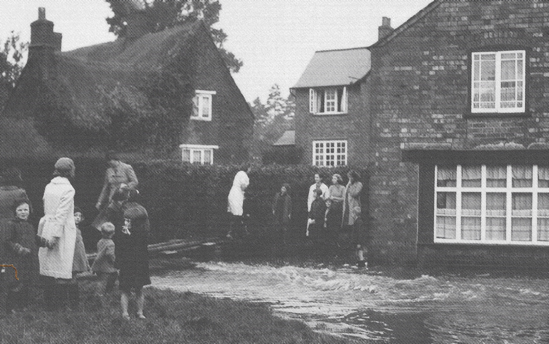
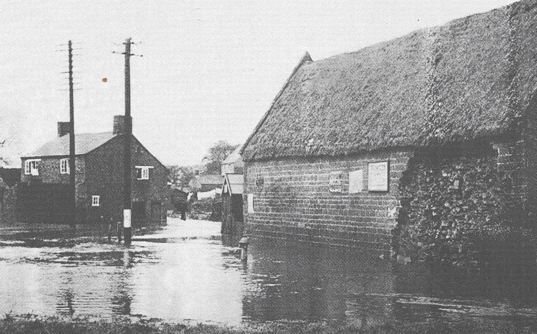
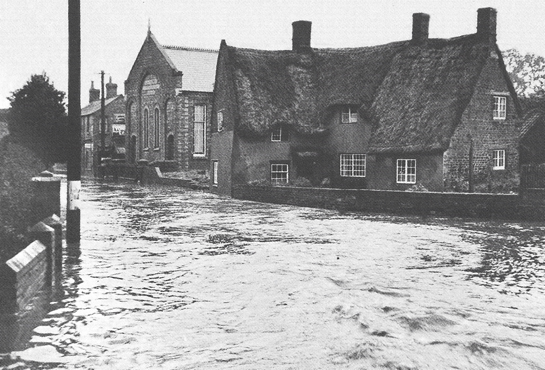
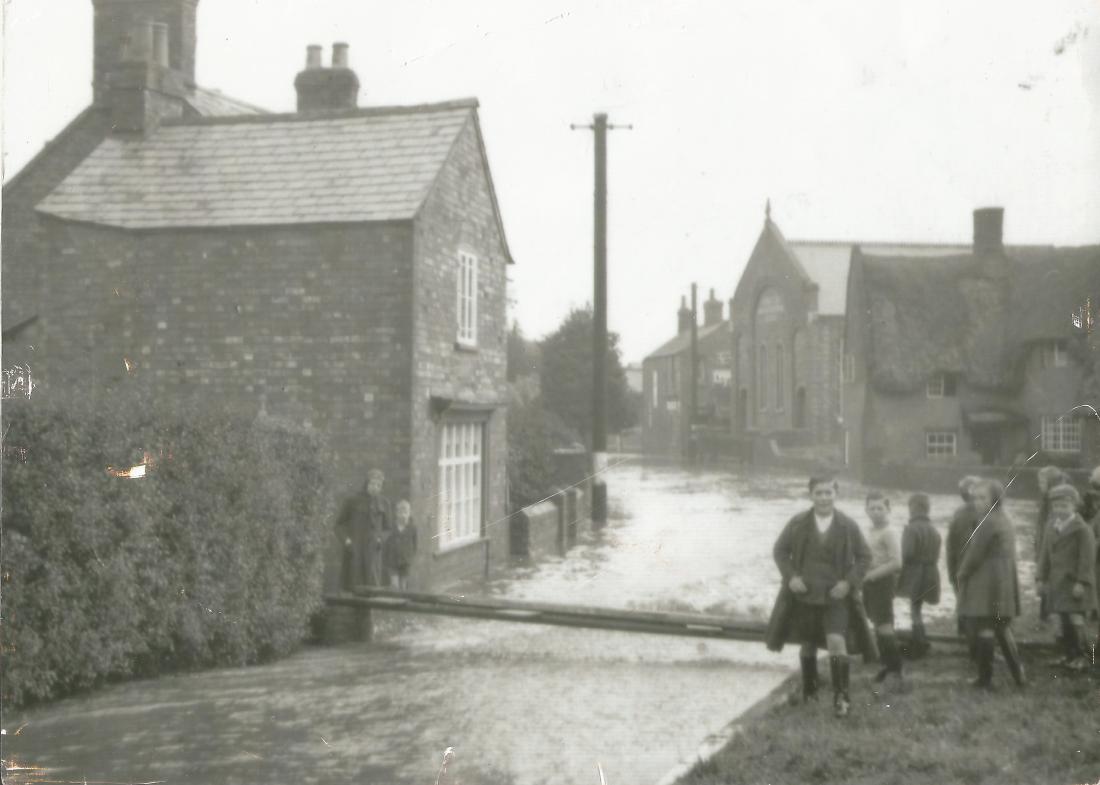
In October 1939, prolonged and heavy rainfall brought the canal level up dangerously high. A break of sixteen feet wide occurred on the Weedon bank, releasing 300 million gallons of water into an already swollen River Nene. The entire Nene valley became flooded and water levels rose into the villages. There has been periodic flooding in the village from time to time, eased to some extent by the culvert inserted in the mid 1980’s. But the recent flooding during the Easter of 1998 showed us again the damage that can he done. On each occasion it was Church Street that bore the brunt of the disaster as is illustrated in these photographs, all taken in 1939.

Watery Lane

NetherHeyford_WateryLane_1939

Church Street / Manor Walk

NetherHeyford_ChurchStreet_ManorWalk_1939

Heyford Antiques (formerly Tops of Heyford)

NetherHeyford_ChurchStreet_1939

The Jubilee Hall

NetherHeyford_JubileeHall_1939

 A view from the top of Church Street

NetherHeyford_ChurchStreet_2_1939

~~

Extra photograph added 2020

NetherHeyfordCanalBurst

Bob Smith January 2020

Extract from “The Story of Heyford” – Local book series published in the late 1990’s

Volume 3 of 4 | Chapter 15 of 17 | Pages 28 & 29

TheStoryOfHeyford_NetherHeyford_Footer

Heyford’s Historical Heritage  |  How the books were created

Index  |  Covers


The Story of Heyford: The Ancient Order of Foresters V3C11

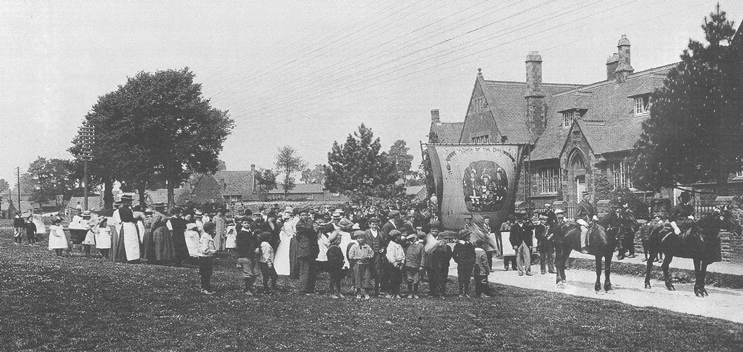
NetherHeyford_ForestersArms_1900

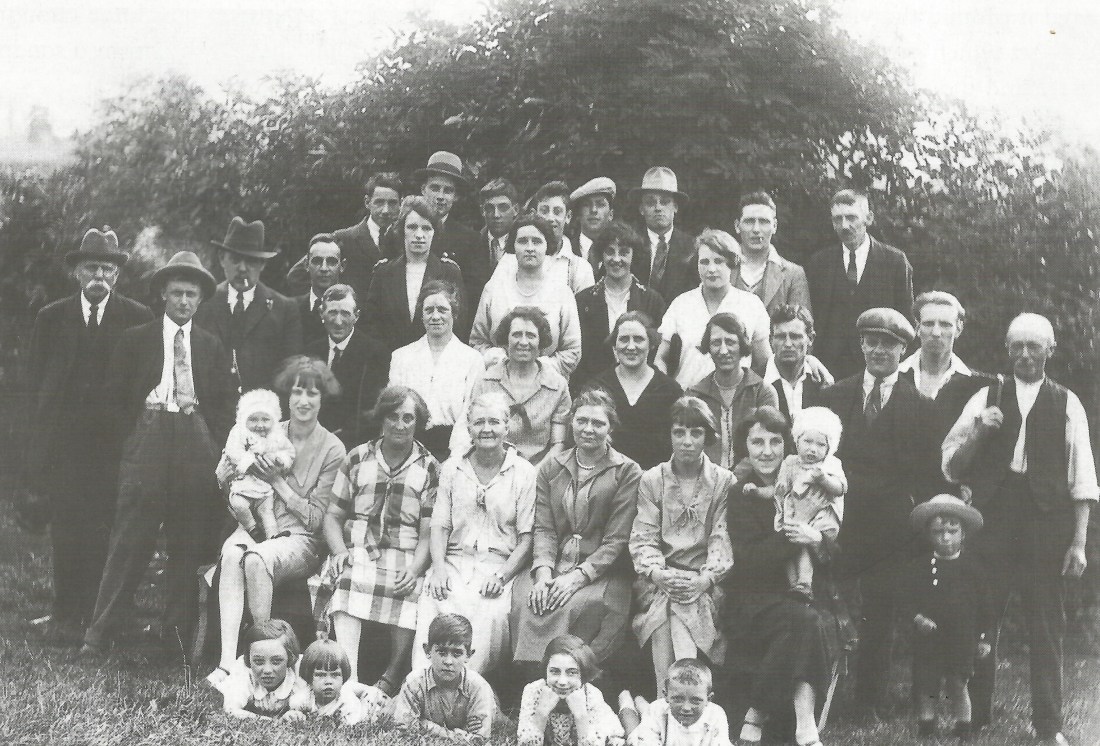
The Ancient Order of Foresters was a co-operative society. This photograph shows their gala day in 1900-1901. Could there have been any link between this and the naming of The Foresters Arms?

~~

Extract from “The Story of Heyford” – Local book series published in the late 1990’s

Volume 3 of 4 | Chapter 11 of 17 | Page 24

TheStoryOfHeyford_NetherHeyford_Footer

Heyford’s Historical Heritage  |  How the books were created

Index  |  Covers

The Story of Heyford: The Tops V3C1

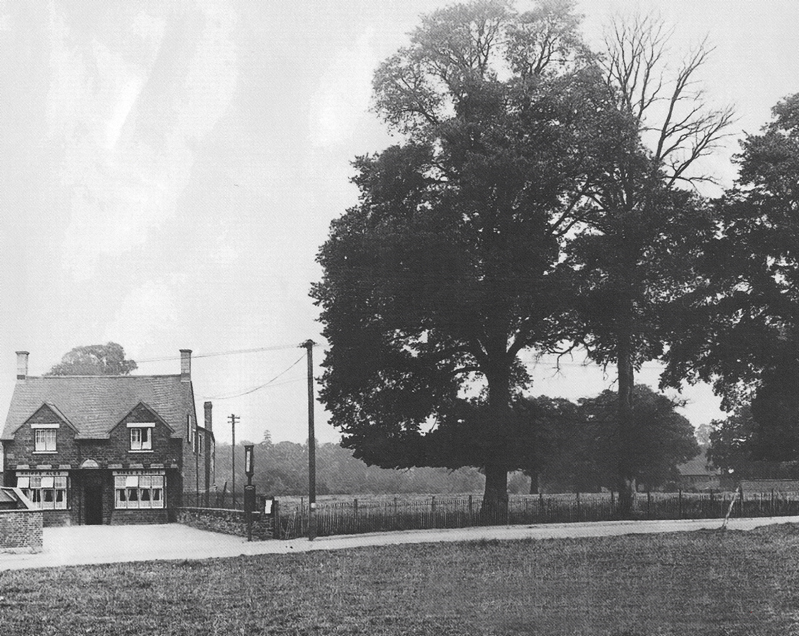
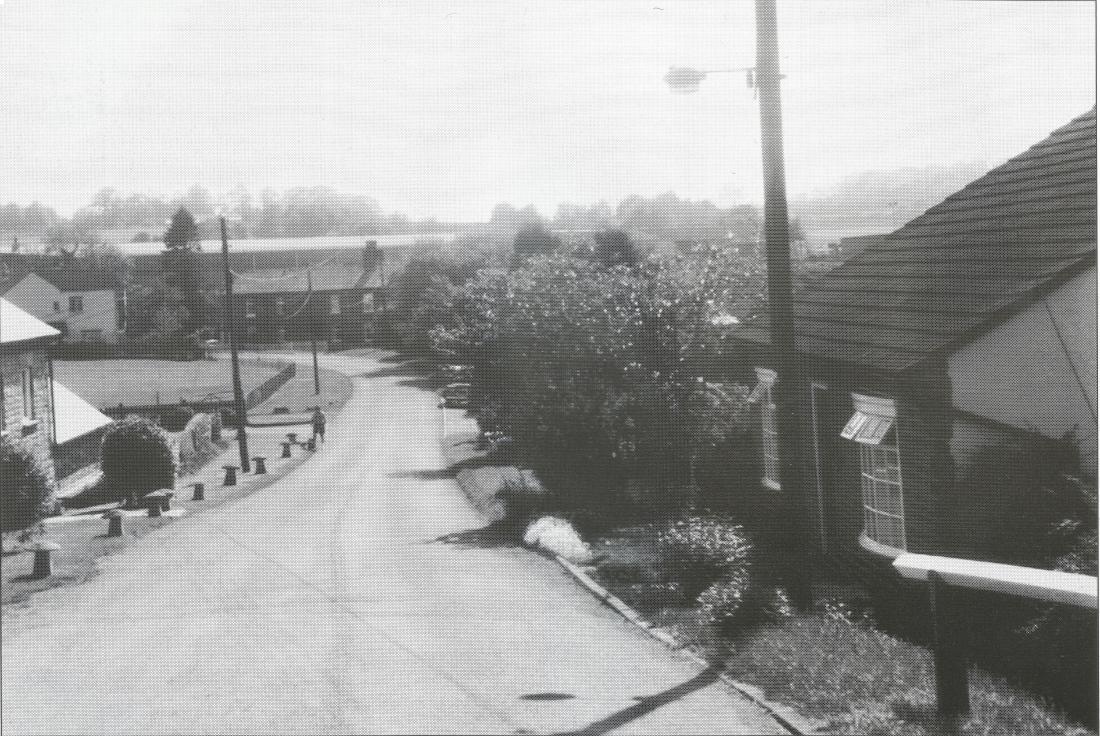
The photograph below was taken in the 1930’s. On the left is the Foresters Arms. There were then no houses between here and the Denny’s house on the corner of Middle Street. In this photograph the view is clear right across the field to Middle Street.

This land was then part of the Manor grounds and was grazed by hunters owned by the occupant of the Manor House. The horses used to stand there, looking over the fence at the passers-by.  Note the old Elm trees at the edge of the field.

The road between this field and the Green was known then as “The Tops” because the children would use the flat area for spinning their tops. The houses which were built alongside the road here by Mr Denny in the 1930’s are sometimes referred to by local people as “the front row”.

The Tops

NetherHeyford_Tops_1930

Photo lent by Judy Armitage 

~~

Extract from “The Story of Heyford” – Local book series published in the late 1990’s

Volume 3 of 4 | Chapter 1 of 17 | Page 2

TheStoryOfHeyford_NetherHeyford_Footer

Heyford’s Historical Heritage  |  How the books were created

Index  |  Covers


The Story of Heyford: The Village Lads in the 1920’s V2C10

NetherHeyford_VillageLads_1920s

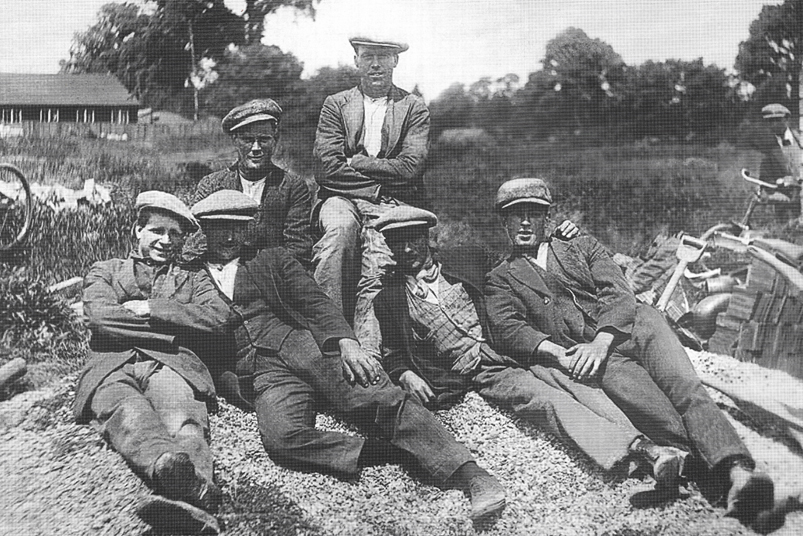
This photograph, lent by the Clements family, was taken early 1920’s. It includes Charlie Clements (back,left) and Arthur Parish (front, second from left)

~~

Extract from “The Story of Heyford” – Local book series published in the late 1990’s

Volume 2 of 4 | Chapter 10 of 11 | Page 25

TheStoryOfHeyford_NetherHeyford_Footer

Heyford’s Historical Heritage  |  How the books were created

Index  |  Covers

The Story of Heyford: The Bricklayers Arms V2C9

Although we can’t be sure exactly when the house was built, the deeds date back to 1827. The earliest reference we have found to the name ‘Bricklayers Arms’ is in the census return of 1871. This shows that it was occupied at that time by John Dunkley. He was aged twenty-nine and his occupation was shown as beer seller and ironworks labourer. The Census returns of 1881 and 1891 both refer to John Dunkley, beer seller, although neither specifically mention the name ‘Bricklayers Arms’.

The earliest recorded memory of the pub was from Bob Browning (1892-1997). Bob recalled that it was run in the early 1900s by Tom Dunkley. He told me that Tom Dunkley was the son of William Dunkley who ran ‘The Boat’ opposite. Tom Dunkley apparently died by drowning in the canal.

The Bricklayers Arms in the 1930s

NetherHeyford_BricklayersArmsPub_1930.jpg

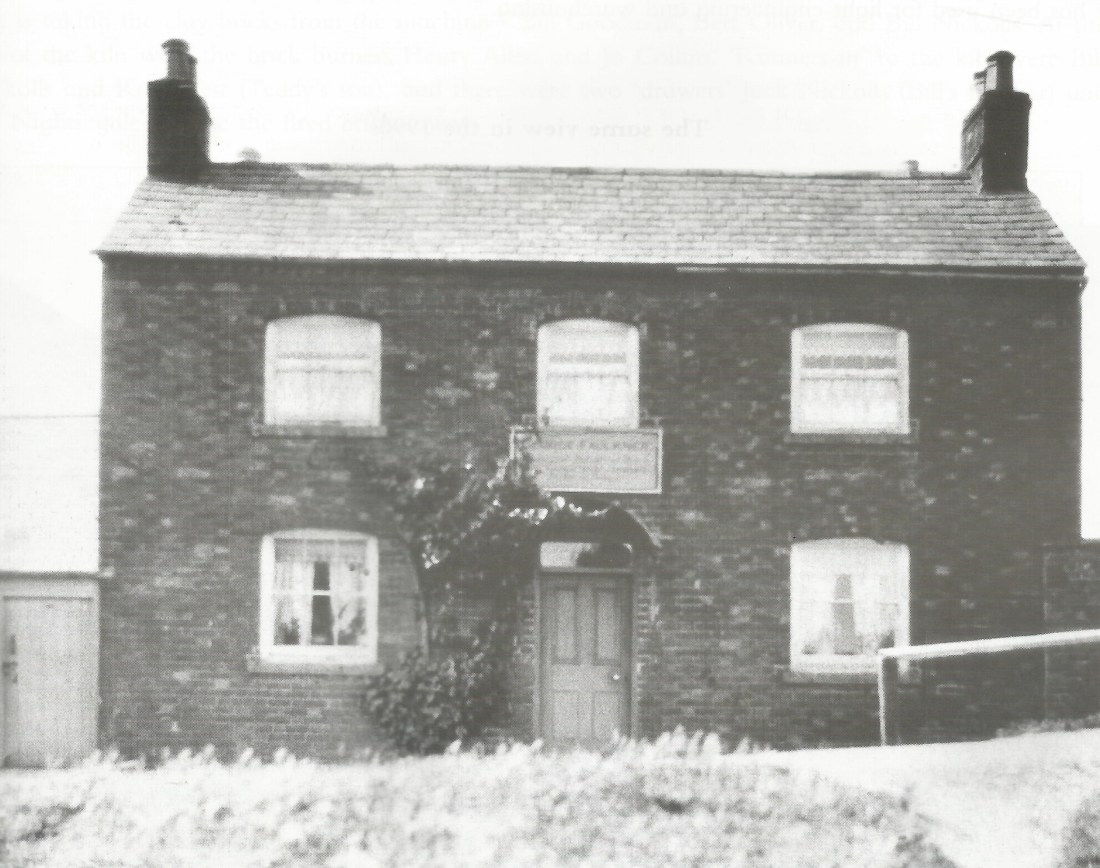
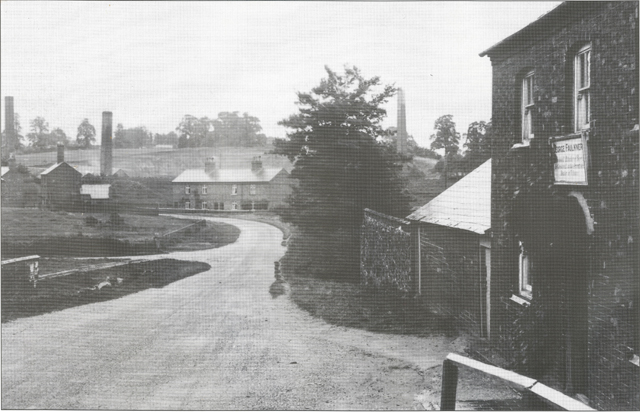
The Bricklayers Arms stood in Furnace Lane beside the canal. Like many buildings alongside the canal it had two floors at the front and three at the back. The building still exists as a private dwelling and is called Bridge Cottage. When it was modernised it was completely gutted and is now hardly recognisable as the same building because it had its top floor removed.

A small pub for local needs

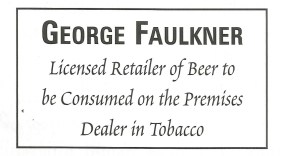
Between the wars the pub was run by George Faulkner who continued to run it until the late 1930s. In the photo you can see the board above the door with the words:

NetherHeyford_BricklayersArms_GeorgeFaulkner

George Faulkner was grandfather to Ada Smith and Charlie Masters. Charlie remembers the pub from when it was in use. As with many buildings alongside the canal, it had two stories at the front and three at the back. The bar or tap room had bare Wooden boards with two or three tables and a handful of chairs. One of the tables was marked out for shove-halfpenny. There was no bar as such. When you wanted a beer the landlord had to go down the narrow steps to the cellar and fetch it in a jug directly from the barrel. The beer barrels were delivered by motor lorry and came from Phipps brewery in Northampton.

The pub had no water, but there was a tap at the railway cottages just down the road from where water could be fetched by bucket. There was no real toilet, just a little shelter with a drain, but no door. There was however a traditional oven heated by faggots. Some of the local people brought their Sunday roasts and Yorkshire puddings to be cooked in it.

Fishing Expedition around 1928

NetherHeyford_BricklayersArms_FishingTrip1928.jpg

The man on the far right is George Faulkner.
The small boy beside him is his grandson Charlie Masters who lent this photograph.

Brickworkers, and fishing trips

At that time the pub catered mainly for the brickyard workers. The brickyard with its coal-fired kilns was warm work and so the pub was often opened for a short time at around 6.30 in the morning for the workers to buy beer to take to work. They would also go there at lunchtime and after work to quench their thirsts. Bill Nickolls who worked at the brickworks recalls that the beer was 4d per pint and that they sometimes played skittles. There was also fun in the evenings. Charlie remembers how Bill Nickolls’ mother used to carry a gramophone up to the pub to play music on Saturday nights.

Sometimes during the summer months a group of people from St James End in Northampton came by bus for a day’s fishing on the canal. The men would fish while the women sat on the grass and chatted. They brought picnics and drank beer from the pub. There was a piano which would be man- handled out of the building so that they could have a sing-song in the sunshine. The photograph here shows the group from one of these trips. On the far left is George Faulkner, and the small boy beside him is his grandson Charlie Masters who provided much of the information in this article.

Hay barn, stables, weddings and coal

To the left of the main building was a hay barn. Underneath this at the back of the house was stabling for six or eight horses. The horses were stabled overnight by the boat people for which George Faulkner charged about 6d. In the hay barn above were three holes at either end through which the hay could be dropped through to the horses below. Sometimes the hay was cleared out and the barn was used as a function room. Charlie’s sister Ada and John Smith had their wedding reception in this room. To the left of the barn was a wall which was built of clinker from the Furnaces. This wall is still there.

George Faulkner also ran a coal business. The coal came by railway to Weedon and then on the siding in the brickyard. He stored the coal beside the pub in the yard where Tarrys now operate and delivered it around the village by horse and cart. There was a small weighbridge, just large enough for a small cart which was used to weigh the coal, and sometimes also sand which came from a sandpit in a field behind the yard.

Little Tommy

One of the visitors to the Bricklayers Arms was Little Tommy (Harris?). He was a shoemaker. If you wanted some shoes or boots he took all the measurements and two or three weeks later he returned with the finished article. He sometimes came to the village on Sundays. He took the bus from Northampton to Weedon and did some business there. He then walked along the A5 to the Bricklayers Arms where he bought eggs from Mrs Faulkner. He wrapped them up individually in paper and put them in his gladstone bag. On one occasion he dropped one on the ground and it broke. He asked Mrs Faulkner for a spoon and ate it from the ground so as not to waste it. He then walked on into the village and did some business there before taking the last bus back to Northampton.

The sale of the pub

Since the opening of the two furnaces in the 1860s the Furnace Lane area had been a hive of industry. Both the furnaces and the Brickworks were hot, thirsty work and the pub had for many years serviced the needs of the workers. There was also during this period much canal traffic. However by the time the Brickworks closed in the late 1930s there was little work left in that part of the village. So after sixty years or more the pub finally closed. Phipps offered to sell the house and land to George Faulkner for £100 but he didn’t take up the offer because he couldn’t afford it. And in any case it was time for him to retire.

Conversion to coal business

In 1950 Phipps Brewery sold the house to Fred Tarry. Fred Tarry, who lived in Bugbrooke, had returned from the First World War, but couldn’t find employment, so in 1922 he set up a coal business in his home village of Bugbrooke. George Faulkner had already run a small coal business from the Bricklayers Arms, so when Phipps sold the building in 1950 it gave Fred Tarry a chance to expand his business to Heyford.

In 1980 the house, which is now called Bridge Cottage, was converted to its present structure. It had originally had two roofs which met in a gulley in the centre. It was almost as though the back half had been added later because the brickwork of the front and back halves was not bonded together. The supporting wall between the two halves was damp from where the gulley couldn’t cope with the volume of water in heavy rainfall. So in 1979/ 80 some serious repair work had to take place. The house was totally gutted, with only the four outside walls left standing. The top storey was removed, a new roof was built, and the cellars below, which had been almost windowless (like the black hole of Calcutta) were converted to living accommodation.

Even today the coal business continues to be run from this house by Frank Higginbottom, his wife Thelma (Fred Tarry’s daughter) and their son Richard.

Stephen Ferneyhough

~~

Extract from “The Story of Heyford” – Local book series published in the late 1990’s

Volume 2 of 4 | Chapter 9 of 11 | Pages 22 to 25

TheStoryOfHeyford_NetherHeyford_Footer

Heyford’s Historical Heritage  |  How the books were created

Index  |  Covers

The Story of Heyford: Heyford Brickworks V2C8

Brickmaking in Heyford
There seems to have been some degree of brick making in Heyford right throughout the 1800s. This is illustrated by the references below. You can see from these that there were always two or three people employed in brickmaking, but the number seems to have increased sharply during the 1880s. It was probably during this period that brickmaking became more mechanised and that the brickyard in Furnace Lane expanded to become an important industry in the village.

1822 George Baker’s ‘History of Northamptonshire’ mentions Nether Heyford, including a reference to ‘a brick kiln towards Stowe field’.

1827 Bryants map shows some brick kilns just S of the canal and E of the railway

1849 Whellan’s directory lists three brickmakers

1851 Census return lists William Braunston of Brickyard House, aged 50, brick and tile maker. Also Richard Haynes, brick and tile maker

1861 Census lists one brickmaker and one brickyard labourer

1864 Kellys directory lists John Judkins, brickmaker

1869 Kellys directory lists Joseph Johnson, brickmaker

1871 Census lists William Towers of Furnace Road, aged 33, brickmaker

1881 Census lists 7 brickyard labourers

1891 Census lists 16 brickyard labourers

Heyford Brickworks
So from the 1880s until the 1930s Heyford had its own brickworks. It was situated in Furnace Lane, beyond the canal, beside the railway, on the site where Wickes now operates. It was on part of the Heyford Grange Estate owned by the Judkins family. The claypit and brickyard were leased to Henry Martin Ltd of Northampton who employed around 15 men. The only one now left to tell the tale is Bill Nickolls who worked there in his late teens from 1930 until 1934. Bill is now aged 84 and it is to him that we owe our thanks for the memories of the brickworks from that period.

Blood, sweat and tears
The clay, known as blue clay, was only dug during the winter. It was dug directly from the pit by hand using special shovels with extra long cutting blades. The pit which was about thirty feet deep can be seen in the photograph just behind the row of cottages in the background. Before they reached the clay they removed the topsoil and also lumps of lime which could be burnt in the kiln to use for the garden. They started digging at the top and worked downwards. Enough clay could be dug through the winter months to ensure brickmaking through until October. The pay was one shilling per square yard. The clay heap was kept moist by pecking it (making holes into the heap) and watering it.

On Easter Tuesday the workforce was doubled for brickmaking during the summer. The clay was barrowed to the brickmaking machine and put into the mincer. This ground up the clay which was then passed downwards between two sets of rollers and came out in a big slab. From there it was cut into bricks eight at a time, and then into a barrow for taking away.

Sadly one of the men died in the mincing machine. His name was Teddy West. He was a small man, but one of the most committed workers, always first to arrive in the mornings and well respected by all the others. Unfortunately he used to wear a sacking apron which on one occasion became tangled in the machine and he was drawn into it. His death was a shock to them all.

From the brickmaking machine the bricks were taken to the yard and stacked. Here they were covered and left to dry before going into the kiln. The stack was later turned inside out to allow for even drying. The pay for turning was 5d per thousand. Bill Nickolls remembers turning 25,000 in one day, but the record was set by Ron West who turned 30,000.

The kiln was fired by coal. There was a siding off the main railway and so the coal ‘slack’ was brought by train. You can just pick out in the photograph the letters of the LMS truck immediately to the left of the Bricklayers Arms. It took ten tons of coal to start the kiln and so once it had been started it was kept going twenty-four hours a day. The kiln consisted of a number of cavities joined by holes and so the fire went from one to another. The clay bricks were put into the kiln, baked, and then taken away red hot for stacking in the yard.

It was hard work. All the pay was piecework. The brick-making process was continuous and all men had to keep up the pace to ensure a smooth flow of work. Bill Chapman, George Record and Bill Watson were wagon fillers in the pit. Feeding in the clay on the top of the brickmaking machine was Bob Sargeant. At the bottom on brick cutting was Reg Matthews. There were three ‘runners away’, that is taking the clay bricks from the machine – Bill Goodman, Bert Oliver, and Bill Nickolls. At the top of the kiln were the brick burners Henry Allen and ]o Collins. ‘Runners-in’ to the kiln were Bill Nickolls and Ron West (Teddy’s son), and there were two ‘drawers’ jack Nickolls (Bill’s brother) and Bill Nightingale to take the fired bricks away.

The Brickworks and Bricklayers Arms in the 1930s

NetherHeyfordBrickworks1

Note the clay pit between the chimneys just beyond the rooftops in the distance. You can also pick out an LMS railway wagon just to the left of the Bricklayers Arms.

Local buildings
Heyford bricks Were used in a number of local buildings. This included the four sets of four council houses in Furnace Lane built in the 1920s and the three pairs of semis lower down on the other side. All these Were built by Mr Denny. Other bricks went further afield. There was a contract with Pratts for half a million per year. These were taken by horse and cart and loaded onto a narrowboat for shipment down the canal to Watford. 3” bricks sold for 38s per thousand and 2 5/ 8” for 45s.

The closure
In 1938 some of the men agitated for an increase in wages but Henry Martins either wouldn’t or couldn’t pay.  He decided instead to close the brickworks and so brickmaking in Heyford came to an end. The site was sold to Mr Beck who owned Heyford Hills although he never developed it. It was used during the War by Weedon Barracks for sorting war goods returned from the front. Then some time after the war a cinder track was laid for holding bicycle races. In the late 1950s the pits were filled in with waste from the building of the M1. In 1965 some factory units were built on it and since then it has been used for light engineering and warehousing.

The same view in the 1990s

NetherHeyfordBrickworks2.jpg

Instead of the clay pit you can now see the roof of the warehousing at Wickes.
The Bricklayers Arms has had its top storey removed and is now a private dwelling.

Stephen Ferneyhough

~~

Extract from “The Story of Heyford” – Local book series published in the late 1990’s

Volume 2 of 4 | Chapter 8 of 11 | Pages 19 to 21

TheStoryOfHeyford_NetherHeyford_Footer

Heyford’s Historical Heritage  |  How the books were created

Index  |  Covers

The Story of Heyford: King George V Jubilee Celebrations 1935 V2C7

To celebrate the silver jubilee of King George V the Parish Council organised a public tea  for all the parishioners. Charges were sixpence for 14-16 year olds and ninepence for adults. The children were paid for by the school governors, and pensioners and widows were free of charge. All other expenses were covered from the proceeds of a jumble sale organised by the Jubilee committee.

As well as the tea there were sports and games on the Green. Bill Kingston particularly remembers a slow bicycle race between the two sets of goal posts. The idea was to get from one end to the other without touching the ground. Sid Goodman won because he came last. He won a wallet. Tom Eales came second. Bill Kingston came third and won a pipe. He swapped it for Sid’s wallet because each preferred the others prize.

Mr Foster (Reg Fosters father) made a brass candlestick for auction. Dorothy Kingston bought it for £1. 5s which was a lot of money then. However it was a beautiful piece of craftsmanship and she still has it today.

Stephen Ferneyhough

~~

Extract from “The Story of Heyford” – Local book series published in the late 1990’s

Volume 2 of 4 | Chapter 7 of 11 | Page 18

TheStoryOfHeyford_NetherHeyford_Footer

Heyford’s Historical Heritage  |  How the books were created

Index  |  Covers


The Story of Heyford: Village Sports in 1900 V2C6

At the beginning of the 1900s up until the First World War in 1914, Heyford celebrated together at their annual sports day organised by a special sports committee, and at which everyone in the village attended.

The sports field was situated beyond the children’s playground where the houses in Hillside Road / Hillside Crescent now stand. The field belonged to a local farmer who removed his cows for the day, which usually meant a bit of clearing up had to be done first. The date was usually set for Whitsuntide, and a beer tent and tea tent would be organised by the ladies.

The men would probably be dressed in striped jackets, baggy trousers and straw hats, the ladies in blouses, long skirts and large hats, the little girls in ankle length dresses and the little boys in jumpers and knickerbockers.

A local band (probably from Bugbrooke) would begin the proceedings and set the mood, and the races would be mainly for the children and fathers, possibly followed by an egg and spoon race for the mums, although they found it rather difficult to run in long skirts. Winners names would be taken after each race for prize giving at the end of the afternoon.

At the interval the lancers from Weedon Depot would give a display of horsemanship, including the spectacular attraction of tent pegging. A peg much the same as a tent peg but softer would be placed in the ground at the centre point. The lancer would mount his horse with his lance at his side, charge at the peg, picking it up with his lance and raising it above his head amid cheers from an enthusiastic crowd.

Prize giving would be the highlight of the afternoon, and the prizes would be something for the home, possibly linen or cutlery which would be acceptable to any family.

The band would play a finale and everyone would go home tired but well satisfied with the days events, and this day would be talked about for a long time.

Shirley Collins

(Reprinted from issue no 3 of The Prattler, dated January 1978) 

~~

Extract from “The Story of Heyford” – Local book series published in the late 1990’s

Volume 2 of 4 | Chapter 6 of 11 | Page 18

TheStoryOfHeyford_NetherHeyford_Footer

Heyford’s Historical Heritage  |  How the books were created

Index  |  Covers


Extract from The Story of Heyford – Volume 2 of 4 – Page 18