The Story of Heyford: Heyford Manor and the Manor House V2C5

In DESIRABLE FREEHOLD ESTATE
Consisting of The
MANOR or REPUTED MANOR
of
HEYFORD
Stone—Built Mansion or Manor House
with
Suitable Offices, Stabling, Gardens etc.
And
Sundry Eligible Farms with their Suitable Buildings
And
528A. 2R. 28P. of uncommon rich Arable, Meadow
Pasture and Wood Land
Let to Tenants on Leases which will expire at Lady Day next, at very low Old Rents (the Wood Lands in Hand included) of
FIVE HUNDRED AND NINETY~NINE POUNDS

These are how the Particulars and Conditions of Sale read on Thursday, February 2nd, 1792 at the Auction held by Mr Christie at his Great Room in Pall Mall. At that time a Fee Farm Rent, payable to the King was 3s. 4d, Land Tax for the whole of the Estate was £54.16s.0d and various Tithes to be paid meant total outgoings of ,£112.6s.9d. Part of the outgoings included an Annual Payment of £20 to the Hospital at Northampton, “out of which £4 is allowed in Land Tax”. The actual Manor House was much smaller than it is now — the East and West Wings came at the turn of the Century and the small ‘Garden House’ at the back, although keeping the original frontage and downstairs room complete with large stone fireplace, was added to as late as 1982.

The early estate

The original Manor House was at Upper Heyford and the remains of its foundations can still be seen. This was the Manor House of the Mauntells and Morgans, Prestons and Herbert Marquis of Powis and is supposed to have stood in the field called the Upper Park. John Mauntell of Heyford, descended from Michael Mauntell of ‘Rode’ married Elizabeth, daughter and heiress of John Lumley (also reputed to be of Heyford) and ‘levied fine of Heyford Manor’ in the reign of Henry VI (around 1446) and so founded a dynasty of Mauntells at Heyford.

Prior to the Mauntells the Tudenhams ruled the roost at Heyford (also ‘big’ in Suffolk; as you approach Bury St Edmunds you can see the village of Tudenham signposted) and presumably occupied the old Manor House, but we are going back to 1333 here and records are a little vague as to Lords of the Manor, but they were certainly large land owners and owned “the manor of Heyford with pertinences, lands and tenements in Bugbrook, Flore and Farthingstone, Grimscote, (Cold) Higham and Carsecoell (Carswell in Greens Norton?), lands and tenements in Cold Ashby and West Haddon”.

The Mauntells

What we do know, however, is that the ‘younger generation’ of Mauntells let the family name down as John and Elizabeth Mauntell had a son, Walter, later knighted, (buried in Heyford with his wife also called Elizabeth) and his son and heir, ]ohn Mauntell, well and truly blotted the family name. In 1541 John “sallying forth in company with his brother-in-law, Lord Dacre, and others, on a nocturnal frolic to chase the deer in Sir Nicholas Pelham’s park in Sussex, encountered three men, one of whom being mortally wounded in the affray; he and his associates were convicted of murder, executed, and their estates escheated to the crown.”

And to make matters even worse and to complete the irretrievable ruin of the house, his only son Walter Mauntell engaged in the Kentish insurrection to oppose the marriage of Queen Mary, headed by Sir Thomas Wyatt, and was taken prisoner with him, sent to the Tower and subsequently executed in Kent, 27th February 1553 and ‘attainted’ (i.e. he lost his estate to the crown).

However, due to a bit of forward planning the Manor was saved from the general wreck of the family fortune as John Mauntell had made a settlement of the Manor to his wife Anne (leafing through old cuttings I came across an article on the Manor written in the Herald September 1908 which said it was his mother, sister of Lord Dacre, who was the recipient of the settlement, but I am sure the Press were apt to make errors even then as old family trees show his wife Anne to have inherited) who with her second husband Richard Johnson and Francis Morgan ‘serjeant—at-law’ (who was lessee for the years 1555-56), “levied a fine of the three manors of Heyford, Over Heyford and Nether Heyford and the advowson, or rather two thirds of the advowson, of Nether Heyford, to the use of Sir Richard Sackville and his heirs.”

The Morgans and Prestons

This meant that Sackville took over the Mauntell estates in Heyford but Francis Morgan soon after obtained the ‘fee simple’ and after Francis Morgan died in 1558 ( he and his wife Anne are buried at Heyford) the estates descended to his son Thomas. However in the archives it is written that Matthew Mauntell ‘of Horton and of Collingtree’ son of the executed Walter, ‘was restored to his father’s estate in the 15th reign of Elizabeth’. This would make it 1573. So it is unclear whether there was another (short) ‘reign’ of Mauntells in between the Morgans.

In any event Thomas Morgan’s daughter and heiress married Sir John Preston of Furness in Lancashire and he was succeeded in his title and estates by his brother Sir Thomas Preston who in May 1685 settled the manors of Heyford, Nether Heyford and a whole lot more on Mary his eldest daughter and co-heiress in marriage with William Lord Herbert, son and heir of William Earl of Powis.

Now, the Earl was zealously attached to James II who selected him to accompany the Queen to France and on abandoning the throne in 1688 James joined them both there. In return the King gave him the titles of Duke of Powis and Marquis of Montgomery. But the Duke was outlawed for remaining abroad in the service of the deposed monarch and died at the court of St Germain’s in 1696.

After a lapse of 30 years, a ‘mandamus’ (judicial writ issued from the King’s Bench Division) was granted and it was accordingly reversed by the court of the King’s Bench in April 1722; by which reversal his only son, William Lord Herbert (as above) then Viscount Montgomery, was restored to the Marquisate and all the other honours to which his father was entitled prior to James II leaving his throne.

The Dukedom and second Marquisate were never legally recognised in England, though generally adopted by courtesy. William the 3rd Marquis or Duke of Powis, only surviving son of the preceding, died unmarried in 1747 and the titles became extinct; but by his will, dated 28 April of that year he left his extensive family possessions (by-passing his several sisters) in trust for Henry Arthur Herbert, then Lord Herbert of Chirbury, who was afterwards created Earl of Powis and in 1751 married Barbara, the posthumous daughter and heiress of his brother Edward.

Decay

Now, if you can keep up with any of this, comes the crunch. The Trustees under the Marquis’s will were empowered to sell all or any part of the Northamptonshire estates towards the liquidation of his debts, and towards raising a fund for working his lead mines and in November 1758 with the approbation of the Earl of Powis and under the authority of an act of Parliament, confirming the authority of the Trustees, the whole, comprising the manors of Heyford and surrounding manors with about 3000 acres of land were disposed of in lots by public auction and produced the princely sum of £65,424.

By this time Sir Thomas Preston may have demolished the actual Manor House, or it may have fallen into general decay during the Commonwealth period (the 1650s). Here again the Herald (and this is substantiated) states that early in the Civil war the Manor House was uninhabited. It was still unoccupied in 1652 as we learn from an entry in the Parish Registers (“lying open into vagrants”).

But in any event the estate itself remained intact and Miss Nelson writes “in 1758 the estate was sold by auction in London, the business taking three days. The names of some of the tenants of farms at that time were Ed Middleton, Richard Gardner, Sam Newbold, Thomas Payne and Richard Claridge. Also Will Simons, who farmed Pond Close, or Pastel Pan and Pastle Pightle. Other field names mentioned in the catalogue are The Spung, Stocking Meadows, Worsten Pond Field, Talland, Adal, Bell Pool Leys, Flash Close and Blakes Hitch.”

Thus the old Manor met its demise and its vast estates were split up.

A new house is built

But a new era had already begun with the building of the new Manor House where it still stands, in Nether Heyford. It is believed to have been built about 1740 by William the 3rd Marquis of Powis (as above) using the stone from the original Manor. (The earliest date found on the old walls of the existing Manor is 1794 but the stone is worn and could read ‘1714’). Some researchers have stated the Manor and 30 acres was then bought by Rev Henry Jephcot in 1759 (who in 1789 became Rector of Heyford) but according to Joan Wake in her book ‘The Life of Henry Isham Longden’ published in 1942 she states “Heyford, like Stowe IV (now Stowe IX) Churches was a Crawley living, a member of that family having bought the two advowsons and the Manor House at Heyford in 1764.”

Churchmen take up occupancy

However according to the auction details of 1792 they clearly state that the Manor was let to the Rev Mr Henry Jephcott “at Will, at a low old rent of £63.0s. 0d” so he would have been a tenant at that time. In 1800 we know that he died and the property passed to his daughter Elizabeth and her husband the Reverend R B Hughes, Rector of Kislingbury. And they must have owned the property as in 1802 they sold the house and land to Reverend John Lloyd Crawley who in 1800 had succeeded Henry Jephcott as Rector of Heyford. John Crawley remained at Heyford as both Rector and Lord of the Manor until his death in 1850 and was succeeded as Rector by his son, Thomas, but he moved into the newly built rectory in 1851.

So, interestingly enough, for the sixty years between 1789 and 1850 there were two successive rectors who were also Lords of the Manor and it was to the Manor House that ‘privileged young people’ went for Sunday School.

When John Lloyd died in 1850 his widow Anne Crawley (at that time 65) remained in the Manor House with her sons Alfred and Charles and three domestic servants (Footman, Ladies Maid and Housemaid) until 1871 when we know from details of a Census that John Smith, Curate of Norton, his wife and their five children and four domestic servants (Cook, Housemaid, Scullery Maid and Groom) took over for the next ten years and by 1881 Charles Carden, aged 61, a retired army captain lived there with his wife, six children and four servants (Housemaid, Ladies Maid, Cook and Groom), a Governess coming from as far afield as Liverpool and a Head Gardener, Richard Houghton, who hailed from Milton.

Then in 1891 Joseph Faulkner, a shoemaker aged 60 with his wife, four children, son-in-law and grand-daughter – who presumably helped out with all the chores as there were no domestic servants recorded – took over the Manor until the turn of the century when the ]eyes family arrived.

The Manor House in 1825
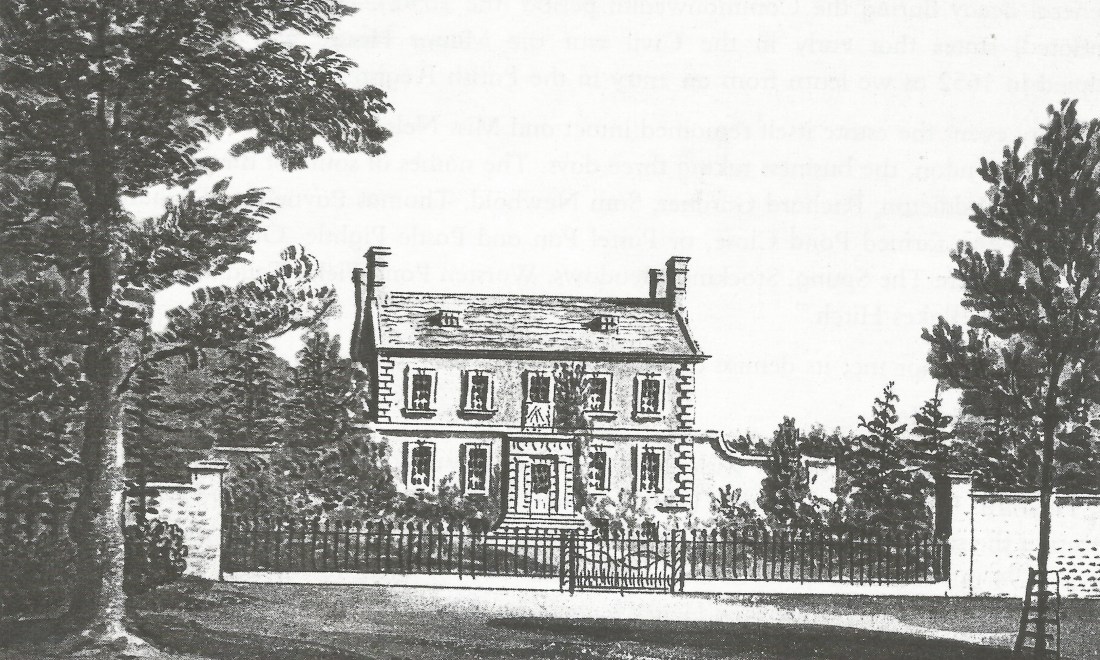
12_NetherHeyfordManorHouse1825

From a print lent by Tony Landon

The early 1900s – military men and merchants

Mr Jeyes was the brother of Philadelphus ]eyes who owned a chemist shop in the Drapery in Northampton. He was a ‘country gent’, sported a coach house and kept three or four hunters in the stables to the west of the Manor (now houses and garages). It was probably while the Jeyes family were in situ that a visit to Nether Heyford Church was arranged in 1906 by a local Architectural and Archaeological Society for the Archdeaconries of Northampton and Oakham as the Rector, the Rev H Isham Longden, was ‘a true archaeologist’ and a visit to the Manor House had been planned. But “time and the weather did not permit a visit” and instead they all headed back to the Rectory for tea presided over by ‘Mrs Crawley’.

After the Jeyes family moved out it was said that it was empty for a while, but then came the Muir family and documentation to this effect is available in the form of an Indenture made out in 1914 by John Buchanan Muir’s son Matthew Andrew which left everything to his wife, Jessie Agnes Muir, on the understanding she did not leave him, in which case she would lose the lot… What is interesting about this Indenture is that the Fee Farm Rent was still 3s.4d….

The Conveyance for the sale to the next occupant was dated 5th December 1919 and this was Lieutenant Colonel Livingstone-Learmouth who was based at the Ordnance Depot in Weedon and it is said that he had the house massively extended with new wings at each end. However it is more likely the East Wing was put on quite a bit earlier and the flat-roofed West Wing added during the first World War as wood was difficult to come by although one rumour has it that the occupant, a woman at the time – Mrs Muir? – could not afford a ‘proper’ roof .

The Manor house around the turn of the century
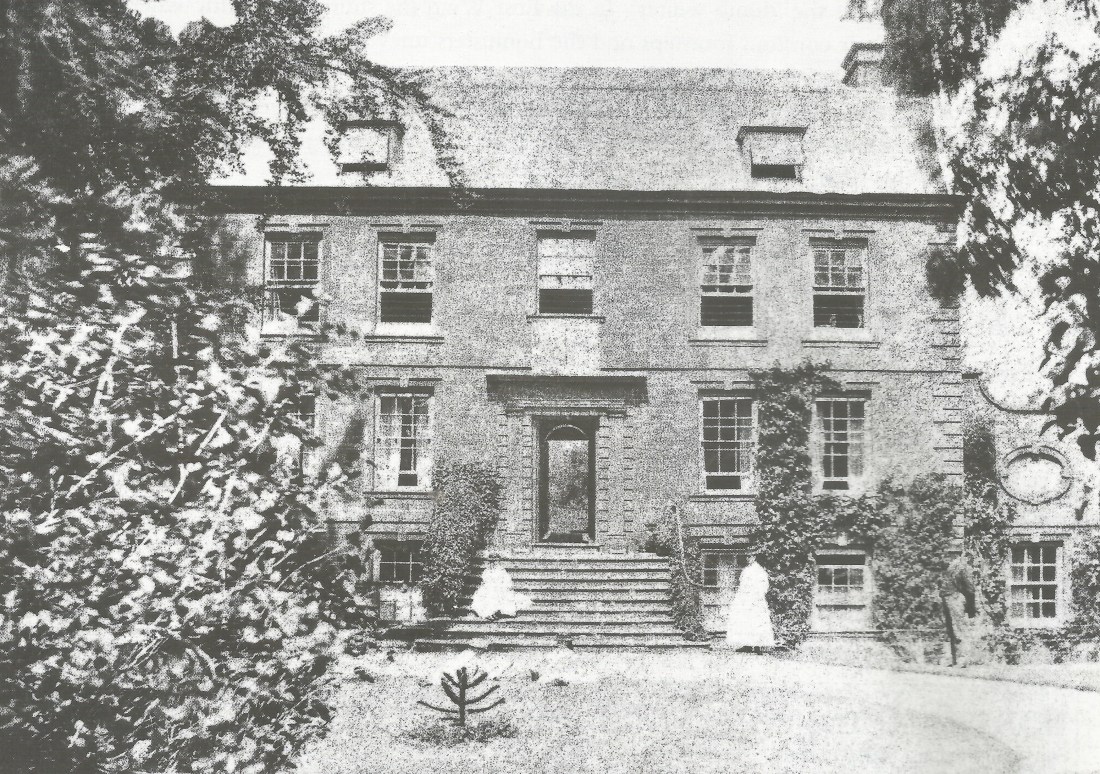
13_NetherHeyfordManorHouse1825

Gardens, stables and domestic service

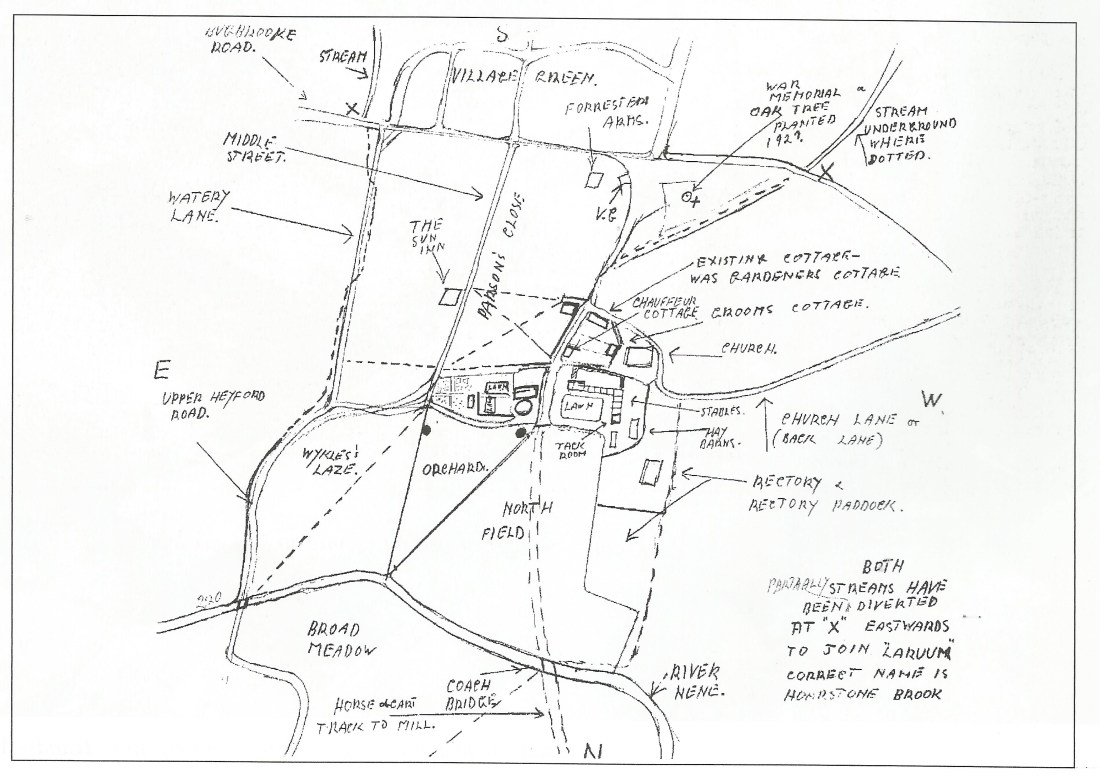
But what we do know is that Frank Pearson’s parents came to Heyford in 1919, his father becoming Head Gardener at Heyford Manor until his death in 1948. Frank was born in the Head Gardener’s cottage which was situated backing on to the Churchyard and Frank himself helped his father in tending the Manor gardens. The earliest inhabitant of Heyford Manor Frank can remember was Brietmeyer “a big man who was very fond of hunting, which he enjoyed sometimes three times a week”. Certainly there are still memories in Heyford at the time of writing of the Master riding to Hounds and scattering coins to the children who had gathered in what is now Manor Walk to see this awesome sight.

But the Livingstone-Learmouth era (1920s and 30s) was probably the last of the ‘greats’ in the sense that here was a large Manor, acres of land, servants and a Head Gardener. The gardens, as remembered by Frank Pearson, comprised rose beds, rockeries, kitchen gardens,flower borders and grass walks, asparagus beds and apple stores and the horse and cart track led down to the ‘Coach Bridge’ and thereon down to the mill. Frank himself told of how he was responsible for raking the gravel drive in order to keep it tidy which ran by the existing boundary at the front of the Manor and on down to The Sun. At that time he said the servants used the West Wing and the ‘garden room’ there was the servants’ dining-room.

The whole of the bottom floor of the Manor was I believe devoted to kitchens and the old bread oven can still be seen in the middle part of the Manor – the little ‘Garden House’ at the back was reputed to be the dairy (although as the present occupants pointed out, strange that the dairy should be in the front of the building?) – and ladies from Heyford can remember helping out in these vast kitchens.

There is still an enormous cellar for the fine wines and the scribblings of the Butler above the store bins denoting the type of wine enclosed. The old bells to summon the servants are also still in place and until very recently so was the ‘dumb waiter’. In the East Wing the stairs to the attic where the servants slept are pitted with their constant footsteps and the bannisters uneven where they slid their hands down in their haste to attend to their duties. The attic roof was bare With no insulation but the coal fire must have been lit as there is an enormous chimney breast which goes through their attic rooms in order to give them some warmth. It must have been a hard life for the young girls who Would have been employed around this time.

But by now the First World War had struck, twenty three soldiers from Heyford losing their lives and Lieutenant Colonel Livingstone-Learmouth CMG, DSO, RHA unveiled the War Memorial in 1921 which stands on the green at the junction of four cross roads. The Rev Isham Longden conducted the service and amongst the names on the memorial is Captain T H O Crawley.

Bill Kingston remembers when there were no buildings between the Foresters Arms and Richard Denny’s house and there was a field stretching back to the Manor House in which the occupant at that time, Captain Shield, kept several hunters.

In 1928 another auction took place this time with only 23 acres attached, the land gradually being eroded by new buildings. This may have been bought by ‘the Diamond Merchant’. Unfortunately no other details as to this person emerges except he left strong evidence of his occupancy within the house itself!

For sale by auction – July 19th, 1928

14_NetherHeyfordManorHouse1825

From a newspaper cutting (source unknown) lent by Tony Landon

The Manor House and gardens as they appeared between the wars
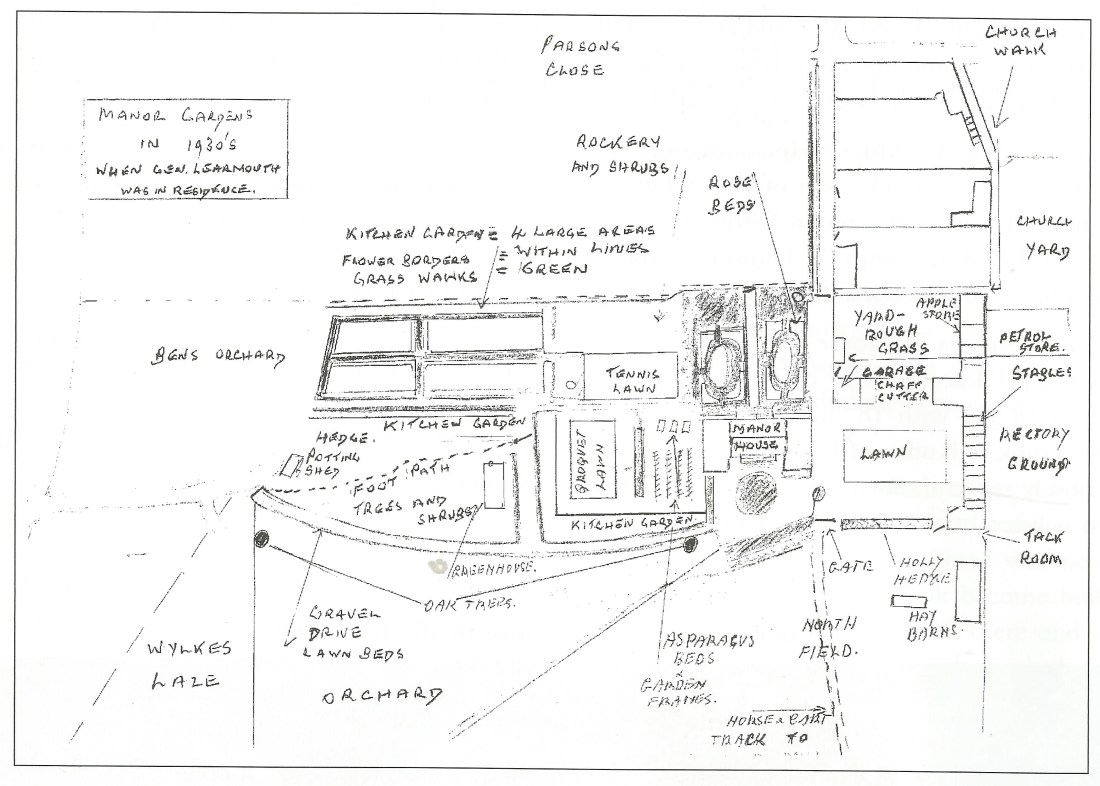
15a_NetherHeyfordManorHouse1825

The surrounding fields

15b_NetherHeyfordManorHouse1825

From illustrations made by the late Frank Pearson

The post-war years

During the Second World War soldiers were billeted in the Manor and on the West Wing ground floor there was a telecommunications room for use between Bletchley Park and Weedon, the room still being there and until recently with a complicated wiring system intact.

After the War the Manor House became a school for deaf children and according to Mary Warr (wife of the former Headmaster of Bliss School) in 1970 it was still listed under ‘Schools’ in the telephone directory… However, Raymond Wray, the present Landlord of the Foresters remembers clearly seeing a plaque on the Manor with ‘St Dunstan’s’ inscribed on it so it looks as though it was actually a school for the blind. But of course there may have been two types of school here.

In the latefifties the house was up for sale again – actually I’m guessing here. I have a copy of the details but no date, the only clues being ‘after the building of the M1 and before decimalisation’ – this time at £18,500 With 18° acres, having been subject to ‘considerable expenditure’, the agents being Knight, Frank & Rutley of Hanover Square, London. Here the Agent’s details reveal that the East Wing was entirely self-contained and used for staff only. And guess What? The Fee Farm Rent payable to the Queen is listed at – 3s. 4d. per annum…!

An aerial view of the house in the late 1960s
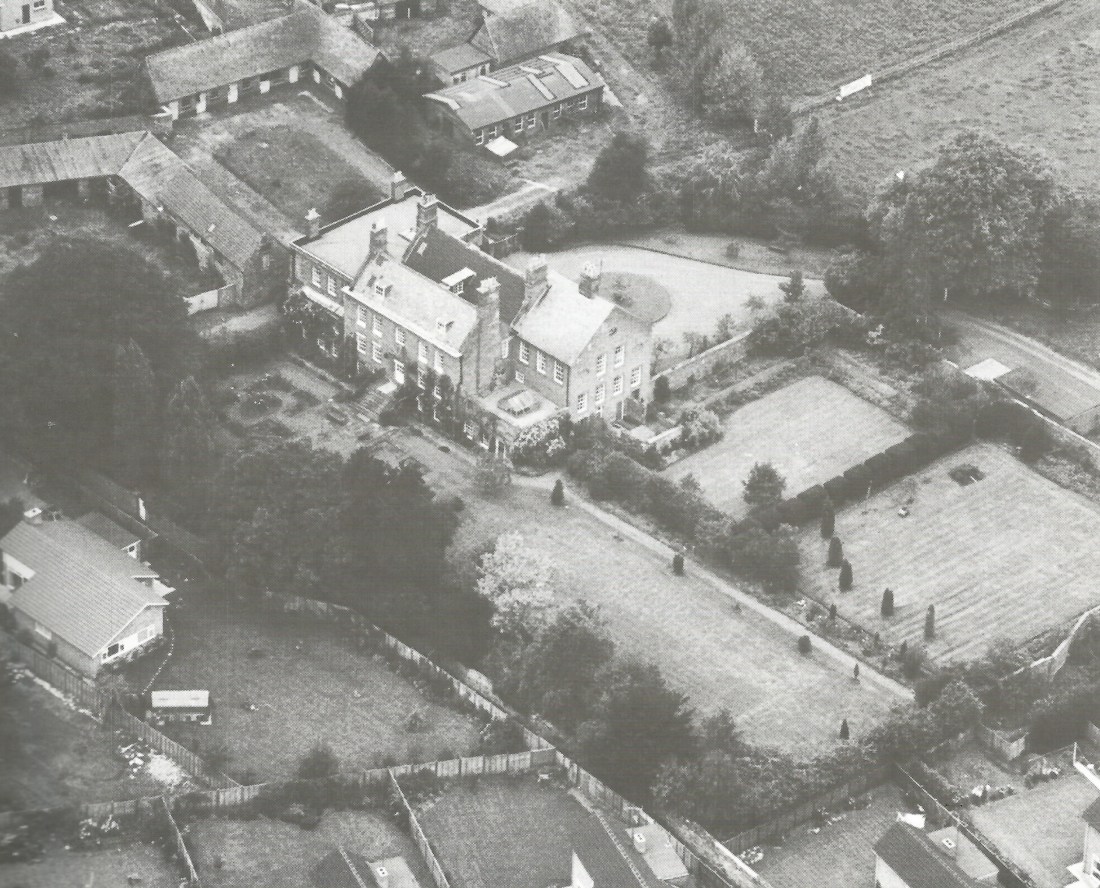
16_NetherHeyfordManorHouse1825

An aerial photo from the late 1960s lent by Julie Rands-Allen

By the sixties the Manor was still intact but with even less land as an old aerial photograph shows the beginning of the new chalet bungalows in Manor Walk built on the grounds of the old Chauffeur’s cottage. And we know that at this time it was occupied by the Architect Mr D Harwin as he was responsible for a lot of the new bungalows materialising. Raymond Wray (at that time living in Flore) was, at twenty-seven, the General Foreman for one of Mr Harwin’s building firms and was responsible for the building of this new development and he is almost certain that it would have been Mr Harwin who purchased the Manor for the sum of £18,500.

Separate dwellings

Then in 1975 with the rising tide of up-keep costs, the Manor and all its remaining land was sold to Cooper Construction Ltd of Lichfield for a housing development known now as Manor Park. Fortunately many of the trees were given Preservation Orders (the Manor itself is a Grade II listed building) and a fine old oak and many Scots Pines stand proudly still, including a very old apple tree which would have been in the old orchard near the stables and garage block.

And the Manor House became divided into three dwellings. The frontage which sports a beautiful old sundial and small oval windows became the back and the large grassed circle. the front of the Manor. The land which swept down passed the Horestone Brook and across the Nene was now all taken up with the new development. Its Glory Days were indeed over! Manor ‘Walk became built up with even more new houses but Manor Cottage — the old Gardener’s Cottage – is still there and other cottages dotted around Manor Walk and others backing on to the Churchyard still look much the same as they did when they belonged to the Manor and its estate. And although the drive that swept through Manor Park and through to Middle Street has long gone, one of the pillars which marked the entrance is still there at 15 Manor Park in Bernard Carpenter’s back garden…

Michael N Harbour, a former member of Northampton’s Royal Theatre Company bought the East Wing and was especially delighted when the BBC offered him a leading role in ‘A Last Visitor for Mr Hugh Peter’ as it depicted the story of Cromwell’s chaplain who is spending his last days after being imprisoned by the Royalists. The Battle of Naseby took place about ten miles from the Manor and Michael believes dead bodies could easily have been buried at Nether Heyford as the soldiers returned to London. Another bit of history to add to the already long one of Heyford Manor…And we mustn’t forget a piece of recent ‘history’. In the Great Northampton Floods of Easter 1998 both the East and West Wings were flooded when the River Nene broke its banks — the worst floods for over a hundred years.

Tony Landon bought the main part of the Manor and skillfully finished converting it into a period home for his family, and the Rands-Allens (appropriately hyphenated) bought the East Wing from Michael Harbour where they have lived for the past seventeen years. Gill and Tony Pont and their family live in the West Wing, keeping all of the original features, having been there for fourteen years, and Wayne and Ann Edmonds live in the little studio at the back which Michael Harbour built and lived in for a time before moving to London. Unfortunately there appear to be no sightings of ghosts from any of the occupants.

With all its history, both actual and imagined and with all the changes the years have seen, one thing remains constant. Families have lived in the Heyford Manor House over the centuries, are doing so now and will continue to do so over the Millennium and far beyond.

Julie Rands-Allen (with a little help from some friends!)

Article updated for the years 1947-1956 in Volume 4 Chapter 6:

The Story of Heyford: The Manor House 1947-1956 V4C6

~~

Extract from “The Story of Heyford” – Local book series published in the late 1990’s

Volume 2 of 4 | Chapter 5 of 11 | Pages 9 to 17

TheStoryOfHeyford_NetherHeyford_Footer

Heyford’s Historical Heritage  |  How the books were created

Index  |  Covers

The Story of Heyford: The Browning Family V2C11

The Brownings are a notorious Heyford family — notorious, that is, for their longevity! The last generation of Brownings to bear the family name in the village all died in their late nineties and early one-hundreds. The very last, Bob Browning, died aged 104 in 1997.

The Browning story begins in Maxey, near Peterborough with David Browning, a labourer, who was  born some time in the late 1790s. He married a woman called Maria and it may have been she who provided the longevity gene. Maria was born in 1798 and died in 1881, in Daventry, at the age of 83 – only a year before her own son and daughter-in-law.

Police inspector

Maria’s son, also called David was born in 1832 in Maxey and he brought the Browning family to Northamptonshire. He married Susan Price, the daughter of a butcher in 1861 and a year later went into the police force. He became the Police Inspector at Daventry and lived at the County Police Station there. The couple had nine children over thirteen years – the last three were all born within a year of the previous birth. While this is an eye—watering thought, of course it was not unusual to have so many children so close together. More remarkable, perhaps, was that seven children survived into adulthood.

Their parents, David and Susan, were not so lucky with their own life expectancy. Both died in 1882; David aged 50 and his wife, only 41. It appears that an unfortunate incident affected David’s police career and ultimately his life.

Hilda Collins, David Browning’s great grand-daughter, said that when the police inspector turned out gypsies at Dodford village as part of his duty he was attacked and, as the family recalled, “was never the same since.” He did not work again and was retired early from the force.

In the October Court Session of 1878 it is recorded: “That Inspector David Browning  be superannuated for 12 months, he has been in the force since 1862 and reported by two Medical Gentlemen as unfit to perform further duty. And it is further ordered as the Chief Constable recommends Inspector Browning for a pension that he do receive for the next 12 months an allowance after the rate of £48 per annum, the allowance to be paid quarterly; at the expiration of the 12 months Inspector Browning be then incapable of performing duty the Court will have to consider the continuation of the Allowance as a yearly Pension.”

One year later the October Session recorded that Inspector David Browning was “incapable of further duty” and was permanently retired. The pension would have been helpful but the family needed to find another income. The Brownings moved to Sheaf Street in Daventry and Susan Browning became a grocer. The census of 1881 shows Susan Browning to be the head of the family, (although David was still alive at the time) with five of her children at home. The elderly Maria Browning, Susan’s mother-in-law – who had been living with the family for at least ten years – had died just before the census was taken.

William Price Browning

Susan and David died shortly after the census, in 1882, and it was left to William Price Browning, as the eldest son, to take care of his younger brothers and sisters. He was 18 and was a commercial traveller and later, a rate collector in Nether Heyford. There must have been some financial difficulty in keeping the family together because Leonard Browning, the youngest child, was sent to Wolverhampton Orphanage at the age of six. Hilda Collins has a Bible inscribed by the orphanage and presented to Leonard. She is not sure why Wolverhampton was chosen but thinks that it might have been a connection with the police force.

Several of the Browning siblings moved to Heyford with William Price Browning (“W.P.”) including one of his younger brothers, David. He was the second son to be called David, the first having died in infancy. David Browning married into the Eales family, who ran the post office, and he kept the shop and post office from 1930 to 1955.

William Price Browning in 1923

NetherHeyford_BrowningFamily1

Photo lent by Hilda Collins (nee Smith)

The Hardly Annuals

W.P. Browning married Violet, a teacher. They lived in a small cottage near the top of Church Street and had six children within seven years! For this reason, their father referred to them as ‘hardy annuals’ little realising how hardy they would actually be. Violet – without the Browning streak of endurance – died aged 49, but all six children lived on into their late nineties or one—hundreds.

Gwendoline, the eldest child, was born in Nether Heyford in 1891 and followed her mother into the teaching profession, becoming a pupil teacher at Weedon School. In an interview for The Prattler in 1977, 86 year old Gwen remembered how “I did some self—tuition by taking a correspondence course and then later on cycled to teachers’ classes in Daventry.”

She recalled that as a child, “We’d go up to the canal at Heyford Bridge and then all the boys would change one side and the girls the other. Then we’d have a swim or watch the boats, all drawn by horses of course, being pulled up the canal.”

As a young woman, Gwen had an illegitimate daughter, Dorothy. She then married Mr Fred George and had two sons, although the eldest Philip died at 13. She could remember the village midwife, Anne Clarke: “It was quite an occasion when she brought her thousandth baby into the world.”

Like many in the Browning family, Gwen was a Baptist and actively involved in chapel life. She later claimed that her secret to a long life was “to never think about age. Forget how old you are, go wherever you’re asked and never turn down invitations.”

The eldest son, Robert (Bob) was born in 1892 and died in 1997 aged 104. He was the oldest surviving sibling. Like the other Browning children, he attended Bliss Charity School under the headmaster, Mr Cook who he remembered as a stern man. One of his earliest memories was in 1900 when a policeman from Bugbrooke cycled to Heyford to post up the call notices for the Boer War.

In 1905 at the age of 13 he left school and went to work for W H Smith in Weedon, delivering newspapers to the surrounding villages. He would walk with the post to places as far as Grimscote. Later, he joined a boot making factory in Northampton to which he cycled each day. He could always recall the terrible stench of the tanneries as he approached the outskirts of the town.

On the outbreak of World War One, Bob Browning was declared unfit to fight but contributed to the war effort by working a modern boot making machine. He married a woman called Mabel and in 1922 he moved into Northampton. However he retained an active interest in his home village and contributed occasional articles to The Prattler.

May Browning, born 1893 married Harold Smith whose family lived by the canal, beside the Bricklayers Arms before it closed. Harold’s father, Charles, was a railway signalman at Heyford South and the signal box was located on the Litchborough Road near Bugbrooke until the early 1930s.

Hilda Collins remembers how her mother, May, took the post up to Upper Heyford. A family there had a piano and May asked for no charge for her errand but just the opportunity to play it.

Winifred Browning, born 1895, married a Trinidadian, Mr Punch, which was probably considered unusual in 1920s rural England. They had two children but marriage did not survive and at the end of the 1930s, Win Punch earned her income running the fish and chip shop in the barn near The Olde Sun, taking it over from George Oliver.

Nell Browning was born in 1896 and married George Bennett with whom she had a son, Bill. The youngest sibling, Fred, was born in 1898 and lived to be 98. He was an active member of the village community and involved in the parish church — particularly bell ringing. He married a woman called Gladys and lived in Furnace Lane.

Despite the size and longevity of the family, the Browning name did not survive this generation. Of nine children born to the siblings, eight were born to the sisters under their married names and the other was a girl who also married. However, the Browning stock continues in the village through the Collins family, with its most recent name change, by marriage, to Willgress.

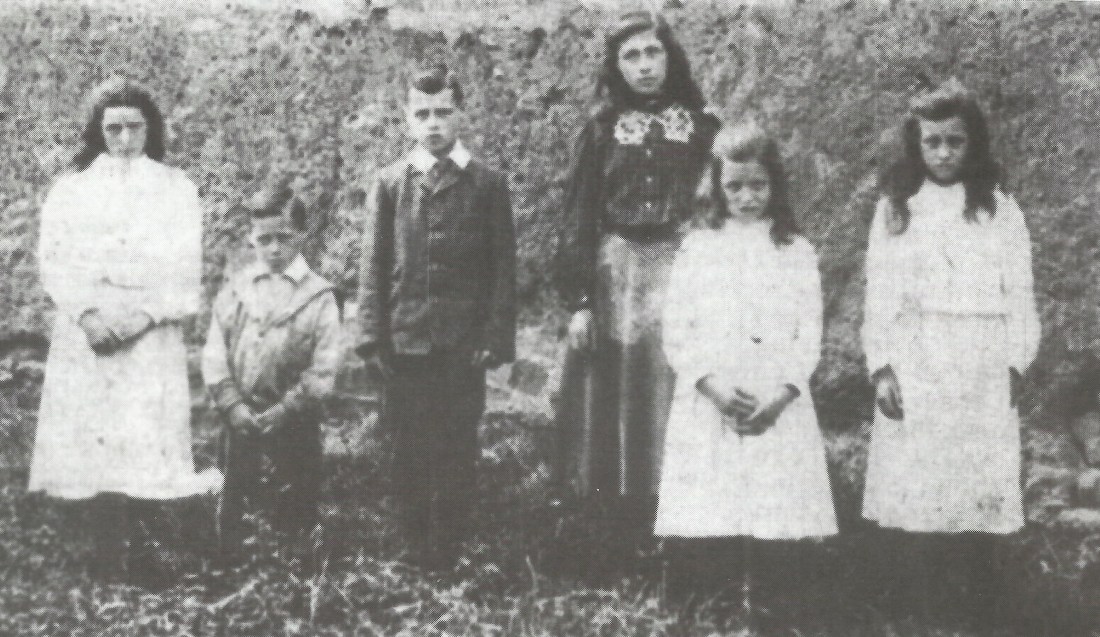
The six Browning children as they appeared around 1906

NetherHeyford_BrowningFamily2

Left to right: May, Fred, Robert, Gwen, Nell, and Win

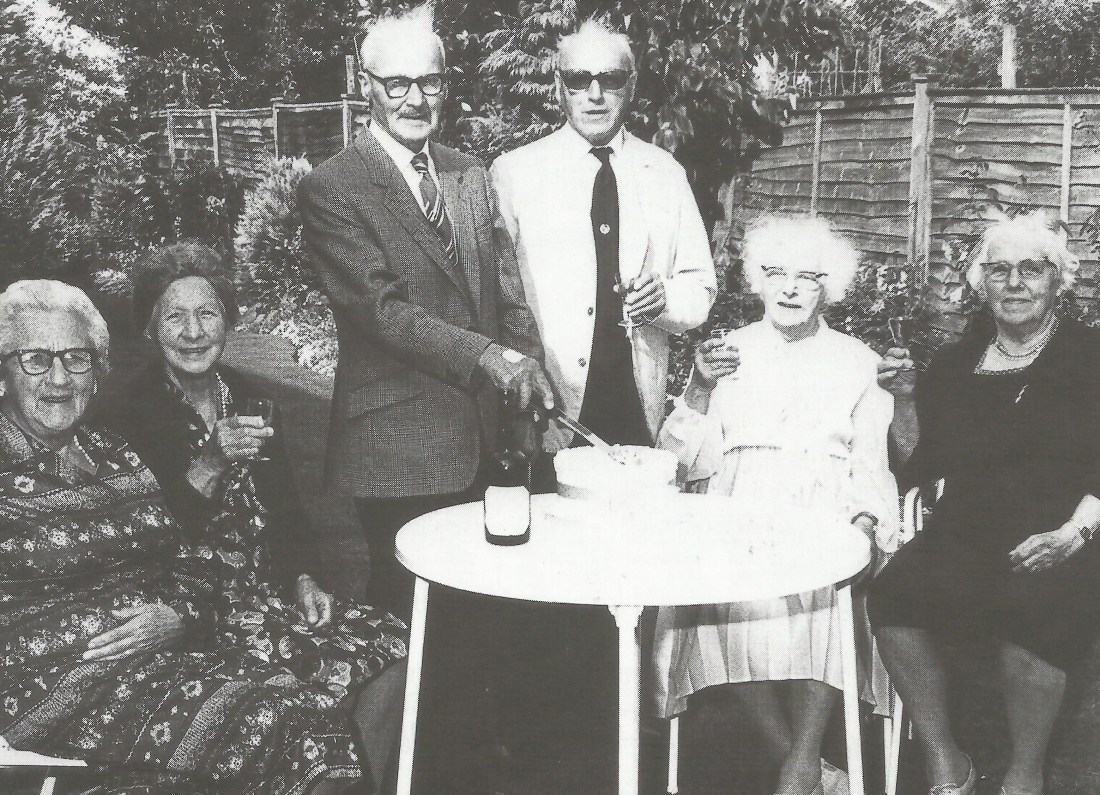
The family on the occasion of Bob’s 90th Birthday celebration

NetherHeyford_BrowningFamily3

Left to right: Mrs Winifred Punch (87), Mrs Gwendoline George (91), Bob Browning (90),
Fred Browning (84), Mrs May Smith (88), and Mrs Nell Bennett (86)

Photos from an article in the Chronicle and Echo August 1982

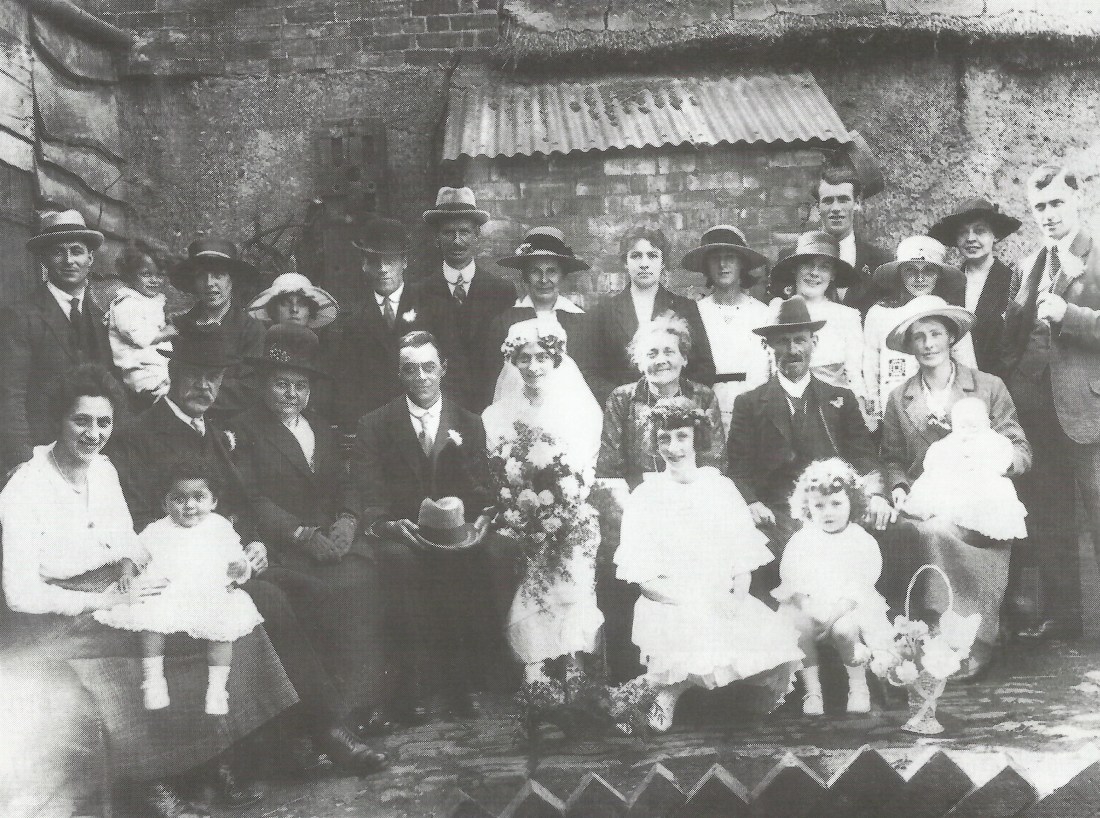
W.P Browning’s family on the occasion of his daughter’s wedding in 1921

NetherHeyford_BrowningFamily4

Top: George Bennett, Bill Bennett, Nell Bennett (nee Browning), Gladys Browning, Fred Browning, Friend, Friend, Mabel Browning, Friend, Friend, Fred George, Friend, Friend, Bob Browning

Middle: Win Punch (nee Browning), Odette Punch, Charles Smith, Harriet Smith, Harold Smith (bridegroom), May Smith (bride), Violet Browning, W.P. Browning, Gwen George (nee Browning), Philip Browning

Bottom: Dorothy Browning, Ellen ‘Nen’ Browning

Photo lent by Hilda Collins (nee Smith)

‘Progress’ by Bob Browning (1892-1997)

These days it seems there’s such a fuss about which foods are good for us.
What’s worse, I notice with dismay, the list grows longer every day!
They’re all the things that I miss most: Yorkshire puddings, Sunday roast,
Mash and bangers, eggs and ham, warm scones and strawberry jam,
Toast with butter, thickly spread, beef dripping on fresh-baked bread
Cheese and chicken are suspect too. I really don’t know what to do!’
Obediently when I was small, what Mother served, I ate all,
It seems to me now I am old, I still must do what I am told.
I’m over four score years and ten, and won’t see ninety—five again.
Since everything I ate was wrong, I marvel that I lived so long!

The words of Bob Browning whilst in Bethany Homestead where he spent his later years.

The Post Office

Other Brownings contributed to life in Nether Heyford. As mentioned, David Browning, brother to W.P., married into the village’s post office family. His wife, Annie, Was a member of the Eales family who had run the business since 1877.

John Eales was the village’s first postmaster and ran the post office and shop for 30 years before handing it on to his daughter Amy. She took over in 1907, When the shop and houses on the site were auctioned at The Old Sun Inn and bought by Amy Eales for £320.

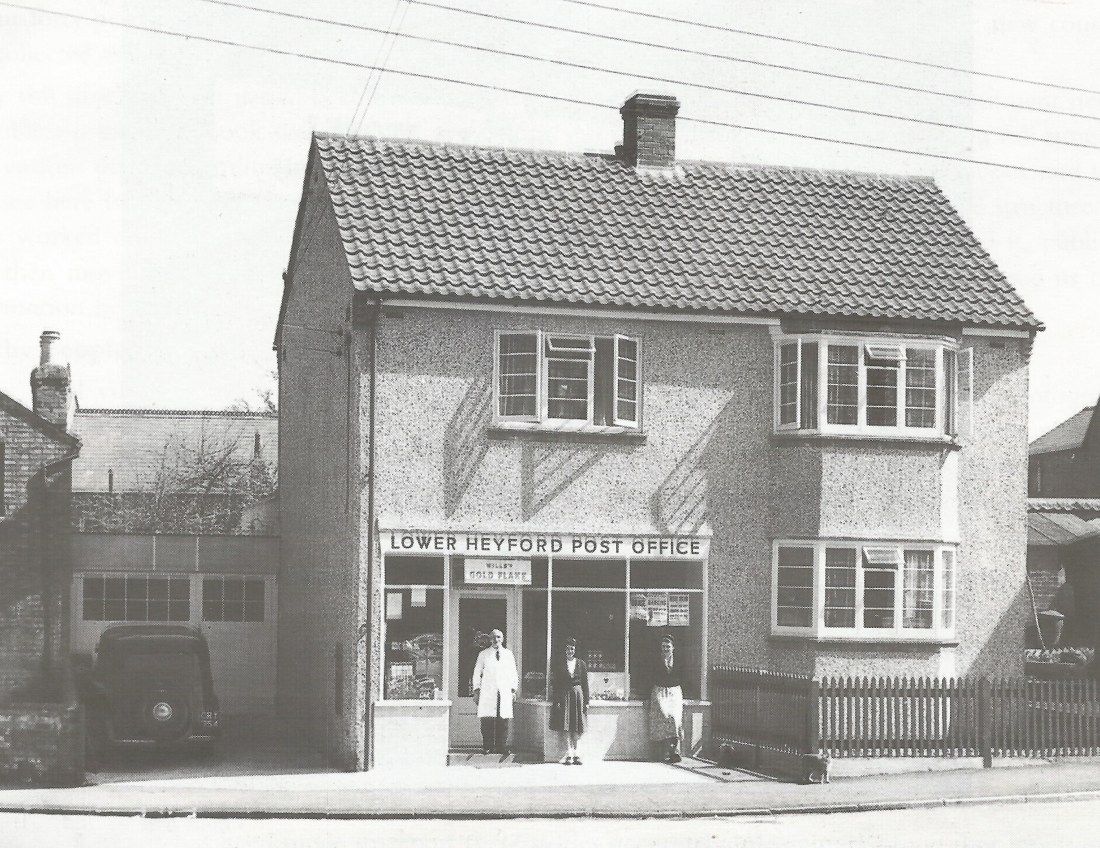
David and Annie Browning then took over in 1930 during which time the thatched premises was pulled down and replaced by the present corner—shop building, They had a daughter, Ellen (‘Nen’) who was born in Manor Cottage, Church Street in 1907. Nen taught in the village school before succeeding the shop and post office from her father in 1955.

David Browning outside the post office in the 1950s.

NetherHeyford_BrowningFamily5

Photo lent by Judy Armitage

Nen Blaney 

Nen ran the business until 1968 When, on the death of her husband, Major W. Blaney, Nen sold the shop to a Mr and Mrs Eales (apparently no relation) and opened the newsagent and post office next door. She continued working until 1986 — retiring gracefully at the age of 80!

Nen Blaney had many memories of Heyford. Her uncle, Mr J. Earl, ran a carrier’s cart to Northampton on Wednesdays and Saturdays. She recalled that “the first bus we had in the village was a coal cart that  travelled once a day and was run by a Mr Harold Botterill from Bugbrooke. On Saturdays it was a bit different because they put a shed thing (a wooden structure) on top as a cover.”

Mrs Blaney outside her post office

NetherHeyford_BrowningFamily6

Photo lent by Judy Armitage

She also remembered a postman named Albert Bates Who used to cycle in from Weedon with the post, hand over Nether Heyford’s share and then cycle on to Bugbrooke. Nen Blaney’s own working day was long; starting at 5am and often finishing around midnight. Despite this demanding schedule, Nen Blaney was chairwoman of the British Legion Women’s Section for over 20 years.

She was proud to be invited to the Queen’s Birthday Party at Buckingham Palace in 1971 in celebration of the Legion’s 50th anniversary. Major Blaney chaired the British Legion’s Northamptonshire Branch and served Nether Heyford on the Daventry Rural District Council, of which he became chairman. Family of Nen Blaney still live in the village today.

Sarah Croutear

~~

Extract from “The Story of Heyford” – Local book series published in the late 1990’s

Volume 2 of 4 | Chapter 11 of 11 | Pages 26 to 32

TheStoryOfHeyford_NetherHeyford_Footer

Heyford’s Historical Heritage  |  How the books were created

Index  |  Covers

The Story of Heyford (Extra): Heyford Home Guard WW2

Nether & Upper Heyford Home Guard (WW2)

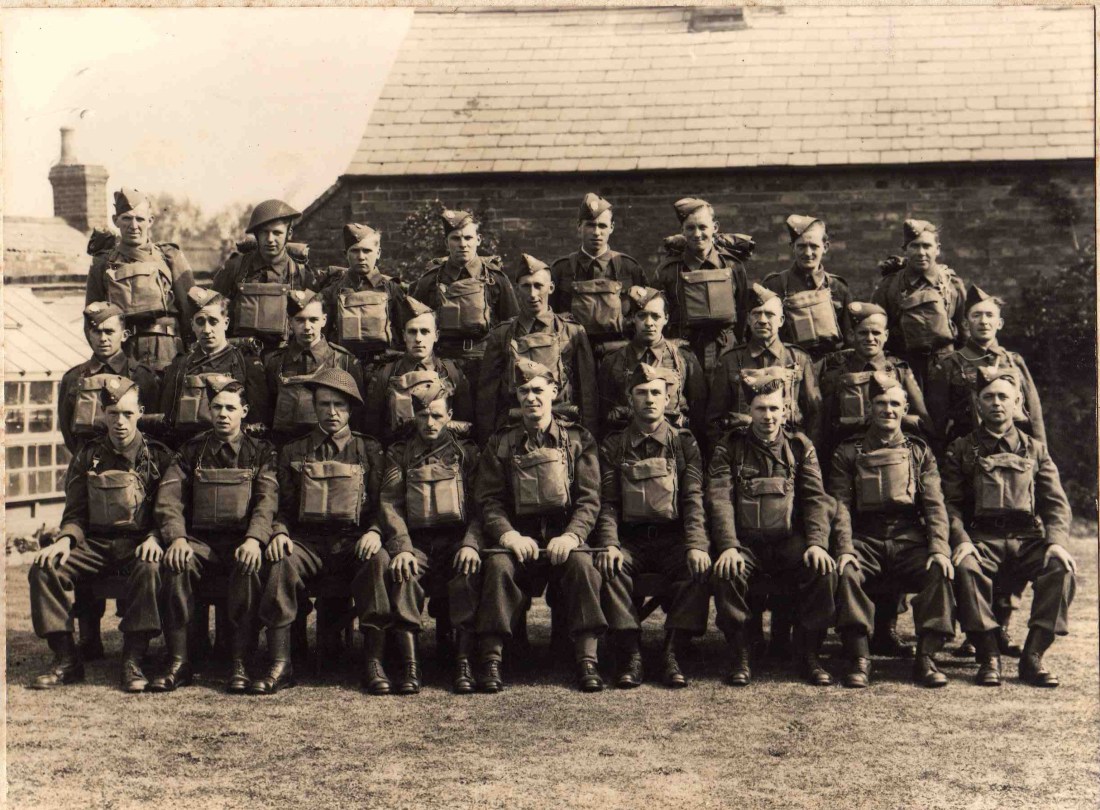
The Home Guards met twice a week in the yard of the Foresters Arms, where they had their stores. The Commanding Officer was Charlie Highfield, chosen because of his army career.

Nether Heyford Home Guard.jpg

Back row (L>R):
Alf Adams, Stan Faulkner, Joe Matthews, Arthur (Batty?) Charvill, Jeff (Geoff?) George, Dick Fisher, Ron or Frank (?) Taylor, Fella Masters (the only name he was known by!)

Middle row (L>R):
Reg Collins, Tom Eales, Charlie Masters, Jack Butcher, Frank Reeve, Dave Ward, Herbert (Horace?) Blood, Amos Lee, Les (Bob?)Foster

Front row (L>R):
Bill Spokes, Anselm Banner, Sid Blencowe (Joe?), Harry Haynes, Charlie Highfield (Captain), Ted Wright, Joe Garratt, Joe (Joey?) Charvill, Arthur Mead

Thank you to the following villagers for the names: Joe Garratt / Michelle McMillan / Tom Harrison / Anna Forrester / Garry Collins / Zoe Highfield / Richard Eales / Keith Clarke /  Trev Clarke / John Butcher / Charlene Zambo / Shirley Collins

Follow more Nether Heyford history, stories and photos on the Facebook group – Nether Heyford Past “Thanks for The Memories”

Please contact The Prattler if you can confirm any of the name spellings or nicknames. Also if you have any information on the Home Guard activities or any memories to share then send them in and we can update this page.

Jez Wilson 

The Story of Heyford (Extra): Growing up in Nether Heyford – Jenny Lewis

Growing up in Nether Heyford 

I was born at No 3 Furnace Lane in 1946 and lived there with my patents until 1969 when I got married. My father was the eldest of 7 children in the Collins family, living at ‘Wharf Farm’, Furnace Lane where my aunty still lives. Lower Heyford, as it was known then, changes its name in later years because the village was often mistaken for Lower and Upper Heyford in Oxfordshire, where the air force is based.

My mother originated from Harpole, and she met my father at the ‘Heyford Feast’ and got married, living in Heyford for the rest of their lives. Heyford Feast was a long standing event. It always fell on the 11th October each year and consisted of a large fair on the village green with Swing Boats, Carousels and Dodgem cars, not to mention Roll the Ball, Shooting and many other amusements. Also, lots of stalls selling candy floss, hot dogs mint humbugs etc. The fair was run by the Abbott and Billing families and over the years we got to know them well and while in the village, their children attended our local school. I went to Heyford School when I was five years old and was educated by Mr & Mrs Woods, then by Mr & Mrs Warr. The school bell was rung twice a day at 9.00am and 1.00pm just as it is today. Although other nearby villages had their own feast dates, Heyford was the largest because of our fabulous village green. People used to come from miles around and Tom Rolfe, who ran the Foresters Arms, opened up the club room for dancing which went on late into the night.

We also had a very good Youth Club which was held in the village hall. I was club secretary and my friend Lynn was treasurer. The fee was 2 old pennies per evening and we often had an awful job getting the money in. We had regular dances, often on a Friday night with live groups. People came from all the nearby villages and Northampton and they proved to be very popular. As club secretary, I had a hand in arranging these events.

I have many things I remember about life in the village. A lot of my leisure time was spent with my cousins on my grandmothers farm, especially in the school holidays. My dad’s youngest brother, Reg and his wife Joan, helped my Grandmother on the farm and lived there with their four children. In the school holidays, my two eldest cousins and I would help out ad played for hours in the hay barns and fished in the nearby canal. The railway line ran next to the farm and we would go into the signal box with the signalman and watch the trains going by. If we were lucky, he would let us pull the levers to change the signal.

Haymaking was always good fun too. My uncle would put the bales on his trailer which was then hitched up to the tractor and us children would stack them in neat rows, getting higher and higher as we went. Then we would sit on the top with my uncles towing the load back to the farm. (This would not be allowed nowadays).

My father, Arthur worked at the Northampton Power station as a fitter until he retired. He was one of the many volunteers who helped build the village hall, giving up their free time whenever they were able to.

Also, in the school holidays I would go with my mother fruit picking on Mr Beck’s farm. He would come into the village with his tractor and trailer to pick up the many helpers (mostly women) to take back to pick the fruit off his many currant bushes and other fruits. At the end of the day he would transport everyone back into the village. He lived on the large estate when New Creation farm is today.

When my parents married, they lived in a small rented house with no amenities, no running water and an outside toilet. One of my lasting memories of this, is having local men come round on a regular basis with the ‘Muck Cart’ to empty the bucket. (No such luxury of a flush toilet). On one occasion I was sitting on the toilet as a young child and they arrived to perform this delightful deed. I shouted through the door, “I haven’t finished yet”. Back came a very calm reply from one of the men, “It’s alright my duck, I can wait”.

Mr Faulkner, the baker delivered the loaves of bread to various houses. It was always in the evening as he baked the bread first in Northampton. He would sometimes stop and chat and on many occasions my mother used to say, “When is he coming as I want to go to bed”. Suddenly the kitchen door would open, and a hand and arm would appear clutching the bread, put it on a chair by the side of the door and say “Coo-Eee” and he was gone in a flash. Thus, he was known as Coo-Eee The Baker. At Christmas time, it was even later, as many customers gave him a drink or a mince pie, and he would be a little worse for wear when he arrived.

Eventually, my parents were able to buy the house we lived in together with the one next door, after John Earl (who owned the property) died. They had the two knocked into one and modernised, and it still stands today.

After I left school, I went to work at the Express Lift Co in the office. This is where I met my husband, Bob. We got married in 1969 in the Baptist Chapel and bought a new house in Rolfe Crescent, which is on the Wilson Estate where we had two children, Christopher and Anna. Twelve years later we moved to our present home in the centre of the village, where we live today. Both our children are now married, and we have four delightful grandchildren, two of which attend Heyford School. This makes them the fourth generation in my family to go there.

I have lots of fond memories of living in this wonderful village, which has grown tremendously over the years with the Village Green as its heart. School sports, football and cricket matches were played on the green before the arrival of the playing fields, which all the village folk would turn out to watch regularly. John Smith’s cows would often escape and go charging over the green with John running frantically behind. Some people now refer to the green today as the park, but to us oldies, it will always remain our beloved village green.

I hope you’ve enjoyed my little visit down memory lane as much as I have.

Jenny Lewis

NetherHeyford_Lewis_Story_December2019

Letter published in The Prattler – December 2019

The Story of Heyford (Extra): Dear Diary – December 1949

December 1949

Dear Diary,

I’m so excited. Christmas is nearly here. The chimney sweep’s been so that Santa won’t get his suit dirty. Mr. West, the coalman has delivered a sack of coal ready for a fire in the front room on Christmas Day, and I’ve asked mum if she can send Father Christmas a letter saying I would love a doll. I’ll do it myself next year when I can write better. I’ll hang my stocking in the fireplace though. I may get an orange, some nuts or coloured pencils.

I live in a Council house in Furnace Lane, on the left, with my mum and dad. My bedroom is at the back of the house and I can see right across the fields. I can see our long back garden with a little lawn for me and our dog, Sally, to play on and dad’s vegetable patch at the bottom, and all the way down one side is a line for mum’s washing on Mondays. I like Mondays because the copper in the kitchen where mum boils the washing, smells lovely and steams up all the windows.

After Christmas it’ll be 1950 and I shall be starting school because I’m four now. I want to go to be with other children, because there’s only me, but I don’t want to leave mum on her own all day. Still, she has my grandparents, a sister and brother and lots of good neighbours in the village so she can always visit one of them. School starts when the bell rings at 9 o’clock. I shall walk down Furnace Lane, with mum of course, and cross the village green on the footpath that runs from the corner by the chapel straight across to the school. There’s another one that goes opposite to the shops. If we took that one I might be tempted to jump the stream that runs along the side of Hillside Road. Still, I just remembered, the cows are on the green some days, chomping away at the grass so we might have to walk along The Tops. She said she’ll fetch me home for dinner at 12 o’clock but I have to go again at 2 o’clock. I’ll probably fall asleep in that time; it’s so quiet while dad’s at work. He’ll be home when it gets dark for his dinner, then perhaps he’ll have a
game of snakes and ladders with me before I go to bed at 6 o’clock.

I’ve started Sunday school and we have been learning all about the baby Jesus and singing hymns. When dad fetches me home we go up Church Lane to see Mr. Potter’s horse. It’s a big horse and it pulls the milk cart round the village so that we all have fresh milk delivered to our door. The lady who delivers it doesn’t need to tell the horse when to stop, it knows.

Well, I’m about to have one of my Nan’s boiled eggs with soldiers for my tea. She has lots of hens in her orchard and I help her collect the eggs sometimes. It’s about this time of year that they seem to die, maybe they get too cold.

Polly

Letter published in The Prattler – December 2019


The Story of Heyford (Extra): Spirit of the Valley

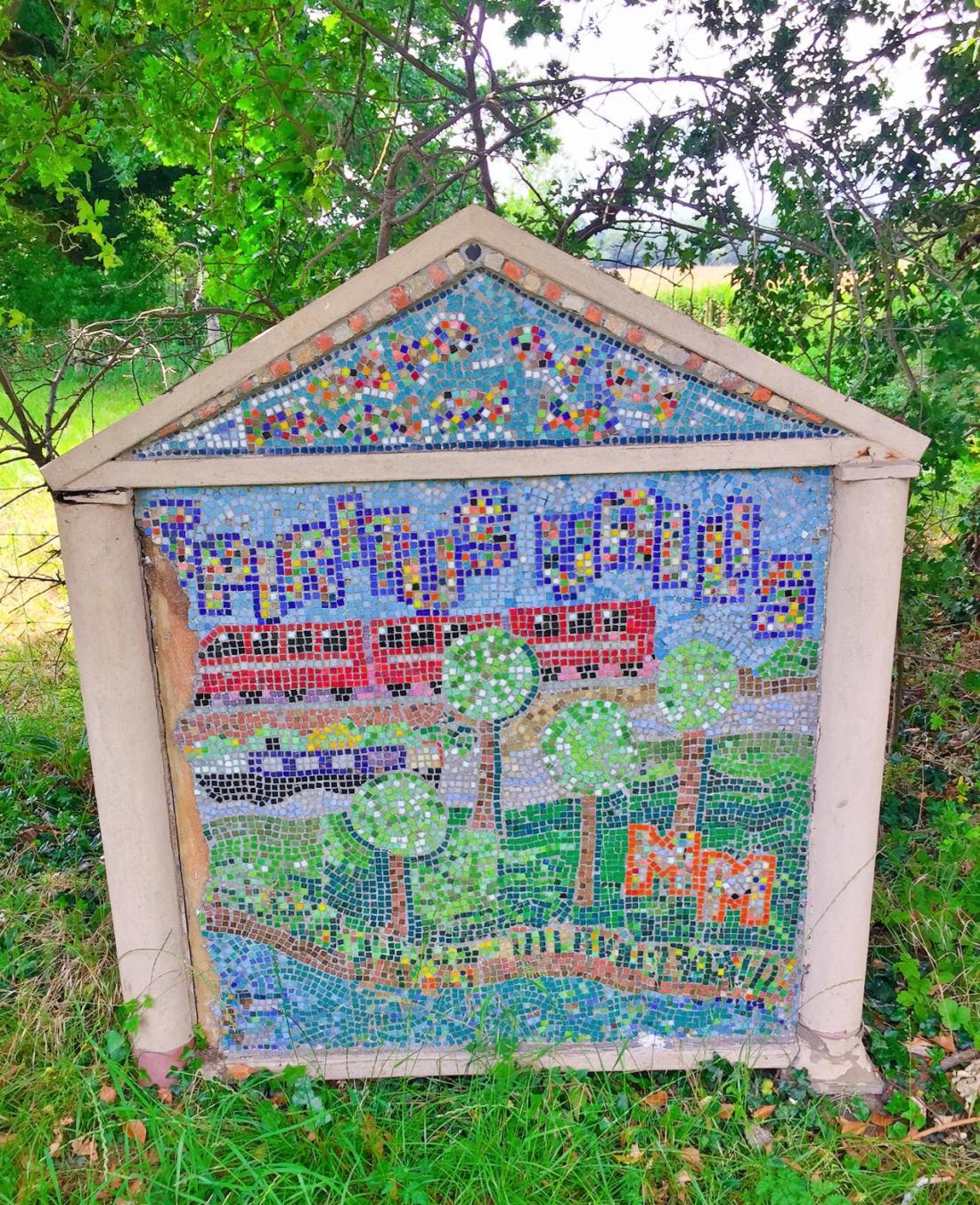
Nether_Heyford_River_Nene_SpiritofValley

This mosaic artwork is situated adjacent to the River Nene road bridge and footpath as you leave Nether Heyford towards Upper Heyford.

Earlier this year I asked around about its origins but didn’t get much of a response, only educated guesses.

The heading reads “Spiritus Vallis” (Latin for “Spirit of the Valley”) and also depicted is MM (Roman Numerals for 2000)

Obviously the railway, canal and river indicate a local connection, the Roman/Mosaic connection ties in with a wealth of very significant discoveries in the village since the mid 1960’s.

The photograph above was taken in July 2019 and as you can see it has suffered from some decay on the left hand edge.

I have recently discovered more information so thought I would share in a post.

“Spirit of the Valley” 

Part of the Northamptonshire’s Millennium Festival – a South Northamptonshire Council funded arts project during 2000.

Based on the Nene Valley and the communities that live along it, the project resulted in many activities including guided walks, photography, performances, writing and visual arts.

  • One of the last elements to be completed was the siting of three mosaic-based art works made by groups in three South Northamptonshire villages.
  • Guided by Northamptonshire artist Carole Miles.
  • SNC Arts Development Officer was Anna Hayward in 2000.
  • Harpole Heritage Group, Bugbrooke Arts Society, Heyford Archaeology Group & Youth Club each produced artwork based of the Nene Valley theme.

The 3 pieces were placed at the following sites:

“Roman Way Marker” – Nether Heyford

“Mosaic benches” –  Harpole

“Giant Fossils” – Bugbrooke


Jez Wilson


The Story of Heyford (Extra): Church Lane 1960’s Happy Days – Maureen Wright

Happy Days

The semi-detached dormer houses in Church Lane were built by Adkins and Shaw in the late 1960’s. After our wedding in 1967, Tony and I moved into No. 4 which was bought for the princely sum of £3,295. At that time most of the occupants of these houses were like us, newlyweds or not long married with young children. The land on which the houses were built had been owned by a Mr Potter whose widow lived at No. 3. The builders had not been able to develop the rest of the field because it was too low to support a sewer which is why the houses have long gardens.

At that time, the late Dennis Clarke who lived at the old bakery in Furnace Lane had a van from which he used to come round the village selling vegetables, fruit and fresh fish. He would park up in Church Lane and firstly visit Mrs Potter who was elderly and not able to walk too well. She in turn would have a cup of tea ready for him and so they would sit and chat and chat. In the meantime, all the potential customers were either waiting patiently or not so patiently for Dennis to appear. We became used to this routine and did not wait at the van unless we too wanted a chat but would keep checking to see if Dennis had appeared. But despite the wait, it was worth it just alone for the hand sized pieces of Plaice he sold, which were delicious steamed and loved by our children. Happy days indeed.

Maureen Wright


The Story of Heyford: Childhood Memories V4C7

Before the second world war the village was only half the size that it is now, transport was very limited, and the modern leisure facilities that are so commonly available today simply didn’t exist. Therefore the young people made their own fun in whatever way they could. There are many people in the village, now in their eighties, with childhood memories from the pre war period.

Children and young people
Before the first world war, the children went to school up the age of 13. Life was pretty busy keeping up with the chores. Mrs Dorothy Kingston of Furnace Lane remembers taking bread and jam to her father at the Brickworks when she came home from school. There was water to fetch, pigs to feed, eggs to collect, vegetables to prepare.

At thirteen, you left school and went to work. Some worked on the farms, some learned trades in their family businesses, but some worked outside the village. Bob Browning’s first job was a Saturday job at the age of 12 for W H Smith in Weedon. He walked from Heyford to Weedon and collected papers for delivery to Litchborough and Maidford and then walked back home. The journey was done entirely on foot and took him all day.

When he left school in 1905 he went to work there full time. They gave him a bicycle and two panniers to carry the papers. His new route was from Heyford to Weedon to pick up the papers, then to Dodford, Everdon, Farthingstone, Upper Weedon, then home. He ate his packed lunch each day under one of the big Beech trees beside the road through Everdon Stubbs.  There he double checked his takings.

On one occasion he arrived home and found he was one gold sovereign short. The sovereign had come from Everdon Hall where they always had several papers. His mother was desperate because he had to give his takings in the next morning but they didn’t have as much as a sovereign in the house.

So Bob cycled back to Everdon Stubbs to where he had counted the money at lunchtime, and there he found the missing sovereign. He was delighted at finding it that he carved his initials with his pocket knife into one of the trees. The four trees are still there today. All of them have dozens of initials carved into them of which some are quite new, but others could be 100 years old. Somewhere amongst them are the initials R.B.

Walking 
With time to, spare, little transport, and few organised facilities, walking was common. People would walk miles without a second thought.

The children all walked to school, some coming from Upper Heyford and others from the Railway cottages, or from Stowe Hill. They mostly travelled in small groups, unaccompanied by adults. Nobody worried about safety. The school didn’t provide lunches then so they made four journeys each day, often dawdling along the Way. There were several brooks in those days, running either side of the Green and also alongside a number of the hedges. Here it was tempting to dally along the way, making boats out of whatever materials they could find in the hedgerows.

Families walked together on Sundays, often for miles up to Glassthorpe or Stowe. They sometimes ended up at one of the pubs where father would have a beer and the children a ‘spruce’ – a bottle of pop with a glass ball in it.

Cars were a rare sight in the village between the wars so groups of young people would walk up to the ‘Turnpike’ (the A5) and sit on the bank by the Stowe turn, Waiting to wave at the drivers as they passed at a rate of only one or two an hour.

The Railway children
Mrs Doris Lovell, now in her eighties, lived in the railway cottages because her father, Frank Denny was a signalman. Although there was never a station in Heyford, she recalls how the railway had a strong presence in the village. There were sidings in the brick yard, there was an active signal box, and there were four railway cottages occupied by signalmen, platelayers and their families.

In the days of steam, each locomotive had its own unique personality and they chuffed past at a more friendly speed than today’s diesels. The driver and fireman, whose faces were often familiar to the villagers, would wave as they passed by, and sometimes they would throw lumps of coal for the children to take home.

The children played in the fields alongside the railway, although there was a strict understanding that playing near the tracks was forbidden. Favourite play areas included the stream near the brickyard just the other side of the small foot tunnel under the embankment. Here you could make stepping stones, build dens, and fish for tiddlers.

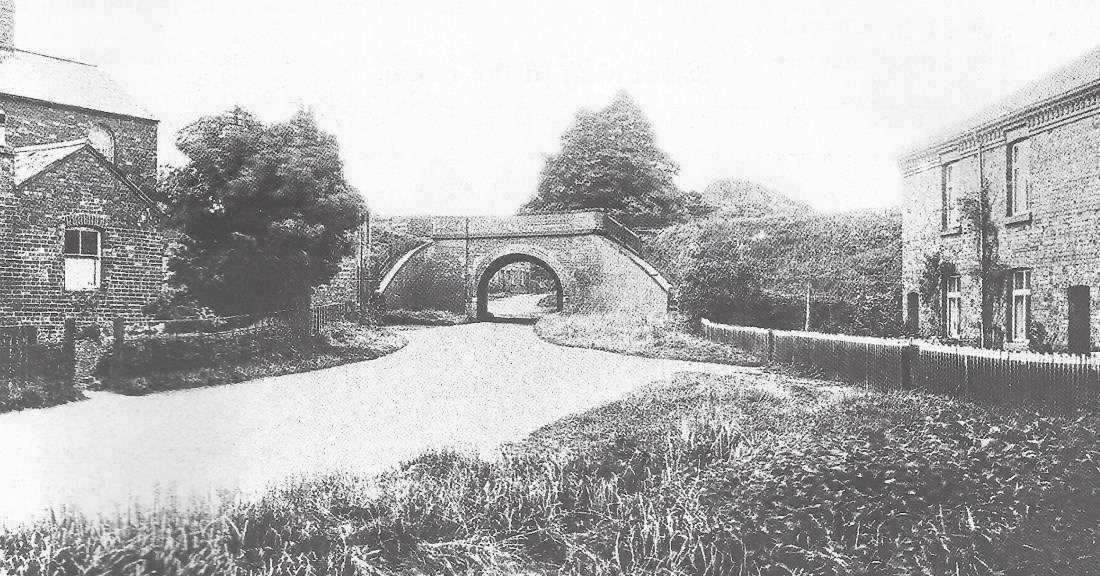
The railway bridge and railway cottages in the 1930s

memories2.jpg

Photo lent by Judy Armitage

Box Pond and ‘the Humps’
Another favourite play area recalled by Doris Lovel was in the field where the furnaces used to be. There was a pond here called ‘box pond’ because it was near the signal box. There was another pond across the road in the brickyard where deep water had formed in the claypit. Both ponds were popular play areas with much wildlife in them, including lizards and moorhens.

Also in the furnace field were four huge clinker mountains. These had been formed out of clinker waste from when the furnaces were in operation. Each seemed as high as a house. They had set solid into various shapes, Weathered through time, and were full of interesting nooks and crannies. They, were affectionately known as ‘the humps’. Cut hands and scraped knees were common.

These ‘humps’ were eventually moved when the M1 was built in the late 1950s. The field was full of hills and hollows from where the furnaces had been, and the contractor, Dowsett, was looking for somewhere to put the topsoil from the construction of the M1. So they broke up the humps, rolled them into the hollows, and covered them with topsoil. Box Pond was also filled in.

Fishing and swimming 
As today, there were plenty of fish in the canal. With a line, a hen feather, a bent pin and some bait, you could catch gudgeon to take home to feed to the cat. Favourite places on the river were by one of the two bridges – either the bridge to Upper Heyford, or Coach Bridge (now only a footbridge beyond Manor Park). Jumping off Coach Bridge into the deep waters below was a regular summer game for the boys.

Many local people, now in their 70s and 80s remember swimming in the canal. On warm summer days the young people would take their swimming costumes, some sandwiches, a drink, and a pot to pick blackberries. This way they could would spend hours by the canal.

An article in the Mercury and Herald dated 25th May 1978 included an interview with Mrs George (nee Browning) in which she recalled how ‘we’d go up to the canal at Heyford Bridge. The boys would change one side and the girls the other. Then we’d have a swim or watch the boats, all drawn by horses of course, being pulled up the canal.’ Unlike the railway where it was firmly understood that the track was out of bounds, the canal was considered ‘safe’. This was in spite of the murky state of the water and the waste disposed of by the boat people. However it was a fun place to spend the day, and was the only way to learn how to swim.

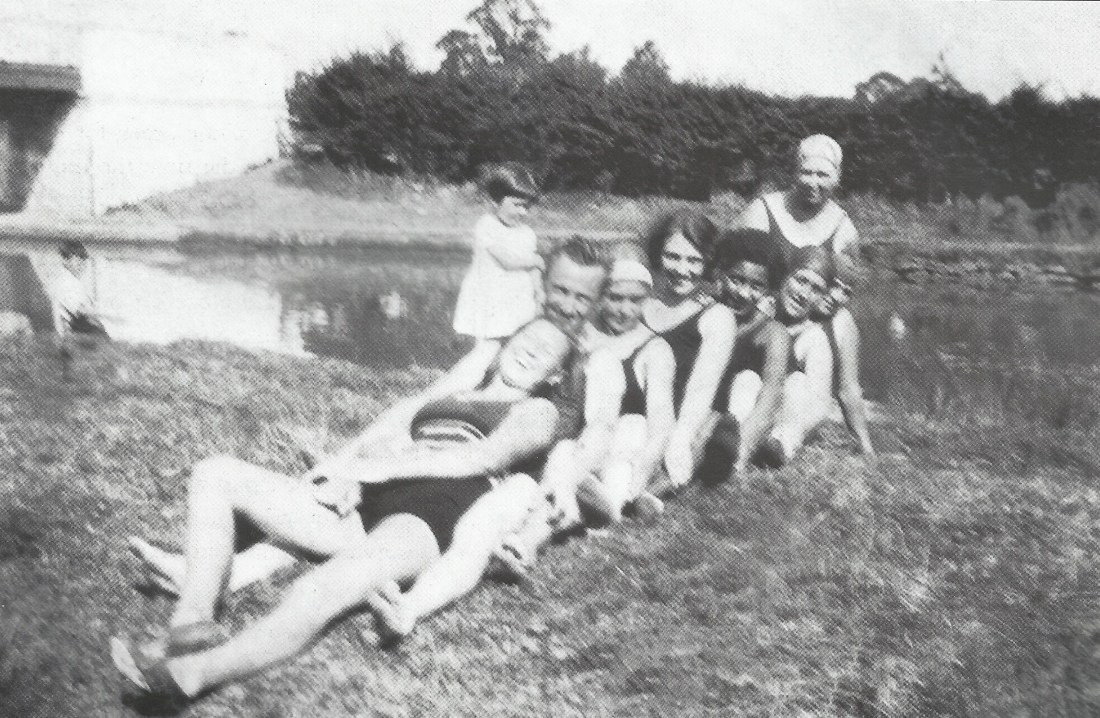
Swimming in the canal

memories3.jpg

This photograph, taken in the 1920s shows a group of young people beside the canal.  They went up Furnace Lane and turned left at Wharf Farm where they walked along to the next bridge. They are seen here in the field opposite the tow path. Pictured from the front are: Ivy Denny, Jack Earl, Friend, Nen Blaney, Odette Punch, Friend, Friend, and Mrs Frank Denny. The little girl to the left of the group is June Denny.

Photo lent by Doris Lovell (nee Denny)

~~

Extract from “The Story of Heyford” – Local book series published in the late 1990’s

Volume 4 of 4 | Chapter 7 of 8 | Pages 28 to 30TheStoryOfHeyford_NetherHeyford_Footer

Heyford’s Historical Heritage  |  How the books were created

Index  |  Covers

The Story of Heyford: Cricket on the Village Green V4C5

Like most villages in England Nether Heyford sported the idyllic sight of twenty two people dressed in immaculate whites playing the age-old sport of Cricket on the Village Green.

A team game remarkably like cricket was being played in England as early as 1300 and by the 1700’s it was being played by the landed aristocracy and so became part of our culture. In the early 1890’s County Cricket was established with clubs being admitted only when the MCC judged their standard to be acceptable and the county of Northamptonshire was admitted in 1905.

The period 1890-1914 is regarded as the golden age of cricket with interest in the sport becoming widespread. Today it is not quite so popular with the young and it is not surprising that India and Pakistan have such magnificent teams as children take up cricket there as soon as they can hold a bat and at week-ends you can see teams and teams of players on any given space practising their skills -far more than even our local lads play football.

The tradition of a local cricket team still goes on in Heyford, but not on the Green. For the last few years you could see Julian Rice and his merry men playing on the well-tended sports ground by the Pavilion built ten years ago and situated just as you enter Heyford from the A45. (The Pavilion used to be the football changing rooms which were moved from the village green to the sports field). Still an idyllic sight but not the same perhaps as when cricket was played in the centre of the village.

The early years

The Cricket Club in Heyford was founded by Henry Isham Longden when he came to the village as Rector in 1897. He was, according to Joan Wake in her book ‘The life of Henry Isham Longden’, fond of cricket and apparently he had played for the Northampton Cricket Club in his curate days, so it is not surprising that he was always ready for a village cricket match. Hevford’s Bob Browning (1892-1997) recalls cricket being played on the green in the early 1900s, but these were in the days of friendlies against neighbouring villages.

There must have been a lapse of all activities during the 1914-1918 war with all able-bodied men fighting, but cricket resumed in the 1920’s. At this time the green was more uneven than it is today as it was grazed by cows. There was continual debate about whether a proper pitch could be laid. According to the rules laid down for the management of the green no digging could take place, and much argument went on about laying such a pitch. However agreement was eventually reached and a wicket turf was laid on the centre part of the green by Jack Nickolls and Tommy Kingston.

In the 1920’s the Heyford team consisted of such people as Bert Thompson, Frank Reeve, Bob Foster, Dick Foster and Ron Humphrey. They played friendlies against local villages, Farthingstone and Everdon. Before each match nets were erected along the far side of the green to protect the windows and slates of the houses nearby. And of course they all met afterwards in the clubroom of the Foresters Arms.

In the 1930’s the players included Bill Kingston, Bernard North, Charlie Copson, Jack Butcher, Dennis Clarke and Reg Collins. The main umpire for Heyford was Sonny Thompson and they played against Everdon, Pattishall, Astcote, Bugbrooke, Kislingbury and Harpole. Bill Kingston recalls that before they could play they had to make up the pitch. They had to fill in the holes, patch it, turf it and roll it because the cows had been on it all week! And according to Charlie Copson the pitch was so well prepared that it was used on Friday evenings for tennis matches.

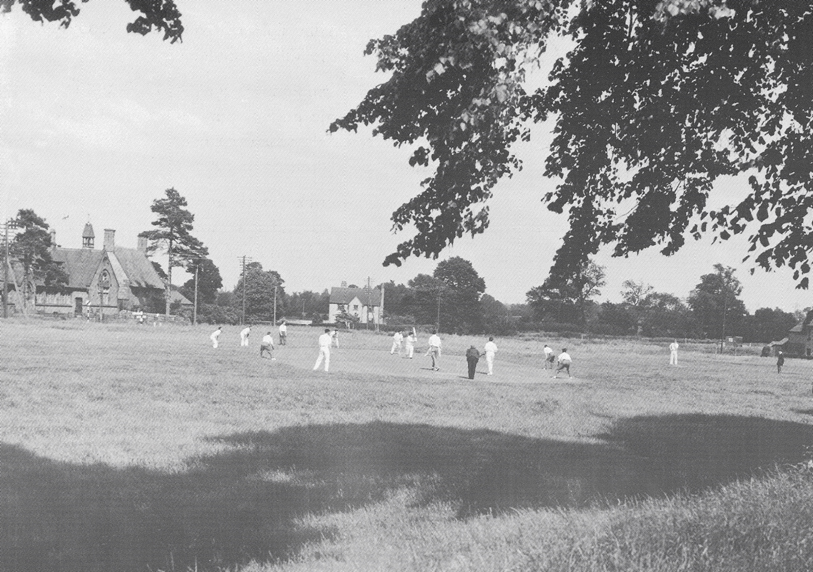
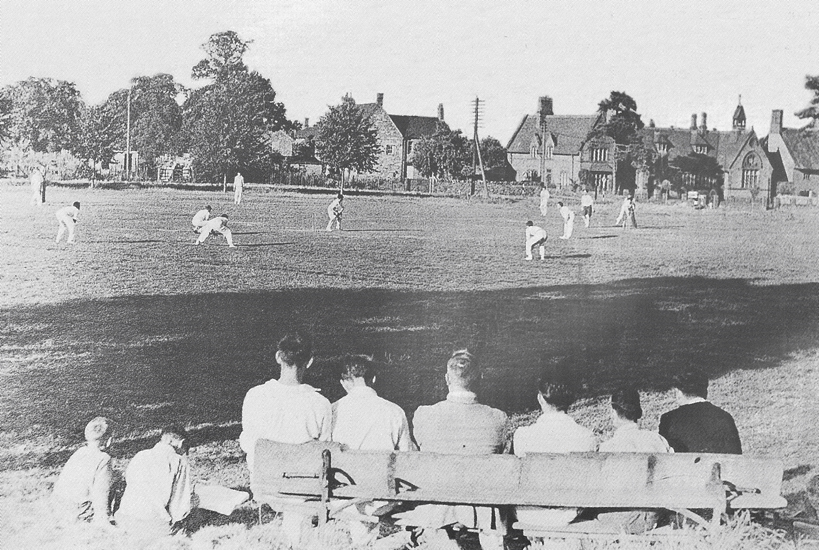
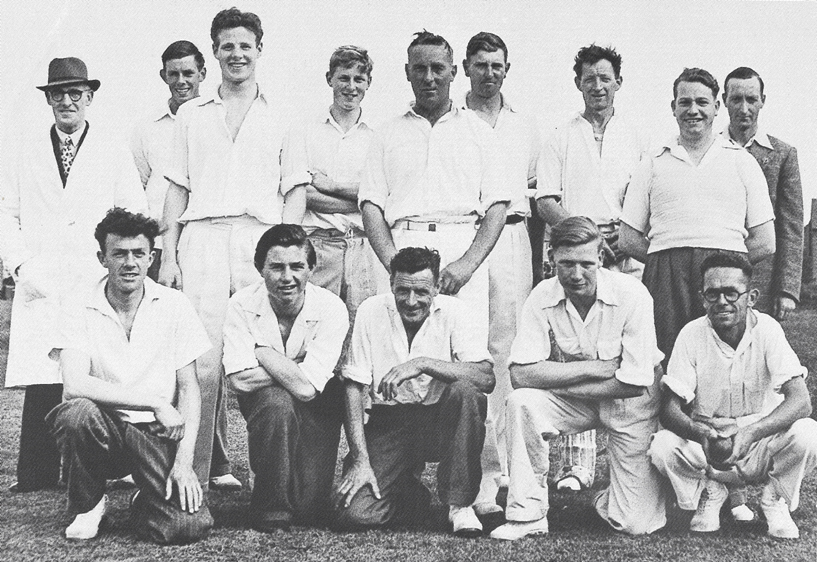
Cricket as it appeared on the Green in the 1940’s and 1950’s

NetherHeyford_Cricket_1

NetherHeyford_Cricket_2

The team in the 1960’s

NetherHeyford_Cricket_3

Standing, left to right: Jack Draper, Peter Brodie, John Draper, Michae Ingray, Norman Fonge, Bernard North, Ron Copson, Bert Thornicroft, Ben Spokes

Kneeling, left to right: Dennis Clarke, Jim Blood, Harry Haynes, Charlie King, Reg Collins 

Twenty years without a club

Then the cricket ceased. In the Sunday Telegraph a few weeks before Easter 1999, it was reported “The village Cricket Club has been forced to close after the wives and friends of the players refused to make their teas”. This, I hasten to add, was not what happened to Heyford. By the 1950’s Tommy Rolfe had left the Foresters and houses had been built alongside the green between Middle Street and the Post Office, making it difficult to protect them against damage from the balls. Also there were few young men in the village in the post war years because many were moving to town to take advantage of modern work and housing opportunities.

In the Mercury & Herald November 6th 1969 a little piece about Nether Heyford appeared. “Heyford is developing fast with an attractive diversity of new and stylish housing running in price to the five figure bracket, but in the heart of the village the scene remains much the same as half century ago – thanks to the preservation of one of the most expansive village greens in England. It is a curious fact, however, that Nether Heyford has no cricket club. It used to have one but the young people have cars these days and go where they will for their sport and pleasure”.

The club reformed

However, on the 16th June 1977 a meeting was held with Charles King asking the question “Would it be possible to raise a cricket team in the village?” and no article about cricket in Nether Heyford would be complete without a mention of Dave Jenkinson who, after this initial meeting, was elected Chairman of the newly reformed Cricket Club with Charles King, who lived in Hillside Road, becoming the Secretary.

Charles told the local paper that when they had started up again they played half-a-dozen evening games with limited overs to test out the interest. But with no pitch and little equipment and the green being used all winter for football, it was becoming very difficult to keep interest going. He reported that “we’ve had talks with a local farmer about using one of his fields, but at the moment we’re playing all our matches away from home; we book pitches on places like the Racecourse in Northampton. But the real snag about a square on the green, is that we’d need to spend £160 on safety netting along the roadside”.

Thus a new venue for cricket was being called for. Plans for playing fields were being started and fund-raising events taking place. And an apt headline appeared in the paper: “Cricketers bat on and refuse to be stumped”.

Discos at the Foresters Arms followed and on December 23rd 1977 a Christmas Supper Dance was held, music by the Neal Stanton Band, and tickets at £2.50. At this time the membership fee of the Cricket Club was £1 a head and the match fees 10p per game. More and more local people became involved with the Club and Mrs. Rosemary Haddon was elected Treasurer having the grand sum of £155.4p in the kitty.

In 1978 on the 25th May the Mercury and Herald reported some memories from Mr. Albert Garrett who was clerk to the parish council for 35 years and at that time 79 years old. “We used to play cricket on the green” he said “they’ve just started the club up again. I played until I was 60” and he laughed. “We used to break a lot of windows but this time I think they’re getting something to protect them. Even so, we always had a collection to pay for them, especially for one old chap who had his broken regularly.”

And in 1982 when Dave Tite was secretary, the Club was looking back to 1977, the year that Heyford Cricket Club was reformed and remarking on how well the club was doing since it started without money, equipment or fixtures. In March 1983 Geoff Garrett was voted Captain and Paul Horrocks was persuaded to take on the job of fund raising- a difficult but necessary job in the circumstances. They had a full fixture list and entered for the Watney Mann Cup.

All matches ‘away’

In 1984 still without proper grounds the Cricket Club flourished, meetings were held still at The Foresters Arms with Mine Hosts Alf and Marg Parker and youngsters were being recruited. At the Parish Council Annual Meeting members raised the subject of their need for practice nets in the village, perhaps on the green, and these “would not take up a great deal of room and could be used by the School and would add to the attractions of the village”. If you look at the fixture list for July 1984 you will see that not one of the matches were played at home. And amusingly on the front of the fixture list you will see the following:

REMEMBER:

It is better to have played and lost than never to have played at all.

(Gayton excepted)

At the 7th AGM of the Heyford Cricket Club on Sunday, 31st March 1985, the Chairman reported sadly that there was now no prospect of home fixtures being played within the Parish Boundary but that it was to be hoped that progress on the Heyford Playing Fields project would mean a ray of hope for future seasons.

The following report in September in the Prattler went “Came second to Ryland 0/B’s in the Clenbury / Haine Shield. Lost in the final. Watney Mann Cup got through to the second round by having a bye in the preliminary round – and beating Gayton in the first round. Lost to Buqbrooke in the second round. We have started a Youth Team with the lads doing most of their own organising. They have been going for about six months and have had two fixtures against very good sides. They tied their first game against Wootton Youth and narrowly lost to Rylands Under 15’s. They have a practise net on the Green every Monday evening. The lads show a lot of promise and hopefully next season we call get them into a league through the Cricket Association. “

But it was to be some time before cricketers could enjoy the game on their home turf. An article appeared in February 1987 stating that “The Parish Council, through its Leisure and Amenities Committee, has been looking into the possibility of acquiring enough land to provide a playing field for the use of the inhabitants of both Nether and Upper Heyford. This matter was also discussed at the last Annual Parish Council meeting. A steering group has been formed to consider the matter, and the outcome of their enquiries to date is that Mr. J Spokes of Upton is prepared to sell approximately 10 acres of land, which seems to be ideally suited to a games area. The land forms part of a flat field, which is situated behind the allotments and Mrs. Smith’s field on the Upper Road.”

The team in 1980

NetherHeyford_Cricket_4

This photograph, taken on Jeremy Rice’s front lawn, shows the team as proud winners in 1980 of the Clenberry / Haine Shield.
Standing: Julian Rice, Ray Haddon, Dave Tite, Tony Charville, G Starmer, Graham Drake
Seated: Alex Kirkbride, Geoff Garrett, Geoff Sturgess, Mike Tharby

Home turf at last

In July 1988 the cricket square was making good progress “thanks to the efforts of the Grounds Committee headed by Jeremy Rice.” And in 1989 Geoff Sturgess of Hillside Crescent was very encouraged by the good turnout for the Youth Cricket Under 16’s Team as nets were now available down on the Playing Field.

In the Prattler, May 1989, the following article appeared compiled by Alex Kirkbride:

“The merry click of bat against the ball, the expectant rush, the cheering that proclaims skill of the greatest of all English games; Flutter of the flags, the branches of the trees swaying beneath the summer breeze; No sweeter music in the world is found than that upon an English cricket ground.

R Ratcliffe Ellis; Cricket Music

Yes, the dream is now a reality. Heyford Cricket Club is back at home”.

And now in 1999 Simon Legge has taken over the captaincy from Julian Rice and will lead his team in League Cricket. The village Green has seen the very last of the cricket but thanks to all the efforts of the stalwarts of the village, the cricket heritage will continue.


With grateful thanks to Barbara Haynes, Julian Rice and Dave Tite

Julie Rands-Allen

~~

Extract from “The Story of Heyford” – Local book series published in the late 1990’s

Volume 4 of 4 | Chapter 5 of 8 | Pages 22 to 27

TheStoryOfHeyford_NetherHeyford_Footer

Heyford’s Historical Heritage  |  How the books were created

Index  |  Covers

The Story of Heyford: Heyford Feast – The Visiting Fair V4C4

Heyford Feast
The fair has been coming for Heyford Feast in October for as long as anyone can remember. Heyford Feast is the anniversary of the dedication of our Parish Church and takes place on the first Sunday after the 11th October. This is also the time of year when Harvest Festival activities took place – they continue to do so today — marking Heyford as one of the churches to celebrate Harvest late in the season.

The fair and the church’s celebrations were closely linked: together they formed the greatest village occasion of the year and would last one week. In the early 1900’s, the fair families attended Evensong at the church and contributed some of their takings to the collection. Today, there is no longer a link between the church and the fair but this still remains the time of year when the fair comes to Heyford.

When the Parish Council was originally set up in the late 1890’s, it stated that no fairs could use the main part of the Green. However, by then, the fair was so much part of our tradition that this ruling was later rescinded. It was a major event to be shared by all and men employed locally were often given the Monday off work to be able to enjoy the festival to the full. Likewise, pupils at Bliss School were allowed the Monday off in order to meet the fair at Upper Heyford and walk down with it into the village.

After Heyford, the fair went on to Daventry to become the centre for the ‘Mop Fair’ – so called because it used to be a time for hiring domestic staff This was at the turn of the century when fairs were still more business and trading occasions than anything else. Workers would advertise their availability for hire by standing with mops in their hands. It was a big occasion there too, and the fair would block the main roads in the middle of Daventry.

Swing-boats and roundabouts
Bob Browning recalled the fair in the village from the early 1900’s. There were swing-boats and roundabouts with wooden horses and most rides charged 1d. All along the road from the Post Office to the schools were stalls: coconut shies, hoopla and darts. Fred Browning remembered the game of Aunt Sally in which you had three balls for one penny and had to throw them through a hole in a door to release ‘Aunt Sally’. There was no prize in succeeding, just the thrill of seeing Aunt Sally appear. Fred even commemorated the fair in verse as part of a poem called “Heyford Green”:

Remember the fairs, wooden horses and wares
would collect to the joy of us all…

By contrast to such ethereal thinking, The Foresters pub was central to the fair’s activities because of its place on the Green and it wasn’t unusual for there to be fights there.

Great anticipation
Many villagers can still recall the fair from the 1930’s and 40’s. There was great anticipation for its arrival. The children would save up money for weeks beforehand and girls sometimes knit purses to hang around their necks with the three or four pence saved for the rides. They gathered rose hips which they could sell through the school for 3d. per lb. for making rose hip syrup. They would also collect acorns from ‘accern orchard’ which they could sell as pig fodder. Some people would collect eating apples which the fair folk would buy for making toffee apples.

On the day of the fair’s arrival there was great excitement. School children – now no longer allowed out to greet it – would often hear the fair setting up on the Green across the road. This caused them enormous frustration because they were all itching to get out and see it. If the fair happened to arrive out of school hours, the children would go to meet it along what is now the A45. They would put their ears to the ground to try to pick up the vibration from the rumble of the steam engines.

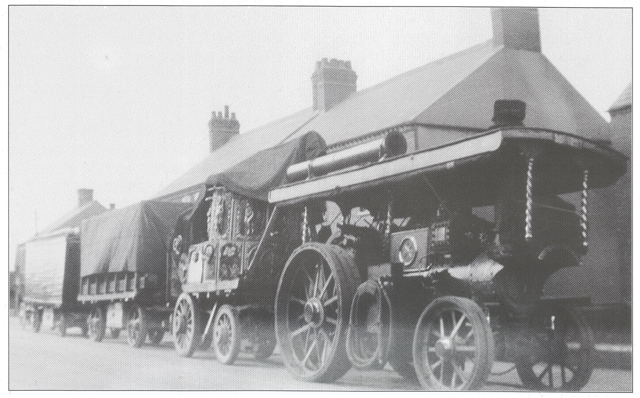
The Steam Engine

Nether_Heyford_Heyford_Feast_1

This photo, taken in the 1930’s, possibly leaving Finedon, shows George Billing’s Burnell 2625 ‘Lady Pride of England’

Photo lent by Ted Garrett

George Billing
The fair was run at that time by George Billing. He wore a bowler hat and a navy blue suit and his wife collected the money in great heavy bags full of pennies. The fair would set up near the shops and The Foresters and the main attraction was the merry-go-round. It had horses on the outside, cockerels in the middle and smaller horses on the inside. It had its own steam engine to drive it and George Billing stoked up the fire to keep it going. However, sometimes the steam would give out and the children would push the merry—go—round around by hand.

The other main attractions were the big swing boats at 1d. a go. There were many battles to see who could take their boat the highest and the fair people got cross if anyone tried to swing their boat right over! There were stalls for the coconut shies, darts, roll—a—penny and skittles. The skittles were tall and white – four in a line – and the prize for knocking them all down was a packet of nuts or Players cigarettes.

The fair also made its own sticks of rock known as ‘Feast Rock’. It was humbug flavour and striped brown and yellow. The rock stall made it by hand by pulling the sweet mixture out into long strings. By all accounts it was delicious!

Horses and steam
Two traction engines were operated by the fair. The larger one stood up by the Baptist Chapel and generated electricity needed for the lights. As there were still only gas lights in Heyford at the time, the electric light display on the Green was rather a novelty. Hilda Collins remembers how the steam engine would stand on its own beside the chapel, chuffing away: “There were clouds of steam and it would be spitting scalding hot water – quite dangerous really!” She also recalls the organ on the roundabout and how, as children, they would ride round and watch the different instruments ‘play’ in turn in the centre of the ride. The roundabout organ used a pianola device of perforated cards that played the music and – being limited to the number of cards the ride had – the same tunes would start up over and over again.

All the caravans were horse drawn and were set up in a row. At first, water for the fair had to come from a private supply but then the fair people used a public tap that was set up on the Green opposite the Denny’s house. The tap was spring—loaded, i.e. it required you to hold the tap open all the time otherwise it shut itself off again. The fair’s horses were left to graze in a nearby field or in the hollow at the far end of the Green.

When The Foresters closed at 10:30 pm each night, some men came out rather the worse for wear and would head onto the fair site. On occasion, George Masters and Herbert Clarke – both big men — came out of The Foresters and climbed up on one of the horses waving their hats and shouting “giddy-up.” Albert Garrett recalled how once, so many men came out of the pub and clambered onto the merry-go-round that it wouldn’t start. George Billing is remembered for throwing his hat on the floor and pleading with some of the men to get off.

When the fair finally closed around midnight, the last tune played on the steam organ was ‘Christians awake, salute the happy morn’ – Mrs Billing’s favourite tune. When it was all over, the children walked around looking for halfpennies and pennies that had been dropped in the grass. It wasn’t unusual to find threepence or sixpence, which was a lot of money in those days.

The Abbotts and Thurstons
After the Second World War, the Abbots brought the fair and they continued coming for another thirty years. The fairground attractions essentially remained the same, but the Abbots introduced the dodgems. The steam engines were eventually replaced by diesel and by the 50’s, the horses were replaced by vehicles.

The fair continued to be very popular and is remembered for being very crowded during this time. Many families had relatives coming to stay with them for the duration of the fair and Heyford Feast. It was also an attraction to other villages in the locality, for although the fair moved on from Heyford to Bugbrooke for a time, the site in Bugbrooke (a field on the outskirts) was not considered very suitable. Hilda Collins remembers how, on the Green, you could hardly see the stalls for the crowds of people around them. If the fair is quieter today, it is probably to do with easier access to the larger towns and the development of Northampton’s own autumn funfair.

While the fair was at Heyford, the fair children would attend Bliss School. This included old Mr Abbot’s daughter, Norma. In 1971, she married William Thurston from another fairground family and in the following year, the fair began coming under the Thurston name — as it still does today.

Around that time there was debate about the positioning of the fair on the Green. Its site near the shops was considered disruptive because of the noise and there were also complaints about the state of the football pitch on the Green after it had gone. For a time the Thurstons alternated year by year from one end of the Green to the other. Eventually they settled on its present location opposite the school.

Mary Warr, who wrote about the fairground family in her short history of Heyford published in 1970, had a far rosier view of the impact that the fair made on the village. She said, “For as long as we have been here (1953-70) the fair has been in the family. Older villagers have seen the fair people growing up and there is much friendship. I can only speak of my own experiences. We have nearly always had the fair opposite the school and have always known them to be friendly, considerate and peace—loving visitors. At night when the fair closes down, all is quiet and nothing happens to disturb our rest. I hope this wonderful relationship continues. Our places of worship have been visited by them and they have given generously to us on occasions.”

The fair in 1998

Nether_Heyford_Heyford_Feast_2

Photo lent by Stephen Ferneyhough

Nowadays the fair continues to be assembled on the middle section of the Green and it is always tidy and compact. The Thurstons bring only a selection of their total fairground equipment because they do not stay many days and space on the Green is limited. They bring the Waltzer, two or three ‘children’s rides including a helter-skelter, a range of gaming machines in an amusement arcade and a variety of side stalls. The Thurstons are based in Wellingborough with a season that runs from March to November, touring all over the East Midlands and East Anglia. Then during the winter months, they do all their rebuilding and maintenance work. William Thurston’s grandson is the seventh generation in his family to work the fairgrounds.

Sarah Croutear with contributions from Hilda Collins and Ted Garrett

~~

Extract from “The Story of Heyford” – Local book series published in the late 1990’s

Volume 4 of 4 | Chapter 4 of 8 | Page 18 to 21

TheStoryOfHeyford_NetherHeyford_Footer

Heyford’s Historical Heritage  |  How the books were created

Index  |  Covers