Letters: Eileen Drake – September 2019

Eileen Drake

Sadly after battling a long illness Eileen passed away in her sleep on 7th July 2019.

Having lived in the village since 1976 she made many friends, many of whom gave help and support throughout her long illness.

She will be sadly missed by myself, son Ian, daughter Joanne, daughters in law Sarah and Rachel and her lovely grand-daughters Violet and Emerald.

Many thanks to those who made donations to Friends of Dantre Hospital and the Lewis Foundation.

Graham

Letters: The Village Fete (Heyford Moped Club) – September 2019

The Village Fete

What a narrow escape we had! Everyone I spoke to was convinced that the heavens would open, and it would be another wash-out. The bouncy castle had already pulled out by mid-morning, though that may have been down to the wind. I met Alwyne, the fete organiser. She told me it was her first as chief, and the paper on her clipboard being so rain sodden it couldn’t be written on. She was breezily cheerful despite impending doom. Well done her for keeping her nerve.

For those who made it, is was the usual mix of fun. The bar was run with quiet efficiency as always by Faye from the Foresters Arms, and the burger bar next door took the concept of slow food very much to heart. Great burgers – worth the wait.

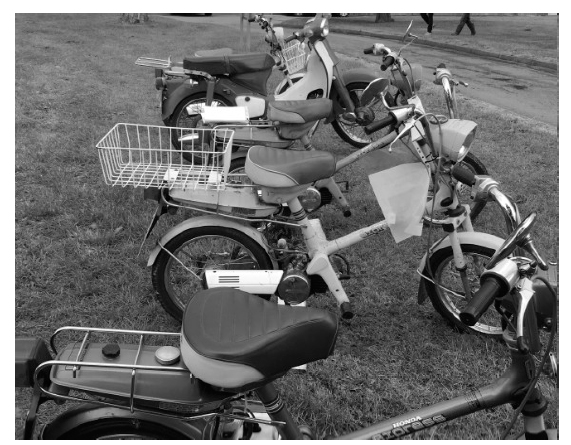
Off to the side nearest the swings, a less than menacing collection of mopeds lined up (owners ditto). We ended up with no less 4 Honda Expresses, in blue, yellow and orange (the only colour missing was the startling acid green variety). These little bikes date from 1978-1979 and were designed to look as much like bicycles and as little like motorbikes as possible, in order to attract the then largely-untapped women’s market. Also present and correct was a very similar Yamaha QT, and the granddaddy of them all – a 1974 Honda C90, apparently found hidden and abandoned in a pile of nettles, and coaxed lovingly back to life. And so Heyford Moped Club was born. We should by now have had our first ride out, to mix it with the big boys at Jack’s Hill Café. What will they make of us?

HeyfordMopedClub2019

James Reed
The Old Chapel, 2a Church St

Flood Watch – September 2019

George Clarke’s recent Channel 4 documentary “Council House Scandal” celebrated 100 years since the Addison Act of 1919 kick started Council Estate building. Sadly since the Right to Buy was introduced properties have not been replaced, hence the current shortage of Council properties for rent. GC has launched a National campaign to encourage Government to build more Council homes and has secured land in Manchester to demonstrate how to build good standard homes at reasonable cost. The programme highlighted a problem with commercial properties being converted to rentable homes under “permitted development” which fail to meet minimum acceptable standards for room sizes. Unfortunately this type of development introduced by Government reduced the power of local Planning Offices to enforce standards and bypass the formal planning processes.

The growth in permitted development could potentially lead to problems during conveyancing on house sale/purchase when the status of each building on site is investigated whether these are new build or change of use. Ideally a Lawful Development Certificate should be produced. To avoid risk to the seller/purchaser the seller can purchase an Indemnity Policy in the name of the purchaser. Not until permitted development is scrapped and the planning process returned to conventional planning application/building control will standards return to normal.

June/July/ August weather has continued to be untypical for this time of the year with short periods of high temperature near 37 centigrade and prolonged periods of heavy rainfall. Surprisingly total annual rainfall to the end of August is only 82% of average resulting from the extremely low rainfall earlier in the year.

Anyone interested in participating in discussions with the E/A over future flood defence requirements and contributing with their own local knowledge of flooding are again invited to contact me directly.

J.Arnold

Letters: Village Hall – 60 Years in 2020 – Request for memories

Nether Heyford Village Hall celebrates its 60th Anniversary next year

“It is the 60th anniversary of our village hall in 2020 and we would like to commemorate it by publishing memories of its existence in our village, particularly if you have resided here for 60 years plus. ”    
The Prattler is helping the Village Hall compile personal accounts, list volunteers who have worked on the hall, gather some photographs, memories and stories; ahead of celebrating their 60th anniversary next year.
  • Do you have a story to tell about its history ?
  • Were you a volunteer who helped out with any of the work ? Perhaps you had a relative who did ?
  • What are your memories of events at the village hall ?
  • Do you have any old photographs of the village hall or events there ?

The Prattler would love to hear from you via email heyford_prattler@yahoo.co.uk or comment on this article below.

If you know any residents who would like to participate but are not online, please send us their contact details via email and once we have a list of participants we may visit for personal interviews during the Autumn.

The story so far…. 

Nether Heyford Village Hall was built with the help of volunteer labour and completed in May 1960 as a prefabricated cedar-wood building.

1991 – Brick extensions were added to provide new toilets and kitchen at one end, a storage room and committee room with toilet and kitchenette at the other and an access ramp to the front door.

2003 – New UPVC double glazed windows, new insulation and cladding to the front and rear of the wooden section was fitted together with new front and kitchen doors. Again all the work was done by villagers giving their time and expertise voluntarily.

2006 – A new insulated roof was added.

2008 – Nether Heyford Pre-School transformed the area at the rear of the hall with an outdoor play surface to make a secure outdoor area for the young children.

Since then the remaining doors and windows have been replaced, new gas boilers fitted and decoration carried out annually whilst maintenance continues by our volunteer team. Other improvement projects have included:

  • Sound System & Induction Loop (hearing) system (2002)

  • Replacement Fire Doors (2008)

  • New energy efficient boilers for heat and hot water.

  • Replacement of rest of external doors & windows (2009)

  • Finger guards on doors (2010)

  • In the summer of 2011 the kitchen was completely refurbished

  • Ceiling fans were installed in April 2013

  • In 2014 the ladies toilets were completely refurbished

  • Also in 2014 new chairs were purchased for the main hall and lockable storage cupboards for all the regular users

  • 2 thermostats were installed in the main hall in 2014

  • Lighting in main areas of the hall upgraded to LED during 2016-17

Over the years, it has been used for all manner of events, from pre-school to pantomimes and dances to dinner parties. It is conservatively decorated and can offer seating for up to 120 people. 

Village Hall Committee 2019

(Last update 12/9/2019)

Village Hall – News – September 2019

Since our fete in June, we have been asked several times: ‘how did you do?’ In view of the awful weather, especially in the morning, we were resigned to raising less than previous years. However, we are pleased to report that we actually raised a net £3,148.69 – an amazing result, due mainly to the generosity and hard work of so many people: individuals, groups, organisations and businesses, including a recent donation from Starbucks. We repeat our heartfelt thanks to them all – what a great village we live in.

Now, we’re beginning to look forward to next year, which will mark the 60th anniversary of the building of our village hall – entirely by volunteers. We want to celebrate this event in great style and are already considering ways of doing this. But we would welcome your ideas too – any suggestions? If so, please contact Alwyne on 07814 898 336 or email: alwyne76@gmail.com

Finally, on a sadder note, our Secretary, Laura Sullivan, is having to stand down due to the pressures of other commitments, so we are currently seeking a volunteer to join our friendly team to help manage the hall. The Management Committee meets 11 times year, with meetings rarely lasting more than 1 ½ hours. The post mainly involves taking minutes, keeping records, being the contact with outside agencies and, if possible, helping with our fundraising events. A handover and continued support will be available. If you think you may be interested and would like to know more, please ring Alwyne on: 07814 898 336.

Alwyne Wilson

Parish Council – July & August 2019 Meetings

Nether_Heyford_Parish_Council_2019

The July 1st meeting was held as normal in the  Baptist Chapel Schoolroom.

The Chair thanked all involved in the voluntary efforts to make the green look as good as possible for the fete.

He also thanked Nick Essex and Lee Pratt for the renovation and re- painting of the sign on the Green by the phone box, and for all their efforts with painting and repairing on behalf of the village.

A resident noted recent work on cleaning gutters and hoped more work could be
done voluntarily. Chair felt it would be better to have it done professionally.

The PCSO reported that there had been a few minor incidents, but generally quiet. He reported concerns about the safety of the junction of Furnace Lane with Weedon Road. There will be an additional PCSO liaising with Bliss School.

Village Fete Felt to have gone very well despite being in doubt due to the poor weather. Despite fewer stalls it had brought in more money than the last fete.

New Homes Bonus – to consider applications. A list was considered and a working party of CK, SC and LD formed to look at proposals for Traffic calming lights, a new Play Area and Lighting. It was stressed that Community Benefit should be foremost in the applications.

Neighbourhood Plan There had been no presence at the Fete but there were 2 pages in the next Prattler to update the village. SC was disappointed that SNC had been unable to give much help with progressing the Plan at this stage.

West Northants local Forum report The Clerk gave a report from the recent forum at which concerns were expressed that “Our” Unitary would be much too Northampton centric, and that the process was not transparent at this stage.

The August 5th meeting was held as normal in the Baptist Church Rooms. The August meeting is a shorter than usual in respect of the holiday season.

Public Participation Concerns were raised about the Oak tree next to the Play Area being damaged by children climbing.

Cllr Adam Brown reported that NCC were progressing towards the Unitary deadline, but there were concerns that changes in government might disrupt this if there were to be a General Election. NCC were trying to improve Children’s social services after Ofsted had given adverse reports. Agency workers were being replaced by Council employees.

Geoff Thorneycroft gave a report on the aspirations of the Playing Fields Association, and the various projects. Problems had been encountered with the Environment Agency objecting regarding new changing rooms, despite a previous time elapsed permission having been granted. He felt that concerns raised about the potential for vandalism and theft at the allotments were unfounded because of the likelihood of pedestrians crossing the allotments to access the proposed new basketball/netball court. He felt that the opportunities afforded to young people and women outweighed any other concerns about problems caused by public access to the allotments. The Chair stressed that Council was in favour of the new facilities but felt that the issues needed raising.

Street name for new houses off Hillside Crescent. All of Council’s suggestions thus far had been turned down. The following suggestions were made. 1. Horsa Court in memory of a wartime glider crash. 2. Meadow View, 3. Canal View.

Cllr Adam Brown has sent this report.

You will be aware that in recent months there has been a spate of sheep killings
across Northamptonshire and neighbouring counties. In response to the livestock
crimes the Police have established Operation Stock which did a number of things:

• Brought all crimes under one investigative strategy
• Appointed a gold/silver/bronze structure to the issue.
• Received investment from the Office of the Fire Police and Crime Commissioner to kick-start immediate actions including overnight patrols of otherwise remote, rural, un-patrolled roads and locations, the production and posting of A1 correx roadside and gateway signs
• Streamlined response to new calls and information created by the public demand
and interest

The NFU has been incredibly helpful as a critical friend and hosted a farmers’ meeting with Police at a barn in Thornby, attended by over 130 local farmers and landowners. It was a tense but productive meeting where Police explained the very basic and elementary strategy, given the lack of witnesses, intelligence or information.

1. Police wanted to raise the awareness and involvement of the farming and rural
community so that, with our help and advice, they could target harden their
property
2. Police wanted to raise the awareness of the rural community and meat market so that intelligence and information would be more forthcoming.
3. Police intended to mount nightly patrols to be able to respond to farmer’s
requests for visibility and respond to any calls created by 1 or 2. It is not a secret that resourcing levels, reductions in neighbourhood policing, and a proper emphasis on threat, harm and risk, would mean that otherwise, rural communities would not have overnight policing presence, unless part of a response to an emergency call on a rural area.

The road signs have been successful, and the operation has had some notable
successes, falling short of prosecuting offenders (as yet). Of highlight are the
following:
• An unprecedented response to Neighbourhood Alert and media releases. Even a month later, interest and concern is not abating. Last Friday, Northamptonshire Police’s Press team had more media requests in one day than that which usually accompanies a whole major incident. The topic has been covered in the national broadsheets, on national radio, local radio and local television. There has been particular recent interest in deployment of the Police/Fire drone at night time
• Deployment of local farmers patrolling vulnerable areas equipped with front and rear dashboard cameras supplied by the NFU
• Commitment of the Commissioner to supporting particular needs of the policing
operation and response
• Meeting of the Commissioner with representatives of the NFU to receive
feedback and highlight issues of concern
• Meeting of Rural Policing representatives last week at NFU Stoneleigh to discuss tactics, improve communications and cross-flow of information and to plan next steps

Further meetings are planned for this week.

• Daily briefings between police departments to include cross-border information
flow
• Integration of this investigation onto a system known as DAMES – similar to those used in serious or major crimes, to ensure all information and actions are captured and responded to
• Continuation of overnight patrols, press releases and Neighbourhood Alerts. Reports from Neighbourhood Watch and Village Facebook groups that membership is expanding with people asking what they can do, and increased reporting of suspicious incidents (other rural crime has reduced in this time)
• Capture of evidence following forensic investigation of crime scenes. This has yielded some DNA opportunities which have been followed up. A man has been arrested in Portsmouth and interviewed by Northamptonshire officers, with some evidence recovered from his home address. He has been released under investigation.
• Following reports of a suspicious van with the livery ‘Plantation Shuttering’ at a sheep farm in Warwickshire, this appeared on a number of occasions in our
county. A Neighbourhood Alert prompted reports of this van in the villages of
Thornby, Sibbertoft, Kilsby, Long Buckby, Naseby and Arthingworth, all in one
day. Farmers saw and contained the vehicle and its two occupants in Naseby,
and called the police. The van was seized for being suspected used in crime, but
there was insufficient evidence to arrest the occupants, whose details were
confirmed. It has been returned to its owners and continues to attract our
attention, and/or that of colleagues in Warwickshire.
• Work continues with automatic number plate recognition enquiries and the
checking of many vehicles using the county’s country roads at night-time. This
has led to the removal of a number of unconnected vehicles for being uninsured
or untaxed (given the ability of the mobile ANPR system to detect such vehicles).

It is vital that local residents in rural areas, remain vigilant particularly those who live on or close to farmland where livestock are grazing.

Next Meeting
The next Parish Council meeting will be on the first Monday of the month at the Baptist Chapel Schoolroom at 7.30 pm and is, like all Parish Council meetings, open to all Parishioners.

Parish Council Notes by the Clerk; Guy Ravine August 2019

For further useful information about Nether Heyford Parish Council and full contact details for the clerk and the councillors please visit our Nether Heyford Parish Council page.

Roads and Pavements.
Parishioners are reminded that anyone can report a pothole or other highways
problem online to the Fixmystreet service, and this can refer to problems outside the village too. https://fixmystreet.northamptonshire.gov.uk/
Alternatively, phone 0300 126 1000 and ask for Streetdoctor.

The Story of Heyford (Extra): Spirit of the Valley

Nether_Heyford_River_Nene_SpiritofValley

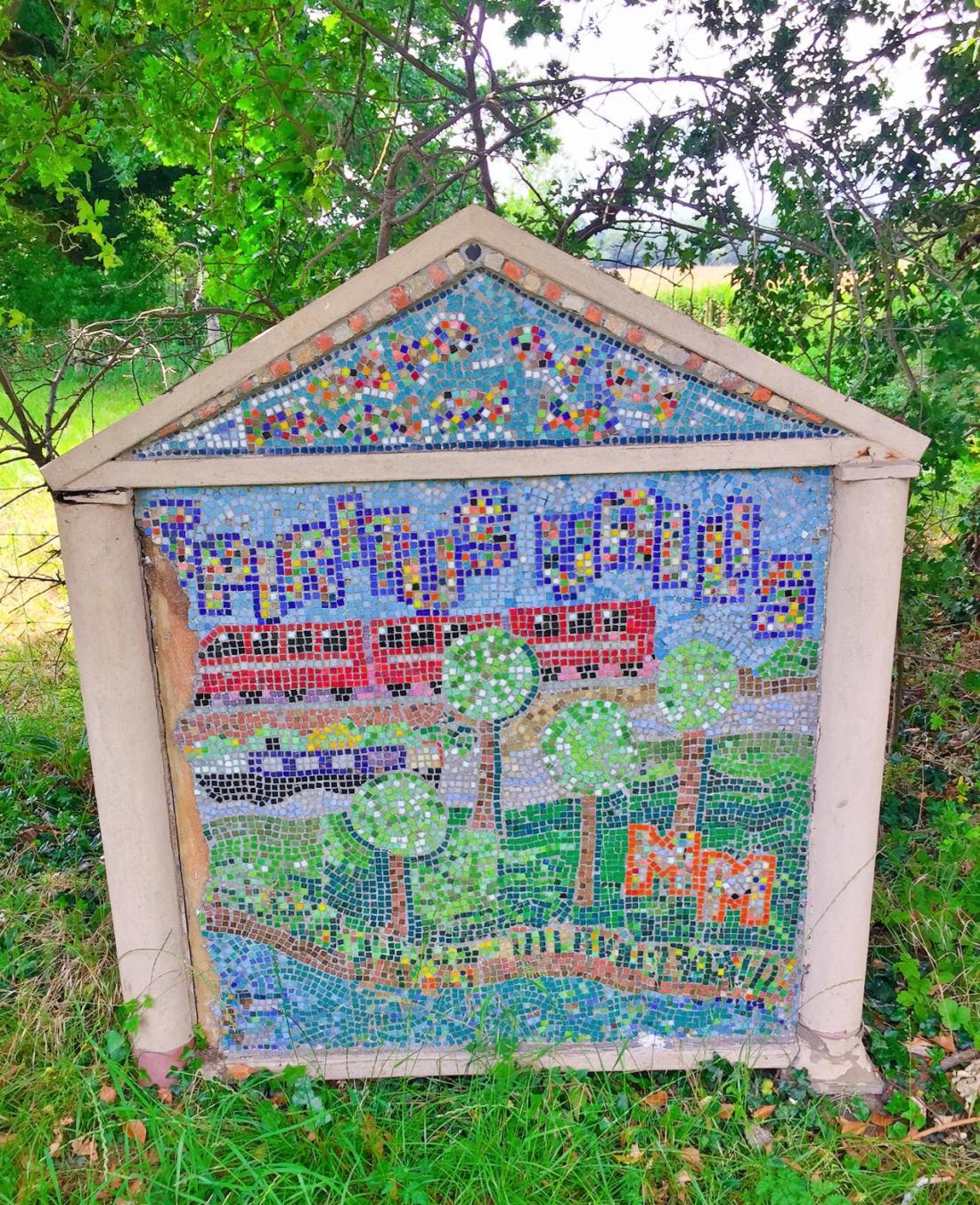
This mosaic artwork is situated adjacent to the River Nene road bridge and footpath as you leave Nether Heyford towards Upper Heyford.

Earlier this year I asked around about its origins but didn’t get much of a response, only educated guesses.

The heading reads “Spiritus Vallis” (Latin for “Spirit of the Valley”) and also depicted is MM (Roman Numerals for 2000)

Obviously the railway, canal and river indicate a local connection, the Roman/Mosaic connection ties in with a wealth of very significant discoveries in the village since the mid 1960’s.

The photograph above was taken in July 2019 and as you can see it has suffered from some decay on the left hand edge.

I have recently discovered more information so thought I would share in a post.

“Spirit of the Valley” 

Part of the Northamptonshire’s Millennium Festival – a South Northamptonshire Council funded arts project during 2000.

Based on the Nene Valley and the communities that live along it, the project resulted in many activities including guided walks, photography, performances, writing and visual arts.

  • One of the last elements to be completed was the siting of three mosaic-based art works made by groups in three South Northamptonshire villages.
  • Guided by Northamptonshire artist Carole Miles.
  • SNC Arts Development Officer was Anna Hayward in 2000.
  • Harpole Heritage Group, Bugbrooke Arts Society, Heyford Archaeology Group & Youth Club each produced artwork based of the Nene Valley theme.

The 3 pieces were placed at the following sites:

“Roman Way Marker” – Nether Heyford

“Mosaic benches” –  Harpole

“Giant Fossils” – Bugbrooke


Jez Wilson


The Story of Heyford (Extra): Church Lane 1960’s Happy Days – Maureen Wright

Happy Days

The semi-detached dormer houses in Church Lane were built by Adkins and Shaw in the late 1960’s. After our wedding in 1967, Tony and I moved into No. 4 which was bought for the princely sum of £3,295. At that time most of the occupants of these houses were like us, newlyweds or not long married with young children. The land on which the houses were built had been owned by a Mr Potter whose widow lived at No. 3. The builders had not been able to develop the rest of the field because it was too low to support a sewer which is why the houses have long gardens.

At that time, the late Dennis Clarke who lived at the old bakery in Furnace Lane had a van from which he used to come round the village selling vegetables, fruit and fresh fish. He would park up in Church Lane and firstly visit Mrs Potter who was elderly and not able to walk too well. She in turn would have a cup of tea ready for him and so they would sit and chat and chat. In the meantime, all the potential customers were either waiting patiently or not so patiently for Dennis to appear. We became used to this routine and did not wait at the van unless we too wanted a chat but would keep checking to see if Dennis had appeared. But despite the wait, it was worth it just alone for the hand sized pieces of Plaice he sold, which were delicious steamed and loved by our children. Happy days indeed.

Maureen Wright


The Story of Heyford: Childhood Memories V4C7

Before the second world war the village was only half the size that it is now, transport was very limited, and the modern leisure facilities that are so commonly available today simply didn’t exist. Therefore the young people made their own fun in whatever way they could. There are many people in the village, now in their eighties, with childhood memories from the pre war period.

Children and young people
Before the first world war, the children went to school up the age of 13. Life was pretty busy keeping up with the chores. Mrs Dorothy Kingston of Furnace Lane remembers taking bread and jam to her father at the Brickworks when she came home from school. There was water to fetch, pigs to feed, eggs to collect, vegetables to prepare.

At thirteen, you left school and went to work. Some worked on the farms, some learned trades in their family businesses, but some worked outside the village. Bob Browning’s first job was a Saturday job at the age of 12 for W H Smith in Weedon. He walked from Heyford to Weedon and collected papers for delivery to Litchborough and Maidford and then walked back home. The journey was done entirely on foot and took him all day.

When he left school in 1905 he went to work there full time. They gave him a bicycle and two panniers to carry the papers. His new route was from Heyford to Weedon to pick up the papers, then to Dodford, Everdon, Farthingstone, Upper Weedon, then home. He ate his packed lunch each day under one of the big Beech trees beside the road through Everdon Stubbs.  There he double checked his takings.

On one occasion he arrived home and found he was one gold sovereign short. The sovereign had come from Everdon Hall where they always had several papers. His mother was desperate because he had to give his takings in the next morning but they didn’t have as much as a sovereign in the house.

So Bob cycled back to Everdon Stubbs to where he had counted the money at lunchtime, and there he found the missing sovereign. He was delighted at finding it that he carved his initials with his pocket knife into one of the trees. The four trees are still there today. All of them have dozens of initials carved into them of which some are quite new, but others could be 100 years old. Somewhere amongst them are the initials R.B.

Walking 
With time to, spare, little transport, and few organised facilities, walking was common. People would walk miles without a second thought.

The children all walked to school, some coming from Upper Heyford and others from the Railway cottages, or from Stowe Hill. They mostly travelled in small groups, unaccompanied by adults. Nobody worried about safety. The school didn’t provide lunches then so they made four journeys each day, often dawdling along the Way. There were several brooks in those days, running either side of the Green and also alongside a number of the hedges. Here it was tempting to dally along the way, making boats out of whatever materials they could find in the hedgerows.

Families walked together on Sundays, often for miles up to Glassthorpe or Stowe. They sometimes ended up at one of the pubs where father would have a beer and the children a ‘spruce’ – a bottle of pop with a glass ball in it.

Cars were a rare sight in the village between the wars so groups of young people would walk up to the ‘Turnpike’ (the A5) and sit on the bank by the Stowe turn, Waiting to wave at the drivers as they passed at a rate of only one or two an hour.

The Railway children
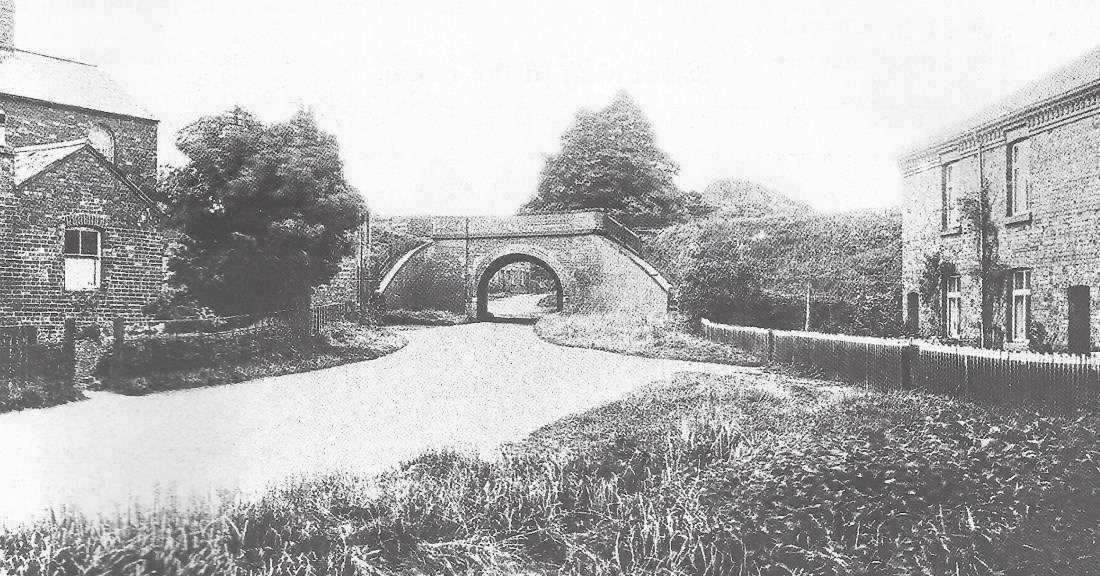
Mrs Doris Lovell, now in her eighties, lived in the railway cottages because her father, Frank Denny was a signalman. Although there was never a station in Heyford, she recalls how the railway had a strong presence in the village. There were sidings in the brick yard, there was an active signal box, and there were four railway cottages occupied by signalmen, platelayers and their families.

In the days of steam, each locomotive had its own unique personality and they chuffed past at a more friendly speed than today’s diesels. The driver and fireman, whose faces were often familiar to the villagers, would wave as they passed by, and sometimes they would throw lumps of coal for the children to take home.

The children played in the fields alongside the railway, although there was a strict understanding that playing near the tracks was forbidden. Favourite play areas included the stream near the brickyard just the other side of the small foot tunnel under the embankment. Here you could make stepping stones, build dens, and fish for tiddlers.

The railway bridge and railway cottages in the 1930s

memories2.jpg

Photo lent by Judy Armitage

Box Pond and ‘the Humps’
Another favourite play area recalled by Doris Lovel was in the field where the furnaces used to be. There was a pond here called ‘box pond’ because it was near the signal box. There was another pond across the road in the brickyard where deep water had formed in the claypit. Both ponds were popular play areas with much wildlife in them, including lizards and moorhens.

Also in the furnace field were four huge clinker mountains. These had been formed out of clinker waste from when the furnaces were in operation. Each seemed as high as a house. They had set solid into various shapes, Weathered through time, and were full of interesting nooks and crannies. They, were affectionately known as ‘the humps’. Cut hands and scraped knees were common.

These ‘humps’ were eventually moved when the M1 was built in the late 1950s. The field was full of hills and hollows from where the furnaces had been, and the contractor, Dowsett, was looking for somewhere to put the topsoil from the construction of the M1. So they broke up the humps, rolled them into the hollows, and covered them with topsoil. Box Pond was also filled in.

Fishing and swimming 
As today, there were plenty of fish in the canal. With a line, a hen feather, a bent pin and some bait, you could catch gudgeon to take home to feed to the cat. Favourite places on the river were by one of the two bridges – either the bridge to Upper Heyford, or Coach Bridge (now only a footbridge beyond Manor Park). Jumping off Coach Bridge into the deep waters below was a regular summer game for the boys.

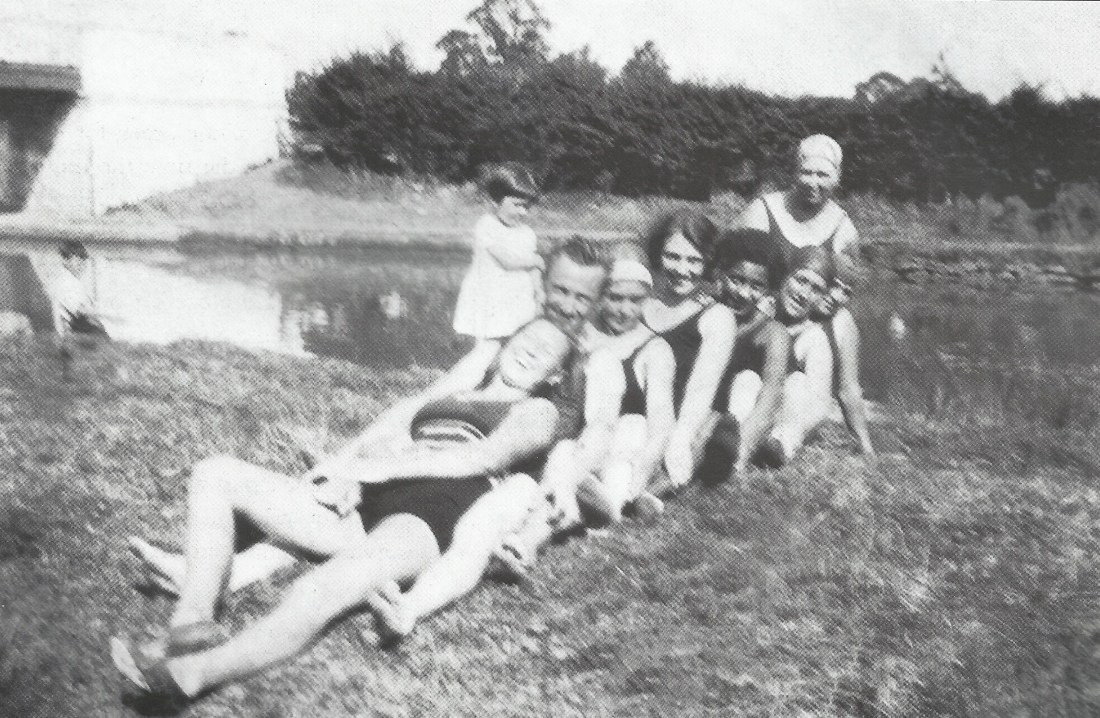
Many local people, now in their 70s and 80s remember swimming in the canal. On warm summer days the young people would take their swimming costumes, some sandwiches, a drink, and a pot to pick blackberries. This way they could would spend hours by the canal.

An article in the Mercury and Herald dated 25th May 1978 included an interview with Mrs George (nee Browning) in which she recalled how ‘we’d go up to the canal at Heyford Bridge. The boys would change one side and the girls the other. Then we’d have a swim or watch the boats, all drawn by horses of course, being pulled up the canal.’ Unlike the railway where it was firmly understood that the track was out of bounds, the canal was considered ‘safe’. This was in spite of the murky state of the water and the waste disposed of by the boat people. However it was a fun place to spend the day, and was the only way to learn how to swim.

Swimming in the canal

memories3.jpg

This photograph, taken in the 1920s shows a group of young people beside the canal.  They went up Furnace Lane and turned left at Wharf Farm where they walked along to the next bridge. They are seen here in the field opposite the tow path. Pictured from the front are: Ivy Denny, Jack Earl, Friend, Nen Blaney, Odette Punch, Friend, Friend, and Mrs Frank Denny. The little girl to the left of the group is June Denny.

Photo lent by Doris Lovell (nee Denny)

~~

Extract from “The Story of Heyford” – Local book series published in the late 1990’s

Volume 4 of 4 | Chapter 7 of 8 | Pages 28 to 30TheStoryOfHeyford_NetherHeyford_Footer

Heyford’s Historical Heritage  |  How the books were created

Index  |  Covers

The Story of Heyford: Cricket on the Village Green V4C5

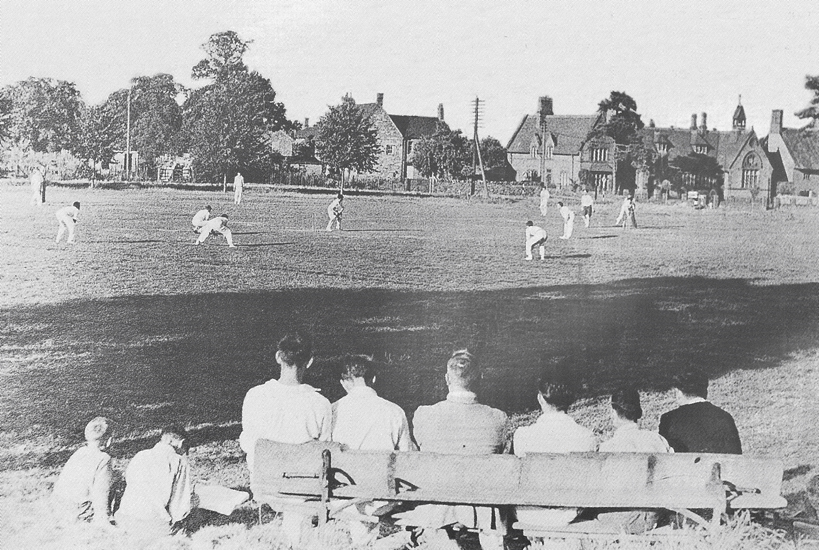
Like most villages in England Nether Heyford sported the idyllic sight of twenty two people dressed in immaculate whites playing the age-old sport of Cricket on the Village Green.

A team game remarkably like cricket was being played in England as early as 1300 and by the 1700’s it was being played by the landed aristocracy and so became part of our culture. In the early 1890’s County Cricket was established with clubs being admitted only when the MCC judged their standard to be acceptable and the county of Northamptonshire was admitted in 1905.

The period 1890-1914 is regarded as the golden age of cricket with interest in the sport becoming widespread. Today it is not quite so popular with the young and it is not surprising that India and Pakistan have such magnificent teams as children take up cricket there as soon as they can hold a bat and at week-ends you can see teams and teams of players on any given space practising their skills -far more than even our local lads play football.

The tradition of a local cricket team still goes on in Heyford, but not on the Green. For the last few years you could see Julian Rice and his merry men playing on the well-tended sports ground by the Pavilion built ten years ago and situated just as you enter Heyford from the A45. (The Pavilion used to be the football changing rooms which were moved from the village green to the sports field). Still an idyllic sight but not the same perhaps as when cricket was played in the centre of the village.

The early years

The Cricket Club in Heyford was founded by Henry Isham Longden when he came to the village as Rector in 1897. He was, according to Joan Wake in her book ‘The life of Henry Isham Longden’, fond of cricket and apparently he had played for the Northampton Cricket Club in his curate days, so it is not surprising that he was always ready for a village cricket match. Hevford’s Bob Browning (1892-1997) recalls cricket being played on the green in the early 1900s, but these were in the days of friendlies against neighbouring villages.

There must have been a lapse of all activities during the 1914-1918 war with all able-bodied men fighting, but cricket resumed in the 1920’s. At this time the green was more uneven than it is today as it was grazed by cows. There was continual debate about whether a proper pitch could be laid. According to the rules laid down for the management of the green no digging could take place, and much argument went on about laying such a pitch. However agreement was eventually reached and a wicket turf was laid on the centre part of the green by Jack Nickolls and Tommy Kingston.

In the 1920’s the Heyford team consisted of such people as Bert Thompson, Frank Reeve, Bob Foster, Dick Foster and Ron Humphrey. They played friendlies against local villages, Farthingstone and Everdon. Before each match nets were erected along the far side of the green to protect the windows and slates of the houses nearby. And of course they all met afterwards in the clubroom of the Foresters Arms.

In the 1930’s the players included Bill Kingston, Bernard North, Charlie Copson, Jack Butcher, Dennis Clarke and Reg Collins. The main umpire for Heyford was Sonny Thompson and they played against Everdon, Pattishall, Astcote, Bugbrooke, Kislingbury and Harpole. Bill Kingston recalls that before they could play they had to make up the pitch. They had to fill in the holes, patch it, turf it and roll it because the cows had been on it all week! And according to Charlie Copson the pitch was so well prepared that it was used on Friday evenings for tennis matches.

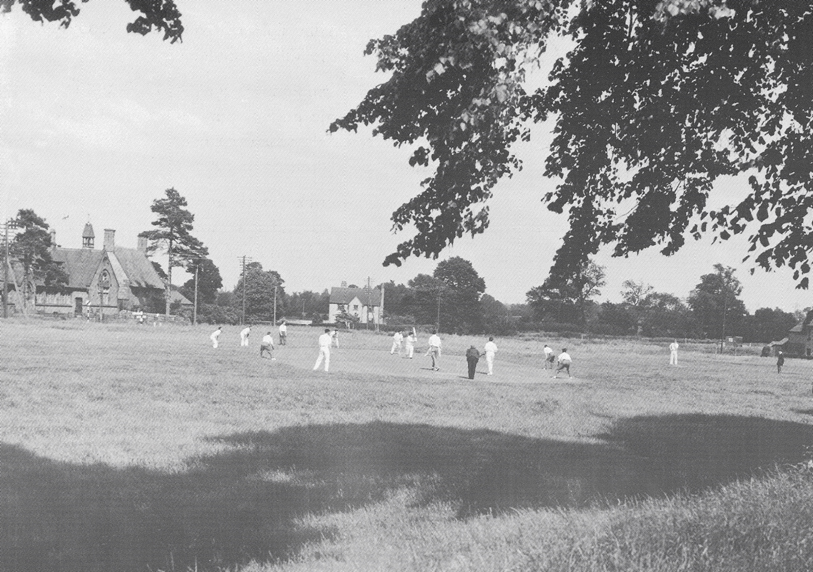
Cricket as it appeared on the Green in the 1940’s and 1950’s
NetherHeyford_Cricket_1

NetherHeyford_Cricket_2

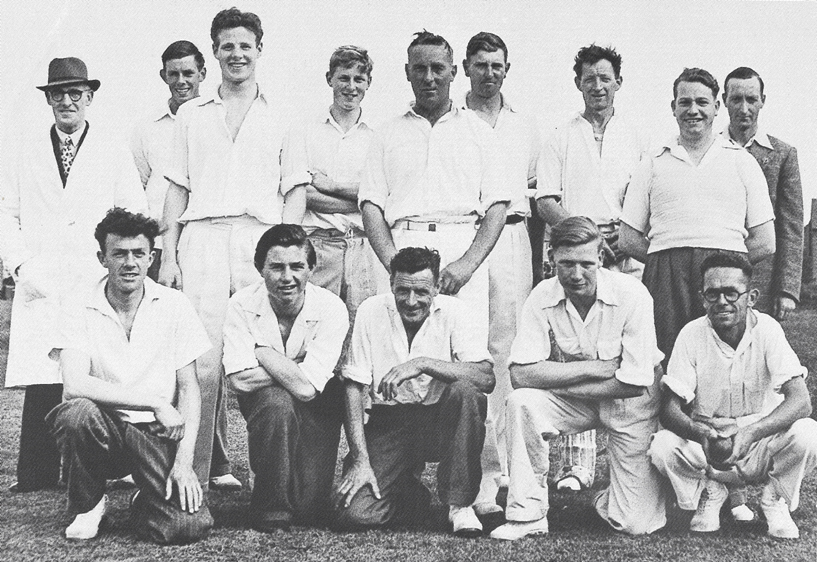
The team in the 1960’s

NetherHeyford_Cricket_3

Standing, left to right: Jack Draper, Peter Brodie, John Draper, Michae Ingray, Norman Fonge, Bernard North, Ron Copson, Bert Thornicroft, Ben Spokes

Kneeling, left to right: Dennis Clarke, Jim Blood, Harry Haynes, Charlie King, Reg Collins 

Twenty years without a club

Then the cricket ceased. In the Sunday Telegraph a few weeks before Easter 1999, it was reported “The village Cricket Club has been forced to close after the wives and friends of the players refused to make their teas”. This, I hasten to add, was not what happened to Heyford. By the 1950’s Tommy Rolfe had left the Foresters and houses had been built alongside the green between Middle Street and the Post Office, making it difficult to protect them against damage from the balls. Also there were few young men in the village in the post war years because many were moving to town to take advantage of modern work and housing opportunities.

In the Mercury & Herald November 6th 1969 a little piece about Nether Heyford appeared. “Heyford is developing fast with an attractive diversity of new and stylish housing running in price to the five figure bracket, but in the heart of the village the scene remains much the same as half century ago – thanks to the preservation of one of the most expansive village greens in England. It is a curious fact, however, that Nether Heyford has no cricket club. It used to have one but the young people have cars these days and go where they will for their sport and pleasure”.

The club reformed

However, on the 16th June 1977 a meeting was held with Charles King asking the question “Would it be possible to raise a cricket team in the village?” and no article about cricket in Nether Heyford would be complete without a mention of Dave Jenkinson who, after this initial meeting, was elected Chairman of the newly reformed Cricket Club with Charles King, who lived in Hillside Road, becoming the Secretary.

Charles told the local paper that when they had started up again they played half-a-dozen evening games with limited overs to test out the interest. But with no pitch and little equipment and the green being used all winter for football, it was becoming very difficult to keep interest going. He reported that “we’ve had talks with a local farmer about using one of his fields, but at the moment we’re playing all our matches away from home; we book pitches on places like the Racecourse in Northampton. But the real snag about a square on the green, is that we’d need to spend £160 on safety netting along the roadside”.

Thus a new venue for cricket was being called for. Plans for playing fields were being started and fund-raising events taking place. And an apt headline appeared in the paper: “Cricketers bat on and refuse to be stumped”.

Discos at the Foresters Arms followed and on December 23rd 1977 a Christmas Supper Dance was held, music by the Neal Stanton Band, and tickets at £2.50. At this time the membership fee of the Cricket Club was £1 a head and the match fees 10p per game. More and more local people became involved with the Club and Mrs. Rosemary Haddon was elected Treasurer having the grand sum of £155.4p in the kitty.

In 1978 on the 25th May the Mercury and Herald reported some memories from Mr. Albert Garrett who was clerk to the parish council for 35 years and at that time 79 years old. “We used to play cricket on the green” he said “they’ve just started the club up again. I played until I was 60” and he laughed. “We used to break a lot of windows but this time I think they’re getting something to protect them. Even so, we always had a collection to pay for them, especially for one old chap who had his broken regularly.”

And in 1982 when Dave Tite was secretary, the Club was looking back to 1977, the year that Heyford Cricket Club was reformed and remarking on how well the club was doing since it started without money, equipment or fixtures. In March 1983 Geoff Garrett was voted Captain and Paul Horrocks was persuaded to take on the job of fund raising- a difficult but necessary job in the circumstances. They had a full fixture list and entered for the Watney Mann Cup.

All matches ‘away’

In 1984 still without proper grounds the Cricket Club flourished, meetings were held still at The Foresters Arms with Mine Hosts Alf and Marg Parker and youngsters were being recruited. At the Parish Council Annual Meeting members raised the subject of their need for practice nets in the village, perhaps on the green, and these “would not take up a great deal of room and could be used by the School and would add to the attractions of the village”. If you look at the fixture list for July 1984 you will see that not one of the matches were played at home. And amusingly on the front of the fixture list you will see the following:

REMEMBER:

It is better to have played and lost than never to have played at all.

(Gayton excepted)

At the 7th AGM of the Heyford Cricket Club on Sunday, 31st March 1985, the Chairman reported sadly that there was now no prospect of home fixtures being played within the Parish Boundary but that it was to be hoped that progress on the Heyford Playing Fields project would mean a ray of hope for future seasons.

The following report in September in the Prattler went “Came second to Ryland 0/B’s in the Clenbury / Haine Shield. Lost in the final. Watney Mann Cup got through to the second round by having a bye in the preliminary round – and beating Gayton in the first round. Lost to Buqbrooke in the second round. We have started a Youth Team with the lads doing most of their own organising. They have been going for about six months and have had two fixtures against very good sides. They tied their first game against Wootton Youth and narrowly lost to Rylands Under 15’s. They have a practise net on the Green every Monday evening. The lads show a lot of promise and hopefully next season we call get them into a league through the Cricket Association. “

But it was to be some time before cricketers could enjoy the game on their home turf. An article appeared in February 1987 stating that “The Parish Council, through its Leisure and Amenities Committee, has been looking into the possibility of acquiring enough land to provide a playing field for the use of the inhabitants of both Nether and Upper Heyford. This matter was also discussed at the last Annual Parish Council meeting. A steering group has been formed to consider the matter, and the outcome of their enquiries to date is that Mr. J Spokes of Upton is prepared to sell approximately 10 acres of land, which seems to be ideally suited to a games area. The land forms part of a flat field, which is situated behind the allotments and Mrs. Smith’s field on the Upper Road.”

The team in 1980

NetherHeyford_Cricket_4

This photograph, taken on Jeremy Rice’s front lawn, shows the team as proud winners in 1980 of the Clenberry / Haine Shield.
Standing: Julian Rice, Ray Haddon, Dave Tite, Tony Charville, G Starmer, Graham Drake
Seated: Alex Kirkbride, Geoff Garrett, Geoff Sturgess, Mike Tharby

Home turf at last

In July 1988 the cricket square was making good progress “thanks to the efforts of the Grounds Committee headed by Jeremy Rice.” And in 1989 Geoff Sturgess of Hillside Crescent was very encouraged by the good turnout for the Youth Cricket Under 16’s Team as nets were now available down on the Playing Field.

In the Prattler, May 1989, the following article appeared compiled by Alex Kirkbride:

“The merry click of bat against the ball, the expectant rush, the cheering that proclaims skill of the greatest of all English games; Flutter of the flags, the branches of the trees swaying beneath the summer breeze; No sweeter music in the world is found than that upon an English cricket ground.

R Ratcliffe Ellis; Cricket Music

Yes, the dream is now a reality. Heyford Cricket Club is back at home”.

And now in 1999 Simon Legge has taken over the captaincy from Julian Rice and will lead his team in League Cricket. The village Green has seen the very last of the cricket but thanks to all the efforts of the stalwarts of the village, the cricket heritage will continue.


With grateful thanks to Barbara Haynes, Julian Rice and Dave Tite

Julie Rands-Allen

~~

Extract from “The Story of Heyford” – Local book series published in the late 1990’s

Volume 4 of 4 | Chapter 5 of 8 | Pages 22 to 27

TheStoryOfHeyford_NetherHeyford_Footer

Heyford’s Historical Heritage  |  How the books were created

Index  |  Covers