Lower Heyford known now as Nether Heyford is a village steeped in history. When I first moved here in October 1964 the village was quite different to what it is today.
We moved into 75 Furnace Lane, a chalet bungalow, opposite was the dairy field with a big house owned by the sisters Green. There were 2 big houses as you came down the road from the A5 on the right hand side, and a bungalow owned by Pinky Lilley on the left. From the bungalow, the field reached down to the council houses.
On our side of the road we were next to the big houses. Our houses had just been built by Mr Howe, a former constable who came from Luton. I think that there were six chalet bungalows built in all. They led down to the council houses on the right of Furnace Lane.
Coming into the centre of the village was the Green which is I’m told is the largest green in the country. Surrounding the village green were thatched houses, the Baptist chapel, school, village hall and a few houses. Opposite Furnace Lane is Church Street where I now live.
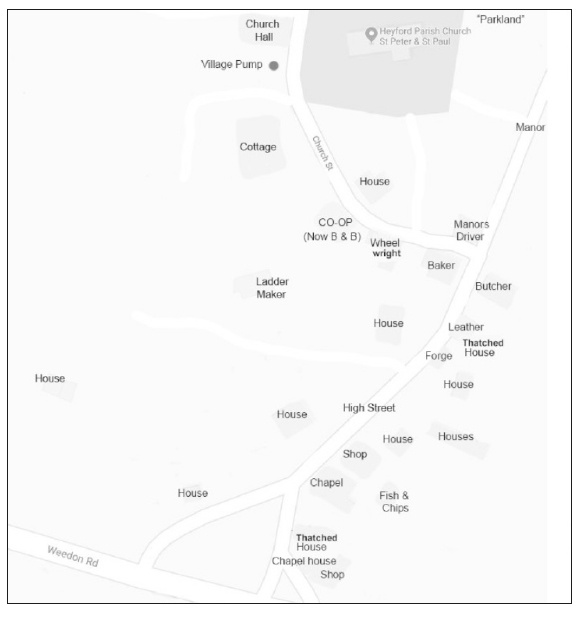
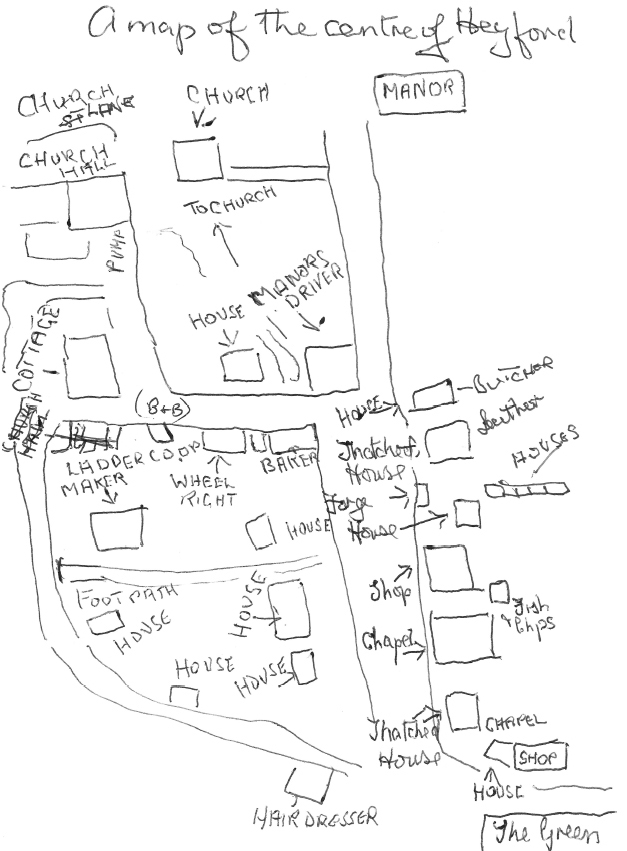
There was a shop on the corner which once was owned by Major and Mrs Blaney. Next to the shops was a house that used to be a chapel and when we moved into the village, an old thatched house was next to a bigger chapel that used to be run as a Youth Club. The shop next door was owned by Mrs Court but was run by Mrs Highfield and there was a small fish and chips place just between the chapel and the shop.
The 3 storey house next to the shop had a row of houses which are now no more and next to them was an old forge which was used later for a garage. The thatched house was beautiful and had a well with wrought iron covers just inside the entrance.
This is the true centre of Heyford.
On the road to the church, there was a bakery which used to cook the congregations Yorkshire puds while they were in church, a wheelwright, the co-op and another small shop next to the jitty and also a ladder makers as well.
Bob Smith
Letter published in The Prattler – December edition 2020
Many years ago (approx 1951) a lady arrived in the village with a horse drawn gypsy caravan which she parked in John Smiths field between the river and Crow Lane. She stayed there for many months during which time her horse died and she was enquiring about a replacement.
My grandfather had a very large shire horse for sale and i suggested to the lady that we should bike over to Caldecote near Towcester for her to inspect the horse. A price was agreed and I offered to ride the horse bareback via Tiffield, Dalscote, Birds Hill and Bugbrooke to Heyford, a very painful journey.
Next day I helped to harness the horse to the caravan which had sunk into the wet ground, the horse heaved and broke all the chains attaching it to the caravan, John Smiths tractor was required to move it.
After some further months the lady, horse and caravan left Heyford and never returned. She was writing a book about her journey but I do not know whether it was ever published. Have any of your older readers any knowledge as to who the lady was and whether a book was ever published?
W John Butcher
Published November Edition 2020
John Butchers article in the November Prattler
The lady mentioned was known to us as Roma Far. In 1951, I was a 7-year-old who walked every day from Upper Heyford to Bliss School. We would stop and feed the goat and stroke the dogs. She camped in the field known as the Pykle next to Crow Lane, before the entrance to the lane was filled in by the council, it was a nice open space often used by gypsies.
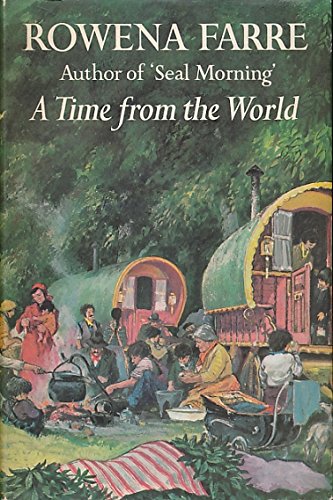
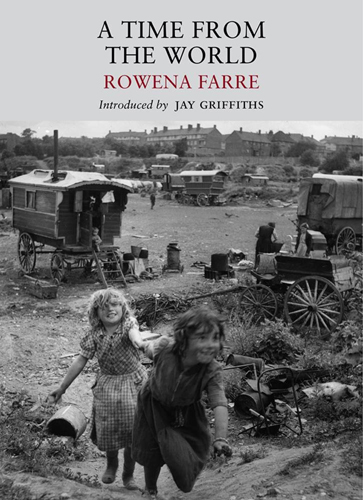
Many years later having become an avid book collector, I discovered that Roma Far was really Rowena Farre, the best selling authoress of ‘Seal Morning’, a wild life book published in 1957. This was followed by ‘A time from the World’ published in 1962. This is the story of her roaming life, living with gypsies and tinkers, her stay in Upper Heyford was part of this journey.
David Banner
Published December Edition 2020
A Time from the World – 1962 Edition & 2013 Illustrated Edition
It’s another lovely morning. Not much left in dad’s veggie patch now summer’s over, just boring green vegetables like cabbage and brussels. It all has to be picked at the right time, vegetables to store in the pantry, fruit to bottle and onions to hang in the barn. We can see his Army influence in the garden, all the vegetables and the flowers in straight lines, like they are on parade, but he’s got so much to look after and he’s very proud of it. Mum’s preparing dinner. I love the first course of Yorkshire pudding with gravy but have to show willing with the main course of meat and vegetables after she’s gone to the trouble of preparing them. Could be rice pudding for afters if we have plenty of milk.
On November 5th some of us made a Guy Fawkes, dressed it in old clothes, put it in an old pram and pushed it round the village with a sign saying “penny for the guy”. Some people were kind enough to give us 1d for some sparklers but it was fun anyway.
We didn’t get a family summer holiday this year, which I wasn’t surprised at, not many families go away. I did get a treat though when I went on a day trip by train to London with my friend Jane. We visited Trafalgar Square, the Houses of Parliament and Big Ben and Buckingham Palace. We didn’t see the queen though. We forgot to let her know we were coming.
We’ve got a telly now and I like to watch Crackerjack. The TV came from Radio Rentals and we pay for it weekly but it’s great fun for us all and it’s on until about 10 o’clock. They then play The National Anthem, a bit like they do at the cinema, except nobody stands up at home. I still like listening to the wireless on a Saturday morning though, with Children’s Choice and Uncle Mac, who always says “Hello Children everywhere”. They have some smashing songs on and I know them all. There’s Tubby The Tuba, A Four-Legged Friend and The Ugly Duckling.
The old Bricklayers Arms on the canal bridge has been sold to a coal merchant. That’s another pub that bites the dust. The Wharf opposite was also a pub at one time called The Boat but that was before the First World War. They say we used to have several pubs in Heyford, now we only have 2. None of them could have done much trade in such a small village though. I think The Old Sun and The Foresters Arms are here to stay. Sometimes my family catch the bus to Daventry, have a drink in the pub near the bus terminus, then come back on the same one. It’s good because it goes through all the little villages. The Railway at Daventry which runs to Leamington Spa is closing to passengers. I’ve never been on it myself. I think it will still be open for freight for a while.
I’ve joined the choir. There are quite a lot of us, maybe 6 girls, 6 boys, 6 warbling women and 6 growling men. We walk to the choir stalls by the altar from the vestry at the back, like in Noah’s Ark, 2 x 2. I enjoy the services and the singing except when we have to learn a special anthem. They are hard to learn, pretty tuneless and the congregation look bored because they can’t join in. Still, it’s not every week. The church looked beautiful in October for Harvest Festival with flowers everywhere and children brought along fruit and vegetables grown in their garden or allotment. On Remembrance Sunday, the nearest one to 11th, the choir will walk to the War Memorial after the service to remember those who died in the two World Wars, and we have 2 minutes silence. Rehearsals will then start for the Carol concert at Christmas. Roll on.
Polly
Letter published in The Prattler – November edition 2020
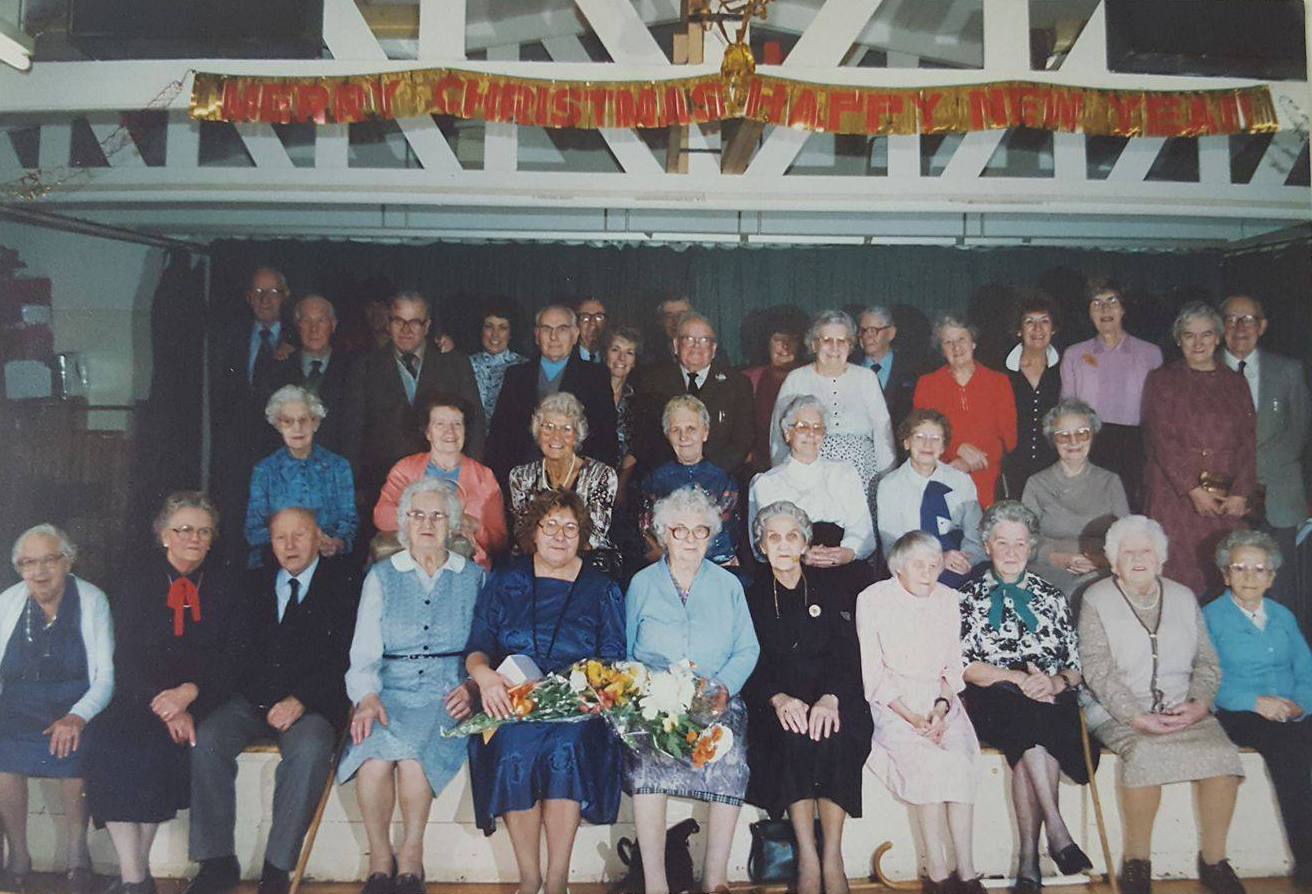
“My nan Florrie Coles would have been 111 today. This is the Nether Heyford pensioners club in 1989. She came to live with us in 1985 from London and was welcomed into the village by all these lovely people. She is 7th from the left front row, in black. Anyone recognise their relatives ?”
I’ve lost both my grandparents now so we’ve moved into New School House so that my uncle has a home and we haven’t got a spare bedroom for him in Furnace Lane. I love this house but Mum says it’s draughty and cold. We have a huge garden so loads of room to play. My bedroom is at the side of the house near the jitty. In the evenings I hear the twins, Joe & Len, who live in Church Lane (Back Lane as it’s known), going home from the pub. They walk well apart and talk like it’s the middle of the day. The Headmaster collects our rent once a month because the house is owned by the School.
I miss my pap, he made me laugh. When I asked him one day why he had so many relatives in the village he simply said “our cat went up their alley” whatever that means. I miss helping my nan shell peas, popping down Mag Courts for some groceries ‘on tic’ and going over to The Foresters Arms to collect her nightly bottle of stout.
I had another nan, dad’s Foster Mother, but we didn’t see so much of her because she lived in Bugbrooke and we had to go by bus. The good thing about visiting her was that she bred Pekinese dogs, kept turkeys to fatten up for Christmas and had a parrot in a cage on her kitchen table which used to swear. She’s no longer with us either.
It’s Heyford Feast weekend soon. Families get together, go to church on Sunday and to the fair which usually runs every evening until after the pubs shut. I hear that in the past, when one man came out of the pub at closing time, he forced the swing boat over the top, losing all the change from his pocket. They wouldn’t allow them to go so high now I bet. Abbott’s fair comes every autumn and parks its caravans and lorries on the green opposite the school. The children from the fair go to the village school and most of the families attend church on the weekend they are here. Two things we can all guarantee winning at the fair is a goldfish and a chalk ornament which is great for drawing on pavements. When the fair leaves, we scour the green for loose change hidden in the grass.
I was confirmed in Kislingbury church this year by the Bishop of Peterborough along with some others from Heyford and surrounding villages. Robert Hensher, the vicar, gave us lessons for 4 weeks beforehand. Now I can go to church regularly to take Holy Communion.
There are plans to build a Village Hall along the area by the top of the green and the first soil was turned recently. It will be built mainly by village volunteers so might take a long time, but how great that will be. Also planned is a motorway from London to Leeds which will run past Upper Heyford. Any soil from this is to be dumped in the old brickyard in Furnace Lane to fill in the pits where the motorcycles used to race.
I’ve done my first year at Duston School. Our school motto is “Have Faith”. There are far more classrooms than the 3 we had in the village so it takes a bit of getting used to and we have a timetable to follow. I lost my sports shorts last term so mum is taking me to Brierley’s for some new ones. “I’m only getting you cheap ones this time” she said. I had a rotten school report this year saying I did too much talking. I can’t believe that.
Polly
Letter published in The Prattler – October edition 2020
About 200 years ago, in 1820, my great-great-great-grandfather was married in Nether Heyford. His name was Joseph Mann and he was born in Weedon Bec in 1800, and baptised there on 18th January 1801.
His first wife was Elizabeth Claridge (1801-1829), with whom he had two children, Lucy (b.1822) and Ann (b.1827), and after Elizabeth’s death, he married Charlotte Claridge (1810-1891) who may have been Elizabeth’s sister or a cousin; there were Claridge’s living in Heyford at that time but there may also have been a Claridge connection with Hertfordshire. Charlotte and Joseph had ten children, all born between 1831 and 1850 of which only one (George, b.1841?) was recorded as an infant death. The next boy, born in 1844, was named George, too.
When Lucy was married, aged 21, in c.1843, her father, Joseph, was described as a shoemaker. In fact, he developed a successful shoemaking business in the village. There were quite a lot of shoemakers (or people connected with the shoe trade) working in Heyford in the mid-19th century, nine in 1841, fourteen in 1851 and nineteen in 1861. The village itself had the first recorded mention of shoemaking in Northamptonshire in 1202.
Joseph died at the age of 61 in 1861 and is buried in Heyford. His widow, Charlotte, then married a John Smith of Heyford, whom she survived, and later she was buried at Cogenhoe. Joseph’s second son, William (b.1833) is the subject of an article in Volume 3 of “The Story of Heyford” and was also at one time a shoemaker. In that article William said that his father was not sympathetic to the established Church and followed the Baptist faith. In fact, it is recorded that Joseph was a “sponsor” of the chapel at Farthingstone. William also mentions that the people were not very happy with the way the Arnold Charity was being administered at that time.
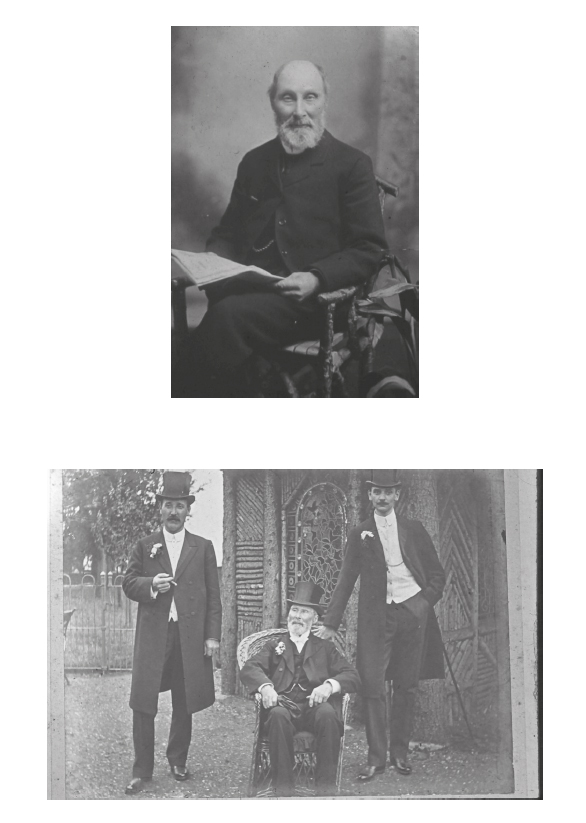
William’s elder brother, the first child of Joseph and Charlotte, was named Thomas Claridge Mann (1831-1921). Tom almost certainly attended Bliss School. He followed his father into the shoemaking trade, working in several places in Nether Heyford. Eventually, he met a girl from Cogenhoe called Charlotte Smith, whom he married in 1852 at Cogenhoe Church. Charlotte came from a family of shoemakers in Cogenhoe. It is from this Thomas Claridge Mann (also known as “Old Tom”) that I am descended.
Old Tom and Charlotte settled in Cogenhoe and Thomas started making shoes in a room in Church Street, Cogenhoe. Eventually three of Tom’s Heyford brothers, Joseph (1836-1921), John (1839-1931) and George (1844-1932) followed him to join him in the business, but for some reason not William. They set up the company of T.C.Mann and Brothers, later to be dissolved in 1883 and renamed T.C.Mann and Sons. The company flourished, making the highest quality shoes, and they opened shops at 160, Regent Street, London and two more in Manchester, at 12, Cross St. and 123, Market St. They made shoes for foreign dignitaries and boots for one of Shackleton’s Antarctic expeditions. The Mann family in Cogenhoe, just like Joseph in Heyford, were chapel people and they built the Chapel in Station Road and a terrace of houses for some of the workers in the factory. At one time the firm employed about a hundred workers, some of whom walked from Wellingborough and Piddington to work. And all this started from their experiences in Nether Heyford. The Story of Heyford states that William Mann lived to the ripe old age of 92, but Old Tom lived to 90, Joseph to 85, John to 92 and George to 88, so there must have been something in that Heyford air!
Old Tom and Charlotte had five children, including William Charles and Thomas Claridge (known as “Young Tom”), and Young Tom also had five children, the eldest being another Thomas Claridge (known as “ Young Tom’s son”) and the fourth child being my maternal grandmother. At one time there were so many family members in Cogenhoe that it was often said that “nearly every other woman that you see is probably a Mann”, but now I don’t think there are any left in either Cogenhoe or Heyford.
In October 1967 I got married at Cogenhoe Church to Ann, a Cogenhoe girl, and we made our home at Nether Heyford, basically because we could just about afford the house, and it was about halfway between Cogenhoe and Charwelton, which is where I was working at the time. In May of that year we had seen an advertisement in the evening paper for a cottage in Furnace Lane and as I was working at Charwelton on the Saturday, my mother brought Ann over from Cogenhoe to look at it. As they drove up the lane, my mother said to Ann that this was the village that her great-grandfather came from, and until then I knew nothing about the Mann connection with Nether Heyford, so it was a bit of a coincidence that we brought the family back to the village just over a hundred years after Old Tom left. We still live in the same house and have been here in Heyford for 53 years because we find the village and the villagers so friendly. We have almost been accepted too, I think!
Since then both our daughter Sarah and our son Kit, granddaughter Beckie and grandson Kyle have all been educated at Bliss School, and then they all went on to Campion School, where Kyle is still studying. Beckie was assisted by the same Arnold Charity that William Mann was so critical of, and then went on to University at Middlesbrough where she still lives, but the fact that the rest of us have remained in the village speaks volumes for Heyford village life. Kyle is the eighth generation of the family since Joseph married here in 1820.
I have attached two photographs, one showing Old Tom, and the other showing, left to right, Young Tom, Old Tom (seated) and Young Tom’s Son.
If anyone can add to this story, especially regarding the people mentioned, or if they know that I have made errors, please let me know on 01327 340599
Pat Andrews
Letter published in The Prattler – September edition 2020
Well, that’s it. I’ve left Bliss Charity School and am preparing for the next stage of my learning at Duston Secondary Modern School. I didn’t pass the 11+ but that’s fine because all my friends are joining me on the daily bus trip to Duston. The few that passed the exam will bike to Upper Heyford, leave their bike in somebody’s garden and catch a bus to the Grammar School in Daventry. I’ve got my new school uniform, navy skirt and white blouse with school tie and a blazer with a badge for winter. For the summer we are to have a green striped dress made from Butterick Pattern No. 7741 available at Adnitts. Duston Secondary Modern School opens its doors this month and I am in Form 1A. A bus will leave Heyford at 8:20 am and bring us home after 4 o’clock. I’m looking forward to the next stage of my education.
I’ve enjoyed the school holidays, mostly outdoors. It was great not having to get up so early. By the time I opened my curtains nearly all the ladies in Furnace Lane had their washing out. They all have a line stretching from top to bottom, and they all seem to wash on a Monday, so it’s lovely to see rows of sheets blowing on a sunny summer’s day.
The other day I had a “butcher’s basket” on Sue’s bike and I jumped off when she started going too fast and ripped my knickers. I told dad I’d fallen down a tree because he knows I climb and he’d be really annoyed if he knew I’d been on somebody’s bike. He thinks they’re dangerous. Mind you that could be because he can’t afford to buy me one. It all started after we’d been scrumping down Ben’s Orchard and had to make a quick getaway because somebody shouted “Ben’s coming”. I have no idea who Ben is and don’t know of anybody who’s ever seen him but he has some lovely apples. I really don’t need to go scrumping because we have apples galore at home but I like to join in the fun.
I’m spending the morning with Nan while mum goes fruit picking up at Beck’s farm by the A5. They say that Mr. Beck was a pilot in WW1. He is a very kind man. Children are allowed in the school holidays but I like to help my Nan pod her peas and pick her gooseberries ready for Pap’s dinner and she lets me help make pastry in the kitchen sometimes. Having said that she’s not quite as bright as she used to be and doesn’t mind if I find a caterpillar in the peas, “adds a bit of meat” she says. I love her 3 cats which she has to keep the mice away. She falls asleep easily but she’s over 60 and she brought up 7 children, so it’s understandable. I might go off and play for a bit if she nods off.
Last Sunday my dad and uncle cut the hedge round pap’s garden & orchard. It’s a very long hedge and takes hours. Backing onto the orchard is Mr. Humphrey’s ladder making yard and you can hear the saws during the week in the woodshed but it’s quiet on Sunday because they all go to chapel.
The morning was spent with the men hedge trimming and mum cooking our meal. After dinner the men were clearing the hedge cuttings and making a bonfire at the top of the orchard, Nan and Pap were asleep in the living room, and me and mum washing up. All of a sudden mum gasped. “Oh blimey, they’ve set the hedge on fire. Go and sit with the oldies, and if Pap wakes up play dominoes with him, but make sure he doesn’t come into the kitchen, he’ll have a fit. What, miss all the fun,
again! Of course, I did as she asked and Pap didn’t wake up until the men came in, all black, saying the work had been done. Mum was grinning.
Polly
Letter published in The Prattler – September edition 2020
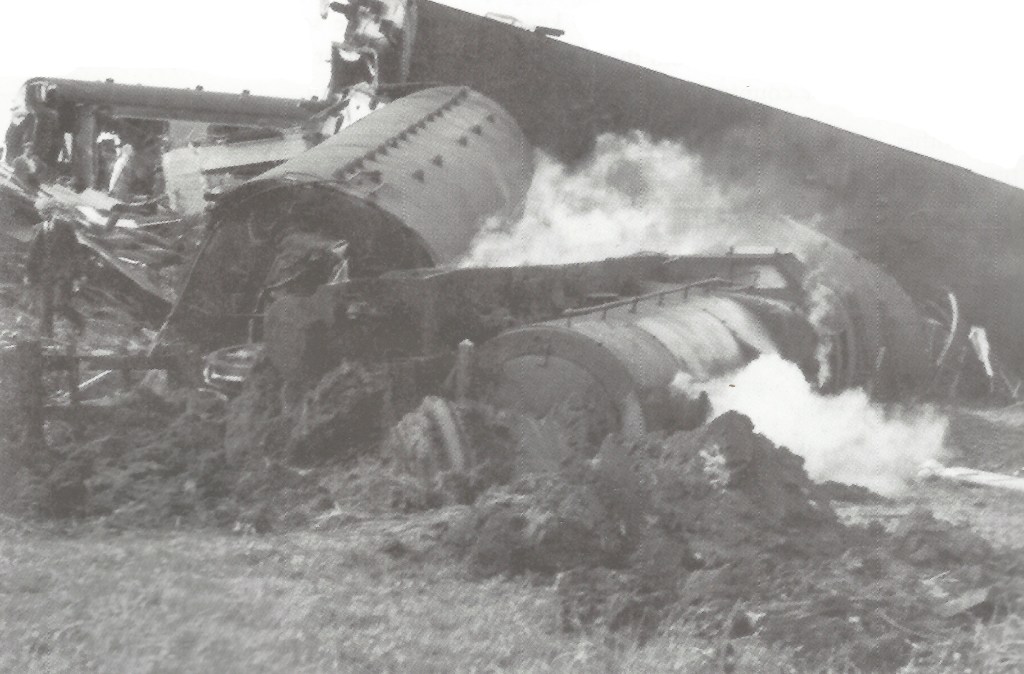
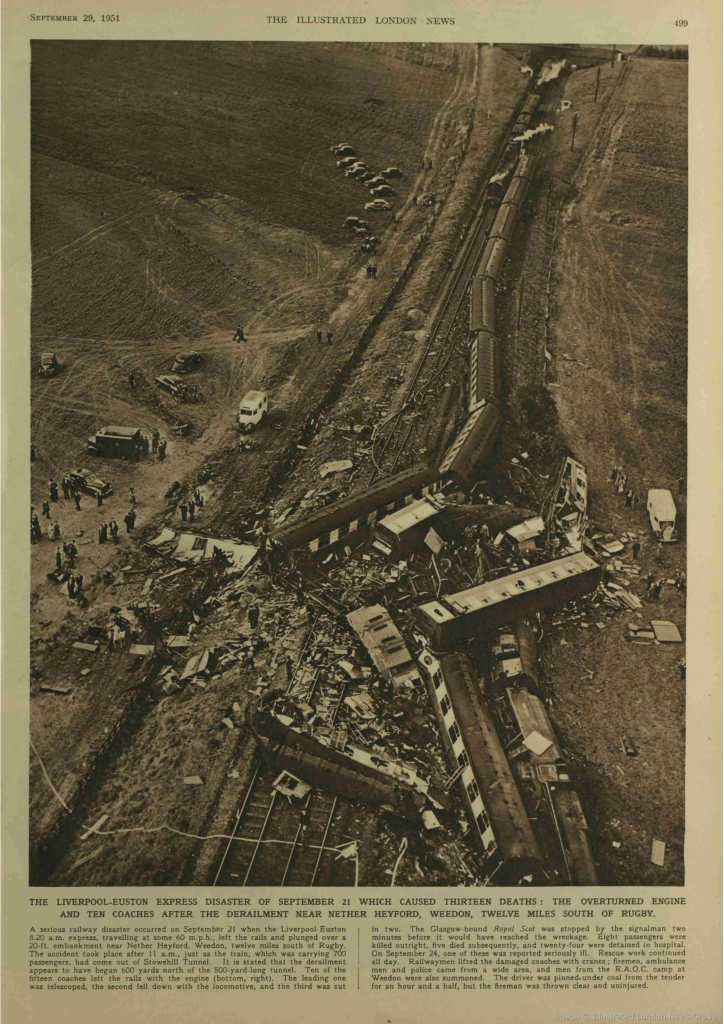
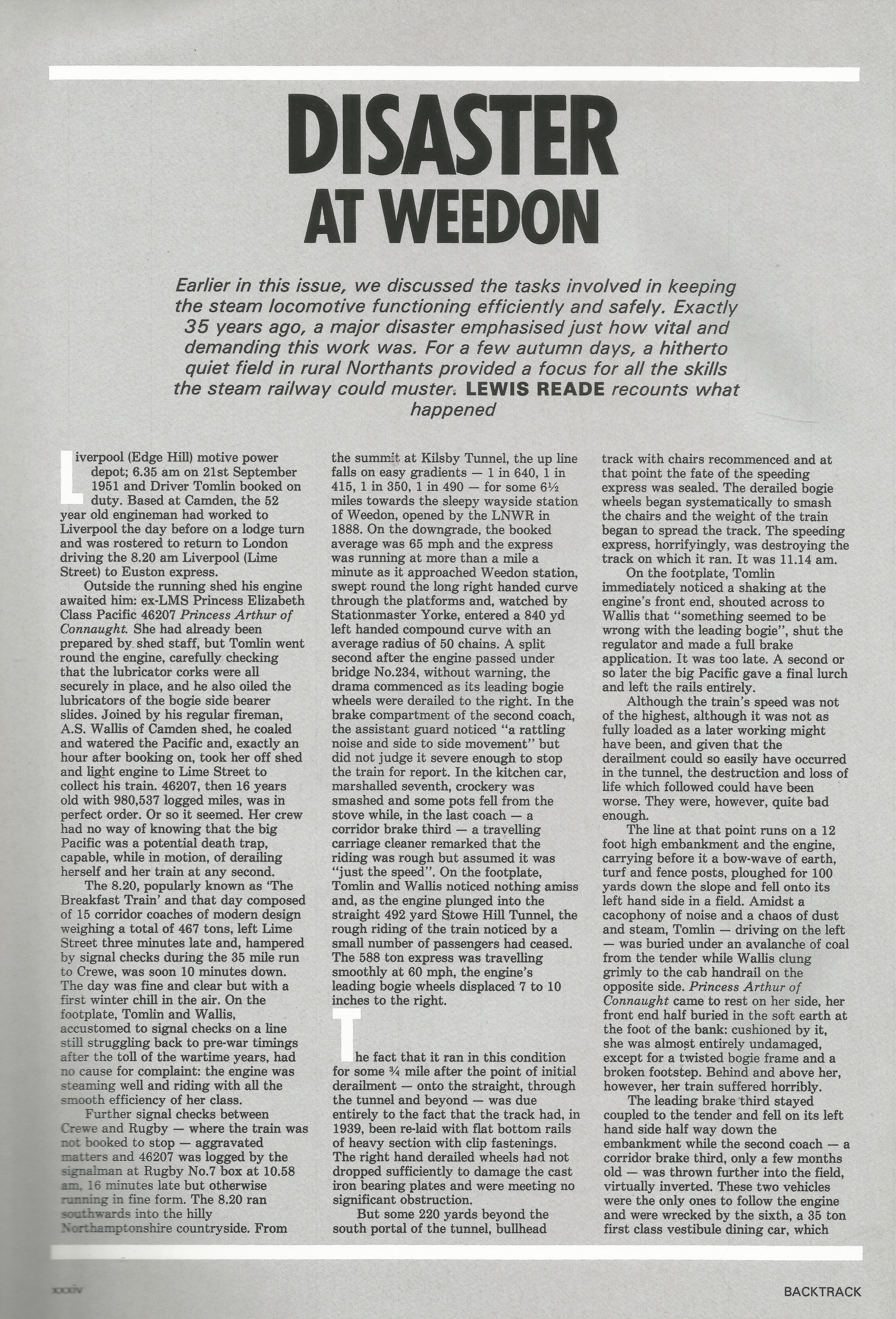
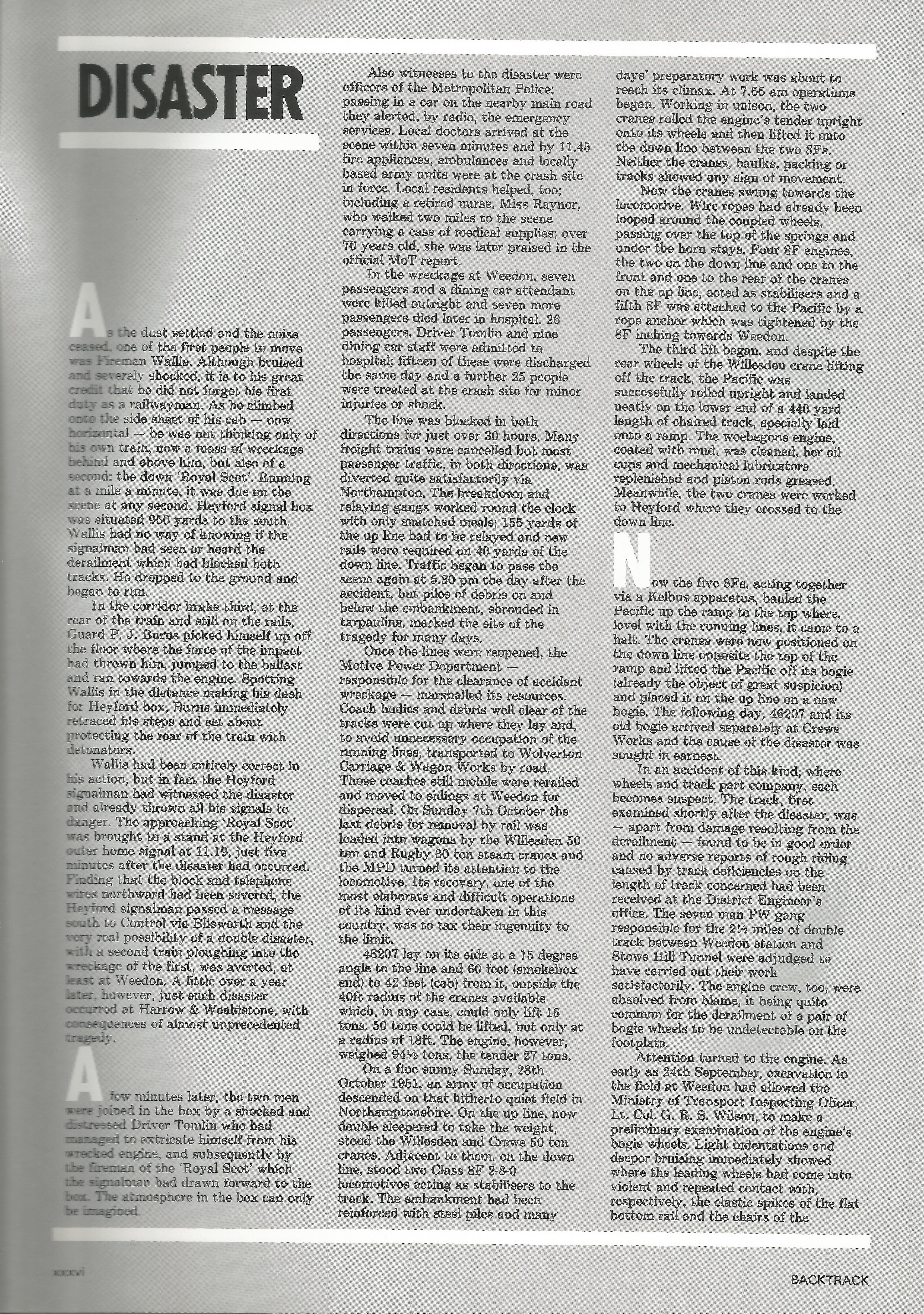
At about 11.20 am on the 21st September 1951, the 8.20 am Liverpool Express to London came off the track at the Stowe Hill Tunnel near Heyford and tipped over in the embankment. The crash killed eight people and another seven died later in hospital. There were also thirty-six other casualties.
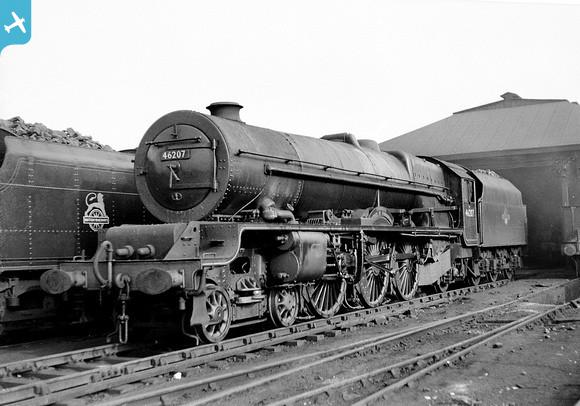
David Blagrove, in his book, “Waterways of Northampton” describes how “the railway can be seen plunging into Stowe Hill Tunnel” and it was here that the train, “hauled by the Duchess class Pacific engine, Princess Arthur of Connaught, left the rails shortly after leaving the tunnel at a speed of between sixty and sixty-five miles an hour.”
Engine 46207 Princess Arthur of Connaught
Photo taken by James Banner and lent by Ted Garrett
A prompt response Frank Denny, the Heyford signal man that day, was the first to realise what happened. His signal box was located about a quarter of a mile from the railway bridge in Furnace Lane, along the stretch of line between Heyford and Bugbrooke. As the signalman, Frank was aware that the train had entered the tunnel from Weedon but he became anxious when it did not reappear. As he looked out of his box, he saw steam rising from the embankment near Tanborough Farm.
Frank instinctively knew something was wrong and realised that his first priority was to halt the Royal Scot which was travelling from London and due to pass at any moment. He therefore rang through to the Banbury Lane signal box at Bugbrooke to get the signal switched to stop. This duly happened the Royal Scot came to a halt near his own box. The driver got out to demand “what the hell is going on.” It was due to Frank’s swift response that a much more serious accident was averted.
MBE At the same time, Mrs Cecily Hughes, the doctor’s wife at Weedon, took a call from the Weedon Stationmaster to say that the Liverpool Express had failed to clear his section of the line. He asked if she and her husband, Dr Stephen Hughes, would take a look. So far, that was all that anyone knew.
The couple set off in their car, armed with first aid that they always carried. They arrived at the tunnel within seven minutes of the accident. Mrs Hughes describes how they found nothing at the tunnel entrance so they climbed up over the hill – to be greeted by the sight of the crash strewn along the line.
The rescue operation
Photo taken by James Banner and lent by Ted Garrett
The first four coaches were the most damaged and contained the dead and badly injured. The doctor took one side of the train and his wife the other, clearing the debris in order to reach casualties. Mrs Hughes recalls how “Everyone was calm and patient. The last two carriages had not even left the rails and were still upright. They were full of boys returning to boarding school and one of the senior boys took charge, leading the others away from the scene and back to Weedon, to the Globe Inn.”
The doctors found the engine driver, Mr Tomlin, buried up to his shoulders in coal from the tender. It took a while to dig him out but he was quite unhurt, as was the train’s fireman who had clung to the cab as the engine tipped over.
After attending to all the serious casualties, Dr and Mrs Hughes returned to Weedon, only to find that many more people, including some of the rescuers, were waiting for treatment for minor cuts and bruises.
As some of the first medics on the scene, the contribution made by the Hughes’s was invaluable. Mrs Hughes was later awarded the MBE for her part in the rescue operation. She was reluctant to accept at first, as there were also others who had helped at the crash site and she felt that she was only doing her job. However, Mrs Hughes was described as “heroine of the morning” and duly received her medal.
Witnesses Several Witness also came forward including a bus driver on the A5 who saw the immediate aftermath of the accident and reported it at Weedon station. It was also very fortunate that a police car happened to be passing the scene along Watling Street as it was one of only two police cars fitted with a radio in the entire county. They were able to summon medical help promptly.
Mr George Richardson of London Was driving along the A5 at the time and said: “I saw the train come out of the tunnel and begin to wobble.”
This “wobbling” and lurching was felt by passengers too. One survivor, Mr Blankfield of Liverpool, explained, “I was in a carriage half-way along the train . . . there were four or five jolts and then the train stopped completely.” He described how he and other passengers immediately climbed out of the windows to help others further along the train.
The damage
Photo taken by James Banner and lent by Ted Garrett
Local help For local people in Heyford who worked near the railway, the sound of trains was a familiar one and you could tell exactly the time of day by the individual noise of each train that passed. When the crash occurred, Mr Gray of Tanborough Farm apparently thought that his wife had knocked over the dresser. But after that, apart from the hissing of the engine, there was an eerie silence.
Word quickly got around and people went up to help. Amongst the first on the scene were Reg and Joan Collins of Wharf Farm. They provided milk churns so that water could be carried up the hill to the casualties. There was no shortage of volunteers to take the churns but at the end of the day. Reg. had to go round and collect them all back again in his tractor and trailer in time for the evening milking.
Joan had to cycle down to Mrs Blaney at the Post Office with messages to be telegrammed to relatives. At this time, there was only the one phone with one public line out of the village. The officials did their telephoning from Holly Lodge which had one of the few phones in Heyford.
Ted Garrett was booking clerk at Weedon Station that day. When the crash happened, communications between Weedon and Heyford were suddenly lost, so they knew that something was amiss. In fact, as the train was thrown from the track, it had brought down the telegraph poles and cut all contact. A message finally arrived at Weedon via Roade Station that there had indeed been a crash. Ted Garrett was given charge to inform the army located at Weedon Depot and ask them to help at the crash site.
Frank Smith arrived with the Daventry ambulance and took the first casualties to Northampton General. He was actually on his second trip to the hospital by the time other ambulances appeared. Then the army from Weedon arrived to help. As they appeared over the hill, people recalled that it looked as though they were on manoeuvres.
Retired district nurse, Miss Raynor – over 70 years of age – walked two miles from Weedon to the crash site with a case of medical supplies. The Salvation Army and the W.V.S. set up mobile canteens and were there all day. The women from the Heyford railway cottages brought up hot tea for the survivors and people also brought blankets and sheets. The sheets were torn up to make bandages and the blankets kept the survivors warm. These were, of course, not returned but compensation was later given to those who had provided them.
The curse of the tunnel The crash was reported in the national media and was news on the BBC Home Service. Local papers were full of the story; Northampton’s Chronicle and Echo carried the banner headline “8 KILLED IN WEEDON TRAIN CRASH” although this figure was unfortunately to rise. The Daventry paper went further and wondered if there was a more sinister aspect to Stowe Hill Tunnel. The paper reported that at the same spot in 1915 there had been another fatal train crash.
There were similarities between the two railway accidents. Both occurred about the same time of year with trains that had left at the same time in the morning. On 14th August 1915, the Irish Mail left Euston at 8.30 am and it too was disrailed; this time as it left the tunnel at the Weedon end heading north. The crash killed nine and injured 13 and many of those on board were troops in service during World War One.
However, despite the comparisons, the crash of 1915 was caused by a broken coupling left by a passing train. The coupling had ploughed into the track and so dislodged the oncoming mail train.
Board of Trade In both crashes, the stretch of line was not found to be at fault. In 1951, the investigation by the Board of Trade was led by Lieutenant-Colonel G.R.S. Wilson. He concluded that the engine (number 46207 for train buffs) had an axle incorrectly fitted after its servicing at Crewe. The axle was slightly too tight, enough to cause a problem when it reached Stowe Hill Tunnel. There is a small change in rail type leading in and out of the tunnel (from flat bottom to bull head track) and, with the axle too tight, the Express dislodged when it went over these rails. The service engineer responsible at Crewe was named but, this being the 50’s and not the 90’s, there was no huge compensation claim or court case.
The engine itself had embedded in the soft clay around Stowe Hill and actually suffered little damage. However, it took almost a month before it could be lifted because of the steep ditch of the embankment. The engine had to be lifted out by a crane and villagers can remember its massive size as it was hauled into the air. It was then towed back to Crewe and was running again within six weeks. Driver Tomlin actually drove the Liverpool Express one more time to London, but never again after that.
By Sarah Croutear. A number of people have contributed to this story but we must give particular thanks to Joan Collins, Ted Garrett, Cecily Hughes and Doris Lovell, Frank Denny’s daughter.
~~
Added 2020:
British Pathe News
24/09/1951 – Many Killed In Train Wreck – A train crash kills several people and injures many more in Weedon
British Movietone News
24/09/1951 – Tragedy occurred aboard the Liverpool-London express train recently, when it crashed at Weedon, Northants., The locomotive plunging down an embankment, derailing all fifteen coaches. It is feared that, at least, seven people were killed and many more injured.
The Illustrated London News
September 29th 1951
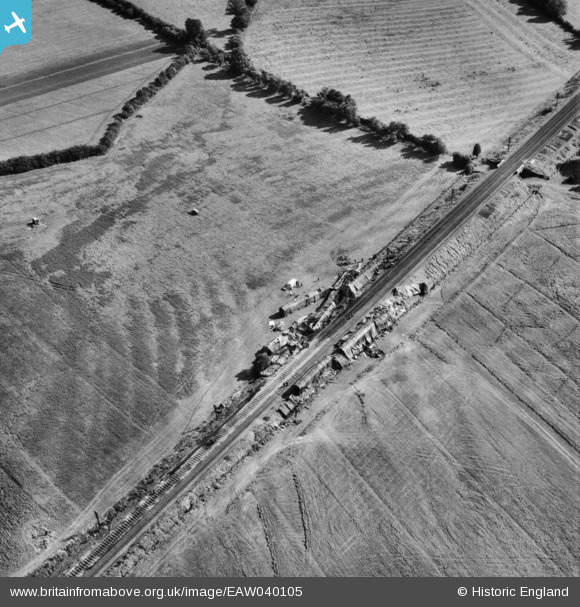
Britain From Above
Wreckage of the 8.20am Express Service from Liverpool to Euston (46207 Princess Arthur of Connaught) on the section of track along from the Stowehill Tunnel (the Weedon Rail Crash), Nether Heyford, 1951
LMS Princess Royal Class No 46207 Princess Arthur of Connaught
LMS Princess Royal 6207 “Princess Arthur of Connaught”
Shot and produced in 1935 this film details the construction of Princess Royal Class no. 6207 ‘Princess Arthur of Connaught’, from raw materials to complete locomotive.
Ministry of Transport Crash Report
Report on the Derailment which occurred on 21st September 1951 near Weedon in the London Midland Region British Railways
“The 8.20 a.m. Up express passenger train from Liverpool to Euston, comprising 15 bogie coaches hauled by a Pacific type engine, was travelling at 60-65 m.p.h. on the leaving transition of a left handed curve of about 50 chains radius, when the leading bogie wheels of the engine were derailed to the right ; the cause was an engine defect. The derailment was not noticed by the enginemen at this stage and the train continued forward at speed for more than £¾ mile on the straight without serious damage to the flat bottom track. No more wheels were derailed until the train reached the bull head rails just beyond the short Stowe Hill tunnel, when the leading bogie wheels began to smash the chairs and break up the track with the result that the whole of the train left the rails except for the last two vehicles.
The engine went down the 12 ft. embankment to the left, and fell on its left hand side: on soft ground. The wreckage of the coaches at the front of the train was severe, and I regret to state that seven passengers and one of the dining car staff were killed outright and seven passengers died subsequently in hospital. In addition, 26 passengers, the engine driver, and nine members of the dining car staff were admitted to hospital, or 36 persons in all, of whom 15 were discharged on the same day, and 25 others sustained minor injuries or shock. The driver, who was on the left hand side of the footplate, had a fortunate escape from serious injury when he was buried in coal from the tender as the engine overturned ; the fireman clung to the right hand side of the cab and was unhurt.
The wreckage of the eight leading coaches was piled behind and alongside the overturned engine across both the tracks. It was seen by the signalman at Heyford box 950 yards ahead when he heard the noise of the final derailment, and he stopped the approaching Down “Royal Scot” express at his outer home signal at 11.19 am., and afterwards drew it forward to the box. The block and telephone wires northward were severed, but the signalman got a message through to the Control via Blisworth, the next junction box to the south. Medical and other assistance was also summoned from all possible sources by some officers of the Metropolitan Police who had seen the wreckage from their car on the neighbouring main road. The Northamptonshire County Police were quickly on the scene and performed outstanding services in co-ordinating the work of rescue.”
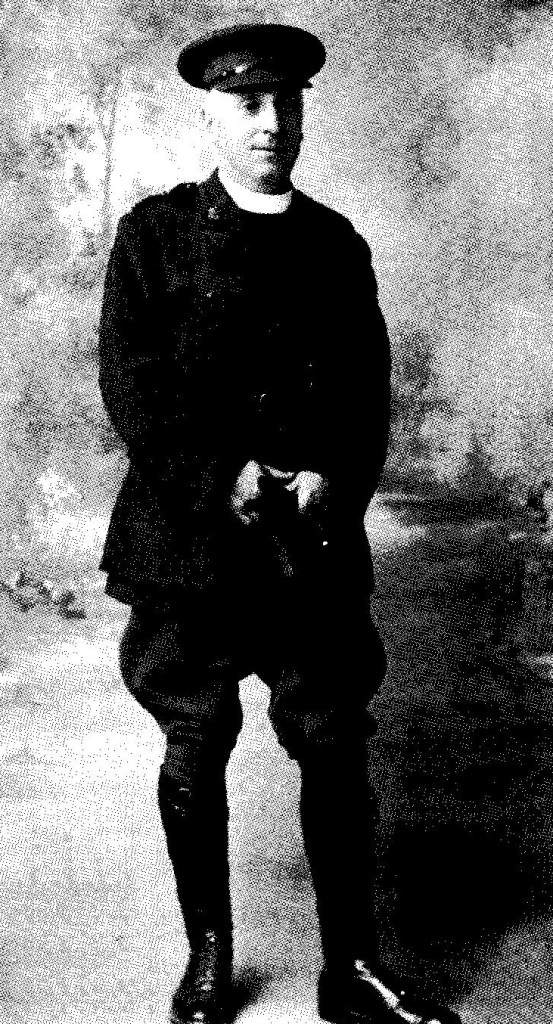
Henry Isham Longden was born at Lamport Rectory on 26th September 1859. Following the death of Thomas Crawley in 1897 he became Rector of Heyford where he remained until his own death in 1942. He was a popular man in Heyford and in 1943, one year after his death, a book about his life entitled ‘A Northamptonshire Rector — The life of Henry Isham Longden’ was published by Joan Wake. The following is an extract from this book relating to his time at Heyford.
A Northamptonshire Rector – The life of Henry Isham Longden
Except for a brief interval during the war of 1914-1918, Heyford was Mr Longden’s home for the next forty-five years. The population of the parish was about 800. His rectory, though commodious and comfortable within, is externally an unattractive mid-nineteenth century building of local ironstone, overdone with gables and plate glass. The beautiful old church lies only some 100 yards away. His church services were, as to be expected, on the high church pattern. He introduced a choral communion service on the first Sunday of every month, at which he officiated investments, then rarely seen in a country church in the Peterborough diocese. He did not, however, indulge in extreme practices of a ritualistic type. The biretta which he had worn as a curate was discarded for a mortar-board on Sunday mornings. Though ready to suffer and possibly to fight for his opinions as other clergy had done, there was no occasion for it – his bishops left him in peace.
In the musical part of the services he was faithfully and ably assisted by Fred Potter, a man of musical ancestry and himself of no inconsiderable musical gifts. Fred had learnt to play the organ at the age of eleven, and officiated voluntarily as a boy at Shangton Church. At Heyford he became honorary organist and choirmaster, and so remained for forty-five years until his master’s death.
Mr Longden always attended the weekly choir practice and wrote out the lists of hymns and chants himself. Until the later years he taught in the Sunday School. On the friendliest terms with his parishioners, he took an interest in the social as the religious activities of the parish. One of his first acts was to collect funds for a church room which after six or seven years he succeeded in building. He founded a village cricket club, and for years was a member of the eleven. The village lads were very fond of him and he corresponded with many of them during the war of 1914-18. He had one or two pupils at the Rectory during the early years, including the Crawley boys from Stowe-nine-churches Rectory.
From the beginning Mr Longden always farmed his own glebe, though the management was left largely in the capable hands of Mr Potter, whose whole heart was in the work. A great reputation was made with the Heyford strain of Berkshire pigs, as also with the hunters, bred and trained on the place, for which purpose a short ‘steeple-chase’ course was laid out. The Hunters’ Improvement Society’s Show at Islington in March, at which many prizes were won, was an important annual event, which was much enjoyed by both master and man.
The Rectory garden, too, except in Winter time, was always ablaze with masses of flowers. The greenhouse also was full of carnations, begonias, cyclamen, and other flowering plants, all under the care and supervision of Mr Potter. He had from the first days at Shangton always lived under his master’s roof, but when in 1901 he married Miss Bertha Nightingale of Pattishall, he moved to a cottage in the village. This arrangement did not last long, and in 1902, to everybody’s satisfaction, they were allotted pleasant rooms at the Rectory. The bacon-curing, butter-churning, and domestic work of the house were carried out by this devoted couple. The affection and respect which they had for Mr Longden was heartily reciprocated, and the party at the Rectory was essentially a happy and contented one.
Rev Henry Isham Longden with Fred Potter
All the Longden children had been taught to ride at Lamport Rectory, but though he kept a horse at Shangton and was always fond of riding, as a young man Mr Longden did not shew any sporting proclivities. After a few years at Heyford, though not actually ill, his health was not up to the mark and Potter suggested that an occasional day with the hounds might do him good. He had bought his brother Arthur’s mare when the latter went out to the South African war in 1899, so now had a suitable mount. Mr Longden agreed, his health improved, and he soon developed a great love of the chase, though he was rather ‘a parson who hunted’ than one of the old-fashioned type of hunting parson like his great-grandfather the Rev. Vere Isham.
Heyford lies just inside the Pychley country, on the borders of the Grafton, but though he would take an occasional day with the former pack, Mr Longden always considered himself a Grafton man. The masters liked to see the sport patronised by the cloth, and Mr Longden’s ‘cheery courtesy and inveterate love of little jokes,’ as Mr Cruft writes, ‘made him ever welcome, even to the most anti-clerical followers of the hounds.’ Well-mounted and well turned-out in top hat, black coat and white cord breeches, he arrived at the meets accompanied by Potter, who besides enjoying the sport quite as much as his master, was thus able to school – and sell – the young hunters bred at Heyford Rectory. Then General Livingstone-Learmouth came to live at the parish, and for eight years after the war Mr Longden hunted regularly two days a week from the middle of November right through the season. (He never cub-hunted). The General used to drive him to the meets, Potter going on with his horse. One day with the Pychley – the meet was at Cottesbrooke – hounds had a great run from Maidwell gardens by Kelmarsh, Arthingworth, Braybrooke, nearly to Brampton Ash, and finally killed not far short of Market Harborough. The General was galloping along beside his Rector. “Padre, I can’t go on any more,” he called. “no man ever stopped in the middle of a run in the Pychley country!” shouted back the parson. Both sportsmen were in at the death, and rode home together the many weary miles to Heyford, gruelling their horses at the Ismays at Hazelbeach on the way.
Then one sad day in the March on 1928, when hounds were running near Preston Capes, someone inadvertently slammed a gate in front of Mr Longden. He tried to pull up but there was not time. His horse swerved and jumped the gate-post, throwing him onto his head on the hard road. Only his top hat saved him from breaking his neck. Potter was with him in a moment and took him home. This was the end of the hunting. The old horse was turned out to grass and Mr Longden was no more to be seen with the hounds. He was then in his seventieth year.
Fred Potter
The relationship between Mr Longden and Fred Potter was obviously a very close one. Joan Wake’s book includes an appendix headed ‘Faithful Service’ which includes the following words written by Canon F. S. Keysell, Vicar of East Haddon, and formerly Vicar of Weedon.
“No record of the late Rev H. Isham Longden at Heyford could be complete without a reference to his trusty servant and faithful friend for 50 years, Mr Fred Potter. In his early days at Heyford Mr Longden used to drive a horse and trap, but with the coming of motor cars and the increase of road traffic and consequent inconvenience, Mr Longden, like many others, though he never went in for a motor car, decided to give up driving and took to a bicycle. It was then, and not till then, that Mr Longden, acting on the advice of Potter decided to take to hunting, for though he had always been fond of a horse, he had never previously appeared in the hunting field.
Potter, who had always been a good judge of a horse, was soon able to fix the Rector up with the right sort of mount, and not feeling it advisable for him to go alone, decided that it would be in the best interests of all concerned that he should accompany his master in the capacity of second horseman. Henceforth for many years the Rector and his groom were generally to be found at meets of the Grafton hounds on Mondays and alternate Fridays, with an occasional meet of the Pychley on Saturdays thrown in. Though Potter made it his first business to see that his master was in the same field with the hounds not only at the meet, but also when they were running, and though he always seemed to be in the right spot when a lead was required over a difficult jump, yet at the same time Potter was generally to be found here, there, and everywhere. Did any rider take a toss and let go his horse? Potter was always there to catch the animal, and if need be to render first aid to its owner. Did anyone at the tail end of a hunt forget to shut a gate? Potter was always there to do the needful in time to prevent any cattle from straying. Did anyone lose their bearings and not know how to find their way home or the place where they had left their car? Potter was always there to tell them, and if necessary to point them by the shortest cut.
Potter soon came to be recognised as an authority on horseflesh, and it became widely known that in the stables at Heyford Rectory there was sometimes to be found a useful, well-trained type of hunter for sale. Would-be purchasers, however, were warned that it was no good going to Heyford with that object in view on a Sunday morning (which alas! had become the fashionable day for such transactions), because at that time the Rector would be standing in the pulpit and Potter would be sitting at the organ, where for many years he acted as voluntary organist and trainer of the choir.
A nasty hunting accident some fifteen years ago when he was then about seventy years of age ended Isham Longden’s hunting career, and Ruby, the much loved horse which had carried him so well for many years, was turned out in the Rectory field where he was allowed to end his days in peace.
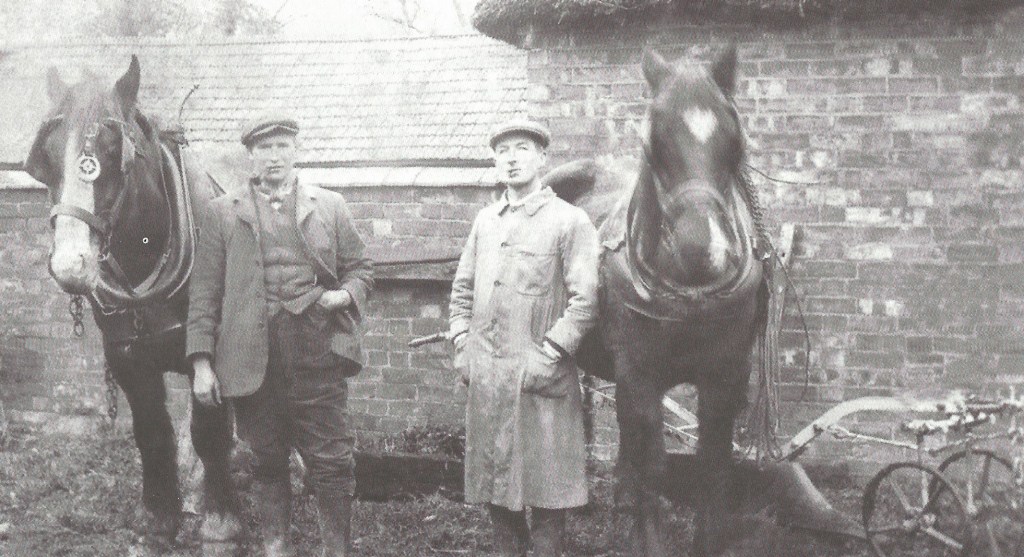
Fred Potter, on the right
Photo lent by Charlie Masters
Potter, however did not allow himself to be downcast because he had no more days to look forward to in the hunting field, but turned his attention to gardening (with the exception of an occasional day’s shooting) and soon the Rectory garden became as well worth a visit as had been the stables in earlier days. On one occasion he was showing the beauties of the garden to the writer of this article. Potter remarked to him “There can be no such thing as a groom-gardener, you must be one or the other – you must concentrate!”
The passing of Isham Longden in the early summer of 1942 meant the breaking up of the home in which Fred Potter and wife had for over 40 years devoted themselves heart and soul to all that concerned the well-being of their master and friend, but it has not meant the breaking up of Potter.
The latest report about him is that he is now farming at Heyford on his own account, for though he is old in years he is still young in mind and body. His many friends will wish him every success and if, when the war is over and the country has settled down, ‘Grafton Mondays’ come into their own again, all followers of the hounds will know that there is one farm in that county at all events on which they can be sure of a hearty welcome, and on which the gates and fences will be in good order, and there will be no barbed wire to obstruct. Potter has, and always has had, that mark of the true sportsman that he likes to share his pleasures with others and to enable them to enjoy to the full the things which he has enjoyed so much himself.”
The words of Canon F. S. Keysell, former vicar of Weedon
The memories of Bill Nickolls
A number of local people still remember Mr Longden and Fred Potter, and talk about them with affection. Mr Longden was a kind man who could relate to people of all ages and backgrounds. If you were unwell in hospital he would visit you, ‘even if you attended chapel rather than church!’ The church in those days (19205 and 30$) was well attended. It was normal to go three times a day – morning service at 9.00am, bible classes in the afternoon and evening service at 6.00pm.
Bill Nickolls particularly remembers the choir. It was a full choir, singing all parts. Some of the attendees were Harry Eales, Fred Goodman, Mr Pearson, Charlie Foster, Nell Nickolls, Freda Tebbit, Doll Collins, Ethel Barnes, Bill Nickolls, ]o Nickolls, and ]ack Nickolls. Choir practice on Friday evenings Was run by Fred Potter who was a skilled and knowledgeable musician. He also made it fun. He used to send out to the shop for some sweets and they sometimes played games.
The will of the Rev. Henry Isham Longden
Henry Isham Longden suffered a stroke and finally died in the arms of his friend and servant Fred Potter on Sunday April 26th 1942 at the age of 82 years. The following details from his will are reprinted here from a newspaper cutting (date and source unknown).
‘The Rev. Henry Isham Longden of Heyford Rectory,.who died on April 26 last, left £11,168 9s 1d gross with net personalty £9,725 8s 7d. He left certain furniture and his horses and crops etc. to his faithful friend and servant Frederick W. Potter, and £1,500 upon trust for him for life, and then upon trust for his wife for her life. £300 upon trust to pay the stipend of the organist of Heyford Church. £100 to the rector and churchwardens to provide an additional bell for the church, and £50 to complete the church room.’
Fred Potter
Fred Potter moved to a house in Church Lane and kept a small dairy herd in the field opposite (now known as Rice’s paddock and partly built on). He continued to farm and to produce milk for the villagers. He died at Nether Heyford on November 10th 1964, aged 87 years and was cremated at Milton.
~~
Extract from “The Story of Heyford” – Local book series published in the late 1990’s
The information below is extracted largely from a PhD thesis entitled ‘The Crawleys’. It was written in 1985 by Rev Alan Horsley who was Rector of Heyford and Stowe-Nine Churches from 1971-78. There is a copy of the full thesis in the Public Records Office at Wootton Park.
Ancient times
Charles Crawley at Stowe and John Lloyd at Heyford had inherited ancient medieval churches. The priest in medieval times would have said mass silently in the chancel while the congregation would have stood in the nave. There were probably no seats, just clean rushes laid on the floor for the benefit of the lay worshippers saying their own private prayers. They would have had only a glimpse of the priest through a screen which was meant to divide the priest from his people.
The East end of the South Aisle is known as St Botolphs Chapel and there would appear to be a connection here with the village tradition that the Old Sun Inn stands on the site of a religious house. Travellers on the old Watling Street might well have turned aside one mile from their route to take advantage of the hospitality of the religious house and to visit the alter of St Botolph, the Patron Saint of travellers.
The repairs of 1850-1860
By the middle 1800s the churches of Heyford and Church Stowe were probably in a very poor state of repair and so the Crawley family set about making improvements. Butterfield was chosen as the architect at Heyford. In 1855 the old box pews were removed. These had been put into the nave by those who thought themselves too good to pray beside their neighbours. At the same time the three-deck pulpit was removed and replaced by one of Victorian design, shorter in height, and for pulpit use only.
Old materials were sold and new ones bought. Carved stone, wood and lead were carted away by boat to London. Some monuments were removed because they were considered unchristian, not gothic in style, and their wording worldly. The large Tudor monument of Judge Morgan and his family were removed from the chancel to the North aisle to allow more emphasis on the alter as a focal point.
At this time, contemporary thinking was that ‘a high pitched roof is far more essential to the Christian effect than is a tower or spire.’ Therefore in 1855 the external entrance in the tower was blocked off and the roof of the nave was raised. However the heightening of the chancel roof and the raising of the chancel floor had to wait until 1884, possibly due to the shortage of money.
The garnishing of the Church
‘During the days of box pews little attention was paid to the actual appearance of the church in connection with the seasons. A little holly may have been used at Christmas, but for the most part the decoration of churches, which had been fairly common in the sixteenth century had lapsed.’ However during this period there was a movement towards ‘a return to the ancient and thoroughly English practice of decking the sanctuary with fair flowers and pleasant verdure.’
On January 19th 1856 the Northampton Herald published the following description of the appearance of Heyford Church in festive Christmas decor.
‘Entering the church by the south porch the eye was struck by the manner in which the edifice was decked with Christmas sticking. Woven wreaths of it were wound round the pillars of the aisles from the bottom of the capital, which was encircled by it,‘ a wreath extended under the clerestory windows on both sides the whole length of the nave, and above it was the inscription, also in sticking “I was glad when they said unto me we will go into the house of the Lord”, with one or two crosses on either side, formed of the same material; the belfry arch at the west end was similarly adorned, and a large cross, in sticking, was conspicuous over the arch. Sticking was closely twined around the framework of the screen dividing the chancel from the nave, as well as round the large Latin Cross by which the screen is surmounted… the Christmas decoration of the chancel included, on the east wall, high on either side of the Altar, involved triangles with monograms, and a text “Emmanuel, God be with us ” over the east window, all in sticking.’
NB. The present vestry doors were made from the former Chancel screen by Butterfield. The screen mentioned above sounds like the pre-Butterfield screen.
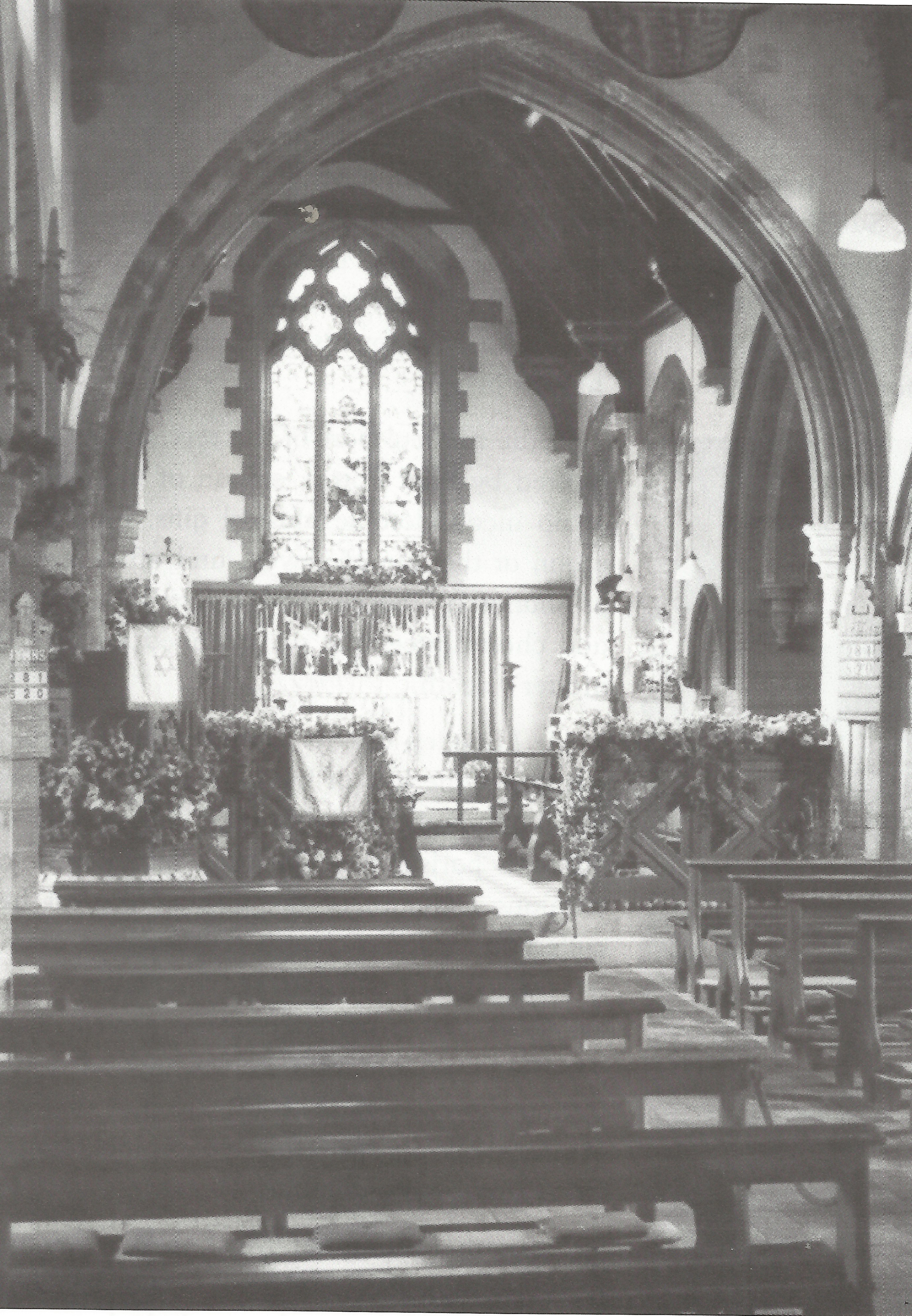
The church Interior, prior to 1968
The photograph above was lent by Mrs Mary Clements of Church Street. The chancel rails, seen here decorated with flowers, were taken down in 1968/69 during the time of the Rev Hensher. Judging by the apples displayed beneath the rails, the occasion must have been Harvest Festival.
~~
Extract from “The Story of Heyford” – Local book series published in the late 1990’s








 The Nether Heyford Prattler