Heyford Singers – July & August 2020

HeyfordSingersJuly2020

Quiz question
When did the song above hit the No 1 spot in the music charts?

I think most people reading this article would agree that if a lockdown had to be imposed, there is no better place to experience it than by living in Nether Heyford. The ready access to beautiful open countryside which surrounds the village, the large village green and open spaces within the area, have enabled folk to enjoy exercise and being outdoors whilst appreciating nature in all its glory as the seasons have changed. Praise too to the local shops which, in times of queues and shortages, have kept the local community continually supplied with food and other goods, whilst the take-aways and book swaps offered by the pubs have provided relief and pleasure.

As the lockdown measures gradually ease it has been a delight to see small groups of pre-school children walking around the village, and the quieter, but still noticeable sounds of children back at Bliss School. The Pizza Van is ‘back in town’, hungry customers patiently waiting for their orders whilst they sit and play on the green, and there is now a steady march of twos or fours towards the tennis courts and playing fields.

In the days and weeks to come we will hopefully see more signs of this cautious awakening, the church and chapel offering the opportunity for quiet reflection and prayer, if not yet large group gatherings or celebratory events, additional sporting activities at the playing fields, and maybe pints enjoyed in pub gardens!

Our little village hall, both a visual and metaphorical hub for the local community still remains closed… except for the wonderful work of volunteers who gather there weekly to sort and distribute food boxes to older and less mobile people in the village. They have, and still continue to do, a sterling job – thank you to each and every one!

I do miss the ‘business’ of the village hall, the full car park evidence that inside people were socialising, exercising, honing their skills and learning – W I meetings, bowling, yoga, Pilates, and taekwondo, gardening and flower arranging, sewing and patchwork, singing, films, quizzes and parties. Our local meeting place is very much the centre of village life and all that we enjoy. Sadly it has been unable to bask in our appreciation of its value, now and in years past, as the 60th anniversary celebrations also fell victim to the Covid 19 lockdown. But I have no doubt that Alwyne (Chairman) and all members of the village hall committee and friends are working hard to ensure that as soon as it is safe and wise to do so, we may again enjoy all the benefits the village hall offers.

Quiz question answer. This was the No 1 hit, and best-selling single, when the village hall was opened on 8th May 1960 by Lord Spencer, and maybe danced to at celebrations that evening or weekend. It remained at the No 1 spot for 7 weeks!

Appropriately now I give you our village hall Chairman’s choice of music should she be cast far away on a desert island, where there is no village hall, no nasty virus, but also no community to be part of!

Thank you Alwyne

I wish everyone a safe and sunny summer, which I hope will slowly and carefully return us to our busy vibrant community!

Desert Island Discs – your choices – Alwyne Wilson:

I usually prefer classical music, especially baroque, but at the moment whilst I’m wading through an extremely tedious and time-consuming list of admin tasks for my family, I feel I need some diverting company – hence this list of vocalists:

Mamma Mia! Of course.
Aled Jones – I’ve been a fan since his choirboy days.
Barbara Dickson – always wished I could sing like her.
Katherine Jenkins – ditto –
Hayley Westenra – ditto – (In my dreams I can sing both soprano and alto)
Alfie Boe – some friends of mine met him many years ago and became friends. I feel therefore I have an affinity with him.
Neil Diamond – Fantastic! Makes an old lady very happy.

Jill Langrish

____________________________________________________________________________________

If you would like to find out more, visit the Heyford Singers page or our website:

www.heyfordsingers.org

 alternatively come along to one of our rehearsals in Nether Heyford Village Hall.

____________________________________________________________________________________
Community Wildlife Area – July & August 2020

View from The Wildlife Patch

Dytiscus marginalis (Great Diving Beetle) is a large and voracious predator of underwater life in both larval and adult stages.

Pauline and myself were watching life in the pond and spotted a Newt trying to shake off something that had a hold of its neck. When the newt eventually managed to shake it off, we could see it was a nearly full grown larvae of the above species. At around 50mm long it was maybe half the length of the newt. As we watched it became evident that there were a number of these larvae who were mostly attacking tadpoles but would try for anything that was moving underwater. Always grabbing from underneath with strong jaws around the neck area. I was watching the pond with Mark and watched one of these larva rise from the shallows to grab a good sized tadpole then swim across the surface to hide, with it’s prey under a lilly leaf, no doubt to consume it’s prey out of sight. That pond may look peaceful but underwater it’s a “proper jungle”.

My own first experience of this beetle was when at the age of about 7 years I caught a adult whilst collecting frog spawn. I put it on an old white enamel bowl along with the spawn. By the next morning the beetle had eaten around half of the centres from my Frog spawn. I remember it well as I told my parents that it was eating the yolks and leaving the whites of the eggs. Both adults and larva of Dytiscus are said to deliver a painful bite. Mine did not bite me despite much handling.

On the rest of the patch Mary found and photographed a lovely Scarlet Tiger Moth. This is another large, showy moth that is gradually moving its territory Northward. We found one there last year so could have a breeding population of these. We would love to find Garden Tiger Moths there. Their larvae are the once common Woolly Bears that people over a certain age remember from their youth. They have sadly declined drastically -possibly due our warmer winters. I have not found a Garden Tiger or a Woolly Bear since moving back to England in 2015.

Despite the drought we are seeing some fruits from earlier sowings. New species of Grass, Yellow Rattle (which could be important to our plans) and other plants are gradually showing their heads. Unexpectedly, a few specimens of Night Flowering Catchfly are growing on last years “Annuals Patch”. This is member of the Campion family that was introduced to the UK sometime in the past. It looks quite insignificant in daytime but comes into it’s own when the sun sets, showing intense, almost luminescent, white blooms that fade with the dawn. Undersides of leaves and stems are covered with sticky hairs, hence the name “Catchfly”. We did not knowingly sow this plant and did not see it last year last year. It is an annual and very easily overlooked in daylight hours so it may well have been among the Wildflower Annuals planted last year.

Dave Musson

Davemusson073@gmail.com 07942 674867


Flood Watch – July & August 2020

Flood Watch

Chaos theory, a phenomenon well known to physicists and climatologists, coupled to climate change could be the reason for meteorologists being astounded by unprecedented changes to the UK weather pattern in 2020. Those of us that grew up in the 1960’s and 70’s experienced regular seasonal patterns, snow and ice in winter, wet springs and long hot summers. However since the late 70’s global temperatures have been steadily rising with changes in the southern hemisphere triggering changes to the global weather patterns. Locally 2020 has seen new records set for the wettest February (over twice monthly average) following a mild winter, the warmest spring and the driest May (only 12% of monthly average). No rain was recorded from 3rd May to 4th June. Since then June has continued with endless showers although only two days the 7th and 18th recorded over 10mm. The remainder of June is expected to see warmer weather returning with the years total rainfall so far expected to be below the usual average to the end of June.

Having recently been contacted by a potential house purchaser enquiring about flooding risks in Nether Heyford reminded me of the role of a flood warden, his deputy and any other wardens located within the Village, all of whom should be registered and insured by the Environment Agency. They are expected to raise awareness of flood risks, help pass on flood warnings and help prepare for flooding events throughout the Village. Acquired local knowledge will often identify potential events before the E/A flood warning service. During flooding events they would coordinate all emergency services, bearing in mind that all agencies will be attending higher priority events elsewhere. An important activity is regular inspection of ditches,culverts, brooks and river and recording the extent of all potential flooding events. A Community Flood Plan should be prepared identifying all areas at risk, each given a rating and action to be taken. A full listing of all contact numbers for wardens and emergency services should be included. It would be helpful to have such a document posted on the Village web site and a reference included in the Welcome pack.

J.Arnold

The Story of Heyford (Extra): Nether Heyford WW2 veteran Hugh Adams recalls VE day in 1945

Northampton WWII veteran who was involved in liberating Denmark recalls celebrations in the street – Hugh ended up watching England winning the World Cup with Danish friends he made after VE Day

A Second World War veteran who was in Denmark when the end of the Second World War was announced is recalling memories as the 75th anniversary approaches.

Hugh Adams, who is now 96, was part of the Royal Dragoons, the regiment that was responsible for liberating Denmark three days before VE Day.

As the war was drawing to a close, there were tens of thousands of German soldiers in Denmark and it was Hugh’s regiment that was tasked with liberating them.

NetherHeyford_VEDay2020_HughAdams

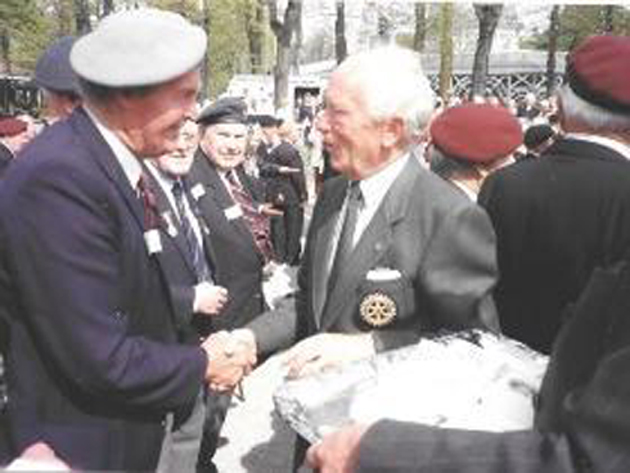
Hugh with the President of Danish Rotary at the celebrations for the 50th anniversary of VE Day.

The great-grandfather-of-four said: “We travelled through northern Germany and some of the towns were in complete devastation. They were really badly damaged and it was a startling experience to witness that.

“I even got some poor shots on my little camera as we went through.

“As we arrived in Copenhagen on May 4 I was driving the jeep. Half of Copenhagen were on the streets.

“The reception we got was something that I shall never forget.

“It was so different to anywhere we had seen in the previous six months.”

On the night of the liberation on May 5, 1945 Hugh and his regiment stayed in Copenhagen before travelling to Odense, the following day where they remained for the summer.

Hugh added: “My regiment moved back to Odense where we spent the summer and looked after the repatriation of Germans in Denmark.

“Germany was keen on looking after Denmark because it was a source of food.

“They called it the land of milk and honey.

“We made friends with Danish people and got to know quite a lot of the resistance people who did a fantastic job.”

As the liberation of Denmark happened a number of days before the end of the war was announced, VE Day was not as iconic for the Royals.

“VE Day brings back memories and so forth, but I was actually back in Odense in a school when the news broke through the radio that war was over,” Hugh continued.

“It was, to me, a bit of an anti-climax after the excitement of liberating Denmark days earlier.

“Obviously we celebrated then with the Danish people who were wonderful and it was a great experience.”

Hugh, who still lives at the family farm in Nether Heyford, was granted an early repatriation in the September of 1945, due to his family’s important work.

“We were short of food after the war and my family were farming so I needed to get back to help with that,” he said.

“I was 21 when I was demobilised and I settled in Northampton where the family farm was and that was my career from then on.

“That was the end of my connection with the army until 50 years later when we went back to celebrate.”

Hugh married in 1950 and also kept in contact with some of the Danish people he made friends with.

The veteran and his family went back to visit Denmark 21 years after the war ended.

“I stayed with a delightful family with whom I had befriended in 1945. They were all very musical and we sang all the old wartime songs and drank lots of Schnapps,” Hugh added.

“We also watched England win the football World Cup on their television.”

Hugh, who is one of the founding members of Northampton West Rotary Club, also visited Denmark again, alongside many other British veterans, in 1995 when the people of Denmark invited them to celebrate the 50th anniversary of VE Day.

Published in the Daventry Express – Monday May 11th 2020

The Story of Heyford (Extra): Heyford Residents who served in WW2

Many Heyford residents served in the Second World War 1939-1945 in the various services.

Hazel Adams – Red Cross Nurse, Royal Navy

Hugh Adams – Royal Dragoons

Albert Beharrell – Army

Richard (Dicky) Bishop-Bailey – Army

Ken Boyes – Army

Helen Cadman – WAAF (Women’s Auxiliary Air Force)

Arthur Charvill – Royal Navy & Army (MP)

Harry Charvill – Army

Charles Copson – Army

Tom Davies – Fleet Air Arm / RAF

Ralph Faulkner – Bevan boy / Army

Gordon Hayes – RAF

Marjorie Hamborg – Red Cross

Frank Higginbottom – Army

Frank Hyde – RAF

Donald Jafkins – Argyle & Sutherland Highlanders

Ernest Jones – Army

Bill Kingston – RAF

Nan Kingston – WAAF (Women’s Auxiliary Air Force)

Robert (Bob) Kingston – RAF (1939-1946)

Jack Lee – Royal Engineers

Joe Matthews – Army

Charles Masters – Army

George Masters – Royal Army Medical Corps

Sheila Masters – ATS (Auxiliary Territorial Service)

Sid Masters – Army

Ray Metcalfe – Army

Cyril Mitchell – Royal Army Ordnance Corps

John Moore – Merchant Navy

Rita Moore – NAAFI (Navy, Army and Air Force Institutes)

Alec Nial – Royal Navy

Bill Norrie – Royal Navy

Tom Oliver – Royal Navy

Joan Pearson – Woman’s Land Army

Dorothy Reeve – COD (Central Ordnance Depot)

Margaret Reeve – Woman’s Land Army

Derek Roberts – Royal Marines

Paul Rogers – Royal Army Medical Corps

William Rogers – HAC (Honourable Artillery Company)

Jack Rossiter – Royal Army Ordnance Corps

Dennis Searle – Merchant Navy

Frank Townsend – Army

Arthur Turland – RAF

Mabel Wallace – WAAF (Women’s Auxiliary Air Force)

William Wallace – Highland Light Infantry

Dennis Weaver – Royal Army Intelligence Corps

Bert Wilkinson – 13/18th Hussars

Rev Wintersgill – Queens Royal Regiment

And those sadly killed in action:

Charles Leslie Foster – Flight Sergeant (Air Gunner) RAF – Killed in Action 23.5.1944 – Aged 24

Frederick Heeler – Lance Corporal Army – Killed in Action 24.7.1944 – Aged 28

Frederick Watson – Sapper Army – Killed in Action 10.10.1944 – Aged 22

John Bennett Whiting – Lieutenant Army – Killed in Action 1.9.1942 – Aged 25

Published in The Prattler – July & August 2020

Many thanks to Hugh Adams for originally compiling a list and to those that have contacted us and added to it since the original publication via the

Facebook “Nether Heyford Past” group

Jez Wilson

Updated 15/10/2021 with Robert (Bob) Kingston – RAF (1939-1946) – thanks to Annie Powell

Jez Wilson

The Story of Heyford (Extra): Dear Diary – July 1955

July 1955

Dear Diary,

It’ll be the factory fortnight soon. Dad will spend his first week decorating as usual. The walls and ceilings are quite stained after a year, probably because my parents both smoke, as do most grown-ups. I dare say we’ll have the chimney sweep come first or it would be a bit of a waste of time decorating. The second week we may go on one of Mrs. Hilliers’ day trips to the seaside, although they are long days.

Last year we went to Blackpool in a boarding house for a week, but I know we can’t afford to go again this year. If we ever do go again I’ll be able to swim because the school are taking us for lessons at Midsummer Meadow outdoor pool. The water is heated by the cooling towers but the air can be really cold when you get out. The bottom is really rough to your feet and the water is murky sometimes.

I love our village green, especially in the summer because so much happens there. It’s the largest village green in the county and it’s great after it’s been mown because we can build dens. The grass won’t be there long though because they’ll want to play cricket at the weekend, so somebody will clear the cut grass away.

Mrs. Blaney has taken over the running of the Post Office from her dad. She was a school teacher once so I bet she knows most of the people in the village.

I was nearly late for school this morning. Dad had borrowed my school pen to write to his brother in Northampton. He is thinking of emigrating to Australia on the £10 package being offered to British citizens and dad wants to talk to him about making this drastic decision. The letter was on the table with the 2 ½ d for a stamp but no pen so I’ll have to go without it. He probably wrote out his bet with it. Does he know how hard it is to get a pen?

Mum was messing about taking the milk off the step before the birds pecked through the lid, then she stopped to talk to Mr. Wigley, the road sweeper, so the bell was ringing before we even reached the green. I ran the rest of the way. Blimey, I’m 10 now so I don’t need her to come with me, but she’s got a little cleaning job and she starts at 9 o’clock when I start school. It’s not like she spent hours in the bathroom as she only has what she calls “a lick & a promise” when she’s going to work.

I’m school monitor this week so I’m to give out the milk at break time and we are having a group photograph in front of the school, with all 70 of us in it, this afternoon. That should be a laugh, trying to get us all looking the same way and smiling. I think we might have country dancing with the boys this afternoon – they hate that. After the holidays I shall be on my last year at Bliss School because they are to build a new secondary school at Duston and those over 11 who don’t pass the 11+, and no doubt that’ll be me, will go by bus. Can’t wait.

Polly

Letter published in The Prattler – July & August edition 2020


The Story of Heyford: William Mann V3C5

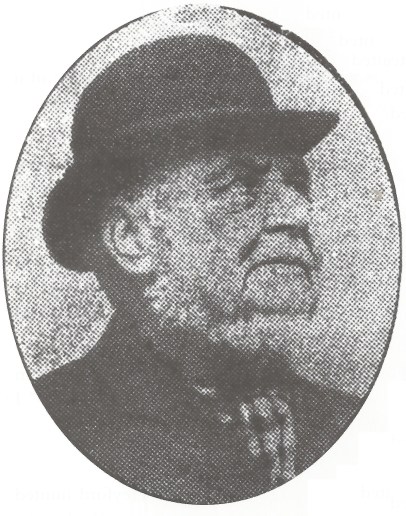
The words below are an exact copy from an article which originally appeared in the Northampton Mercury in 1911. It consists of an interview with Mr William Mann who was born in Heyford in 1833. It tells of life in Heyford in the middle 1800’s.

A Vigorous Veteran – Mr William Mann of Heyford

NetherHeyfordWilliamMann

There are not many stronger men of his age than Mr William Mann of Lower Heyford with whom I had a ‘crack’ the other afternoon. In his 79th year he still stands firm and erect, has a clear eye, a sound mind and a memory that takes him back to the ‘hungry ‘40s’. They were hungry indeed. The wages of farm labourers in his early days were not more than 8s. a week, and many capable men were working for less. Two good workers who he remembers were paid only 6s. which was increased to 7s. in one case when the man married. “Seven bob a week,” exclaimed Mr Mann in scorn, “to keep a nice bird and himself on.”

Like charity

Working folk in the villages, he said, never had meat in those days unless they stole it – and there was a good deal stolen. He remembers one man in the adjacent parish of Stowe who was sent to penal servitude for ten years for sheep stealing. The bread they ate was made from barley flour, and they were very glad to get that.

His old smock frock was the best suit of clothes he had. Like charity it covered a multitude of sins, and he remembers going without his trousers while his mother washed them — a performance which has been scarcely tolerable since the smock disappeared. “I wouldn’t give threepence for all the clothes I had at that time,” he said. “Boys nowadays are young gentlemen compared with what we were in my young days.”

Not good old days

No. Mr Mann would not go back to the old days. His pension now is nearly as much as men in the prime of life earned seventy years ago. Things are better in every respect. There is more liberty as well as better living, greater freedom for the mind as well as more nourishment for the body.

“Years ago in my parish,” he said, “the parsons would not bury unbabtised people. I remember one funeral which took place in the dark at eight o’clock at night. Some Staffordshire men were working with me at furnaces and they said they never saw anything like it before. We used some poetry about it:

“Not a sound of bell nor funeral note
As the corpse to the grave was hurried.”

“You know where that comes from?” he said, and I pleaded guilty to remembering something rather like it.

Sunday schools and charities

Continuing his reminiscences, Mr Mann told me that in those days no Sunday School was permitted except for a few privileged young people who went to the Manor House. He himself and some others used to walk to Bugbrooke Chapel on Sunday morning and take their dinner with them. Afterwards a school was started at the Heyford Baptist Chapel.

Another incident in his memory concerns the local Arnold’s Charity, which like many other charities has been a bone of contention. His father – “he was just such a man as me” – wrote up on the end of his house near to the Church: “No flannel or calico wanted here, but money according to the testator’s will” – and money was afterwards distributed.

An election reminiscence

The powers that be at Heyford were very Tory in those days but the people, said Mr Mann, were of a different sort. “Five out of six of them would have voted for the disestablishment of the Church in England as Well as in Wales.”

At one election a sightless old man called Blind Tom Robinson, being a freeholder, was taken in a Tory conveyance to vote at the booth on Northampton Market Square. There were no ballot papers in those days – the man had to say straight out who he wanted to vote for. When he was asked to whom his vote should be given, he shouted out boldly, “Althorpe!” for Lord Althorpe was the Liberal champion in that fight. “Who?” said the Tory who brought over, thinking the man had made a mistake. Blind Tom gave the same answer again and again, till the shoemakers and others standing by shouted “He’s just told you,” and then (when the man had voted) “Take him away,” but the Tory escort would have nothing to do with him on the return journey.

Blind Tom Was left stranded on the Market Square. He found his way to St James’ End, and then was given a ride in one of a number of coal wagons that were going to the Near Fields. “Where?” I asked. “The Near Fields,” he said, meaning the nearest coal fields in Warwickshire.

A hunting story

Another of my old friends stories was of the hunting field. Mr John Stanton of Upper Heyford hunted a good deal and was very fond of his joke. One day he was after the hounds, and near to Bugbrooke Mill a rev. gentleman’s horse refused a fence and pitched him over the hedge into the brook. “Help!” he cried. Mr Stanton, hot for the chase, looked to see who it was, and then said, “Oh, never mind him, he won’t be wanted till next Sunday.” It was then Monday morning!

Mr Mann has any number of these old yarns with their broad humour, redolent of the soil. Although the rigours of the old days killed a vast number, some of the survivors are extraordinarily fine old fellows. He was one of a family of twenty-four, and his father was a poor man. The old age pension of which Mr Mann is the proud possessor, was then beyond the wildest dreams of avarice. May he live long to enjoy it.

With many thanks to the Northampton Mercury

He did indeed live a long time

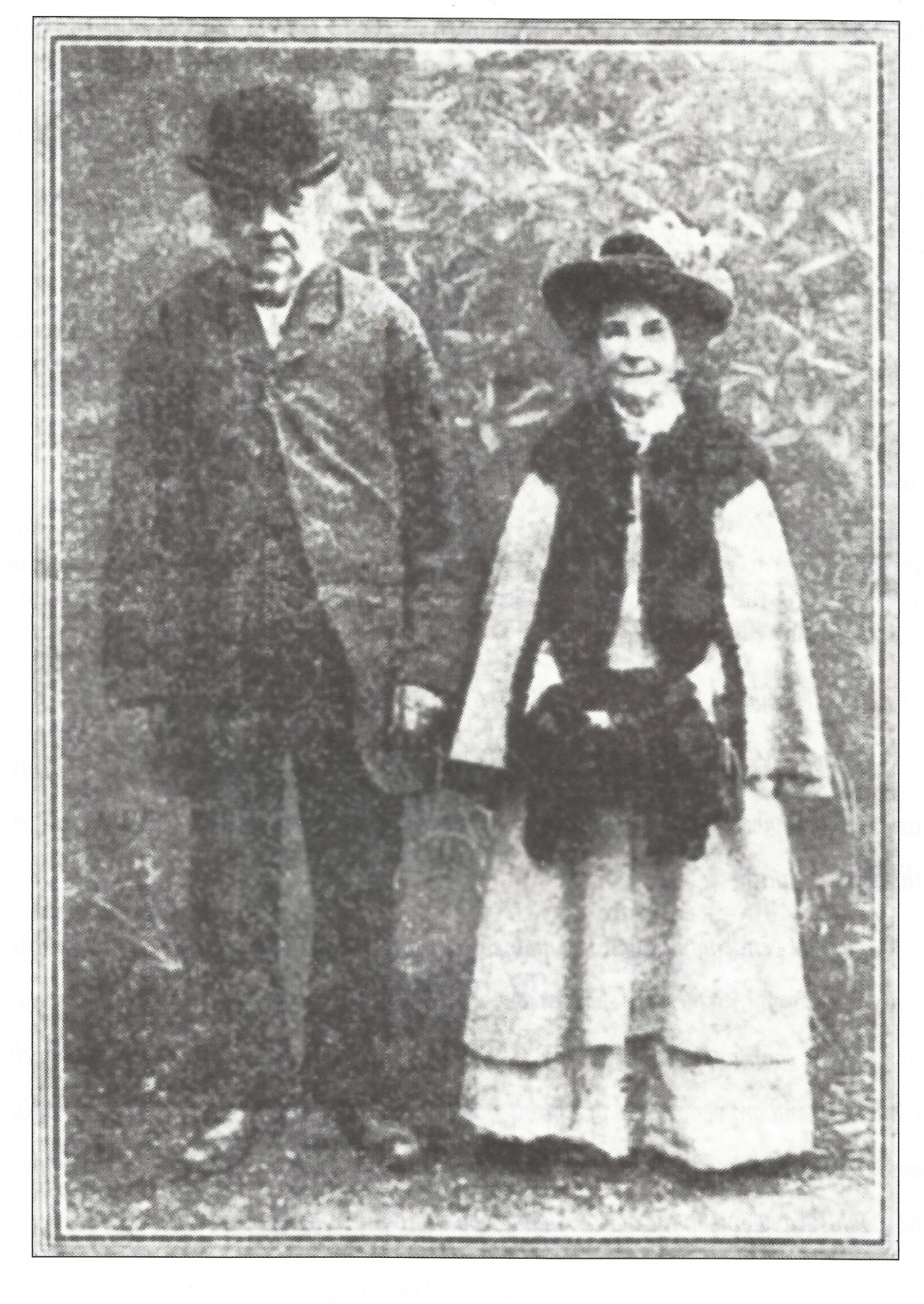
Mr Mann did indeed live a long time. His first wife Sarah had died in 1870, his second wife Sophia died in March 1913, aged 77. But on Saturday 19th December 1914 he was married again. His bride this time Was Elizabeth Green, aged 77, also from Lower Heyford. They were married at the Registry Office at Derngate in Northampton. The photograph below appeared in the Daily Chronicle on Monday December 21st, 1914 under the heading of ‘A Northampton Romance’.

NetherHeyfordMann

William Mann eventually died on December 23rd 1925, aged 92 and is buried in Heyford cemetery. With three marriages and a long life behind him it seems that the Mercury correspondent was absolutely correct in referring to him as ‘a vigorous veteran’.

~~

Extract from “The Story of Heyford” – Local book series published in the late 1990’s

Volume 3 of 4 | Chapter 5 of 17 | Pages 9 to 11

TheStoryOfHeyford_NetherHeyford_Footer

Heyford’s Historical Heritage  |  How the books were created

Index  |  Covers

The Story of Heyford: The Domesday Survey V3C4

All the information in this article was taken from ‘Domesday Book – History from the Sources’ published by Phillimore in 1979.

In 1066 Duke William of Normandy conquered England. He was crowned King, and most of the lands of the English nobility were soon granted to his followers. Domesday Book was compiled 20 years later. The Saxon Chronicle records that in 1085 ‘at Gloucester in midwinter . . . the King had deep speech with his counsellors . . . and sent men all over England to each shire . . . to find out . . . what or how much each landholder held . . . in land and livestock, and what it was worth.’

The Domesday Book was undertaken not only as a means of tax assessment, but also so that ‘every man should know his right and not usurp anothers’. Because it was the final authoritative register of rightful possession, the natives called it Domesday Book as an analogy to the Day of Judgement.

The Domesday Book described old English society under new management. Foreign lords had taken over but little else had changed. The chief landholders and those who held from them are named, and the rest of the population was counted.

The detail below shows the names of the primary landlords in Heyford and of those to whom the land was sub-let. It also shows the size and value of the land, the number of ploughs, and the working population, both slaves and free. It also shows the name of the person who held it prior to 1066.

Definitions
Hide. A unit of land measurement, generally about 120 acres. A measure of tax liability.
Virgate. A fraction of a hide, usually a quarter, notionally 30 acres.

Land of the Bishop of Bayeux
William Peverel holds (from the bishop) 2 hides and 1 ½ virgates of land in Heyford.

Land for four ploughs. In lordship 2 ploughs; 2 slaves;
7 villagers and 2 smallholders with 1 plough.
Meadow 10 acres.
The value was 10s.; now 20s.
Bishop and Aelid held it freely before 1066.

Land of the Count of Mortain
(Robert, Count of Mortain was a half brother of King William 1. He also held land in Weston Favell and many other manors scattered all over England.)

Walter holds 1 virgate and 3 parts of 1 virgate. Land for 1 plough, which is there, with 2 slaves.

A mill at 16s; meadow, 4 acres
The value was 10s; now 30s.
Bishop held it. The jurisdiction lies in Bugbrooke.

Ralph holds one virgate of land and two parts of 1 virgate.

The jurisdiction lies in Bugbrooke. Land for one plough; it is there.
Meadow 1 acre
The value was 5s; now 10s
Wulfstan held it.

Land of Gilbert of Ghent
Sasgar holds 1 hide and 1 ½ virgates of land from Gilbert in Heyford. Land for 2 ploughs.

In lordship ½ plough.
3 villagers with 1 smallholder have 1 plough.
Meadow 4 acres.
The value was 10s; now 20s

~~

Extract from “The Story of Heyford” – Local book series published in the late 1990’s

Volume 3 of 4 | Chapter 4 of 17 | Page 8

TheStoryOfHeyford_NetherHeyford_Footer

Heyford’s Historical Heritage  |  How the books were created

Index  |  Covers

The Story of Heyford: Bugbrooke Gasworks V3C14

Did you know that there used to be a gasworks serving Nether Heyford. It was wedged between the road and the canal half way between Nether Heyford and Bugbrooke. The tiny gasworks served the communities of Bugbrooke and Heyford until the trunk gas main was laid in the 1960’s, bringing natural gas.

David Blagrove describes in his book ‘The Waterways of Northamptonshire’ how its waste tar or gas water used to be taken away by canal to a refinery in the London area. ‘A wide beamed tank boat used to make about one journey each year to collect the tar, bearing upon its decked-in hold a two-wheeled cart with hand pump and tank. This was worked back and forth from the gas water pit to the boat, using the boat’s horse. After many laborious journeys the boat would be loaded.’

All that remains now is the small brick building which can just be seen from the road. The tank was originally flanked by poplar trees, but the site is now just a scrap yard and is flanked by sheets of corrugated iron.

(Reprinted from the Prattler April 1995)

Update 2020: The poplar trees, scrap yard and corrugated iron sheets are now gone.


~~

Extract from “The Story of Heyford” – Local book series published in the late 1990’s

Volume 3 of 4 | Chapter 14 of 17 | Page 27

TheStoryOfHeyford_NetherHeyford_Footer

Heyford’s Historical Heritage  |  How the books were created

Index  |  Covers

The Story of Heyford: Inquest, Heyford Wharf V3C13

The following extract is taken from the Northampton Herald, dated 26th November 1864. It refers to the inquest into the death of William Gibson. The cutting was supplied to us by Mrs Maggie Ingram, great grand-daughter of William Gibson.

“On Monday last an inquest was held at Heyford Wharf before W Terry Esq., county coroner, on the body of William Gibson, who was found drowned in the Grand Junction Canal at Heyford Wharf on the previous day. It appeared that deceased, a labourer, 53 years of age, went on Friday afternoon to the Boot at Heyford Wharf. He did not have a great deal to drink, but when he left between half past six and seven, was not quite sober. It was supposed by the landlord of the Boot that deceased was going straight home to Pattishall. He had left a can, however, at the side of the canal, where he had been working, breaking slag, and it would seem that he went to fetch it, and by some means fell into the water. When found, deceased ’s clothes were much torn; his head was badly wounded, as was also his left shoulder, and both his arms were broken. On Saturday, a steamer which passes up and down was stopped at the place where deceased was found by something catching in the screw. Mr Walker, surgeon of Bugbrooke, stated in his evidence that the above mentioned injuries, it was his opinion, had been caused by machinery of some kind after death. The cause of death he attributed to drowning. At the conclusion of the evidence the jury returned a verdict of found drowned.”

The reference to ‘the Boot’ must surely be a mis-spelling, as the pub at Heyford Wharf was called ‘the Boat’. It was the white building now known as Wharf Farm.

~~

Extract from “The Story of Heyford” – Local book series published in the late 1990’s

Volume 3 of 4 | Chapter 13 of 17 | Page 27

TheStoryOfHeyford_NetherHeyford_Footer

Heyford’s Historical Heritage  |  How the books were created

Index  |  Covers