Blog

The Story of Heyford: Mammoth Draw in aid of a Heyford Widow V2C4

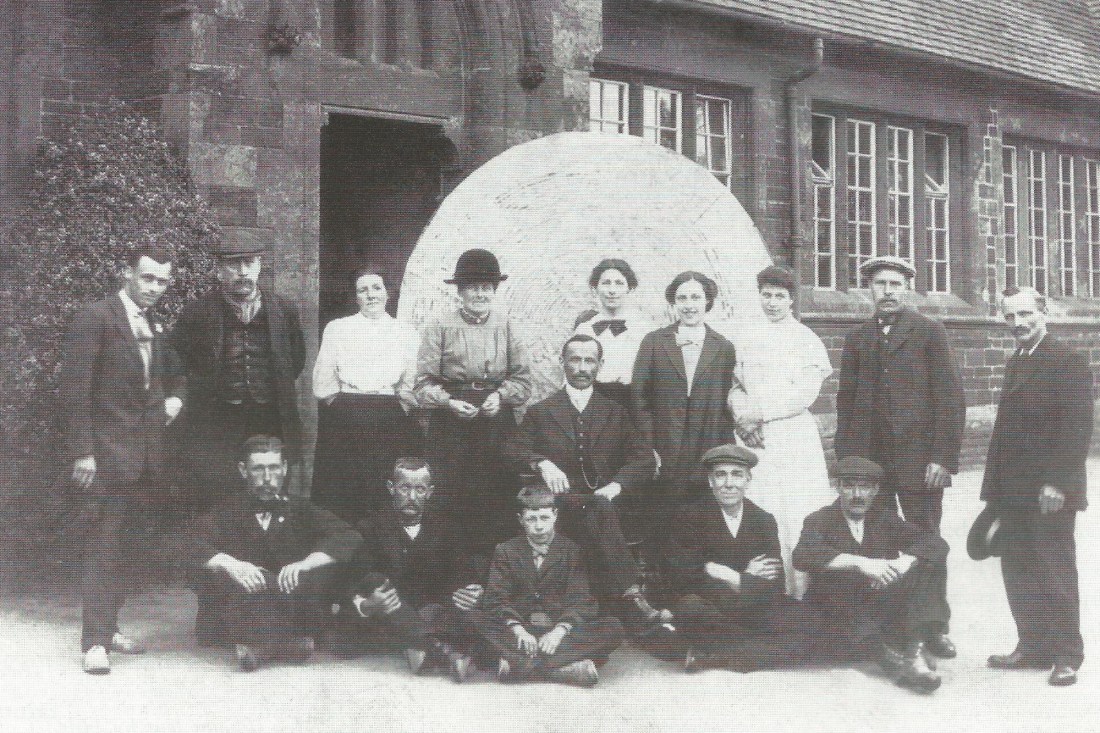
In the days before the existence of the welfare state the village was a caring community in which neighbours took care of the needs of each other. An example of this is illustrated in the photograph below which was taken in 1911.

On the left of the picture is Bob Browning who was born in Heyford in 1892 and died in 1997. He remembered the photograph being taken and it was he who gave us the information below.

A woman called Mrs Ephrain Collins became widowed with six or eight children. She lived in a stone cottage where the old folks bungalows now stand in ‘the Pound’. A photograph of this cottage appears in volume 1 of ‘The Story of Heyford’. The village held a raffle to raise money for her welfare. Raffle tickets were sold in the surrounding villages and stuck onto the circular board shown in the photograph. The winning ticket was established by firing a shotgun, owned by Mr Stanton Boyes of Upper Heyford, at the board.

The raffle raised around £2,000 which was invested on behalf of Mrs Collins to keep her in rent and coal for the rest of her life.

NetherHeyford_1911_BlissCharitySchool.jpg

Back row: Bob Browning, Mr Sargent, Mrs Roberts, Mrs Violet Browning, Mrs Gwen George, Win Earl, Mrs Sargent, Mr Gibson, David Browning
Gentleman in chair: Mr William Browning
Front Row: Mr Nightingale, Mr Roberts, Ted Sargent, Ted Wright, Mr Hobbs

~~

Extract from “The Story of Heyford” – Local book series published in the late 1990’s

Volume 2 of 4 | Chapter 4 of 11 | Page 8

TheStoryOfHeyford_NetherHeyford_Footer

Heyford’s Historical Heritage  |  How the books were created

Index  |  Covers

The Story of Heyford: Four Hundred Years of Bell Ringing V2C3

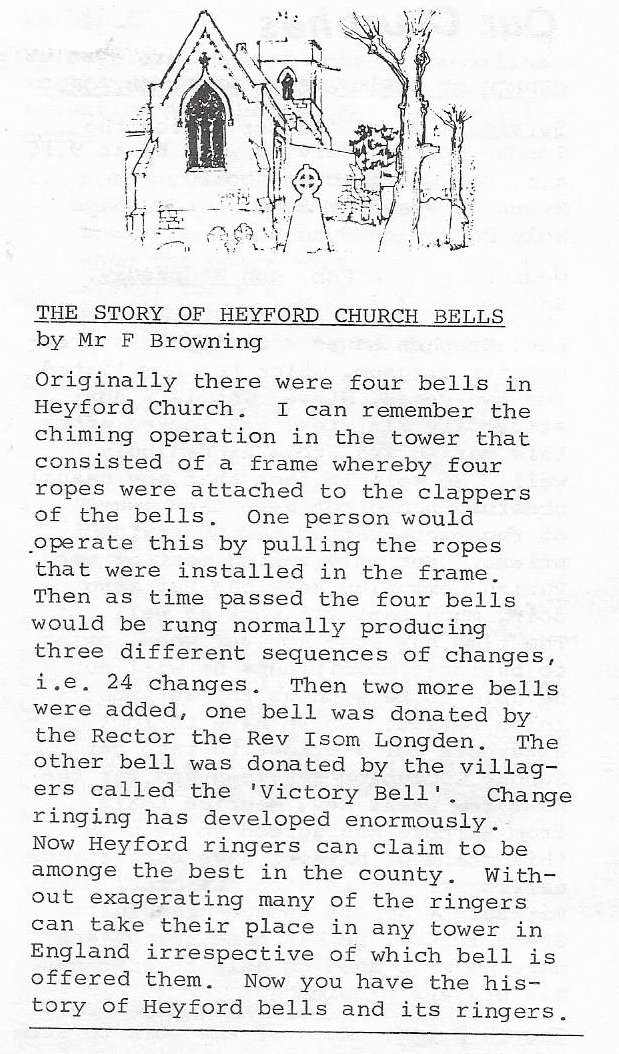
Bell—ringing in the parish church of St Peter and St Paul goes back at least four centuries. The two oldest bells are dated 1601 and one of these is inscribed ‘Thomas Morgan gave me to the church frank and free.’  Judge Morgan lived in the Manor House at this time. Both bells were cast by a founder called Watts and one is the heaviest bell in the belfry. It is the tenor, weighing over seven hundred-weight: that’s over 784 lbs. or 356 kilos. Another bell was added in 1638, cast by Watts II, and a fourth in 1704 cast by H. Penn. With these four bells it was possible to ring a maximum of 24 changes or sequences (English Change Ringing is based on mathematical sequences rather than musical composition). This was how it remained for 250 years.

Originally there was an external door in the tower where the bell-ringers could gain access. In 1855 there was extensive restoration work in the church which included opening up the tower inside, moving the organ and sealing off the outside door. The heavy wooden door which was removed became the one now hanging as the front entrance to the Old Sun pub. This would be appropriate as the vestry meetings used to adjourn to the Old Sun. Of course, it is still the tradition today for the bell-ringers to finish off every Friday-night ringing practice with a drink in the local – even if, for some reason, ringing hasn’t actually taken place!

During the 1930s the ringers included Mont Smith (John Smith’s grandfather), Fred Browning, Charlie Foster, Bernard Kingston, Harry Eales and Dick Capell. At this time, ringing only usually took place on holy days such as Christmas or Easter; for church services, the bells were just tolled. During the Second World War, bell—ringing generally was banned and only to be used as an alarm for the community. However by 1943 the threat of invasion was considered over and the ban lifted.

A new era and two new bells

This spelled a new era for the Nether Heyford bells. Fred Browning, as the tower captain, recruited and trained a new generation of ringers, including Ted Garrett and Hilda Collins who are still ringing today. Fred also developed handbell ringing at Christmas time. This new enthusiasm was further encouraged by the addition of two new bells after the Reverend Isham Longden, rector from 1897 to 1942, left £100 in his will for a new bell. Even in the 1940s, this provided only a quarter of the amount needed to cast and hang the bells, so an active fund—raising campaign started in the village.

Coffee mornings, whist drives and sales helped to raise £400 and on 21st September 1946, two treble bells were dedicated in church. They were made in London by Gillett and Johnson and hung on a metal frame above the others who were still on a timber frame.

One was called the Victory Bell and there is a list from 1943 of villagers who donated funds towards it. The list includes the rector “Mr” (sic) Mortimer, Harry Allen the verger, Jack Capell the butcher, William Wakefield Whitton, the Kingston family, the Brownings, the Collins’s and the carpenters shop. Most contributed £1, some as much as £5 and some gave ‘two ‘n’ six.’ Now with six bells, the number of possible changes increased dramatically from 24 to 720.

Repairs

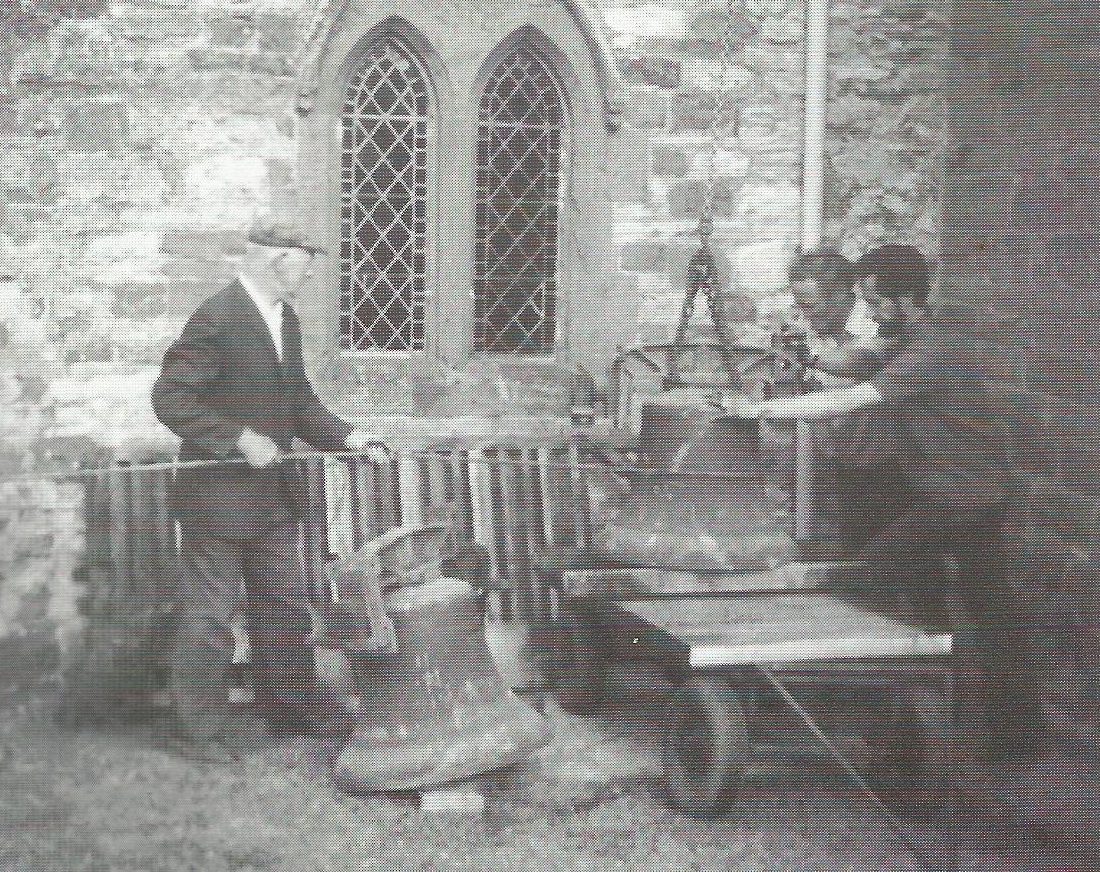
In 1979, the four older bells on their wooden frame needed to be rehung and refitted. They had been taken down before but this was the first time in nearly 400 years that they had left the village. They were taken to Taylors of Loughborough and their transport was provided by Jeremy Rice. An eight mile sponsored walk from the church to Flore and Stowe was organised to help raise funds.

Lowering the bells

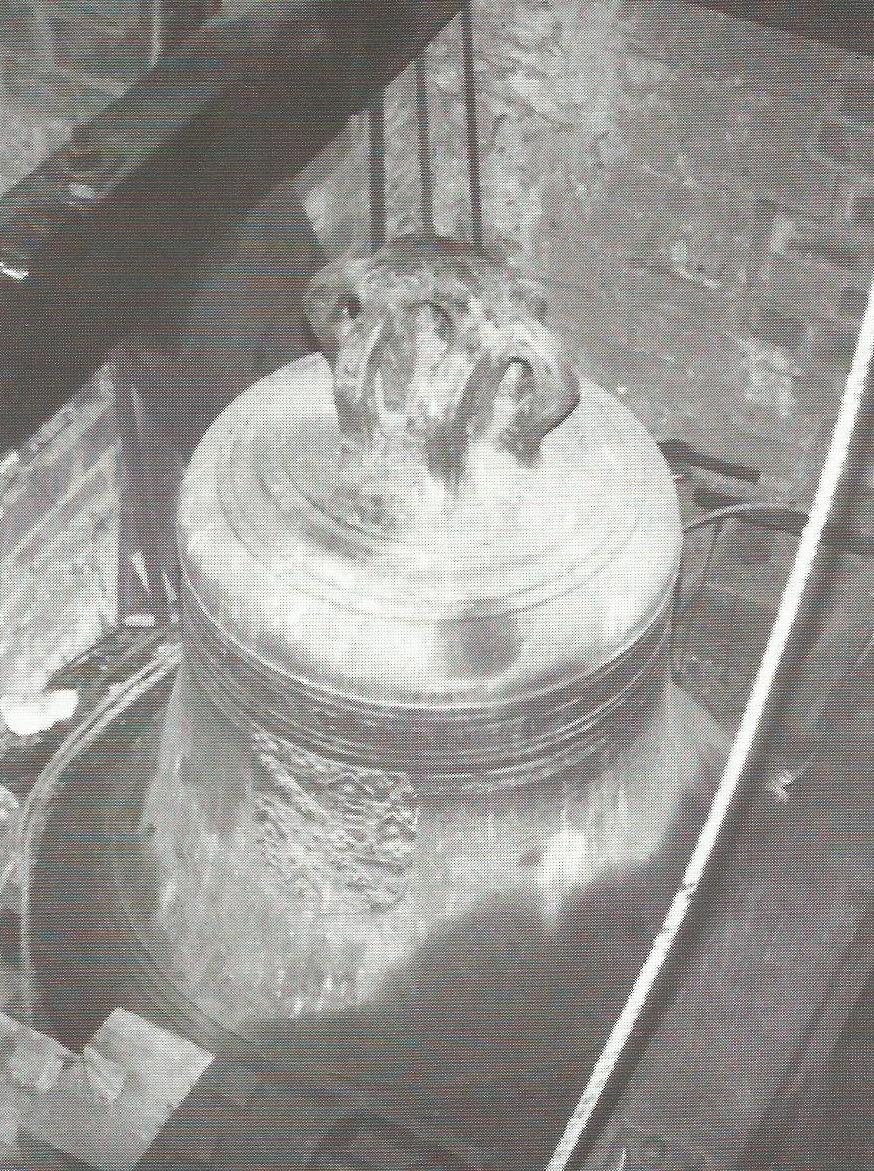
NetherHeyfordChurch_Bells1

The Tenor bell of 1601 bearing the Morgan family crest

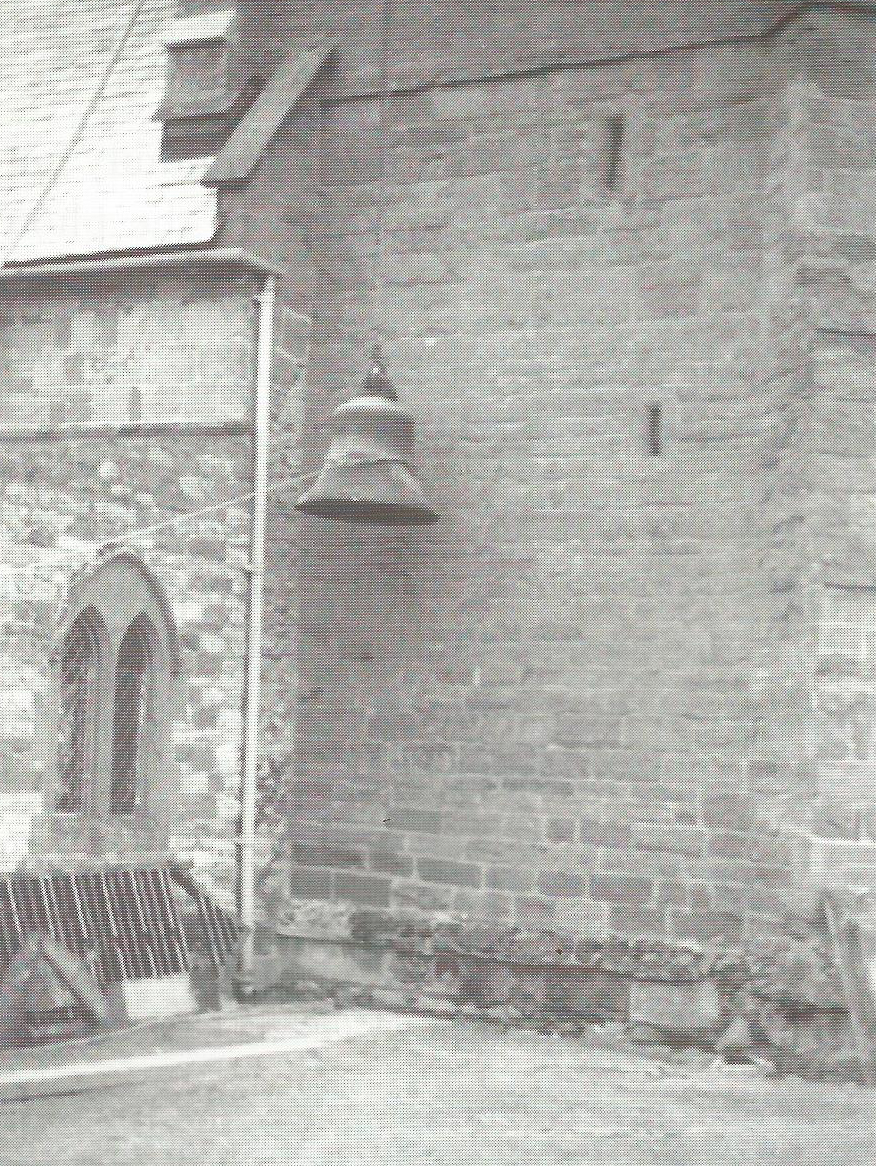
NetherHeyfordChurch_Bells2

Removing the bells to Loughborough in 1979

NetherHeyfordChurch_Bells3.jpg

Left to right: Wilf Denny, Bill Collins, Malcolm Chown

Photos lent by Hilda Collins

In 1995, a quarter peal was rung to commemorate the 50th anniversary of VE day. This consisted of 1260 rings non stop and lasted for about an hour. In 1996, the church celebrated the half-century of the treble bells with the Heyford Morris Men, handbell ringers, a lone piper, John Anderson, and a special commemorative service.

Sarah Crontear with thanks to Hilda Collins and Ted Garrett

~~

NetherHeyfordChurchBellsFredBrowning

Article Published in The Prattler – February 1989 – Fred Browning

~~

Extract from “The Story of Heyford” – Local book series published in the late 1990’s

Volume 2 of 4 | Chapter 3 of 11 | Pages 6 & 7

TheStoryOfHeyford_NetherHeyford_Footer

Heyford’s Historical Heritage  |  How the books were created

Index  |  Covers

The Story of Heyford: The Crawley dynasty, High church and Protestantism V2C2

The Crawley dynasty and the struggle between the high church and protestantism.

Much of the information in this article came from the PhD thesis written by Alan Horsley in 1985 entitled ‘The Crawleys’. Alan Horsley had been Rector of Heyford and Stowe-Nine-Churches from 1971-1978. Other information was provided by local people.

For the entire nineteenth century the parish churches of Heyford and Stowe were run by the Crawley family. The Crawley dynasty began when Charles Crawley became Rector of Stowe in 1789. He was descended from Sir Francis Crawley of Luton, born in 1584, who had been a loyal supporter of Charles l in the struggle between monarchical high churchmanship and puritan parliamentarianism. Charles was one of the early members of the Oxford Movement, a clerical movement which developed the principles of High Church and which had a significant influence on religious thinking during the Victorian era.

The family settles in Heyford and Stowe

The family connection with Stowe began in the year 1717 when Charles Crawley’s great grandfather John Lloyd bought the advowson of Stowe lX Churches for £1,055. john Lloyd’s grandson, Rev John Lloyd became rector of Stowe IX Churches and Heyford until his death in 1788. In 1789 Charles Crawley (Rev John Lloyd’s nephew) became rector of Stowe IX churches and Henry Jephcott became rector of Heyford.

Charles Crawley remained rector of Stowe until his death in 1849 at the age of 95. He set high standards for his church with two services on Sundays, both with sermons. This was at a time when most churches had only one service, or even only once a fortnight, or not at all in bad weather.

In 1800 Henry Jephcott died and Charles’ nephew John Lloyd Crawley became rector of Heyford at the age of 25. He remained at Heyford until his death in 1850. Therefore both Stowe and Heyford were now being run by the Crawley family with their strong High Church principles.

Lord of the Manor

However this was at a time when Protestantism was gathering popularity in the area. Until 1759 the two manors of Upper and Lower Heyford were largely in Catholic hands. With Thomas Morgan the manor house at Upper Heyford was a Catholic centre from 1558 to 1604. Although the manor house at Upper Heyford fell into decay during the Commonwealth period the property remained in Catholic hands until 1758 when the estates were sold in lots by public auction.

The manor house at Lower Heyford was bought by Henry Jephcott and passed to John Lloyd Crawley on his death in 1800. So John Lloyd Crawley was both rector and Lord of the Manor. However his influence was limited because the manor house came with only 30 acres. Because the catholic estates had been broken up into small lots, there were several landlords in the area, each with power to exert religious and political views of their own.

Tensions between High Church and Non-Conformism

Throughout the 1700s and 1800s there was a growth of Protestantism. The Quaker movement had been established in 1649 and meeting houses were opened in Flore in 1678 and Bugbrooke in 1692. In the absence of any strong High Church landlords, non conformism was able to flourish. Towards the end of the 1700s Baptism and Methodism were developing. The Baptist chapel opened in Heyford in 1826 and the Methodist one in 1835. Therefore the Crawley family had come into an area saturated with Protestantism.

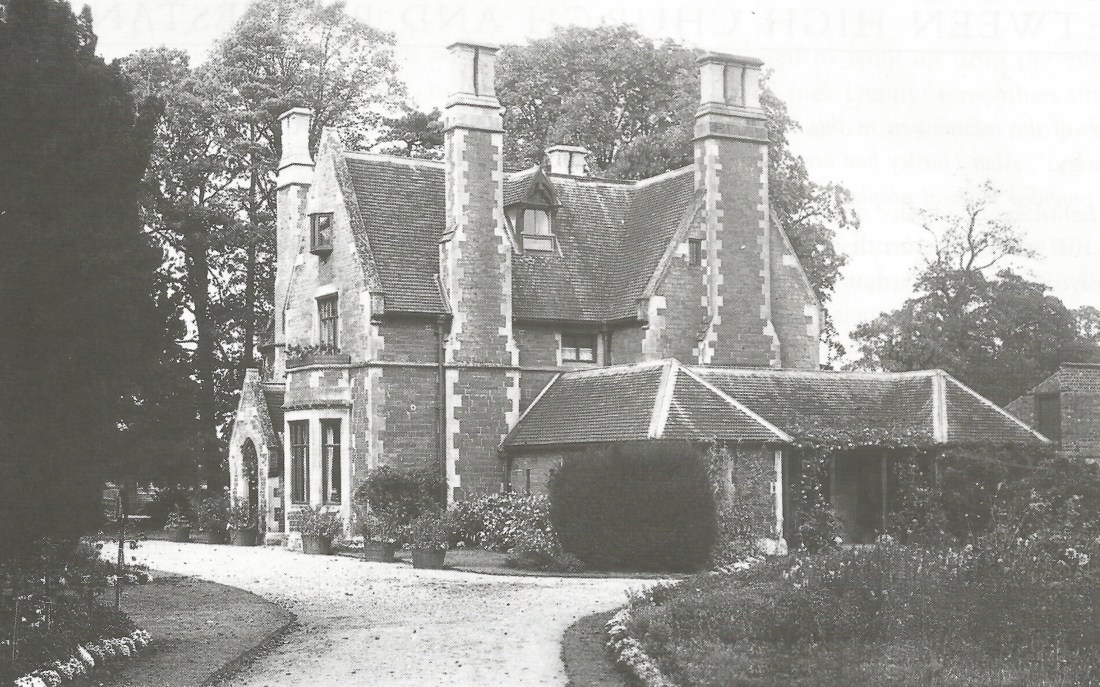
The Rectory

NetherHeyford_Rectory

The Rectory was built in 1851 by the Crawley family. It was used as the Rectory until 1969 when it was sold, and the new Rectory built within its former garden.

In 1849 Charles Crawley died at the age of 95. He was succeeded by one of john Lloyd’s sons Henry who remained rector of Stowe until 1895. In 1850 john Lloyd died and was succeeded at Heyford by one of his other sons Thomas. So for a second generation, both churches continued to be run by the Crawleys.

The Rectory at Heyford was built in 1851 and Thomas lived there rather than at the manor house. Thomas, who was born in 1815, remained rector at Heyford until his death in 1897. He continued all the principles of high church that had for so long been a part of his own family values. However there remained tensions between the church and the growing number of non-conformists in the village. These tensions are well illustrated by the following story.

Under pressure from the non-conformists, an act of parliament in 1847 made provision for the establishment of cemeteries. However, in practice it was often many years before they were opened. Meanwhile only the parish churchyards were available. All Englishmen had the right to be buried there but only a Church of England clergyman could officiate. The prayer book of 1662 dictated that if the deceased person died upbaptised ‘the order for the burial of the dead’ should not be used. Therefore the Baptist tradition involving baptism in adulthood rather than at birth meant that those who died young, before baptism could take place, could not be considered Christians.

Frederick William Marsh was born in 1876, the third son of Alfred and Emma Marsh. They were a Baptist family. He died, aged 11 in 1887. The saying ‘the sun shines on the righteous’ ‘comes from the fact that the sun travels from east to west across the churchyard with the south side receiving most of the sun. ‘Good Christians’ were buried on the sunny side. Those considered less so were often buried on the North side where less sun reached. A grave was selected for Alfred Marsh on the very north-east edge of the graveyard, often thought of as the devil’s corner. The burial laws amendment act of 1880 allowed Baptist ministers to preside at such burials. However for reasons we don’t know, the service on this occasion was conducted by Thomas Crawley. ‘It is commonly asserted in the village that he conducted the service over the walls of the rectory garden next door’.

This same story was recounted to me by Bob Browning in 1996, only a year or so before he died. Bob was born in 1892 and was a grandson of Alfred Marsh. Frederick William was the uncle that he never knew. Quite why Frederick William was not buried in the newly established cemetery, we don’t know. The Lychgate was built in 1885, but perhaps the ground inside hadn’t been fully prepared. Bob told me that Alfred Marsh was so incensed by the treatment of his grandson that he took a leading role in getting the cemetery established.

The end of an era

Thomas Crawley died on 12th May 1897 and was buried in the Crawley vault in the graveyard. Bob Browning told me that there were seven coffins in the vault, three either side and one across the top. Access to it was down a few steps, and when the last coffin was placed inside it was bricked up. The vault is on the east side of the graveyard but is unmarked by a gravestone.

Thomas was succeeded at Heyford by Rev Henry Isham Longden. His brother Henry, who had been Rector of Stowe had died two years previously in 1895. The Bishop of Leicester, in a letter to Henry Isham Longden on his appointment at Heyford, wrote:

“Dear Mr Longden,

I am happy to hear you are coming again to the Northamptonshire Archdeaconry. I wish I could be present at Heyford at your institution, but I fear that will not be possible for me on Oct. 26th.

The Crawley brothers were very peculiar men – men of good connection and of high minded-principles and cf the old Churchmanship well known to them before the Oxford movement ever began! The Rector of Stowe 9 Churches upon a stout cob carried ‘the Tracts for the Times’ about the Country as they came out: with his own comments upon them to the less instructed clergy. Your predecessors son is now his uncle’s successor at Stowe, and will know much about Heyford of course. I have often been there, and I much admired both brothers, though their views were far behind the times for practical application.

With renewed good wishes,

Believe me, Very truly yours, F. H. Leicester”

So for the entire nineteenth century Heyford and Stowe churches had been run by the Crawley family. Although none of the succeeding rectors at Heyford have been Crawleys, the Crawley patronage of the church continues. In 1977 a festival and pilgrimage around the two parishes was organised in recognition of the family’s enormous contribution to the life of the Church of England, both at local and national level.

Stephen Ferneyhough, with very many thanks to Alan Horsley’s thesis

~~

Extract from “The Story of Heyford” – Local book series published in the late 1990’s

Volume 2 of 4 | Chapter 2 of 11 | Pages 3 to 5

TheStoryOfHeyford_NetherHeyford_Footer

Heyford’s Historical Heritage  |  How the books were created

Index  |  Covers

The Story of Heyford: Heyford’s First Motor Vehicles V2C1

In the 1920’s cars were very few and far between. Groups of people used to walk up from the village to the A5 , then known as The Turnpike, to watch for cars. Doris Lovell nee Denn remembers sitting on the bank b the Stowe turn waiting for cars to go by , which they did at a rate of only one or two an hour. When one passed they all waved to the occupants.

On 25th May 1978 the Mercury and Herald published an article about the village. It included an interview with Alf Garrett who was for many years clerk to the Parish Council. In it he said, ‘When I was first married I earned £2.10s per week as a farm foreman. The farmer wanted someone to learn to drive and offered me the job. I jumped at the chance and learnt down at Grose’s in 1920. At that time there were only two cars in Heyford.’

Major Campbell, who lived at Heyford Hills, was one of the first in the village to own a car. It was a Morris with a canvas hood. He was a generous man. If he saw people walking along the road, he gave them a lift into the village.  He also gave pocket money to the children if they watched to see when it was clear for him to pull out of the drive.

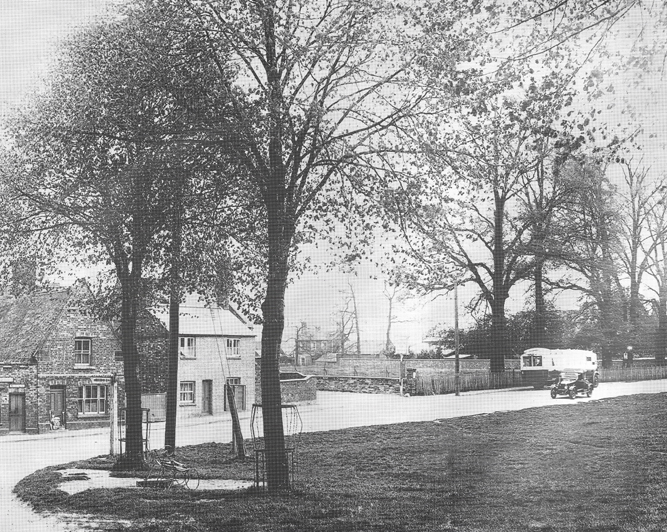
Heyford’s first motor bus 

NetherHeyford_FirstMotorVehicles

Photo lent by Judy Armitage (daughter of Mrs Blaney)

Mrs Blaney recalled how the village’s first bus was actually a coal cart. It was owned Harold Botterill of Bugbrooke and was used during the week to carry coal. On Saturdays he put a wooden structure on top with seats in it, and with this he made two journeys into Northampton and back with passengers.

There was also a bus from Weedon to Northampton. If walked up the lane to Upper Heyford you could catch the bus there.

~~

Extract from “The Story of Heyford” – Local book series published in the late 1990’s

Volume 2 of 4 | Chapter 1 of 13 | Page 2

TheStoryOfHeyford_NetherHeyford_Footer

Heyford’s Historical Heritage  |  How the books were created

Index  |  Covers

The Story of Heyford: Scrumping… V1C13

Do you remember . . . .
– Ben’s Orchard, and scrumping therein?
– The orchard on the Manor grounds, opposite Ben’s orchard (harder to get into for scrumping)?
– The dutch barn next to the orchard where the apples, having been scrumped, were eaten?
By the way, who was Ben?

~~

Extract from “The Story of Heyford” – Local book series published in the late 1990’s

Volume 1 of 4 | Chapter 13 of 13 | Page 32

TheStoryOfHeyford_NetherHeyford_Footer

Heyford’s Historical Heritage  |  How the books were created

Index  |  Covers

The Story of Heyford: Bert Wilkinson V1C12

In 1953 George Warr succeeded Mr Woods as headmaster, and in 1955 he and Bert Wilkinson formed the Heyford cub pack to save the younger boys having to travel to Flore. Like the scouts, the cubs also met in the school hall and regularly numbered over twenty during the 1950s. Bert Wilkinson went on to become Group Scout Leader. He eventually retired in 1977 but continued to take an active interest in ‘his boys’ throughout his life. In 1985 Mr Mike Lane, the county commissioner presented him with the ‘Silver Acorn’, an award of special distinction to the scouting movement. Mr Lane described him as a man who by his example and leadership had set the standard for the future of the generation of boys with whom he had worked over many years. Bert Wilkinson continued to live in Heyford until he died in December 1996.

~~

Extract from “The Story of Heyford” – Local book series published in the late 1990’s

Volume 1 of 4 | Chapter 12 of 13 | Page 32

TheStoryOfHeyford_NetherHeyford_Footer

Heyford’s Historical Heritage  |  How the books were created

Index  |  Covers

The Story of Heyford: Memories of Heyford Scouts in the 1950’s V1C11

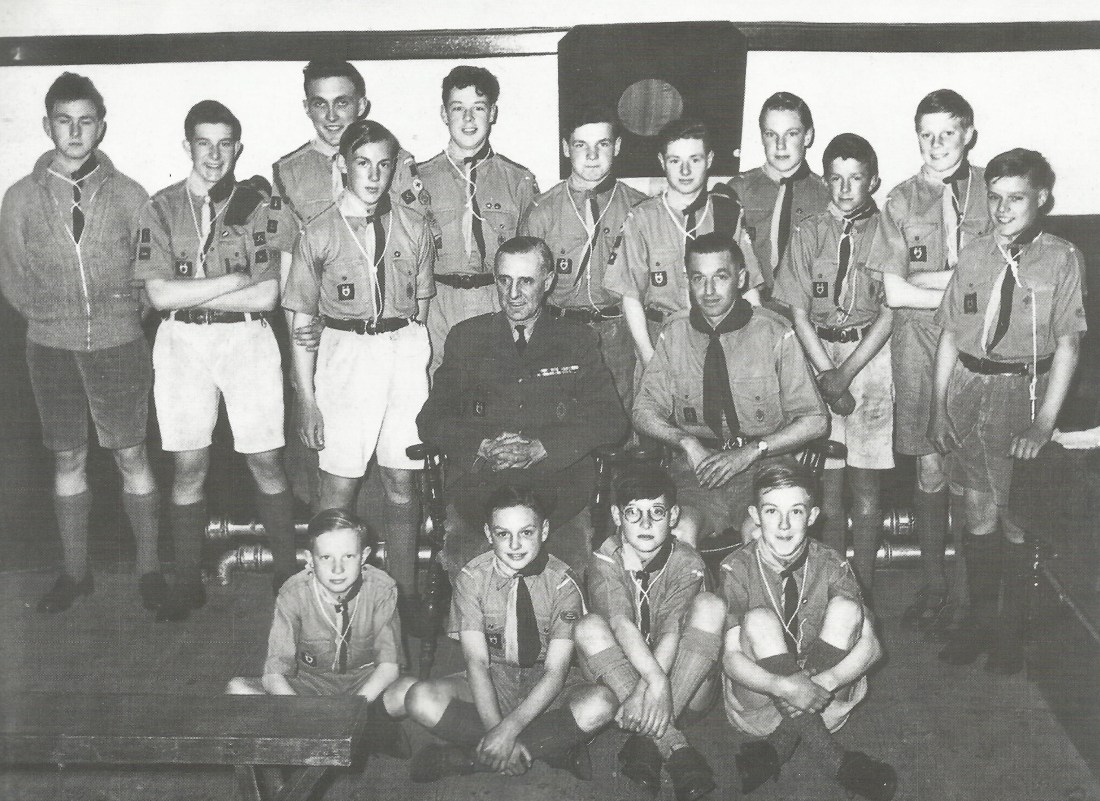
Heyford Scouts was formed in 1952. The School headmaster, Mr Woods, was the scoutmaster, ably assisted by Mr Bert Wilkinson. During the 1950s it had a thriving troop of more than 20 boys. The troop was split into several patrols – peewit, kingfisher, etc., each with their own patrol leader, and weekly meetings were held in the school hall.

The Scout Troop in the 1950s

StoryOfNetherHeyford_Scouts1.jpg

Back row: Terry Randall, Norman Denny, Tony Lovell, David Butcher, Brian Eales, Anthony Hinnick, Colin Haynes, Michael Eales, John Smith, Colin Harrison, John Haynes
Seated centre: Gordon Cabbam, Bert Wilkinson 
Front row: Michael Royle, Roger Wilkinson, Richard Danby, Ken Garrett

Photo lent by Mrs Mary Butcher

Gang shows
Gang shows were very much a part of the scout year and were always a great success. They were presented on stage in the church rooms on the corner of Church Street and Church Lane and consisted of the normal songs (such as Ging Gang Gooly) and sketches. Rehearsals seemed to go on for ever and parents must have torn their hair out trying to provide costumes for some of these. The show was sometimes taken on tour for one night only to places as far afield as Flore, and it was just as daunting performing to strangers as to family and friends.

Soap Box Derbys
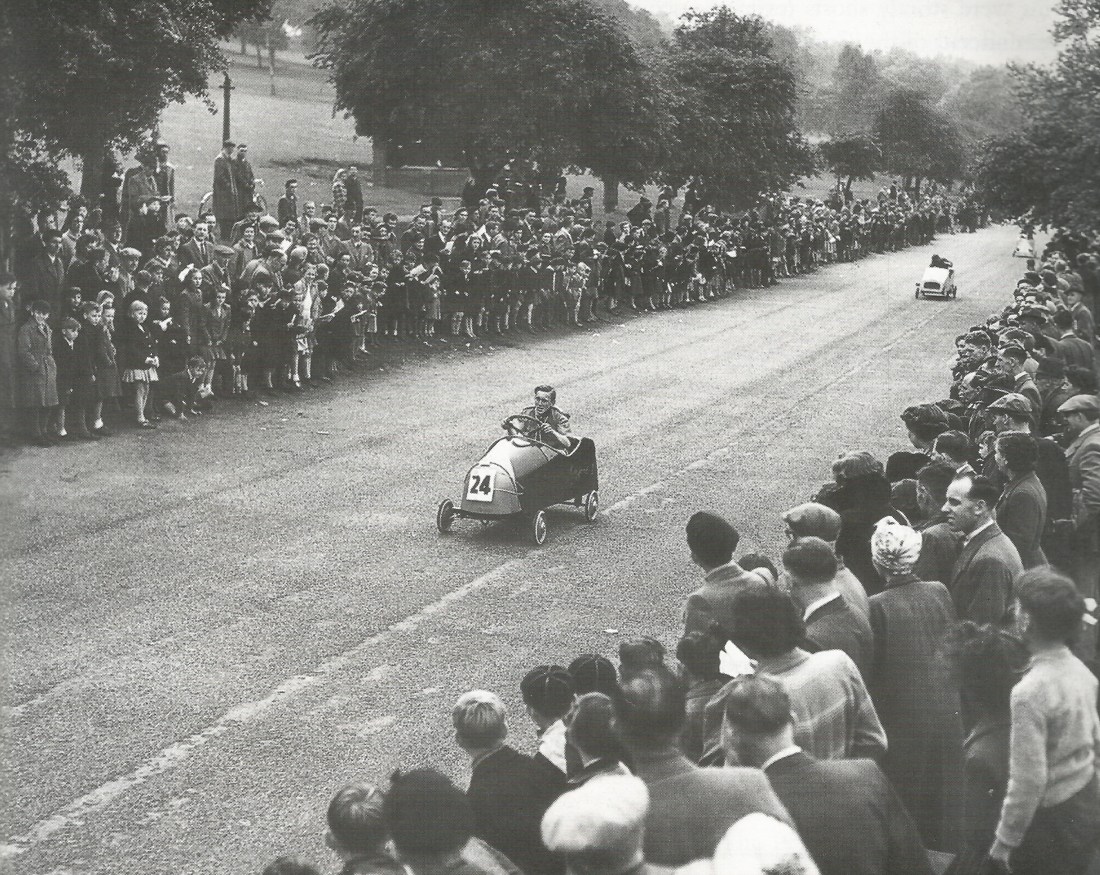
During my time in the scouts the troop entered the National Soap Box Derby. We built our soap box with a lot of help from Grose’s garage, and to our great delight we reached the national final held in Morecambe. To reach there we had to leave the village at about five o’clock in the morning and didn’t return home until late. The excitement of winning, however, got us through. The ‘car’ was on display for a month in the garage showroom, which at that time was in Marefair where the Barclaycard building is now situated. Boy, were we proud!

David Butcher winning the Soap Box Derby at Morecambe

StoryOfNetherHeyford_Scouts2

Photo lent by Mrs Mary Butcher

Camps
From later Spring until early Autumn several weekend camps were held fairly locally, and once a year the annual camp took place. This was always further afield and normally lasted for two weeks. One of these camps took us to the Pendle Hills in Lancashire, and inevitably it was raining when we arrived. After showing us to the field in which we were to make camp, the farmer pointed to the hill behind us and solemnly declared that, “If you can see those hills it’s going to rain, and if you can’t see them it’s already raining.” If memory serves me right we had about one day of dry bright weather in the whole fortnight and I seem to remember using washing bowls to scrape mud away from the front of the tents. No-one suffered any ill effects from this experience however and all returned to the village quite healthy.

During these camps one patrol was responsible for cooking the breakfast each morning and the others all went for an early morning run accompanied by the scoutmaster in order to work up an appetite. Each patrol took it in turns during the week so that nobody missed out on the joys of the run. Breakfast consisted normally of porridge made in a large billycan and coated with golden syrup diluted with hot water. This was followed by bacon and omelette. It was never a surprise if you found a generous helping of grass in either or both courses, but it never had any adverse effects on anybody.

The morning ablutions were always an adventure as we normally washed in cold water. One camp in the Lake District was near to a small stream and this was used by one or two hardy souls.

Street cred
Uniforms were strictly shorts (even the scoutmaster wore them!) and the distinctive hats with the stiff brim, reminiscent of the Canadian Mountie. These were terribly difficult to get flat again once you had bent it out of shape. This often happened, especially at camp.

I spent many pleasant and happy years in the scouts and during that time learned to cook, tie knots (some of which I still use, especially the granny), semaphore and Morse codes (all of which I have forgotten!). I also learned that it was easy to be polite and helpful and that this didn’t damage your street cred. I feel that I am better for the things I did and look back to this time with much pleasure.

Ken Garrett

~~

Extract from “The Story of Heyford” – Local book series published in the late 1990’s

Volume 1 of 4 | Chapter 11 of 13 | Pages 30 to 32

TheStoryOfHeyford_NetherHeyford_Footer

Heyford’s Historical Heritage  |  How the books were created

Index  |  Covers

The Story of Heyford: The changing character of the village during the 1950’s V1C10

Until the second world war, the village was largely a rural community and the population had been slowly declining. The school had been rebuilt in 1880 to accommodate 170 children at a time when the population was about 800. By the early 1950’s the population had fallen to 700 and the average attendance at school was only 70. This reflected not only the smaller population, but also the reduction in the proportion of younger people. The post war baby boom hadn’t yet hit us. Therefore Heyford in the 1940’s and 1950’s was taking on the profile of an ‘elderly’ village. An article in the Mercury and Herald in November of 1969 recorded that there were 24 residents in the village over the age of 80.

With the end of the war, young people were finding it increasingly difficult to get work in the village or to afford housing. The farms were becoming more mechanised, and the small cottage trades were being replaced by large new businesses such as British Timken which enticed the young men away with modern working conditions and good wages. The young people were therefore beginning to find work and homes outside the village.

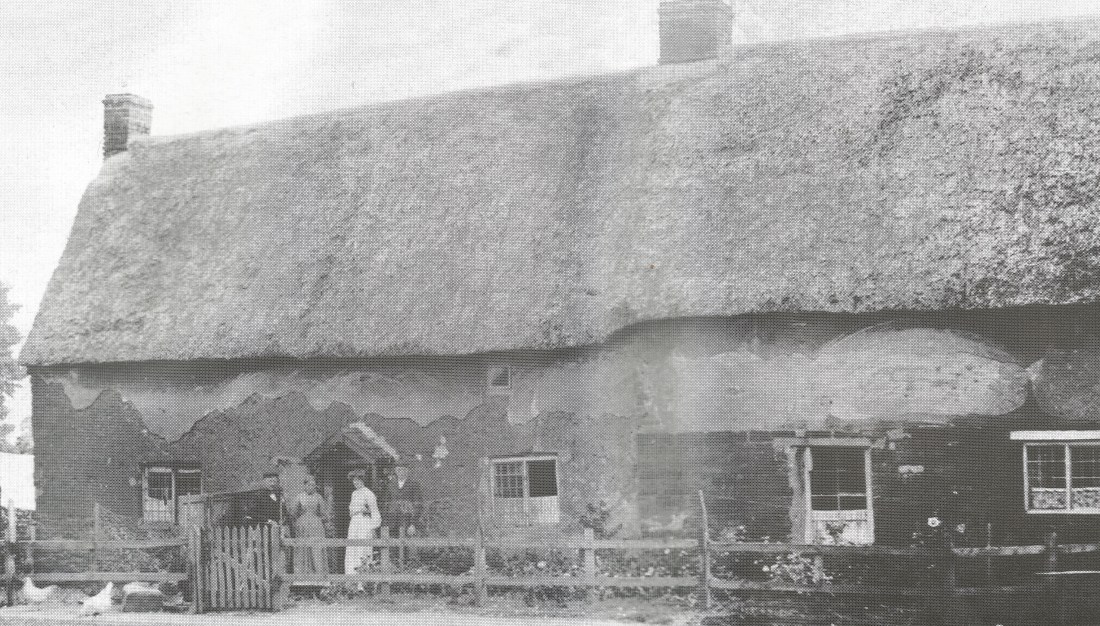
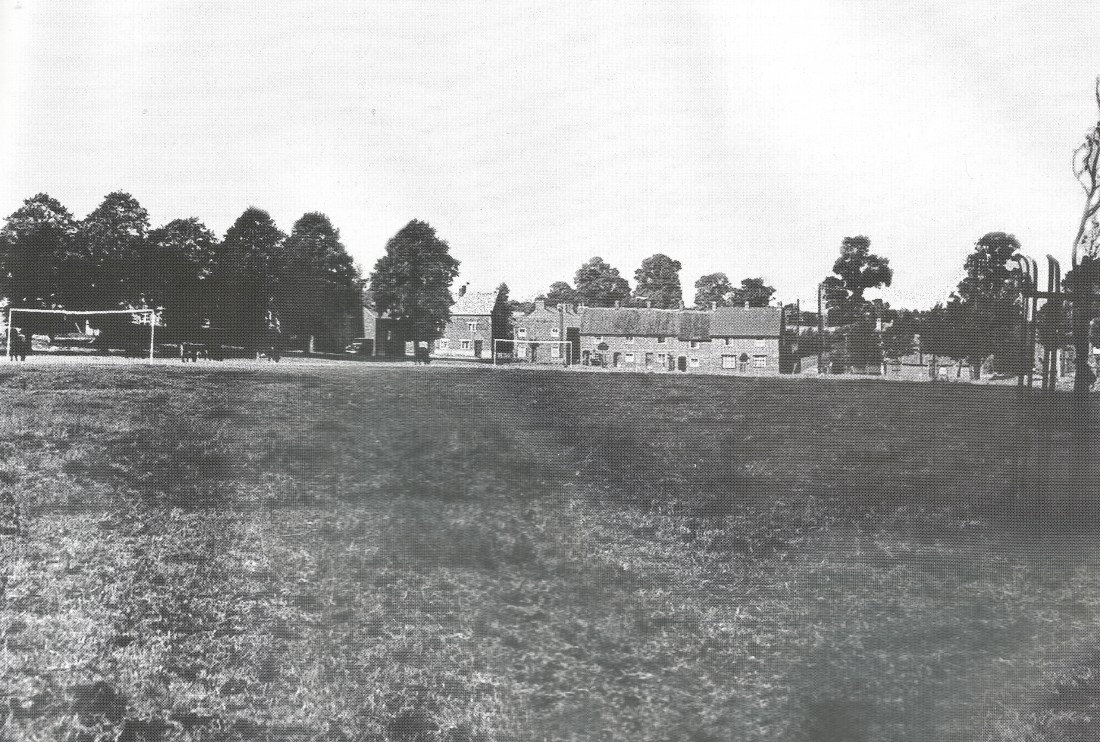
Some of the older buildings were becoming derelict and uninhabitable. Many of the old stone and thatch buildings were demolished and replaced by modern homes. These included three cottages on the far side of the green where Pound is now situated, four cottages at the bottom of Furnace Lane, Mrs Lilleys cottage between the Post Office and Methodist Chapel, and Brook Farm. On reflection it seems sad that we weren’t able to preserve these buildings. However some of the older residents recall how they didn’t always live up to their chocolate box image. They were often dark, damp, and infested with mice. Houses like this were expensive to maintain but the families that occupied them didn’t necessarily have the funds to do it. It was therefore quite understandable that people wanted to swap them for the modern comfortable housing which was becoming readily available. During the 1960’s the village began to change dramatically.

HEYFORD TOWN
Seems unbelievable, but could be true, and wouldn’t it be a pity;
In fifty years our little village could become just like a city!

Written in 1983 by Gordon Hayes of Close Road

Mary Warr’s ‘Diary of Change’
The following notes were made by Mary Warr while she lived in the village. She was the wife of George Warr who was headmaster from 1953 until 1975. Mary also taught at the school. Although they were ‘outsiders’ they spent many happy years in the village and became well respected members of the community. They took a leading role in a number of activities in the village including the Scouts, the WEA, the Library Service and the Theatre Club. During their time in Heyford the village changed enormously, and Mary kept hand-written notes of the changes as they occurred in a school exercise book which she later donated to the record office at Wootton Hall. The following notes are taken largely from that notebook.

‘We came to the village in 1953. The council houses in Furnace Lane and Church Lane, originally built in the 1930’s, were being modernised. Rayburn cookers were put in, along with bathrooms and deep drainage. In those days a cart called at many houses to collect the toilet contents.

In December 1953 Mrs Hazel left the school after many years service. In January 1954 the school children helped to plant trees in Coronation Avenue.

The council began to plan and build houses up Hillside Road and Hillside Avenue, and afterwards the cottages at the corner of Close Road were demolished. In the same year water sanitation was put in the school. 

In 1956 the school was rewired for electricity and repainted – bright colours this time. Also the senior children were removed and the school became a primary and infants school. All the classrooms had new floors, and the hall was built during this time.

In 1962 plans began to ‘make haste’ for the change from village street gas lighting to electric lighting. Electric lighting became a fact in September 1963.

In 1964 the village began to grow quickly. We had watched Mr and Mrs Cowling ’s dormer type house grow next to Mrs Smith’s farm.

Old cottages on the site of The Pound around 1900.
Nether_Heyford_The_Story_Of_Heyford_1.jpg

Photo lent by Charlie Copson

Mr Harwin at the Manor House began to build in the Manor field – Church Close. Now we can only dream of the buttercup field across which we brought the children back from church every other Ascension Day. The first people to move in were Mr and Mrs Buck and their son William whose bungalow is next door to Mr and Mrs Denny (the builder and his wife). 

In Manor Lane there are now houses too. At the end of 1964 houses up Furnace Lane next to Mr and Mrs Buck were built and inhabited.

In 1965 building work started on the field between Mr and Mrs Lilley and Mrs Jones. Two houses originally thatched next door to Mr Watson’s shop and the jitty were pulled down and rebuilt by the council.

Work is contemplated by Adkins and Shaw for houses in the Brook Farm Field, now owned by Mr Frank Hodgkiss and originally belonging to Mr Whitton.

In 1964 / 1965 houses were also erected along Bugbrooke Road, the first built for Mr Watson and his family next to Mrs Smith’s mushroom field.

Mrs Potter’s field was for sale in Church Lane in 1965 and it still remains to be seen what happens there. Two council houses built in 1965 to replace four thatched cottages on the green next to Mr Watson’s.

In May 1966 the village has changed its character. The field in front of Brook Farm is being built on by Adkins and Shaw. Houses are going up opposite too along the Bugbrooke Road. By the Rectory in Mrs Potter’s field are standing two bungalows built by Adkins and Shaw. There is to be a new Rectory in the Rectory gardens.

Mr C. Denny has built a new bungalow for his own occupation between Sunnyside and Miss Eales’ house. Furnace Lane has its quota of new houses on both sides now, and Middle Street has new houses from Mrs Buck’s down to the corner of the field. Only one space is left and the road has yet to be built in this area.

In the far corner of the field by the manor one house is inhabited and there is a right of way across the field from that corner to Middle Street. How we miss the freedom of that buttercup field.

The four thatched cottages in Furnace Lane pulled down in 1965
Nether_Heyford_The_Story_Of_Heyford_2.jpg

Photo lent by ]udy Armitage

It is rumoured that Mr R Adams is going to sell yet another field and 100 houses are to be built. Ben’s Orchard is for sale – three plots – and three houses or bungalows are to be built in the Manor garden.

Middle Street is to be a one way street to Upper Heyford, and Watery Lane is to be widened to take the the traffic from Upper Heyford.

The Youth Club is now quite at home in the old Methodist chapel which was formally opened in the Autumn of 1965. Adjoining it, Mrs Lilley’s old thatched cottage, now belonging to Mr and Mrs Blaney is derelict. The thatch is falling off, the chimneys look very dangerous, and it looks as though all might collapse like a pack of cards.

The Post Office was moved from the corner to a cottage nearby just before Christmas, also the letter box, and the name of the village from January 1st became Nether Heyford.

A factory – light engineering – is to be opened at the furnaces and local labour will be used. At the parish meeting early this year it was proposed that seats should be erected on the green. Now, May 25th, they are still not there.

People have been turning out at night to hear the nightingale in the Furnace Lane direction. We are getting much more traffic in the village. It is hardly safe for dogs to be loose. People are getting used to seeing roads up – pipes, gas and electric cables have to be laid.

Mrs Potters field in Church Lane before the houses were built

Nether_Heyford_The_Story_Of_Heyford_3.jpg

Photo lent by ]udy Armitage

The small Heyford family is definitely having to get used to living with strangers in its midst. Meanwhile one can only conjecture on what will be the effect. It is quite true that nobody now seems to know everybody else. The intimate feeling of knowing our village is disappearing.

May 1967. Houses have been built in Church Lane, Wakefield Way (Mr Hodgkiss’s), Winston Close, Furnace Lane, Middle Street, Manor Walk and Weedon Road. And now building operations commence at the end of Close Road (Wilsons estate). I have lost count, and without walking round or consulting records I cannot estimate how many.

The A45 dual carriageway from Upton Mill to the Heyford flyover has been built this year. It is 3 miles long and cost £520,000

We ourselves, March 1967, have formed a Theatre Club and have 34 members. We are all set to visit the Shakespeare Royal Theatre on June 22nd to see “All’s Well that Ends Well”.

July 1968. Bugbrooke secondary school is now open. For the first time in 16 years a Parish Council election was held. All the members are Old Heyfordians. This I think is a pointer to the resistance the newcomer must meet.

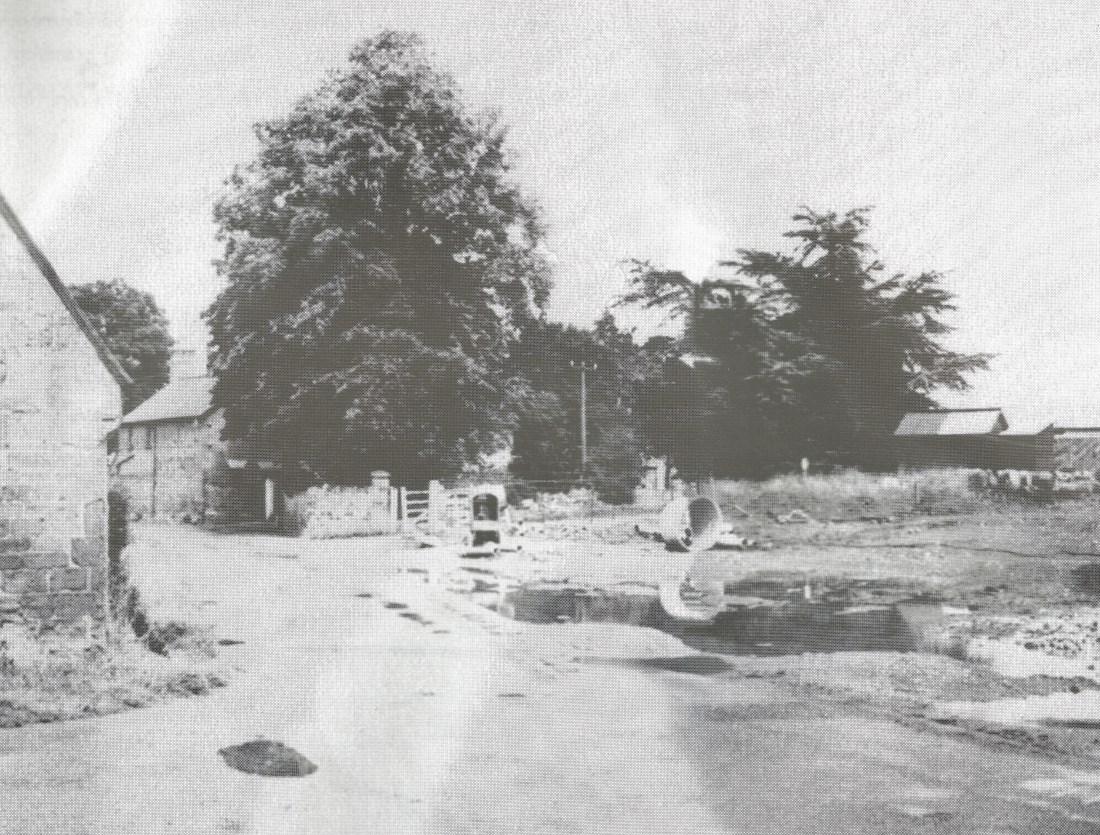
A view of Watery Lane before its development in the 1960’s.
Nether_Heyford_The_Story_Of_Heyford_4.jpg

Photograph lent by Mrs Searle

February 1969. It has been impossible to keep pace with all the buildings in the village and do my job as infants teacher. In Middle Street all the lovely trees were cut down in 1968. The school extensions started last year in March and we are now using our new hall. The Wilsons estate grows apace and so does Hillside Crescent and Winston Close.

People come and go. There is a flourishing play group for pre-school children. The WEA group is strong, and my own Theatre Club is now affiliated to the Arts Council.

The shop changed hands from Mrs Blaney to Mrs Eales. Mrs Blaney still has the post office, helped by Miss Humphrey. Mrs Lilley’s old cottage has been partly demolished to make it safe. Middle Street is being widened as far as the bridge and we now have a pavement opposite the School House.

1969. The new Rectory is being built. The school dining hall and kitchen were completed in January. Five Georgian houses have been built in Manor field . Mrs Lilley’s old thatched cottage has been razed to the ground. There is a building site at Brook Farm. There are buildings now on both sides of Middle Street and in the river field near the Manor. Mrs Highfield sold her shop. There is now a Green Shield Stamp shop to compete with the VG stores. John Haynes and his wife live at the post office and his wife helps Mrs Blaney. The Monday Club has been formed – it seems for young newcomers and their friends. The Youth Club is to be revived.

1970. A children’s playground committee has been formed. The brook has been dredged. The river has been dredged. Brook: Farm has been demolished in Watery Lane, and Middle Street has been provided with pavements.’

Mary Warr

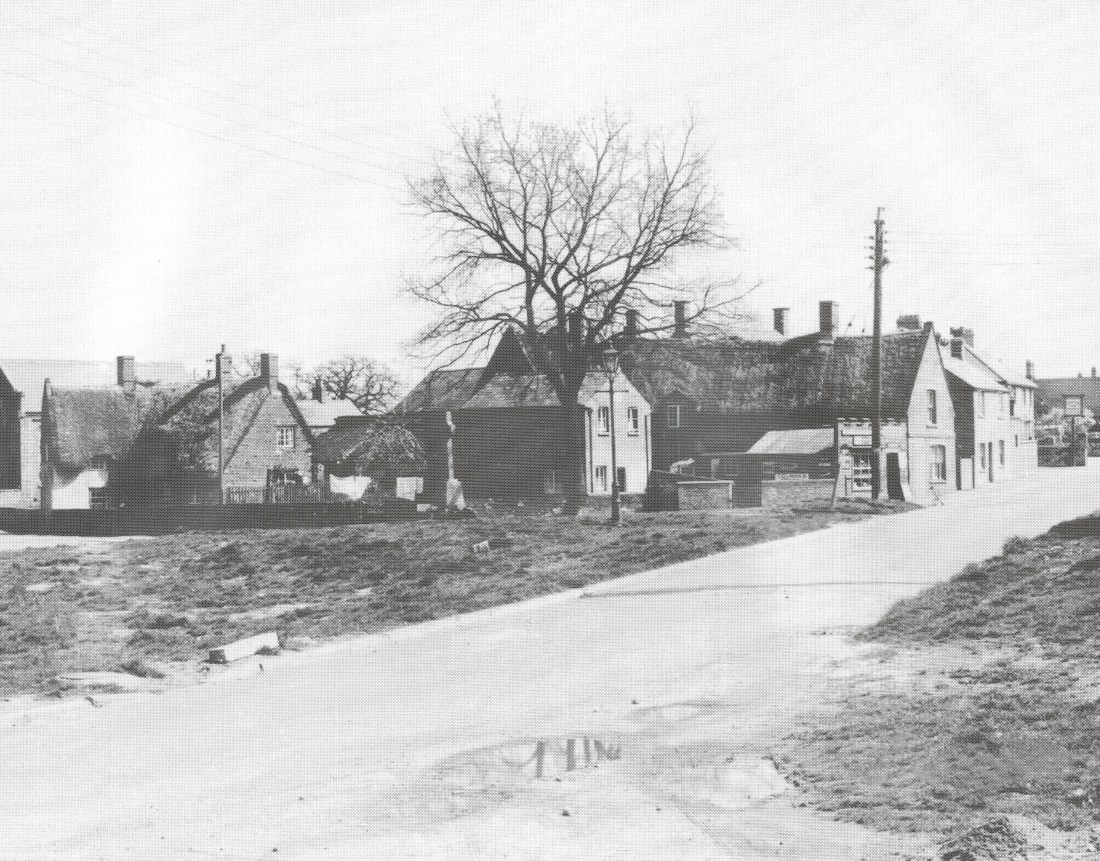
The Memorial Green.
Nether_Heyford_The_Story_Of_Heyford_5.jpg
Photo lent by ]udy Armitage

The photograph above, lent by ]udy Armitage, was taken in the 1940’s. Towards the right behind the telegraph pole is the old thatched post office, demolished in the early 1950’s and replaced by the modern stores. In the centre behind the tree is the original Methodist chapel built in 1838. To the left of this is the thatched house occupied by Mrs Anne Clarke, Heyford’s midwife in the early 1900’s, and later by her daughter Mrs Lilley. This house was demolished in 1969.

HEYFORD’S BEAUTY
Of bureaucratic interference, no one is deserving,
But certain things in Heyford are truly worth preserving.
John Smith’s lovely farmyard, the school, the village green.
If developers ever get them, they’ll be no longer seen!
So the word ‘conservation’ should never cause a frown,
Let’s keep those lovely treasures so there’s something to hand down.

Gordon Hayes, 27th October 1983

~~

Extract from “The Story of Heyford” – Local book series published in the late 1990’s

Volume 1 of 4 | Chapter 10 of 13 | Pages 24 to 29

TheStoryOfHeyford_NetherHeyford_Footer

Heyford’s Historical Heritage  |  How the books were created

Index  |  Covers

The Story of Heyford: Heyford Hills Fruit Farm V1C9

Heyford Hills Fruit Farm

The magnificent house at Heyford Hills was built originally for the owner of Heyford Ironworks. In the late 1800’s it was owned by John Hardy, a farmer. During the 1940’s it was occupied by Major Campbell. In the late 1940’s, Mr Beck, a gentleman farmer came from Herefordshire to Heyford Hills and established a fruit farm for his semi retirement.

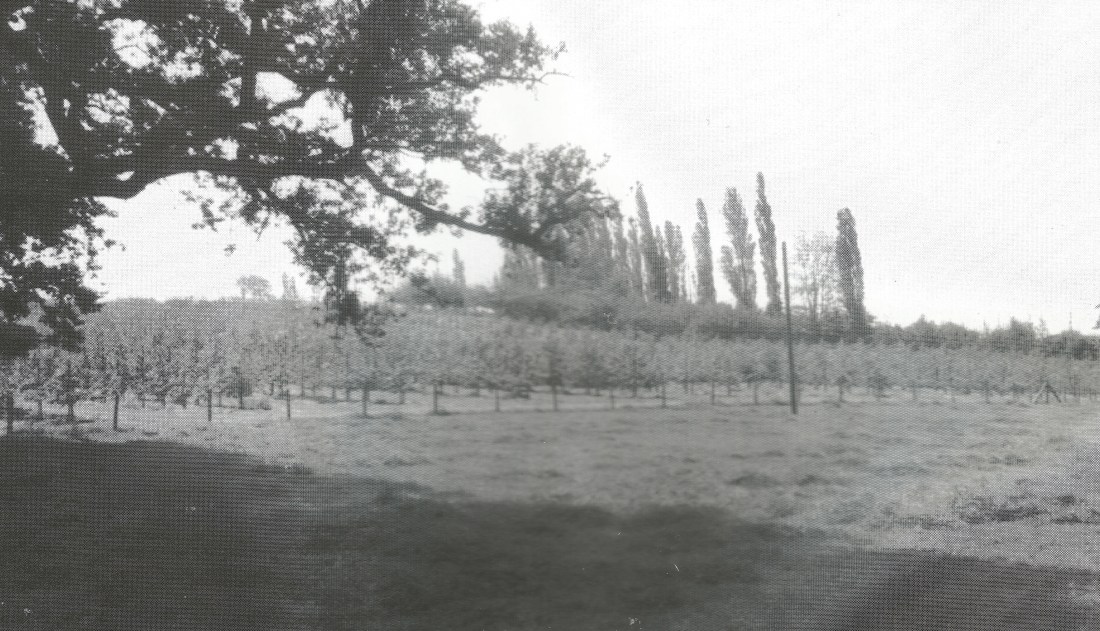
He planted 12 acres of fruit on the side of the hill to the right of the drive. He grew apples, plums, gooseberries and blackcurrants. It was a quite a good site because although it wasn’t south facing it was largely frost free and enjoyed the afternoon sun.

He employed local people to look after the fruit, doing pruning, general gardening duties and picking. Three people who worked there regularly were Mrs Butcher, Mrs Lilley and Mrs Sargeant.  Mrs Butcher, who provided much of the information for this article, worked there for 24 years.

The Fruit Farm

NetherHeyford_FruitFarm.jpg

Local people

During the picking season he employed thirty or forty local people. He sent a tractor and trailer into the village to collect them, mostly but often children as well because much of the picking was done during the holidays. The fruit was collected in small tubs, then weighed and put into 50 lb wooden barrels. The pay was a penny—farthing for gooseberries and twopence-halfpenny per lb for blackcurrants. It wasn’t much, but it provided an opportunity for local people to spend many happy hours picking and chatting amongst the fruit bushes in the warmth of the afternoon sunshine. Mrs Butcher remembers on one occasion picking 568 lbs of gooseberries in 6 hours. It was a messy job with stains from the blackcurrants and scratches the gooseberry thorns, and at local jumble sales people went searching for cotton gloves to protect their hands.

They used gooseberry graders to sort the fruit. The big fruit was sold locally to wholesalers as whole fruit, and the smaller ones were sent to a cannery.

When the fruit was ready to be taken away it would be loaded into bushel boxes (large wooden boxes with a handle at each end) and taken away by lorry to commercial processors in Cambridge and Stratford to be canned or to make drinks and jam.

Mr Beck

Mr Beck himself was a wealthy man. He had been a pilot in the first world war and still had the tail of a German plane that he’d shot down. He had some property in South Africa to which he returned each year and to which he eventually retired in 1975. He enjoyed expensive cars and had four or five Mercedes. He hard worker and expected those around him to work hard too, but he was a real gentleman and everybody loved him. He took an active part in the village and was at various times president of the football and cricket clubs.

Mrs Beck’s interest in dog shows for which she was a judge. She employed a kennel maid and kept alsatians and beagles, many of which won prizes. She often judged the dog shows at the village fete.

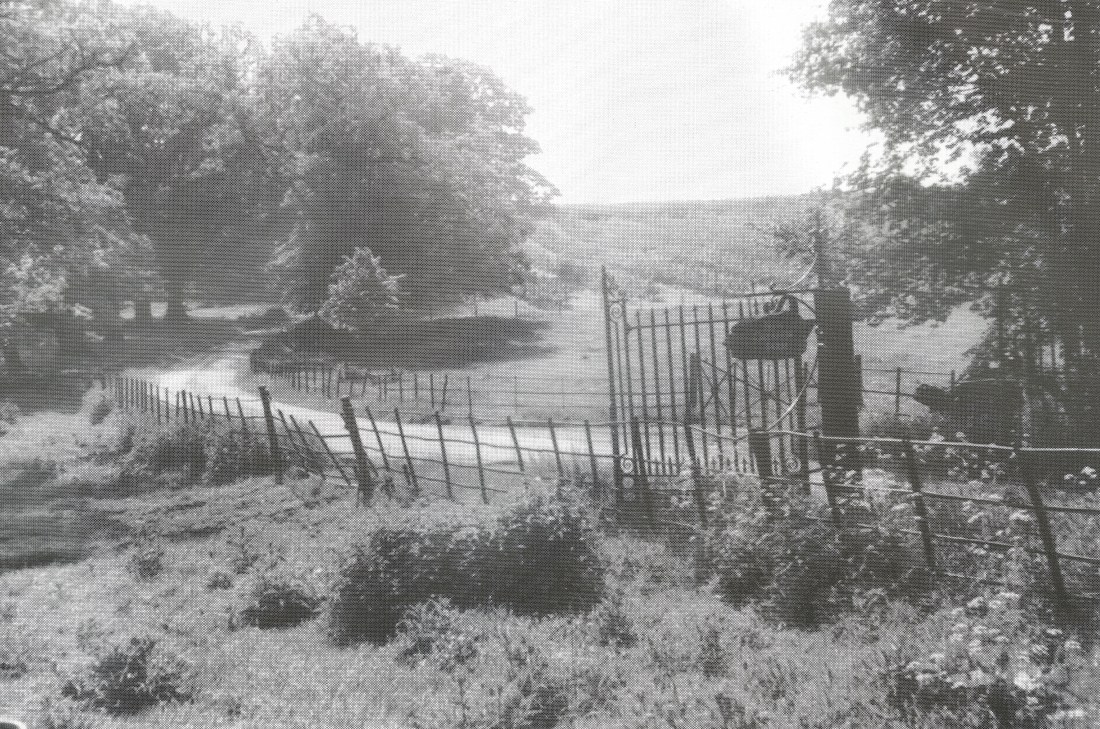
The entrance to ‘New Creation Farm’ in 1996

NetherHeyford_NewCreationFarm.jpg

The Jesus Fellowship

In 1976 Beck sold the farm to the Jesus Fellowship. Dave Lantsbury of the Jesus Fellowship first came across Heyford Hills in the early 1970’s. He was a teacher at Campion school and had brought some rural studies students to see the farm. Around that time the Jesus Fellowship were starting to develop their about a community existence and when the farm came up for sale in 1975 the Jesus Fellowship brought it. They renamed it ‘New Creation Farm’

At first they took over the twelve acres of orchard. They added some sows and chickens, they installed 70 bee hives, they planted potatoes, and they extended the fruit bushes right down to the drive. They later bought some other neighbouring land, together with Novelty Farm on the A5. Today they have 300 acres and run the farm as a community, both to feed themselves and to produce crops for selling commercially through their farm shop.

Stephen Ferneyhough

~~

Extract from “The Story of Heyford” – Local book series published in the late 1990’s

Volume 1 of 4 | Chapter 9 of 13 | Pages 22 & 23

TheStoryOfHeyford_NetherHeyford_Footer

Heyford’s Historical Heritage  |  How the books were created

Index  |  Covers

The Story of Heyford: The Humphrey family and ladder making V1C8

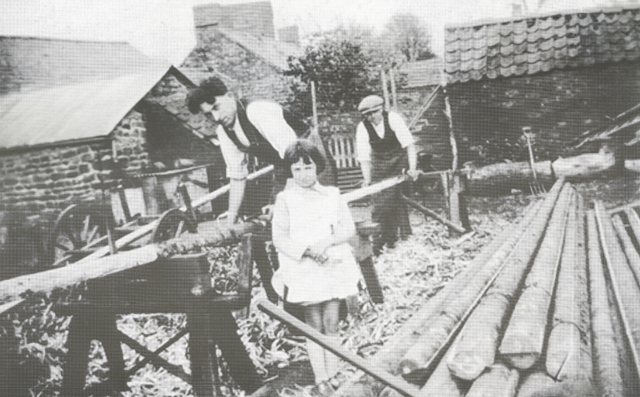
Laddermaking did run(g) in the family! The Bugbrooke firm of J Ward and Son were undertakers and ladder makers and three generations of Humphreys worked there. Ernest Humphrey, Ron and Arthur’s father, was born in Bugbrooke and worked at Ward’s with his wife’s father. Ernest became a journeyman carpenter and for a while went to work in Loughborough with Moss Builders who built the Narborough mental hospital. He remained at the hospital where he was responsible for building maintenance and helped the patients in the workshops there. He married Alice who had been a children’s nurse in Northampton and they started their family, but he became unwell and had to leave his job as a result. The asylum, as it was then known, continued to pay him a small pension until his death in 1936.

How the business began 
The family came back to live in Northamptonshire, only this time in Nether Heyford. Ernest returned to Ward’s. His eldest son Ron went to work there in 1920 when he left school at the age of thirteen, and perhaps it was their experience of working together that encouraged his father to start his own business in Nether Heyford. The asylum pension allowed him to buy the first lot of poles used in the business. Steve Ward, their previous employer was not very happy about this and threatened ‘to smash them’. He even took out a summons against them for not working out their notice, but it didn’t come to anything and in time relations once again became amicable.

At that time the family lived in the cottage on the south side of the Green, no 17, where Mrs Pearson now lives and near to the old folks bungalows. They used the house and garden to make ladders. The garden was turned into a work yard for boring holes in the poles which formed the ladder sides, and for assembling the ladders. The room which is now the living room but at that time was a wash house, was used to make the ladder rungs. The chips left over from making the ladder rungs provided a useful supply of fire lighting material and were sold to local people for sixpence a sack. The ladder sides were planed in a barn behind the Baptist Chapel Rooms, now gone, and at that time owned by Mr J.O.Adams. This space was also used for finishing the ladders off: painting, etc.

Their first venture into business was not a financial success. They were offered a big order from a firm out of the area, which they duly completed. Somewhat strangely they had been asked to deliver the ladders to Travis and Arnold in St James, Northampton from where the ladders would be collected. Having no transport, Mr Humphrey, Ron, Arthur and daughter May had to push the ladders into Northampton on a cart. They were delighted to have made a good sale and looked forward to settlement of the account as money was tied up in timber stock. This was not to be. The firm went bankrupt and not a penny was received.

The move to Church Street
Younger brother Arthur joined the business in July 1923 when he left school. Money was tight and it took time for the business to establish itself in the harsh economic climate of the years after the First World War, but in time it grew sufficiently for Mr Humphrey to buy a property in Church Street where there would be much more space for the family business and home.

The property in Church Street comprised a group of farm buildings complete with an orchard, still there, and a stream with watercress growing in it. The farm was bought on 8th August from Mrs Lookes, an elderly lady who lived in St Matthews Parade in Northampton. There were a number of sitting tenants who, one imagines, were rather disconcerted at the prospect of having to find somewhere else to live. There was Mrs Dunkley who moved to another cottage in 1928, the Collins family who moved to the farm beside the canal bridge in Furnace Lane, the Barnes, the Clarke family and Mr H Gilke.

When Mr Collins was served notice to quit it seems that he didn’t take it lying down and Mr Humphreys noted in his records that he ‘used abusive language to me’. It was not until 1929 that the Humphreys finally moved in.

In the meantime there were rents to be collected and taxes to be paid and it is evident that Mr Humphrey was concerned that the rents were not really sufficient to pay his overheads. It seems that in 1929 ‘the property only brings in yearly £51-12s-6d’.

The large stone farmhouse was in a sorry state and barely habitable. There were also two Victorian cottages on the right hand side of the drive into the farmyard. It was decided to live ii the old farmhouse and to renovate one of the cottages. Eventually the family moved into the cottage, although by that time May was already living at Moulton. When Ron married he moved into the cottage next door where he spent the rest of his life. When Arthur married he moved into a house in Church Street and then to a house on The Green where he still lives.

Ron, Sheila and Arthur in the 1930s

The_Story_Of_Heyford_Nether_Heyford_Ladders_1

Photo lent by the Humphrey family

On the farm there was plenty of space to erect two good workshops fitted up with gas lamps. One of the Workshops (where Ladder Cottage now stands) was assembled from an ex-army sectional building. It had a beautiful wooden lining and good windows, and was large enough to take the assembly of a sixty rung ladder. When the business was closed the building was dismantled and sold to a scout group east of Northampton. The other workshop, still standing, was lined with First World War munitions boxes and the pillars for the building were built by Mr Denny.

The  ladders were made by hand until 1946 when a universal machine was bought from Birmingham. This was purchased with the proceeds of selling the family’s dairy cows and Arthur attributes the success of the company to the fact that from that early date they made a point of investing in new machinery. Other machines came from Fells of Windermere, a firm which is still in business. These machines made the work much easier and enabled production to be increased.

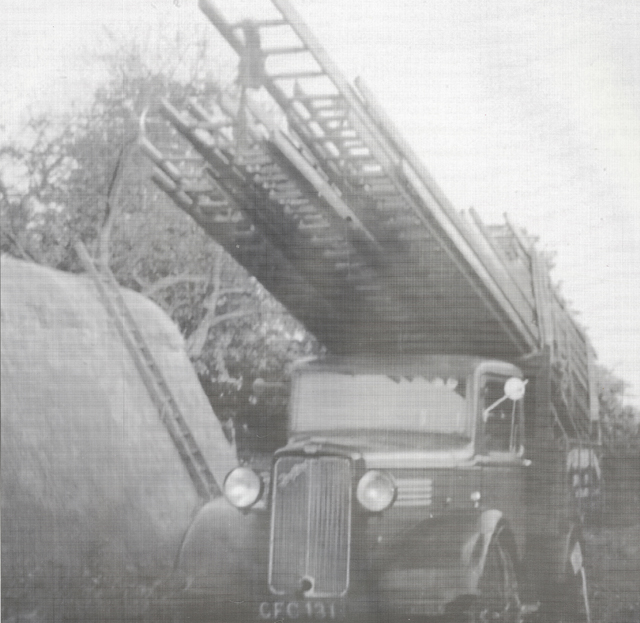
The Humphrey’s first and last lorry

The_Story_Of_Heyford_Nether_Heyford_Ladders_2

Photo lent by the Humphrey family

The ladders were made from two very different timbers. The sides were made from ‘poles’ imported from Norway and were of Christiana pine and spruce. A special trip would be made to Great Yarmouth or Hull to inspect them. They were then brought by train to Weedon from where they had to be delivered to the workshops, sometimes by the local carrier, Tarrys. Timber was also bought from the London timber docks, south of the River Thames at Surrey Docks. The poles were brought in ‘green’ and were seasoned on the farm. Oak was used for the ladder rungs, and for this it was necessary to go to Leicester where they could be relied upon to supply good quality timber. They must have liked the Humphreys ladders because they would buy their ladders to sell on. Mabbutts of Brixworth supplied first class oak which was knot free. Oak was also bought from Badby and from between Everdon and Stowe. When the oak became scarce and too expensive and the Humphreys had bought the last oak from Earl Spencer’s estate, they turned to ash of which supplies were plentiful. During the war all timber was rationed and it was necessary to have a licence to buy the poles from local merchants.

Many different types of ladder
Over the many years different kinds of ladders were made. They were of different lengths and were measured by the number of rungs they had. A thirty rung ladder was twenty-two feet long. When a pole was split to make the sides of the ladder it produced a round side and a flat side. Builders liked to have the round edge on the outside. perhaps to make it easier on the hands when climbing up it. Others such as farmers and thatchers wanted the round side to the centre, perhaps so that it would not hurt their knees if they leant against the ladder, but also because the thatchers would use the outside face of the ladder as a straight edge to help them lay the thatch.

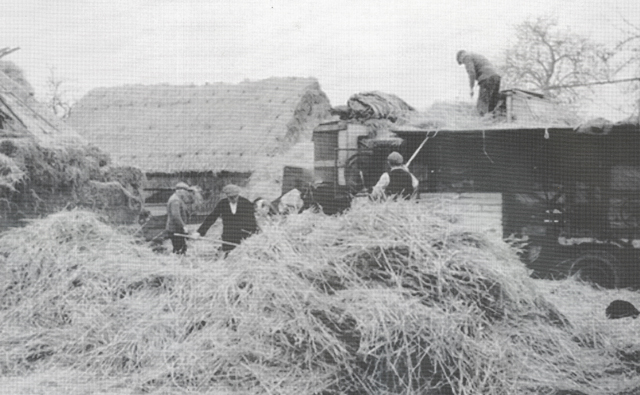
Thatching hay ricks using Humphreys ladders

The_Story_Of_Heyford_Nether_Heyford_Ladders_3

Photo lent by John Smith

There were extension ladders too. The longest was a triple extension ladder of ninety-three rungs for a hotel in Bournemouth. There were also window cleaners ladders and decorators ladders. Some of the ladders were painted, others simply stained. Load ladders were made of willow and were used by farmers when loading the hay wagons. The willow for these was cut from along the Nene Valley and they were not straight. In fact they were deliberately irregular so that if they were knocked over when the hay wagon was loaded they would fall to the ground and rock but not break. Load ladders were also used for thatching hay ricks or ‘thaking’ as it was called locally. The ricks were thatched to keep the hay dry over winter.

In 1930 a forty-five rung ladder for the Northampton Electric Light & Power Co. cost £5-6s-8d. This company were for some years the Humphreys’ best customer with an insatiable need for ladders, and in that same year bought at least fifty of various different lengths. Electricity was still relatively new and presumably the company were busy putting up poles to serve the new customers. I wonder how many of the poles which still exist in Hey-ford were put up using a Humphrey ladder.

Nearly all the customers were local at the beginning but over time it became necessary to look to a wider market and it was then that the ladders began to be exhibited at the annual agricultural shows. Each summer the Humphreys triangular ladder display was loaded up on to the lorry and taken to such shows as the Royal Show at Stoneleigh, and the East of England Show at Peterborough. In time Humphreys ladders were delivered within a seventy-five mile radius which included Worcester and Coventry. But it was the local firm Travis and Arnold which became their best customer.

The Humphreys did not only make ladders. A 1930 order came from ].Y.Castell of Gold Street in Northampton for four milking stools at 4/ – each (less 10% discount), and in the same year a ‘navvy’ barrow was made for W.G.Denny of Nether Heyford for 35/-. They also did repairs such as fixing a gate for the Parish Council, sharpening saws or repairing the handle of a billhook or mallet for Mr J.O.Adams. There seems to have been a delay in settling this bill which eventually involved the exchange of 1.5 cwt of potatoes.

In time a number of local ‘youths’ came to work in the ladder workshops including Bill Kingston, Cliff Gilkes and Ted and Maurice Sargent.

Other family activities
While the men of the family were busy making an selling ladders the women were also active. May Humphrey, the second child, was the post mistress at Moulton for many years before coming back to Nether Heyford to work in Mrs Blaney’s post office. May and Sheila, the youngest daughter, lived in the family home with their mother. For a while they moved into Northampton where it was easier to look after Alice but she died shortly afterwards in 1974.

Arthur and his sister Sheila were well loved members of the Bugbrooke Choir. May was known for her Albert the Lion monologue of which Stanley Holloway also gave a good rendition, and with a bit of encouragement May can be persuaded to do it even today ! The family were stalwart supporters of the Baptist Chapel, May having been Church Secretary and Shelia playing the organ for many years.

Arthur was also a keen gardener and for sixty years gardened the allotment next to the Church Street jitty. This once was a fine garden with flowers and vegetables and the food grown was enjoyed by the whole family.

In order to help with the family finances Ernest had started a milking herd of about nine cows. They had names like Buttercup and Daisy and would respond to their names when called. On Ernest’s death Arthur took over responsibility for the cows which most days would be driven up to fields on Weedon Road. To the dismay of Alice and Arthur, Sheila’s pet lamb, Betty, did not like to be left behind and used to try to go out with them, walking beneath one the cows where it was hard to detect her. There were also hens and many fruit trees. Because of these farming activities Arthur was exempted from the war and the Humphreys continued to deliver milk to local people throughout the war years. When they sold their herd Sheila continued to deliver John Smith’s milk for a while before getting a ‘proper job’.

During the war many people were expected to accommodate evacuees and the Humphreys were no exception. Mrs Humphrey was asked to accommodate a Mrs Buck and her children, and she did what she could to make the old cottage next to the farmhouse habitable, although by now it was in a very sorry state. Mrs Buck’s husband would come up from London at the weekends and in time he got an allotment. He knew nothing about growing vegetables but learned quickly, and to the amazement of the other men in the village was soon producing some of the best. One of the Buck boys was so impressed with Nether Heyford that at the end of the war he decided to stay and in time moved to a house in Furnace Lane. His son Jeff still lives in the village. I always thought he had streak of the Londoner in him. Now I know why !

The later years
The Introduction of baling machines meant that hay as no long loaded onto the wagons and the demand for farming ladders dropped almost overnight. Arthur can remember the first baler in the village at what is now New Creation Farm. The demand for wooden ladders continued to decline after the war. New, lighter metal ladders began to appear. The lack of demand, together with the lack of younger members of the family wanting to go into the business led them finally to close in May 1975. Ron was then 68 and read to retire. He died in 1994. Brother Arthur took retirement and with his wife Nora gave much of their time to the Hospital Guild in Northampton. Nora sadly died but Arthur Humphrey can still be seen walking round the village and gardening in spite of his very bent back, probably brought on by the heavy work of lifting wooden ladders.

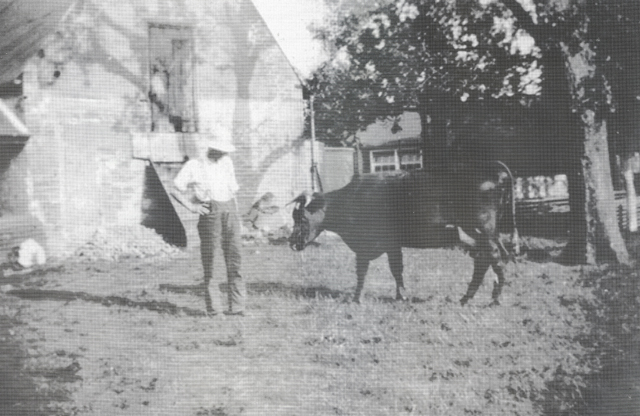
Mr Ernest Humphrey and Kit the cow in the orchard in the early 1930s

The_Story_Of_Heyford_Nether_Heyford_Ladders_4

Photo lent by the Humphrey family

In 1985 a house was built on the site of the assembly shop and Sheila and her husband Albert Beharrell moved into it. It is aptly named ‘Ladder Cottage’. The old farmhouse has now been largely demolished, although part of it has been incorporated into house built in 1995 by John Connolly for Albert’s daughter and her family. May still lives in the house that the family renovated for themselves ,and Ron’s daughter Jean lives in her old family home next door to May.

Eiluned Morgan (1996)

~~

Extract from “The Story of Heyford” – Local book series published in the late 1990’s

Volume 1 of 4 | Chapter 8 of 13 | Pages 16 to 21

TheStoryOfHeyford_NetherHeyford_Footer

Heyford’s Historical Heritage  |  How the books were created

Index  |  Covers